
Latest News
We didn’t get justice from ICC: Bangladesh sports advisor

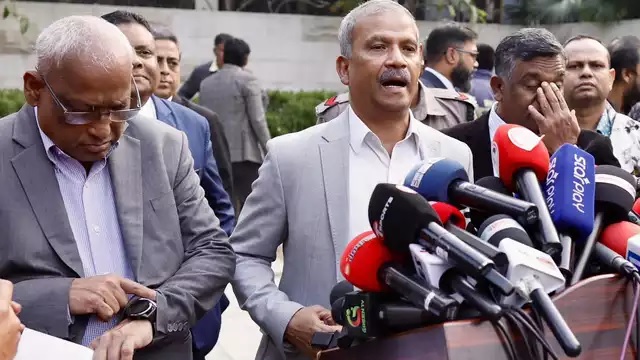
Asif Nazrul, the Bangladesh government’s sports advisor, on Thursday said that the ICC and the BCCI made no effort to convince the the Bangladesh Cricket Board of the security for their players in the upcoming ICC T20 World Cup, scheduled to be hosted in India and Sri Lanka. He also added that they did not deliver justice to their plea of shifting matches to Sri Lanka.

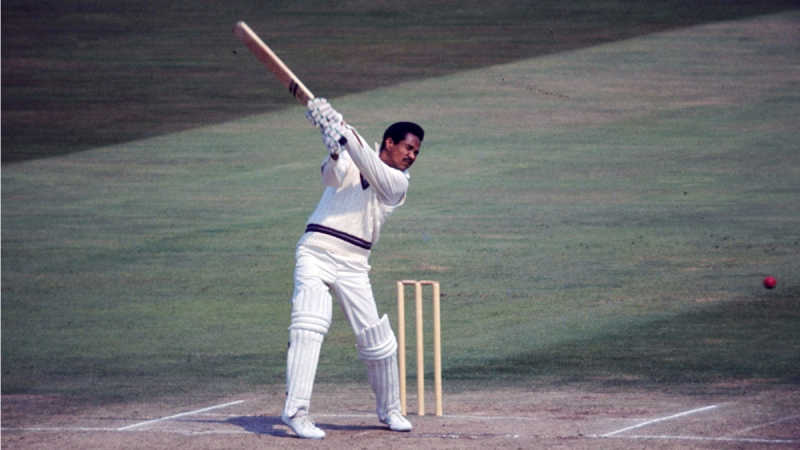
Sir Garry Sobers the legendary West Indies allrounder and one of the sport’s most towering icons, has died at his home in Barbados. He was 89 years old.
Widely regarded by many as the greatest allrounder and most gifted cricketer to have played the game, Sobers excelled as Test batter, could bowl left-arm pace as well as orthodox and wrist-spin, and he was an exceptional fielder and close-in catcher – attributes that once led his fellow all-timer, Sir Donald Bradman, to describe him as a “five-in-one cricketer”.
Sobers played 93 Test matches for West Indies between 1954 and 1974, scoring 8032 runs at an average of 57.78 and took 235 wickets at an average of 34.03. He also captained West Indies in 39 Tests between 1965 and 1972, winning nine and losing 10. The ICC’s premier annual award in men’s cricket – the Sir Garfield Sobers Award – is named in his honour and recognises the most outstanding overall performer in men’s international cricket across all formats.
Sobers made his first-class cricket debut at the age of 16, against the touring India team in January 1953, and excelled with four first-innings wickets to help his side enforce the follow-on. His Test debut followed a year later, against England in Jamaica, where he scored 14 and 26 from No.9 and took 4 for 75 in England’s first innings.
He played his initial Tests as a bowler, but at the age of 23 he scored his maiden Test hundred and also broke Len Hutton’s world record for the highest individual Test score by making 365 against Pakistan at Sabina Park in 1958. It was a record that stood until 1994, when it was broken by Brian Lara, an achievement Sobers was on hand to witness and celebrate.
A decade after that record-breaking innings, Sobers became the first cricketer to hit six sixes in an over in first-class cricket – off Glamorgan’s Malcolm Nash – while playing for Nottinghamshire in Swansea. His first-class career comprised 383 matches for West Indies, Barbados, Nottinghamshire and South Australia and he amassed 28,314 runs at an average of 54.87 and took 1043 wickets at an average of 27.74.
While Sobers played 95 List A games, his international career had wound down by the advent of ODIs and he played only one international in that format – against England at Headingley in 1973. He was knighted for his services to cricket in 1975, and in 2000, he was named as one of Five Cricketers of the Century by Wisden Cricketers’ Almanack, alongside Bradman, Sir Jack Hobbs, Sir Viv Richards and Shane Warne.
Born in Barbados in 1936, Sobers was the fifth of six children, and was raised primarily by his mother after his merchant-seaman father died during the Second World War in 1942. He was born with six fingers on each hand – the extra digits were removed in his childhood – and he excelled in all sports, including basketball, football and golf.
In a statement on behalf of Cricket West Indies, the board president, Dr. The Hon. Kishore Shallow, described Sobers as the “greatest cricketer the world has ever seen”, and offered his “heartfelt condolences to his family, the Government and people of Barbados and all those across the world who mourn his passing.
“There are moments in the story of a people when the life of one individual becomes woven into the hopes, dreams, and identity of generations,” Swallow added. “Today, the Caribbean mourns the passing of such an individual … His mastery of batting, bowling and fielding was unparalleled, but his true significance reached far beyond the boundary ropes.
“He emerged from the Caribbean at a time when our region was finding its voice and asserting its place on the world stage. Through his excellence, he gave millions across our islands and in the diaspora, a renewed belief in what was possible. He showed that greatness was not confined by the size of our nations, the geography of our islands or the circumstances of our beginnings.
“Sir Garfield Sobers became more than a sporting icon. He became a symbol of Caribbean excellence, resilience, and possibility. His achievements brought pride to Barbados, inspiration to the West Indies and admiration from every corner of the cricketing world.”
(Cricinfo)

A tsunami warning has been issued for parts of the Pacific after a powerful magnitude 7.3 earthquake struck off the coast of southern Mexico on Friday.
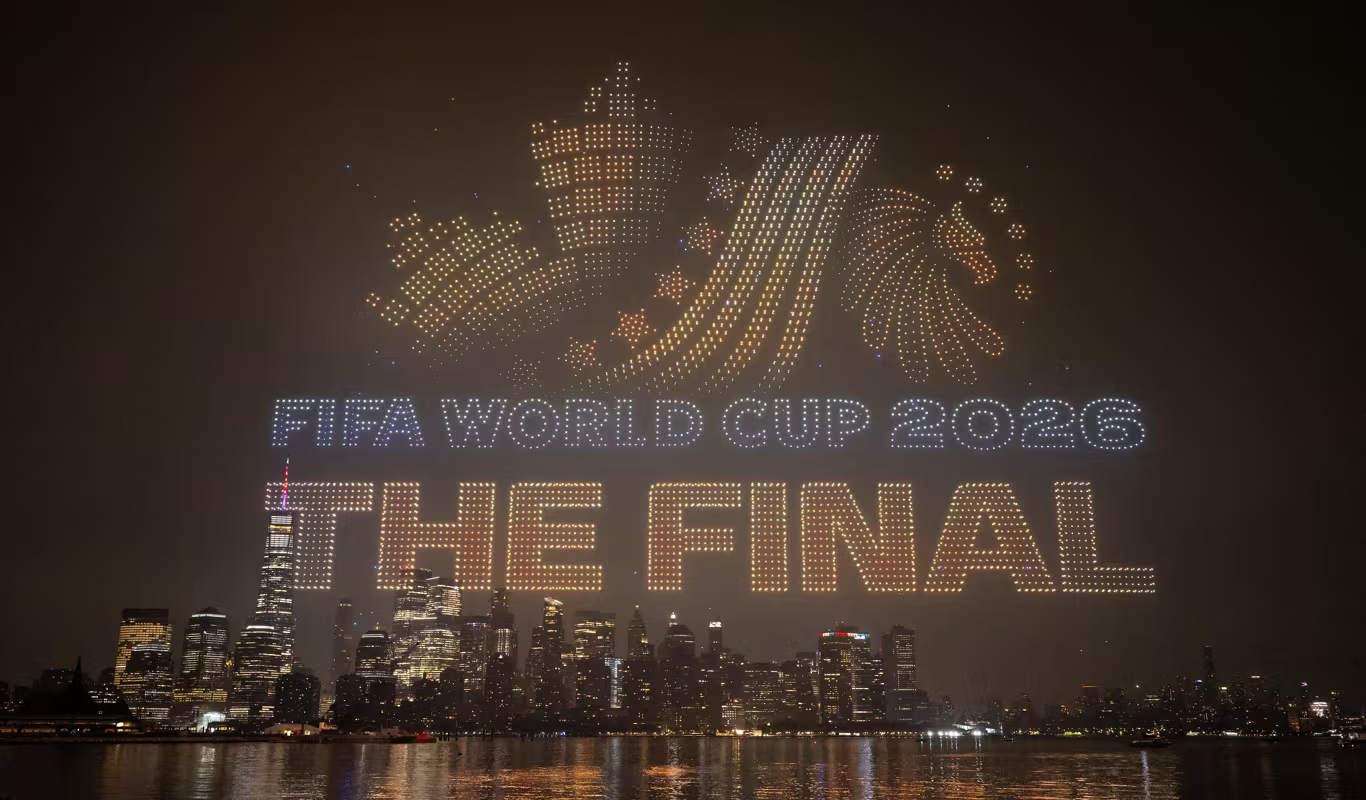
Four years after their triumph in Lusail Stadium at Qatar 2022, Argentina have the chance to become only the third side to defend a World Cup crown.
They may be led by the legendary Lionel Messi, they may be champions of South America – indeed, the holders may well be the comeback kings of the tournament – but they are not the favourites.
Standing in their way of claiming a first for more than half a century, since Brazil defended their title in 1962, are the European champions – and pre-tournament favourites – Spain.
Al Jazeera Sport looks at why the defending champions are seen as the outsiders for Sunday’s final and what chance they have to upset the odds.
Why are Spain favourites to win the FIFA World Cup 2026 final?
Spain came into the 2026 edition as the number one ranked team in the world and the favourites to lift the trophy, but they lost that mantle mid-campaign to the attacking endeavour of France.
The star turns of Kylian Mbappe and Ballon d’Or holder Ousmane Dembele were ably supported by Michael Olise and Bradley Barcola, with the latter’s Paris Saint-Germain teammate andp starlet of French football, Desire Doue, demoted to his supporting act.
Going into the semifinal clash between the European giants, the French were firmly the favourites to lift the title – as long as they could see off the Spanish.
They could not.
Spain did not give the French a sniff in their 2-0 win and Mbappe, Dembele and co ploughed lone and desperate furrows in their limited attempts to lay the foundations for their team to find their footing.
Having been held by debutants Cape Verde in their opening game of the tournament, the spotlight was on the Spanish thereafter.
They limped past Uruguay, Portugal and Belgium and failed to fire overall – until they met the French.
Now Spain’s confidence is restored – if it was ever even in doubt
What are Spain’s strengths that should concern Argentina?
The question is perhaps easier answered in terms of where are their weaknesses? There don’t appear to be many and that is why their underwhelming performances up to the semifinal were such a surprise.
Coming into the tournament, coach Luis de la Fuente attempted to rally his troops – and the country – by talking of a “united” Spain.
No Real Madrid player was named in the Spanish squad for the tournament, which threw open the question about the credentials of the European champions’ current set-up.
Eight of the 26-man squad play for Barcelona, who last season defended the domestic title with ease.
“For me, the greatest team there is – the very greatest – is the Spanish national team,” de la Fuente said.
“I don’t look at where players come from or their background. What matters are Spanish players who are proud to represent their country’s national team and to be part of a united nation.”
It is not only a Catalonia conundrum for de la Fuente to solve.
Of the starting semifinalists in midfield and attack for the Spanish, Fabian Ruiz is the pivot in midfield for Champions League holders PSG, Alex Baena is Atletico Madrid’s darling on the flank, Rodri is Manchester City’s 2024 Ballon d’Or-winning maestro, and the lone frontman, Mikel Oyarzabal, is putting Real Sociedad on the map for the global audience.
The 29-year-old’s five goals at the tournament so far may well give him an iconic status in Spanish football history, if the trophy can be secured.
Then there is Spain’s Barcelona-based spine. Lamine Yamal is the new poster boy of world football – despite a quiet campaign off the back of a pre-tournament hamstring injury – and, alongside Real-rival Mbappe, is seen as successor to Messi and Cristiano Ronaldo as the global superstars of the sport.
The 19-year-old provided many a star turn to help the Spanish win Euro 2024, but his adoring fans await his moment of magic at the World Cup.
Dani Olmo is the orchestrator of attacks, slotting between the defensive duo in midfield and looking to feed the wingers and the striker.
Pau Cubarsi, at only 19 years of age, has made himself a fixture for club and country in the heart of defence.
The might of the Spanish is perhaps best exemplified by the fact that one of the most sought-after talents in the game, Athletic Bilbao’s 24-year-old winger, has hardly had a look-in, despite his key role in their Euro 2024 campaign.
What kind of World Cup final will Spain and Argentina produce?
It is hard to see the final playing out as Argentina’s 2-1 semifinal win against England did – their latest turnaround, having also come from behind to beat Egypt in the last 16.
The English, with stars from Real Madrid, Bayern Munich, Arsenal and – with Anthony Gordon’s recent move – Barcelona, dominated Argentina until Gordon’s 55th minute goal.
Thereafter the shift – helped by England’s retreat – saw Argentina end with 64 percent of the possession across the game.
England are not renowned for keep ball, but Spain are, and they will look to hold the midfield, as the English did until their goal, and limit the attacking threat of Messi by wearing Argentina down.
Should Spain take the lead, at whatever time, do not expect de la Fuente to order all his troops to defend their own box as Thomas Tuchel ill-advisedly instructed England to do to their cost in Atlanta on Wednesday.
Rodri and Ruiz will be ordered to control the game from start to finish. Yamal, Olmo and Baena will be tasked with supporting Oyarzabal at every opportunity and, should it come to it, counter at pace if Argentina have to throw everything at chasing the game as they did against England.
Is Messi Argentina’s best chance against Spain?
Having been the pin-up of Barcelona and Spanish football for nearly two decades, Lionel Messi will be seen as Argentina’s best chance of defending their title.
With eight goals at the tournament already – and set to be named the Golden Boot winner barring an Oyarzabal hat-trick or better – Messi put to bed any doubt about his ability to continue to lead the way for Argentina at the age of 39.
Although he was an isolated figure for most of the last-four victory against the English, it was Messi who laid on two assists as Argentina produced their late comeback. Lautaro Martinez was the beneficiary on one of those occasions as he headed home the injury-time winner for his third goal of the tournament. Beyond those three, no other player for either side has reached three goals.
Martinez, who leads the line for Italian club Inter Milan, is once again likely to start from the bench in the final, with the Atletico Madrid duo of Julian Alvarez and Giuliano Simeone required to make the running on the flanks.
Behind those three will be the wall that the English could not conquer.
It starts with the three powerful midfielders who will run all game, Alexis Mac Allister, Leandro Paredes and Enzo Fernandez, who scored his side’s equaliser in the semifinal.
Can Argentina’s defence keep Spain and Yamal at bay?
At the heart of the Argentina defence are a pair that divide opinions. Former England and Manchester United defender Gary Neville has described Lisandro Martinez and Cristian Romero as the “best, worst centre-half pairing in the world”.
They seem to give a goal away between them every single game,” Neville said on the Overlap Podcast.
“But you watch them, they are scoring goals, heading the ball, they’re literally everywhere – it’s incredible.
“They absolutely at times can be unbelievable, but the next, it’s the sublime to the ridiculous.”
Romero, who plays for Tottenham Hotspur in the English Premier League, described the comments as “ridiculous”.
The pair, who are both 28, will leave nothing behind by the time the final kick is struck in the tournament and Martinez will not flinch at criticism.
Neville’s former United teammate Paul Scholes has previously said the club will not win the title with Martinez at centre-half – his 1.75 metres height, being one of the main reasons for the comment.
However, the Old Trafford crowd have taken Martinez to heart due to his commitment to the cause, and their struggles at the back in the last two seasons have been put down to the defender’s prolonged absences through injury.
Oyarzabal stands six centimetres taller than Martinez, but it is unlikely that balls thrown endlessly into the box by Spain will settle the final.
Moreover, the headlines are likely to be written by Barcelona’s past, present and, likely, future – but will it be the magic of Messi or Yamal that leaves their mark on this World Cup?
The game’s sales folk and financiers will be just as hopeful as the fans that it is a moment of beauty from one of the superstars that illuminates, not only the final, but leaves their unmistakably and irreplaceably marketable imprint on the 2026 finale.
(Aljazeera)

Garry Sobers dies, aged 89

Magnitude 7.3 earthquake quake strikes off Mexico coast

Can Argentina and Messi beat Spain and Yamal to defend World Cup?

Anushka Sanjeewani, Vishmi Gunaratne return for Pakistan ODIs

Lennox stars again as New Zealand take series lead after West Indies collapse

Former IGP C.D. Wickramaratne found dead at his residence

‘Dates have the highest sugar content to fight Coronavirus’

Sunday Island 27 December – Headlines

#SundayIsland 17th December – Headlines

Sunday Island – 28th March

Sunday Island Headlines – 21 March

Sunday Island – 21st February – Headlines
-
 Features6 days ago
Prison riots and politics: NPP’s biggest challenge and Sri Lanka’s biggest opportunity
-

 Editorial7 days ago
What’s the world coming to?
-
 Features3 days ago
Dirty Money
-

 Editorial6 days ago
Much ado about crime: Fish or cut bait
-
 Features6 days ago
More on Saudi Arabia: ARAMCO and beyond
-
 Midweek Review3 days ago
The sordid tale of theft and tragedy at Finance Ministry
-

 Latest News3 days ago
Oil prices hit 1-month high as US-Iran attacks dim Strait of Hormuz outlook
-

 News19 hours ago
Money laundering case against Yoshitha, fixed for pre-trial conference