
News
Indian HC says Defence pact with Lanka has no unstated objectives

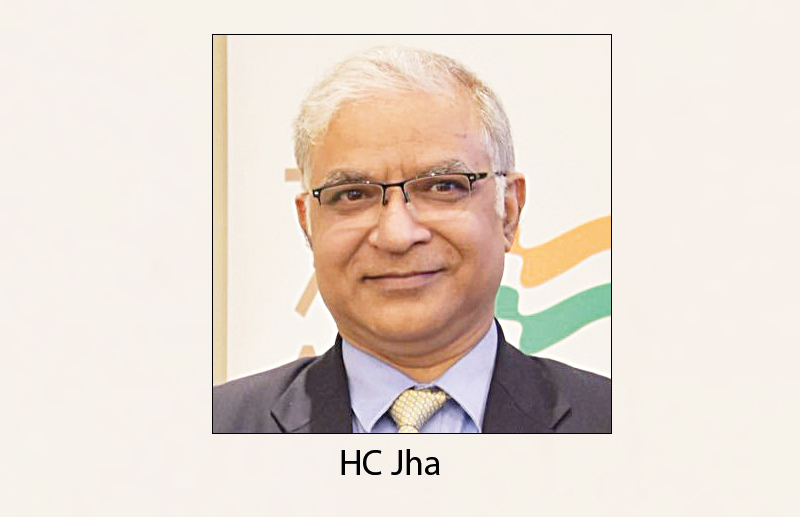
Indian High Commissioner Santosh Jha characterised 2025 as a year of “re-energising and reaffirmation” in India–Sri Lanka relations, reiterating India’s substantial aid package for cyclone recovery while steering clear of commentary on Sri Lanka’s domestic fiscal policies and the broader strategic context of a bilateral defence pact.
Addressing the media in Colombo yesterday, Jha highlighted the elevated levels of “trust, goodwill and friendship” between the two nations, evidenced by a series of high-level exchanges.These included Prime Minister Narendra Modi’s April visit—during which he received Sri Lanka’s highest honour for foreign leaders—and the October visit of Sri Lankan Prime Minister Harini Amarasuriya.
A significant portion of the interaction focused on India’s response to Cyclone Ditwah. Under “Operation Sagar Bandhu”, India dispatched naval ships, aircraft, disaster response teams and engineers, delivering more than 1,100 tonnes of relief material. Jha announced a new USD 450 million assistance package—comprising USD 350 million in concessional credit and USD 100 million in grants—for rehabilitation across five key sectors: connectivity infrastructure, housing, health, education, agriculture and disaster preparedness.
“This is a demonstration of Sri Lanka’s key place in India’s Neighbourhood First and Mahasagar policies,” Jha said, noting that a joint monitoring mechanism was already operational to expedite project implementation. He added that Indian corporate contributions to Sri Lanka’s rebuilding fund had exceeded USD 1 million.
When The Island asked about the strategic dimension of the India–Sri Lanka Defence Cooperation Agreement following the Indian Army Chief’s recent visit, High Commissioner Jha offered a circumspect response. He asserted that there was “nothing beyond what is included” in the provisions of the pact, which was signed by President Anura Kumara Dissanayake and has generated controversy in Sri Lanka due to the absence of public discourse on its contents.
Framing the agreement as a self-contained document focused purely on bilateral defence cooperation, Jha said this reflected India’s official position. By directing attention solely to the text of the agreement, the High Commissioner indicated that there were no unstated strategic calculations involved, aligning with the Sri Lankan Foreign Minister’s recent clarification that the pact was “not a camp”.
A follow-up question by The Island regarding India’s assessment of Colombo’s progress on fiscal reforms and debt restructuring—as the country that provided the most assistance during Sri Lanka’s economic crisis—was met with a firm refusal. “This question is out of my ambit and I wouldn’t want to reply to it,” Jha said, declining to comment on whether the current trajectory is sustainable for long-term stability and self-reliance.
Despite the setback caused by the cyclone, Jha painted an optimistic picture of the economic partnership. He cited record Indian tourist arrivals—accounting for over 20 per cent of the total—and suggested that, when investments routed through global subsidiaries are included, Indian firms may account for 40–50 per cent of Sri Lanka’s foreign direct investment inflows in 2025.
Flagship projects such as the Sampur Solar Power Plant, railway upgrades and the West Container Terminal at the Port of Colombo were highlighted as symbols of deepening engagement, which now extends into technology, innovation and artificial intelligence.
Concluding his remarks, Jha expressed confidence that the partnership was in a “historic sweet spot”, with India poised to remain Sri Lanka’s leading partner in trade, tourism and investment. The briefing underscored India’s role as a primary development and crisis-response partner, even as its top diplomat carefully navigated questions touching on strategic and domestic sensitivities.
By Sanath Nanayakkare ✍️




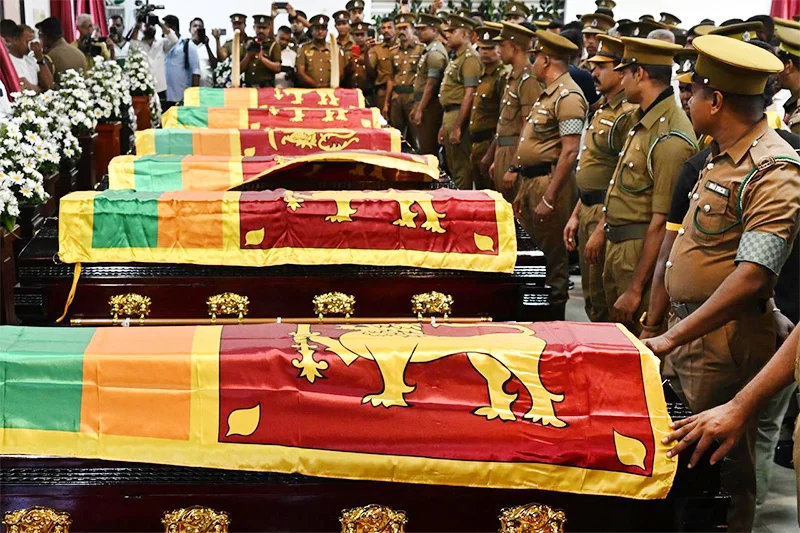
Prison officers yesterday requested Justice and National Integration Minister Harshana Nanayakkara to protect their colleague who opened fire at the Negombo Prison during Monday’s riot.
They made that request when the Minister visited the Welikada Prison to pay his last respects to seven officers killed by inmates during the clashes. Soon thereafter, the National Hospital reported that another prison officer had succumbed to his injuries.
The Minister was told that the officer had opened fire through a small opening in the main door to prevent the rioting prisoners from escaping.
The Opposition has demanded to know who ordered the prisons officer to fire. The concerned officer’s colleagues told the Minister that had a breakout occurred the inmates would have posed a serious threat to the public.
Altogether, authorities transferred 1,033 inmates from Negombo to other prisons. Among them was Katuwellegama Suresh, who is alleged to have spearheaded Sunday’s attack on a group of prisoners that led to the following day’s clashes.
Executive Director of the Committee for Protecting the Rights of Prisons, Attorney-at-Law Senaka Perera told The Island that some of the transferred inmates had been mercilessly assaulted in other prisons.
Sources familiar with the situation at prisons said that they were able to accommodate between 11,000 to 12,000 inmates but over 40,000, both convicted and suspects were held in the country’s prisons. About 30,000 of them are suspects. Due to severe overcrowding, prison management had been compelled to accommodate both the convicts and suspects at the Negombo Remand Prison, sources said, adding that the clashes had erupted between the two groups.
Those who had been convicted were accused by the other group of passing information to the previous prison management resulting in elimination of narcotics and other banned items in the prison, sources said. They went on the offensive after both the administrator and the second-in-command were transferred separately and the authorities ignored the volatile situation and proceeded with routine work on Monday.
Sources said that the authorities were yet to release the exact number of convicts and suspects killed and wounded during clashes between the two groups and with prison staff. According to the Health and Media Ministry the total number of persons admitted to the National Hospital, following the incidents, were 29. Of them, 14 were inmates. The Ministry said that of the 29, 12 were in the intensive care unit.
Prof. Prathiba Mahanamahewa told The Island that the overcrowding of prisons should be carefully examined, taking into consideration that even some innocent people were held in various prisons. Poisons, Opium and Dangerous Drugs (Amendment) Act of No 41 of 2022 was being exploited and misused by law enforcement authorities to frame and arrest people. In terms of this law, those who had been framed couldn’t secure bail from the High Court but had to seek the intervention of the Court of Appeal. The lawyer explained how Section 54 of the Act was being used indiscriminately against people.
According to Mahanamahewa about 80 percent of those suspects held were on narcotic charges.
By Shamindra Ferdinando
News
Negombo Prison riot: Ensuring protection of prisoners fundamental responsibility of the state – UN

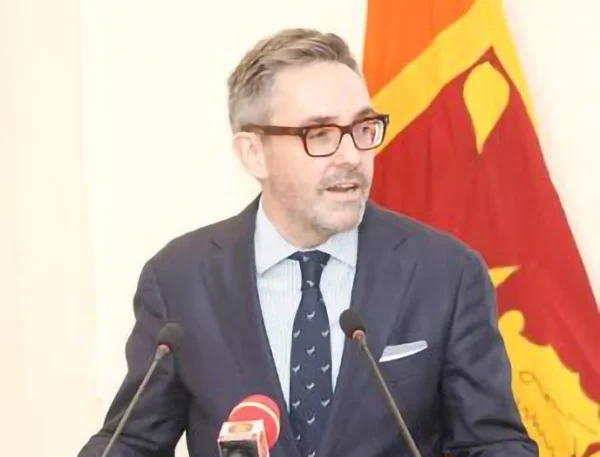
Expressing concern over the death of prisoners, both convicts and suspects, as well as correctional officers, the United Nations Resident Coordinator in Sri Lanka, Marc-André Franche has emphasised that ensuring that protection is a fundamental responsibility of the State.
Twenty prisoners and seven correctional officers were killed in clashes on Sunday and Monday. Over 100 received injuries.
Issuing a statement, the United Nations extended its condolences to the families affected by the tragedy and wished a speedy recovery to those injured.
Underscoring prison officials carried out challenging duties in service of the State, and the general public, the UN Resident Coordinator said that their loss was deeply felt. The UN also stressed that inmates who died, or were injured, were under the care and protection of the State, emphasising that both correctional officers and prisoners require greater protection. Ensuring that protection is a fundamental responsibility of the State, he said.
The UN statement highlighted the urgent need for continued investment and reform within Sri Lanka’s prison system.
It pointed to longstanding challenges, including overcrowding, outdated practices and poor conditions in detention facilities, which remain concerns in prison systems both in Sri Lanka and globally.
The UN said Sri Lanka’s engagement with international human rights standards, relating to the treatment, safety and wellbeing of persons deprived of liberty, provides an important framework for addressing these issues.
The United Nations welcomed the establishment of an independent committee to investigate the circumstances surrounding the prison violence and emphasised that the committee’s findings should lead to concrete and lasting improvements in detention conditions.
The UN also reaffirmed its commitment to supporting Sri Lanka through technical cooperation aimed at improving prison security, strengthening detention conditions, and supporting the welfare of correctional personnel.

The government was considering imposing restrictions or a possible ban on social media access for children under 16, Prime Minister Harini Amarasuriya told Parliament yesterday (8).
Responding to a question raised by SJB Gampaha District MP Harshana Rajakaruna, the Prime Minister said discussions with relevant stakeholders were currently underway to assess the impact of social media use on children and explore measures to ensure their safety.
She said the consultations, led by the Ministry of Women and Child Affairs, were focussed on the social, mental and health effects of excessive social media use, digital security concerns and global developments in regulating online platforms.
The Prime Minister said the National Child Protection Authority and the National Childcare and Protection Society were also engaged in discussions on the proposal, while steps were being taken to draft national guidelines on restricting access to social media platforms for children below 16 years.
She added that awareness programmes would also be introduced to safeguard children’s mental and physical wellbeing in an increasingly digital environment.
According to the Prime Minister, several government institutions, including the Ministries of Women and Child Affairs, Education, Higher Education and Vocational Education, Health, Mass Media and Digital Economy, along with the Sri Lanka Police, Department of Probation and Child Care Services and the National Child Protection Authority, were collaborating on the initiative.
The PM said the government, together with World Vision, was implementing a programme aimed at addressing mobile phone addiction among children under 18, which had already shown positive results.
Prime Minister Amarasuriya said the government’s focus was to strike a balance between protecting children from potential online harms and ensuring they benefit from digital opportunities.

Several spells of showers will occur in the Western and Sabaragamuwa provinces and in Galle, Matara, Kandy and Nuwara-Eliya districts

Prison officers urge Justice Minister to protect their colleague who opened fire

Negombo Prison riot: Ensuring protection of prisoners fundamental responsibility of the state – UN

Govt. considers banning or restricting social media for children under 16: PM

Brandix donates vital ECG machine to Mirigama Base Hospital Emergency Care Unit

High-scoring draw gives West Indies rare series win

‘Dates have the highest sugar content to fight Coronavirus’

Sunday Island 27 December – Headlines

#SundayIsland 17th December – Headlines

Sunday Island – 28th March

Sunday Island Headlines – 21 March

Sunday Island – 21st February – Headlines
-

 News4 days ago
Singapore-based Buddhist monk marks nearly four decades of humanitarian service
-

 News5 days ago
Freedom 250: US Embassy celebrates America’s 250th Independence Day through magic of American cinema
-
 News6 days ago
CIABOC to question Harak Kata on Rs. 200 mn bribery allegation
-
 News6 days ago
SLAF conducts successful rescue mission under UN command in Central African Republic
-

 News3 days ago
AI concerned over proposed SL military deployment in Haiti
-

 Business6 days ago
‘Dialog Air Fibre powers a new era of Ultra Fast Home WiFi’
-
 News6 days ago
UNEP support pledged to strengthen Sri Lanka’s Environmental Priorities
-

 Features4 days ago
The NPP’s New Challenge: Balancing Easter Lawfare and Economic Welfare