
News
Entrepreneur sees massive untapped potential in our mineral sector

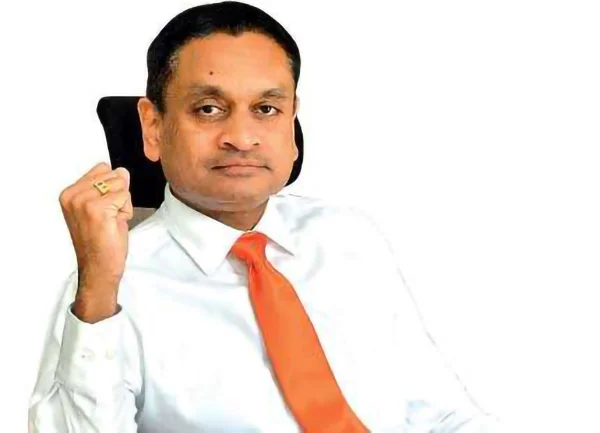
Sri Lanka’s mineral sector presents significant investment opportunities, particularly in graphite, mineral sands (ilmenite, rutile, zircon), and rare earth elements, driven by investor-friendly policies and the push for value-added processing, with potential exports reaching US $2 billion said Senior Economist and the Chairman of Energise Australia Pvt. Limited, Dr. Arosha Fernando.
Dr. Fernando has participated in a number of recent international investment forums, including in Taipei, the capital city of Taiwan, focusing on global economic trends and fostering new investments, especially in sectors like AI, semi-conductors, and technology, building on Taiwan’s strong economic outlook and efforts to become an Asian asset management hub.
He further learnt Taiwan’s mineral policy focus on securing critical minerals for high-tech manufacturing (semi-conductors, batteries) and clean energy, leveraging its strong downstream processing capabilities (magnets, components) through partnerships.
During the Forum, Dr. Fernando explained that the key areas for investment include high-purity graphite mining, graphene tech, advanced gem operations, and mineral sands development which is fully supported by the Board of Investment (BOI) and the new national mineral policy currently being formulated in Sri Lanka. While challenges, like regulatory clarity and past corruption concerns. exist, the focus is on attracting foreign investment for sustainable, modern mining to capture more of the island’s untapped mineral wealth, he further elaborated.
The government plans to make the maximum utilisation of its mineral resources to bolster the nation’s economic growth, and the potential for creating value-added products from these resources. Given the island nation’s rich mineral resources, the government has devised plans to expand investment opportunities.
Dr. Fernando requested the Sri Lankan government to further foster foreign investments and proposed that the state conduct a comprehensive ore reserves study to maintain transparency and informed decision-making within the industry. An ore reserve study will determine the economically recoverable quantity and quality of minerals in a deposit, involving geological modelling, data analysis (from drilling), and economic assessment to classify resources as reserves for mining, using standards like JORC or SAMREC, and is crucial for mine feasibility and planning.
Sri Lanka’s mineral export potential is as much as US $ 2 billion annually where the realised amount is only US $ 389 million as estimated by the ITC Export Potential Map, a report compiled by the Pathfinder Foundation.
“We think it makes a lot of sense for Sri Lanka as well. In Australia we know the potential of the minerals and the renewable energy sectors because much of it has already been realised. Mining, as many will know, makes a massive contribution to Australia’s economy. It’s roughly 10 percent of our GDP, more than 60 percent of our export revenue. These are huge figures,” Australian High Commissioner Matthew Duckworth said in a recent event held in Colombo that investing in minerals and renewable energy has made a lot of sense for Australia.
Commenting further on the mining sector, he said Sri Lanka had significant export potential here, including for many minerals that are only going to be in greater demand globally. We know there are graphite deposits in Sri Lanka that are renowned for their quality – crucial inputs into modern technology. We also know there are mineral sands deposits in the northern and eastern provinces.
“Now just as Australia has really benefited from the development of our minerals and most recently our renewable energy sectors, we really want Sri Lanka to benefit from this here as well. We see common interests for both our countries in this. On renewable energy for example, our view is that Australia and Sri Lanka share the same interests here,” he further added.

News
M G Lalith Ananda appointed to the post of District Secretary/Government Agent of the Ratnapura Administrative District

The Cabinet of Ministers approved the resolution furnished
by the Minister of Public Administration, Provincial Councils and Local Government to appoint M.G. Lalith Ananda, an officer in the Special Grade of the Sri Lanka Administrative Service, to the post of District Secretary/Government Agent of Ratnapura with immediate effect.
Latest News
Payment of compensation for crop damage caused to Paddy Cultivation in the area due to the construction of a Salinity Barrier across the Nilwala River in Matara
Approval had been granted at the Cabinet meeting held 2025-07-07 to allocate provisions through the Budget and pay compensation for the crop damage caused to paddy cultivation in the Matara District during seven consecutive cultivation seasons (from the 2019 Yala season up to the 2022 Yala season), due to flood conditions caused by the obstruction of the Nilwala River during the period of the construction of the salinity barrier across the river, following a proper assessment of the relevant damages.
Accordingly, compensation amounts have been calculated in accordance with the compensation payment methodologies of the Agricultural and Agrarian Insurance Board, taking into consideration costs and paddy prices, and an allocation of Rs. 1,200 million has been made through the 2026 Budget for the
payment of the relevant compensation.
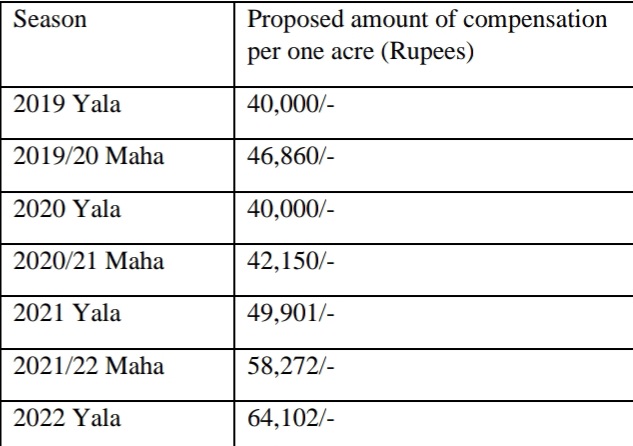
Accordingly, the Cabinet of Ministers has approved the resolution furnished by the Minister of Agriculture, Livestock, and Land and Irrigation to pay compensation to the farmers who are eligible for compensation as follows.
Season Proposed amount of compensation per one acre (Rupees)
In accordance with the water tariff formula approved at the Cabinet meeting held on 2024-07-15, the unit cost of water sales is required to be reviewed on a half-yearly basis, taking into consideration changes in major cost factors.
Based on the analysis carried out on the financial statements of the National Water Supply and Drainage Board for the year 2025, it has been confirmed that the prevailing water tariffs are
sufficient to cover the full operating costs.
Therefore, the Board of Directors of the National Water Supply
and Drainage Board has decided to maintain the unit cost of water sales for the first six (06) months of 2026 without any increase.
Accordingly, the consent of the Cabinet of Ministers has been given for the resolution furnished by the Minister of Housing, Construction, and Water Supply to maintain the prevailing water tariff without any revision during the first 6 months of the year 2026.

M G Lalith Ananda appointed to the post of District Secretary/Government Agent of the Ratnapura Administrative District
Payment of compensation for crop damage caused to Paddy Cultivation in the area due to the construction of a Salinity Barrier across the Nilwala River in Matara
No change in Water Tariffs for the first half of 2026
A ‘National Space Policy’ to be drafted
A comprehensive National Intellectual Property Policy for Sri Lanka to be formulated

An Inbound Labour Migration Policy for Sri Lanka to be drafted

‘Dates have the highest sugar content to fight Coronavirus’

Sunday Island 27 December – Headlines

#SundayIsland 17th December – Headlines

Sunday Island – 28th March

Sunday Island Headlines – 21 March

Sunday Island – 21st February – Headlines
-

 Features3 days ago
Sri Lankan Airlines Airbus Scandal and the Death of Kapila Chandrasena and my Brother Rajeewa
-
 News7 days ago
Ex-SriLankan CEO’s death: Controversy surrounds execution of bail bond
-
 News4 days ago
Lanka’s eligibility to draw next IMF tranche of USD 700 mn hinges on ‘restoration of cost-recovery pricing for electricity and fuel’
-

 News3 days ago
Kapila Chandrasena case: GN phone records under court scrutiny
-
 Midweek Review7 days ago
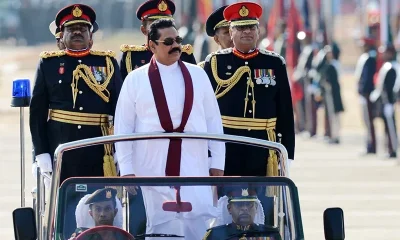
A victory that can never be forgotten
-

 News3 days ago
Rupee slide rekindles 2022 crisis fears as inflation risks mount
-

 Opinion6 days ago
Electricity tariffs have skyrocketed: Can further increases be prevented?
-
 Features5 days ago
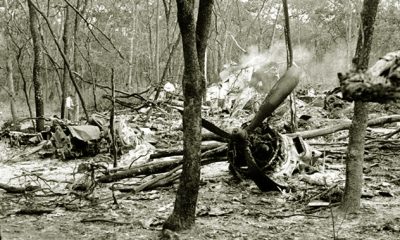
Mysterious Death of United Nations Secretary General Hammarskjöld