
Opinion
Protection of the state from terrorism act:a critique of the current proposal

I. Background to the Government Proposal
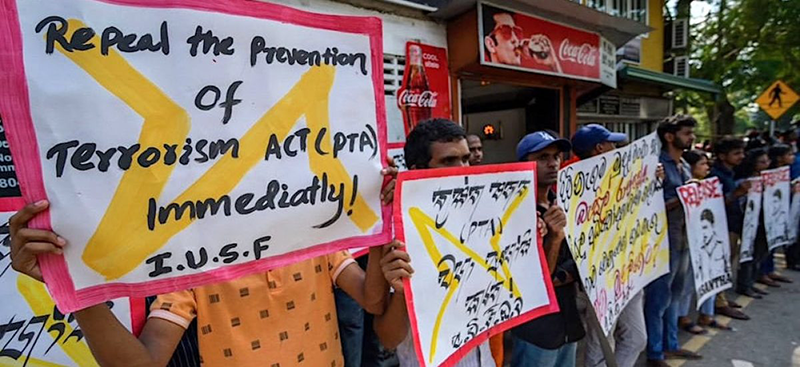
The Prevention of Terrorism (Temporary Provisions) Act, No. 48 of 1979, (PTA), has been vigorously assailed for 45 years as the anchor of a legislative regime which is destructive of basic political and civil rights. It has gained ignominy as an instrument for denial of justice in diverse contexts and also placed in jeopardy, internationally, the prestige of our country as a vibrant democracy. There have been legislative interventions from time to time by Act No. 10 of 1982 and Act No. 22 of 1988.
By 2022, it was clear that the momentum of reform had to be accelerated. As Minister of Foreign Affairs at the time, on 22 March 2022, I introduced in Parliament, and secured the passage of, a series of amendments to the PTA. This was in the form of Act No. 12 of 2022. These amendments had as their principal objective, shortening the maximum period of permissible detention without trial, enhancing judicial oversight of detention, access to legal representation and communication, expediting of trials, liberalizing the law relating to bail, and invocation of the jurisdiction of the Supreme Court in fundamental rights applications.
I made it clear in Parliament that this was only a preliminary step confined to the introduction of urgent amendments to address immediate concerns. The ultimate aim, I informed Parliament, was not ad-hoc modification of the existing law, but the enactment of all-encompassing, fresh legislation. Towards this end, a comprehensive review was underway with participation by the Ministries of Defence, Justice, and Foreign Affairs, and the Attorney General’s Department.
At the 50th session of the Human Rights Council on 13 June 2022, as Foreign Minister of Sri Lanka, I gave a firm assurance in Geneva that, pending this overhaul of the applicable legislation, there would be a de facto moratorium on use of the PTA. Although the Inspector General of Police had issued instructions accordingly at the time, unfortunately, after successive changes of government, this undertaking was not adhered to.
Three attempts have been made by different governments to enact complete legislation on terrorism. These were the Counter-Terrorism Act gazetted in September 2018, and two versions of an Anti-Terrorism Act in March and September 2023. On account of strong public resistance, none of these found their way into the statute book.
The current draft, Protection of the State from Terrorism Act, (PSTA), which has been in the making for almost a year, was published in December 2025. Notwithstanding the high level of expectation which it had generated, regrettably, the draft Bill fails, in fundamental respects, to advance the law towards justice and freedom.
II. Issues of Definition and Scope
One of the main weaknesses of the draft legislation is that it is entirely unsuccessful in addressing the pivotal issue of the legitimate boundaries of an extraordinary system of criminal liability which displaces seminal rights inherent in the Rule of Law. In all democratic cultures, it is recognized that imperatives of security in extreme circumstances call for measures incompatible with guarantees of freedom upheld by the regular law. The lines of demarcation, however, are of overriding importance. From this standpoint, the proposed legislation is a singular disappointment.
Structurally, in its very foundation, it contravenes criteria imposed by international human rights law. This is starkly evident in the approach of the draft Bill to definition of the mental ingredient in terrorism-related offences, one of the critical factors in containing liability within appropriate limits.
International law requires, in this context, a hybrid mental requirement consisting of a dual-layered intention to cause death, serious bodily harm, or taking of hostages but necessarily combined with the calculated intention of bringing about a reign of terror and intimidating the public. Both elements are compulsory requisites of liability for a terrorism-related offence. This fundamental postulate is breached by the proposed legislation which adopts the approach of requiring direct intention or knowledge in respect of the first element [section 3(1)], but regards the second as an oblique inference from a “consequence” such as the death of a person, hurt or hostage taking [section 3(2)]. Dramatic lowering of the threshold of responsibility by this mode of definition strikes at the root of the value system entrenched in international law.
The draft legislation creates no fewer than 13 categories of acts carrying the taint of terrorism. The compelling objection to this extensive catalogue is that it blurs the distinction between ordinary criminal acts and the stringently limited category of acts involving terrorism. The first, and indispensable, requirement of legislation in the latter field is that of clear and unambiguous definition with no scope for elasticity of interpretation. By vivid contrast, the draft law contains a multitude of offences which find their proper place in the Penal Code and other regular legislation, but are by no means necessarily susceptible to the label of terrorism. Egregious examples are serious damage to any place of public use or any public property; the offence of robbery, extortion, or theft; and serious obstruction or damage to, or interference with, any electronic, automated, or computerized system [section 3(2)].
The inclusion of these offences in a counter-terrorism law, given the empirical experience of the past, is no less than an invitation to abuse of the system for collateral purposes, with the distinct prospect of danger to cherished democratic freedoms in such vital areas as communication and assembly. This is especially so, because the types of intention envisaged subsume so vague a purpose as “compelling the government of Sri Lanka or any other government or an international organization to do or to abstain from doing any act” [section 3(1) (c)]. The peril is obvious to entirely legitimate forms of protest and agitation. It must be remembered that the penalty applicable is rigorous imprisonment extending up to 20 years and a fine not exceeding 20 million rupees [section 4(b)].
This clearly threatening feature is aggravated by other characteristics of the draft Bill. Several are worthy of note.
(i) Ancillary offences are framed in such broad terms as to inject a deterrent effect in respect of exercise of individual and group rights enshrined by the Constitution. Section 8(1), according to its marginal note, purports to deal with acts “associated with terrorism”, a vague and catch-all phrase. The text of this provision imposes liability on a person who is “concerned in” the commission of a terrorist offence. “Encouragement of Terrorism”, the title of section 9, is manifestly overbroad. Its ambit, encompassing all forms of “indirect encouragement”, would sweep within its purview, for instance, a large swath of the activity associated with the Aragalaya in 2022, which brought about a change of government.
There is unmistakable exposure for all forms of social activism. Section 10, entitled “Dissemination of Terrorist Publications”, goes so far as to bring within the net of liability for terrorism any person who “provides a service to others that enables them to obtain, read, listen to, or look at a terrorist publication or to acquire it”. The whole range of mainstream and social media is indisputably in jeopardy.
(ii) There are other obnoxious aspects, as well. The draft law makes generous use of the idea of “recklessness”, as in the context of publication of statements and uttering of words (section 9), and in the dissemination of publications (section 10). This is a state of mind alternative to intention; but the concept of “recklessness” is operative within very narrow confines in criminal jurisprudence. This is yet another lever for expansion of liability beyond the class of terrorist offences, properly so designated.
(iii) A feature of the proposed law, open to even more cogent objection, is the extension of this draconian form of liability, carrying condign punishment, to mere omissions. This is the effect of section 15, which makes failure to provide information a terrorist offence. The trend in the modern criminal law is markedly hostile to widening the boundaries of liability to situations in which the accused has only refrained from commission of an act. One of my own mentors, Professor Glanville Williams of Cambridge University, described by Professor Sir Rupert Cross, at the time Vinerian Professor in the University of Oxford, as the greatest criminal lawyer in the United Kingdom since Sir Fitzjames Stephen, has consistently opposed, in principle, the attribution of criminal liability, let alone liability for terrorist offences, to mere omissions. In conjunction with all the other instruments embedded in the draft, this expedient places in the hands of a politically motivated Executive a ready means for indiscriminate application of terrorist sanctions, to the detriment of enjoyment of rights taken for granted in a democratic society.
(iv) Section 3(4), which purports to confer a measure of protection on such activity as protests, advocacy of dissent, or engagement in strikes, by a provision that such activity, by itself, is not to be regarded as a sufficient basis for inference of terrorist intent, has an illusory character. While engendering a sense of comfort, its applicability is negated by parallel provisions which enable imposition of liability, for example, on the ground of alleged intent to bring compulsive pressure to bear on the State [section 3(1)(c)]. Uncertainty created by the conflict between these provisions places at unacceptable risk the ethos of democratic safeguards.
III. Overreach of the Executive Arm for Arrest and Detention
Broadening of categories of terrorist offences beyond legitimate limits presages an imminent danger. This takes the form of authority conferred on the Executive, represented by such officials as the armed forces, the police, and coast guard personnel, to resort to action which erodes the rudiments of liability. The wider the ambit of terrorist offences, the ampler is the power available to these officials to invade the substance of freedom by action to enter the homes of citizens, interrogate persons, seize documents, carry out stop and search operations on public highways, and engage in other forms of harassment. The current draft has no hesitation in conferring these powers in the fullest measure.
(i) Detention Orders
This is one of the features of the PTA of 1979, which attracted trenchant criticism for more than four decades. In terms of section 9(1) of that Act, the Minister of Defence was invested with power to issue detention orders for a maximum period of three months in the first instance, capable of extension for periods not exceeding three months at a time, subject to an aggregate period of detention not exceeding 18 months. Significantly, corresponding provision is contained in the current draft which empowers the Secretary to the Ministry of Defence to issue detention orders [section 29(2)] at the behest of the Inspector General of Police or a Deputy Inspector General of Police authorized by the IGP [section 29(1)].
The only difference is with regard to the period of detention. According to the new draft, the detention order cannot be extended for a period in excess of two months at a time, and the aggregate period is a maximum of one year. Subject to this marginal variation, the perils of the instrument of a detention order continue, unabated.
What is especially disquieting are the grounds specified in the draft for issuance of a detention order. There are four grounds spelt out. Among these is “to facilitate the conduct of the investigation in respect of the suspect” [section 3(a)]. This is wide enough to permit the most flagrant abuse. A provision, so flexibly phrased, allows detention without judicial review. Due process, required by the regular criminal justice system, is supplanted by a regime antithetical at its core to the fundamentals of the Rule of Law.
Our country has had a distressing record of torture and extrajudicial executions in custodial settings. The recurring feature is that these atrocities have typically taken place in non-judicial custody. In the face of this reality and in cynical disregard of sustained protests against this obvious avenue of abuse, the present draft complacently leaves wide open this convenient window. This is done by section 30(1) which accords official sanction to “approved places of detention”. The accumulated harrowing experience of the past has totally escaped attention.
Despite largely cosmetic concessions, the victims of detention orders within the framework of the proposed legislation, no less than under previous statutory regimes, remain substantially at the mercy of the Executive.
The exhortation in section 36 that “Every investigation shall be completed without unnecessary delay” amounts to no more than a pious aspiration, in the absence of a mandatory maximum period stipulated for investigations. Moreover, even when the investigation, potentially open-ended, has been completed and a report submitted to the Magistrate, the Magistrate’s power to discharge the suspect is rigidly curtailed. This is because a judicial order for discharge is possible in terms of section 36(3) only when an allegation against the suspect is not disclosed on the face of the report. There is telling irony in this situation.
The loophole is one through which the Executive is able to drive a coach and six with the greatest ease. Practical experience demonstrates conclusively that, in situations indicative of the most grotesque abuse in the past, the courts were confronted not with the total absence of an allegation, but rather with a clumsy, trumped-up allegation defying credibility. In this, the typical case, the proposed legislation chooses to leave the Magistrate with no jurisdiction to grant urgently needed relief.
The most hazardous provision of all is one which enables a suspect, already in judicial custody, to be transferred to police custody in pursuance of a detention order issued by the Defence Secretary. It is this power, fraught with dire consequences, that the new draft, in section 39(1), seeks to confer. This power can be invoked on the disingenuous pretext that the suspect, prior to being arrested, had committed an offence of which the officer in charge of the relevant police station was unaware. While the desirable direction of movement is obviously from police to judicial custody, movement in the opposite direction is the strange result of this provision. Although interposition of a High Court Judge’s authority is envisaged, the exigencies of a security situation, urged with emphasis by the Executive, may well be difficult to resist in practice.
IV. Other Oppressive Interventions
(a) Restriction Orders
It is quite remarkable that other instruments of oppression which have attracted strenuous condemnation during the entire operation of the PTA, continue substantially intact.
Restriction orders offer an illustrative example. Any police officer of the rank of Deputy Inspector General of Police or above is given authority to make application to a Magistrate’s Court for a restriction order (section 64). The only contrast with the PTA is that, in terms of that regime, the Minister was empowered to make the order directly. In subsequent attempts at reform, this was clearly acknowledged as unacceptable, and in the amending legislation proposed but not enacted in September 2023, the initiative was that of the President and it was the High Court that had jurisdiction to issue the order.In comparison with this, the current proposal is regressive, in that the application is to be made by a police officer, (clearly at the behest of the Executive), and jurisdiction to issue the order is vested in a lower court.
In yet another respect, the present proposal is less satisfactory than the innovation proposed in 2023, in that desirable safeguards embedded in the latter, such as that the order sought should be “necessary” or “proportionate” [section 80(4)], are omitted from the present proposal. In this sense, the current draft is not merely stagnant but regressive, by abjuring salutary approaches to reform.
Restriction orders, without doubt, infringe basic rights corrosively. Their awesome scope contravenes core rights as to communication, association, employment, and travel [section 64(3)]. These erosions remain untouched as to intensity and range, except in respect of duration.While the PTA provided that a restriction order was to be in force for a period not exceeding 3 months, subject to further extensions of 3 months at a time, the maximum aggregate of such extensions being 18 months, the sole concession made by the present proposal is that the validity of a restriction order is limited to 1 month, and the aggregate period cannot exceed 6 months [section 64(9)].
(b) Proscription Orders
In this regard as well, the present proposal takes a step in the wrong direction. Proscription orders are a means by which the President exercises overarching power, simply by notification in the Gazette, to declare organizations illegal, with the consequence of preventing recruitment, meetings, and other activities, transactions in bank accounts, lobbying and canvassing, and publication of material (section 63). The period of application of a proscription order has an arbitrary and capricious quality: it is entirely at the discretion of the President and remains valid until rescinded [section 63(6)].
It is especially noteworthy that the legislative regime at present in force, the PTA, contains no provision whatever for the issuance of proscription orders. This purpose could be accomplished only by having recourse to regulations made under section 27(1) of the Act. Incorporation of this power in the substance of the principal Act itself was proposed in the draft legislation of 2023, which could not be enacted because of vehement resistance. The current proposal, curiously enough, sanctifies as part of the substantive Act, a dangerously fraught procedure which can, as of now, be resorted to only through subordinate legislation. The present draft, then, operates as a travesty rather than a palliative by pushing the law backwards. This hardly amounts to delivery on a promise that underpinned the year-long process which culminated in publication of the current proposal.
(c) Declarations Designating Prohibited Places
The bizarre reality, here again, is that the present proposal, far from expunging excrescences from the current law, actually adds further objectionable provisions which do not exist in the body of terrorist legislation today.
The much-maligned PTA does not include a provision empowering the Executive to declare places as “prohibited places”. This had to be done, if at all, under the aegis of legislation dealing with entirely different subject matter, for example, section 2 of the Official Secrets Act, No. 32 of 1955. Contrary to the professed objective, the new proposal, for the first time, introduces into terrorist legislation the conferment of power on the Defence Secretary to designate “prohibited places”.
The consequences are far-reaching, indeed: entry into a designated place, the taking of photographs and video recordings, and the making of drawings or sketches are all criminalized by the infliction of imprisonment for up to 3 years or a fine not exceeding 3 million rupees [section 66(8)]. This has a particularly chilling effect on journalists and media personnel; and it is the bequest of legislation professedly aspiring to enhance the contours of freedom.
V. Deprivation of Liberty by Insidious Pressure
One of the few positive elements of the new proposal is the deletion of provisions in the PTA dealing with the admissibility of confessions made to a police officer above the rank of an Assistant Superintendent [section 16(1) of the PTA]. Unfortunately, however, this benefit is largely detracted from by other provisions which constitute an onslaught on values intrinsic to the Rule of Law. Pre-eminent among these is the presumption of innocence and the postulate precluding denial of freedom except in full compliance with due process, both substantively and procedurally.
These sacrosanct values receive short shrift in the proposed law, which gives the Attorney-General overwhelming coercive powers in respect of deferment of criminal proceedings on the basis of an iniquitous quid pro quo. The Attorney-General is invested with authority to defer the institution of criminal proceedings for as long a period as 20 years on the footing of a “prior consensual agreement” between the Attorney-General and the suspect, subject to sanction by the High Court [section 56(1)].
It is entirely unrealistic to impute to this “agreement” any element of spontaneity or independent volition. The suspect finds himself under virtually irresistible pressure to acquiesce in any condition proposed, in order to obtain release from the stress and turmoil of a criminal trial potentially entailing the gravest penalties. The situation becomes wholly untenable when the condition takes the form of submission to “a specified programme of rehabilitation”. This is a euphemism for de facto incarceration under thinly-veiled duress without the interposition of a fair trial before a court of law.
VI. Conclusion
Far from making any contribution of value to restoration of balance between security and freedom, the proposed draft has the effect of reversing some of the recent gains of law reform in this field without offering anything significant by way of redeeming features. This is a statutory misadventure which can reflect no credit on the laws of our country.
By Professor G. L. Peiris ✍️
D. Phil. (Oxford), Ph. D. (Sri Lanka);
Former Minister of Justice, Constitutional Affairs and National Integration;
Quondam Visiting Fellow of the Universities of Oxford, Cambridge and London;
Former Vice-Chancellor and Emeritus Professor of Law of the University of Colombo.


What India chooses to do with the strategic freedom it has built over eight decades may be the defining question of its next phase
 by Milinda Moragoda
In the emerging global economy, countries will increasingly seek multiple sources of energy, technology, capital, minerals and markets. India can contribute by helping create an open network rather than another exclusive bloc.
As India marks eight decades of Independence, its strategic position has changed almost beyond recognition. Yet the central question of strategic autonomy remains. What India chooses to do with the strategic freedom it has built over eight decades may be the defining question of its next phase.
India has spent the past decade expanding its strategic choices — deepening ties with the US, Europe and Japan while maintaining important ties with Russia and strengthening engagement with the Gulf, Africa and Southeast Asia. Australia and New Zealand are also becoming increasingly important partners in the wider Indo-Pacific. At the same time, India has sought a larger voice for the developing world in international institutions. Strategic autonomy has traditionally been understood in diplomatic terms: the ability to maintain freedom of action without being drawn into competing power blocs. In an increasingly interconnected world, however, that freedom will depend just as much on economic choices.
The objective should be strategic interdependence — building sufficiently diverse relationships that dependence on any one country or economic system does not become a vulnerability. India is unusually well placed to pursue this. Its geography connects the Gulf and wider West Asia, the manufacturing economies of Asia, Africa across the Indian Ocean and the Eurasian space extending through Russia. The opportunity, therefore, is to become a connector between economies increasingly fragmented by geopolitical competition.
India’s relationship with Japan is extending into advanced manufacturing, technology, energy, semiconductors and critical minerals. Its engagement with the US is deepening across technology, investment, advanced manufacturing, energy and strategic cooperation, while its engagement with Europe is becoming increasingly economic and technological. Its relationships with the Gulf are expanding beyond energy into investment and connectivity. Australia and New Zealand add an important southern dimension to its wider Indo-Pacific engagement, while Southeast Asia provides pathways into wider Asian production networks.
Russia remains an important part of this equation. India’s continuing engagement with Moscow, alongside its deepening relationships with Washington, Tokyo, Europe and the Gulf, demonstrates that strategic autonomy gives India the flexibility to maintain important relationships across geopolitical divides.
China inevitably occupies a special place in this landscape. India’s answer cannot be either excessive dependence or complete separation. It will require strengthening domestic capabilities, diversifying supply chains and building partnerships elsewhere, while retaining space for engagement where interests permit.
India possesses another asset that few countries can match: a large, globally active and influential diaspora. Yet the diaspora can also present challenges, as political currents within these communities do not always align with India’s interests and can occasionally create sensitivities in its relations with host countries. The greater opportunity lies in nurturing the economic, intellectual and cultural connections the diaspora can create, while respecting its diversity and independence. In the emerging global economy, countries will increasingly seek multiple sources of energy, technology, capital, minerals and markets. India can contribute by helping create an open network rather than another exclusive bloc.
Ports, shipping routes, energy corridors, digital infrastructure, supply chains and trade agreements increasingly shape strategic influence. India’s challenge is to bring these strands together without turning them into a closed sphere of influence.
India’s economic rise will be more sustainable if other countries see themselves as participants in its growth rather than simply as markets for it. The value for India lies in making these relationships complementary rather than choosing among them. India’s leadership of the Global South can now move beyond representation in international forums towards creating an international economic environment in which developing countries have greater choices. India’s own experience is relevant here. It has moved from a relatively closed economic model towards deeper global integration while retaining a strong emphasis on domestic capability. The lesson is that openness and strategic autonomy need not be contradictory.
As the G20 meets again in Miami in December, India can continue to argue that the Global South should not merely seek greater representation within existing institutions, but a greater stake in shaping the economic networks and institutions of the future. An economically integrated Indian Ocean could allow countries such as Sri Lanka, Bangladesh and the Maldives to participate more deeply in regional supply chains, logistics, energy, tourism, technology and services. Influence based on shared prosperity is more durable influence based on dependence. India’s strategic opportunity, therefore, lies in becoming one of the principal connectors of a changing world.
(Milinda Moragoda is founder of the Pathfinder Foundation, strategic affairs think tank, and can be contacted via email @milinda.org.)
Courtesy Hindustan Times
by By Kasun Kariyawasam
and Shiran Illanperuma
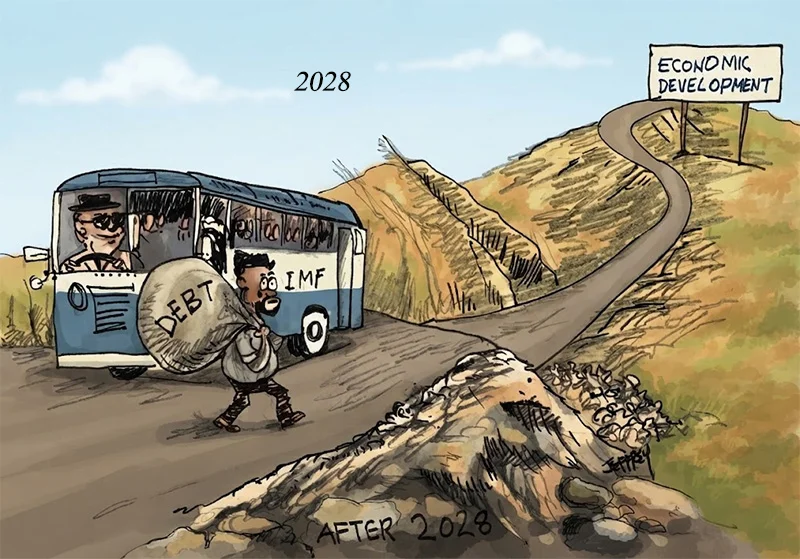
In March 2027, Sri Lanka’s Extended Fund Facility with the International Monetary Fund (IMF) will expire. It is the seventeenth arrangement the country has entered into with the Fund since 1965. That number is not a footnote; it is the argument. Sixteen previous left the underlying structure of the economy intact – an economy that imports what it consumes, exports what it cannot process further, and borrows to cover the difference. Each programme ended, and the conditions that produced it reassembled themselves.
The seventeenth has been the most invasive. Approved on 20 March 2023, in the aftermath of the sovereign default and the uprising that followed, it arrived at a moment of maximum leverage for the creditor and minimum room for the debtor. Fiscal consolidation was achieved primarily through indirect taxation, so that the burden fell heaviest on the poor. Energy subsidies were withdrawn and utility pricing made cost-reflective, transmitting global price movements directly into household budgets and industrial input costs. Public investment was compressed, and public sector wages held below inflation for years.
The revenue target was met but the social consequences are now well documented.
First, poverty in Sri Lanka roughly doubled after 2022 and has remained near a quarter of the population – a level not seen for two decades. Malnutrition among children, school dropout, and the depletion of household savings and assets are the transmission channels through which a fiscal adjustment becomes a lost generation.
Second, the most mobile and most skilled workers – nurses, doctors, engineers, IT workers – have left in numbers that constitute a structural loss of productive capacity, subsidised by the Sri Lankan state and captured by the labour markets of the Gulf, East Asia, and the West.
Third, and the least discussed, is the loss of economic sovereignty. The Central Bank Act of 2023 grants the Central Bank of Sri Lanka operational independence under a narrow inflation-targeting mandate and prohibits the monetary financing of government deficits, removing an instrument of development finance that every industrialised economy used on its way up. The Economic Transformation Act of 2024 legislates the programme’s own quantitative targets as binding statutory obligations on all future governments.
Although the IMF programme ends in March 2027, the framework it installed does not. Austerity has been converted into a legal architecture. Any government that wishes to finance development after 2027 will find that the fiscal space to do so has been pre-emptively legislated away, and that the debt service profile steps up sharply from 2028 as the restructured bonds begin to amortise in earnest.
The instruments on the table
Three instruments are currently under discussion for managing the debt portfolio. Each is worth examining on its merits, and each shares a common limitation.
Macro-linked bonds.
The upside triggers are more likely to be hit than the underlying real economy warrants, because the reference variable is dollar GDP. A nominal appreciation of the rupee lifts dollar GDP without a single additional unit of output being produced. The control variable intended to guard against precisely this – a requirement of 11.5% cumulative real growth – is a low bar following two consecutive years of contraction, when the base effect alone does much of the work. The country may find itself paying creditors a growth premium for an exchange rate movement.
Climate swaps.
Debt-for-nature and debt for-climate arrangements can retire a portion of the stock and may unlock multilateral climate grants, which are concessional. But they do not address the productive structure that generates the deficit in the first place, and their conditionalities – conservation commitments over land, forest, and coastal zones – can cut directly against the industrial and energy build-out that any serious development strategy requires. A country cannot finance debt relief by constraining its own industrialisation.
Bond buybacks. Retiring restructured bonds converts a contingent, complex portfolio into a plainer one, which makes debt management tractable. If the bonds trade below face or recovery value, Sri Lanka retires debt at a discount. Lazard reportedly advised this course for Zambia, so the playbook exists. However, Sri Lankan bonds have performed strongly since the restructuring, which means the discount that would make a buyback attractive has largely disappeared. A buyback becomes cheap only if sentiment softens again, or if specific contingent tranches are marked down on fear of the upside triggers. Moreover, a sovereign buying back its own debt shortly after a restructuring invites the interpretation that it anticipates difficulty, which raises the cost of future issuance. Selective buybacks are worth pursuing, given the uncertain external environment and the value of a cleaner portfolio, but that they are a marginal improvement rather than a solution.
All three instruments manage the existing stock of debt. None of them generates new finance for development. They are exercises in liability management, and a country cannot manage its way out of underdevelopment. Sri Lanka needs relief and it needs capital, and the current conversation addresses only the first.
Building the domestic architecture
New financing without new institutions reproduces the crisis. Before Sri Lanka seeks capital abroad, it must rebuild the machinery that governs how it borrows.
The primary dealer system requires reconstruction on a proper legal footing. Before the crisis, the primary dealer network degenerated into a captive placement channel: when the central bank could no longer absorb unsold stock, dealers took paper on terms set by proximity rather than price. This is allocation by moral suasion, and it produced a domestic debt market that told the government nothing useful about the cost of its own borrowing. Rebuilding it with binding contractual obligations, genuine capital requirements, and published performance rankings – as China does for its own dealer network – would restore price discovery. A government that cannot read a true yield curve cannot manage a debt portfolio.
Sri Lanka also needs a published Medium-Term Debt Management Strategy (MTDS) with explicit targets for the composition of the portfolio: external against domestic, concessional against commercial, and fixed against floating rate. Borrowing at present is reactive, driven by immediate financing needs rather than by a strategic view of currency, rollover, and interest rate risk. An MTDS makes those trade-offs visible and accountable. It is unglamorous and it is prerequisite.
The China angle
Sri Lanka’s most underused financial asset is its existing relationship with China’s monetary and capital market infrastructure. A currency swap line of 10 billion RMB is already in place, renewed in 2025, and it functions almost entirely as a passive reserve backstop. It could be the foundation of a financing strategy.
Broaden the use of RMB for trade settlement.
The swap is presently constrained in its permitted uses. Extending it to cover bilateral trade invoicing and settlement would reduce the dollar dependency that is the primary transmission channel for external volatility into the Sri Lankan economy. Every import invoiced in dollars is a claim on reserves that fluctuates with US monetary policy, over which Sri Lanka has no influence whatsoever.
Request eligibility for the FIMA RMB repo facility.
China’s facility, announced in June 2026, provides eligible central banks with access to RMB liquidity against holdings of Chinese government bonds. For Sri Lanka this would mean an RMB reserve buffer that is genuinely liquid rather than notional, and a second source of emergency liquidity that does not require a Fund programme as its precondition.
Issue panda bonds in the onshore Chinese market.
Sri Lanka has already begun refinancing dollar-denominated loans from Chinese banks into RMB, which establishes the precedent and the relationships. Issuance in the Shanghai interbank market would lock in RMB funding at rates below what the Eurobond market will offer a recently defaulted sovereign, and it diversifies the creditor base away from the Paris Club and Western commercial holders whose collective action in 2022 and 2023 was itself a lesson in concentration risk.
Access the offshore dim sum market in Hong Kong.
The offshore CNH market is deep – new issuance reached $157.2 billion in 2025 – and is a plausible source of medium-term infrastructure financing on terms that do not carry policy conditionality.
Integrate with CIPS.
None of the above scales without payments infrastructure. Integration with China’s Cross-Border Interbank Payment System reduces exposure to dollar-clearing volatility, carries lower transaction costs than routing through SWIFT correspondent banking, and is what allows the swap facilities to be used at volume rather than symbolically.
Establish direct LKR–RMB settlement.
Building on the Indonesia–HKMA–PBoC framework of June 2026, a direct settlement mechanism for bilateral trade would give Sri Lanka a working channel into one of the largest markets in the world, and create a pipeline for foreign direct investment and other inflows that does not transit the dollar system at all.
Multipolarity as infrastructure
What Sri Lanka should build is a blueprint for a local currency settlement corridor that can be scaled to any partner. Begin with China, where the infrastructure already exists, and extend it to India, the country’s nearest neighbour and one of its largest trading partners, where rupee settlement arrangements are already operating with other states. The same institutional template – bilateral swap, direct settlement mechanism, payments system linkage, local currency invoicing – applies to any counterparty with which Sri Lanka has meaningful two-way trade.
The immediate prize is energy. A large share of Sri Lankan inflation originates in oil, transmitted through both the world price and the exchange rate at which it is paid. That volatility does not merely raise the cost of living; it creates genuine industrial hurdles, because manufacturers cannot plan around input costs that move with a currency they do not earn. Denominating energy imports in local currency terms would break one of the most damaging transmission channels between external shocks and domestic prices. For a country whose recent history is defined by a fuel queue, this is not an abstraction.
Multipolarity, understood correctly, is a portfolio strategy. A sovereign with settlement channels in several currencies, funding relationships across several capital markets, and reserve buffers denominated in more than one unit of account is a sovereign with options during a crisis. Sri Lanka in 2022 had none, and the terms it accepted in 2023 reflect that.
By Chula Goonasekera,
on behalf of the LEADS Forum
Based on discussions with Ajith Wijemanna, Director General of the Department of Meteorology, and Kithsiri Abayasinghe, former Director of the Department of Meteorology
Sri Lanka may be facing another major natural challenge. Unlike many disasters, however, the warning signs are already visible, giving the country an opportunity to prepare before the situation becomes critical.
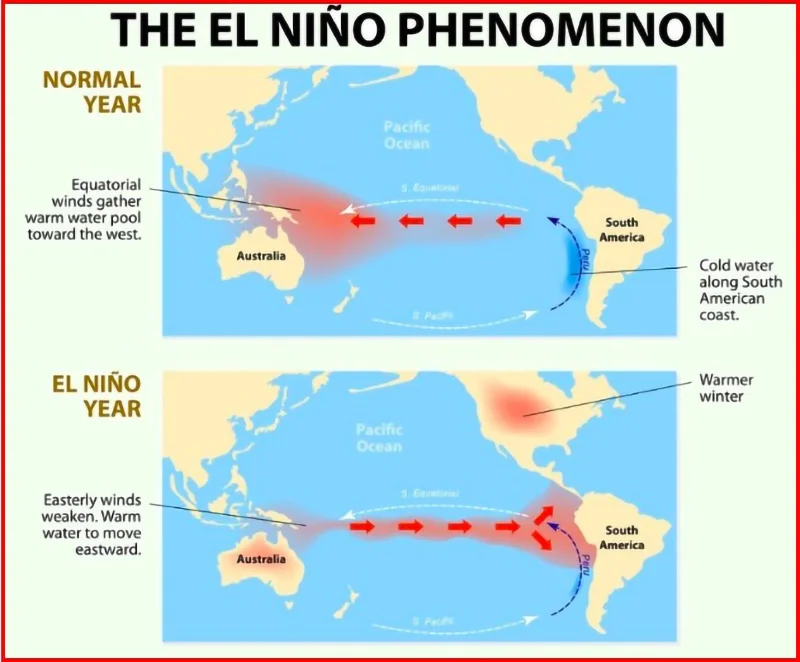
A recent discussion with two of Sri Lanka’s most experienced meteorologists highlighted concerns about the developing El Niño phenomenon and its potential consequences for the country. While no scientist can predict with certainty exactly how El Niño will evolve, current indications suggest the possibility of above-normal rainfall later this year, followed by reduced rainfall and potentially severe drought conditions in early 2027.
This is a warning Sri Lanka cannot afford to ignore.
Most Sri Lankans still remember the devastation caused by the Indian Ocean tsunami in December 2004. El Niño is fundamentally different. It does not arrive as a single catastrophic event. Instead, its effects can develop over many months, potentially bringing drought, water shortages, crop failures, extreme heat, wildfires, flooding and food insecurity.
The critical difference is that, unlike a tsunami, El Niño gives us time to prepare.
Sri Lanka therefore has a choice: act on the warnings now or pay a far greater price later.
We Must Not Wait for Disaster
The 2004 tsunami exposed Sri Lanka’s vulnerability to large-scale disasters and demonstrated the immense human and economic costs of inadequate preparedness.
El Niño cannot be prevented. However, many of its potentially damaging consequences can be reduced through early planning, effective coordination, public awareness and practical risk-reduction measures.
The purpose of this article is not to predict exactly what will happen. Rather, it is to ask a more important question:
Are we prepared for what could happen?
Depending on the intensity and evolution of El Niño, Sri Lanka could face:
· severe drought and prolonged dry spells;
· water shortages affecting households, agriculture and industry;
· reduced agricultural production and increased food insecurity;
· increased risks of forest and grassland fires;
· heatwaves and heat-related illness; and
· localised flooding caused by unusually heavy rainfall.
One threat deserves particular attention: wildfires.
During prolonged dry periods, fires can spread rapidly through forests and grasslands, destroying ecosystems, wildlife habitats, agricultural land, livelihoods and critical infrastructure, while placing enormous pressure on emergency services.
The lesson is straightforward: understanding potential worst-case scenarios before they occur greatly improves our ability to prevent them from becoming national catastrophes.
A Crucial Role for Disaster Management
We understand that Sri Lanka’s Disaster Management Centre (DMC) is already engaged in preparing the country for the potential impacts of a stronger El Niño event. Its focus must remain on helping communities prepare before emergencies arise, while ensuring that essential services continue to function during periods of crisis.
Disaster response and recovery come at a high cost to the public through government expenditure and taxpayer-funded resources. Investing in preparedness is therefore not only a humanitarian responsibility but also a sound economic strategy—particularly at a time when Sri Lanka continues to face considerable fiscal constraints and limited capacity to absorb another major shock.
The principle is clear:
Prevention is invariably less costly than recovery.
Every rupee invested in preparedness today can help prevent far greater social and economic losses tomorrow.
Listen to the Scientists
The public should pay close attention to forecasts and guidance issued by the Department of Meteorology.
At the same time, it is important to recognise that long-range forecasting is inherently complex. Climate systems involve countless interacting variables, many of which cannot be measured or predicted with complete accuracy months in advance.
When a forecast subsequently changes, this should not automatically be regarded as a failure of science. Forecasting is, by its nature, an assessment of probabilities and risks based on the best available evidence at a particular point in time.
The appropriate response is not to dismiss forecasts because they contain uncertainty, but to use them as tools for informed preparation.
What Should the Government Do?
The Government and relevant public institutions should urgently review Sri Lanka’s preparedness for drought, flooding, wildfires and extreme heat.
Key priorities should include:
· strengthening climate monitoring and early-warning systems;
· improving weather forecasting and public communication;
· developing comprehensive drought, flood and wildfire preparedness plans;
· enhancing reservoir, catchment and water-resource management;
· maintaining drainage infrastructure to reduce urban flooding;
· strengthening wildfire prevention, detection and response capabilities;
· investing in climate-resilient infrastructure; and
· establishing clear lines of responsibility and coordination among government agencies.
Coordination is particularly important. During a national emergency, citizens should never be left wondering which institution is responsible for taking action.
Water Security Must Be a National Priority
If prolonged dry conditions materialise, water security could become one of Sri Lanka’s most pressing challenges.
The country should strengthen groundwater protection, support the rehabilitation and maintenance of wells, and implement long-term water-security strategies in drought-prone regions. Such measures are important not only for human communities but also for agriculture, livestock and the natural ecosystems that sustain the country’s biodiversity.
Reservoirs and catchments must be managed carefully, while water conservation should be actively promoted among households, businesses, industries and farmers.
The key question is simple:
How much water will Sri Lanka require if the dry season lasts significantly longer than expected?
That question is far easier to answer before reservoirs begin to run dry.
Protecting Agriculture and Food Security
Agriculture remains highly vulnerable to drought and irregular rainfall. Significant disruption could result in rising food prices, reduced farm incomes and increased pressure on vulnerable households.
Sri Lanka should accelerate the adoption of drought-resistant crops, climate-smart farming techniques and efficient irrigation systems, including drip irrigation. Measures should also be taken to secure water and feed supplies for livestock, maintain strategic food reserves and strengthen weather-based advisory services for farmers.
Food security must be regarded not merely as an agricultural concern but as a matter of national resilience.
Preparing for Wildfires
Prolonged dry conditions can significantly increase wildfire risks. Sri Lanka must strengthen its capacity to prevent, detect and respond to fires before they escalate.
An effective strategy should rest on four pillars:
Prevention. Preparedness. Early detection. Rapid response.
Seasonal climate forecasts should be used to identify periods of heightened risk. Vegetation dryness, weather conditions and fire-prone regions should be monitored systematically, with modern technologies used wherever feasible.
Firebreaks should be established and maintained around vulnerable communities, forests and critical infrastructure. Dry vegetation and other combustible materials should be appropriately managed. Where environmentally and scientifically justified, carefully regulated controlled burning could also form part of an integrated fire-management strategy.
Human activity is responsible for many wildfires. During high-risk periods, open burning should therefore be restricted and unsafe land-clearing practices rigorously controlled. Public education campaigns should reinforce these measures.
Firefighting resources should be pre-positioned in high-risk areas before peak fire seasons begin. Adequate equipment and water supplies should be secured, and coordination strengthened among local authorities, fire services, forestry officials, disaster-management agencies and, where necessary, the armed forces.
Where practical and affordable, aerial firefighting capabilities should also be considered.
The guiding principle is straightforward:
Fight fires when they are small, rather than after they become uncontrollable.
Protecting Sri Lanka’s Natural Ecosystems
Healthy ecosystems are among the country’s most effective natural defences against climate stress.
Sri Lanka should protect wetlands and other water-retaining ecosystems, conserve forests, prevent unnecessary land clearing and fragmentation, and safeguard wildlife habitats from fire and degradation.
Forest conservation is not simply an environmental issue. It is central to water security, food security, biodiversity protection, public health and long-term national resilience.
Citizens Also Have a Responsibility
Preparedness cannot be the responsibility of government alone.
During dry periods, households should conserve water and avoid unnecessary waste. Communities should ensure that wells are cleaned, maintained and restored where necessary, particularly if prolonged disruptions to piped water supplies occur.
During periods of extreme heat, people should remain hydrated, avoid unnecessary outdoor activity and follow public health advice.
Families should maintain basic emergency plans and supplies. Communities in fire-prone areas should know evacuation routes and designated safe assembly points. Citizens should also avoid activities that could inadvertently start fires and remain alert to official warnings.
Particular attention should be given to vulnerable groups, including older people, people with disabilities and those with limited mobility. Communities should also be prepared for the health effects of wildfire smoke and deteriorating air quality.
From Response to Preparedness
Sri Lanka’s greatest challenge is not responding when disaster strikes. It is ensuring that natural hazards do not develop into national catastrophes.
This requires a fundamental shift from a culture of reaction to a culture of preparedness.
Government agencies, scientists, farmers, businesses, schools, community organisations and individual citizens all have important roles to play. A coordinated approach combining climate forecasting, land management, public education, community preparedness, early-warning systems and rapid emergency response can significantly reduce the risks posed by El Niño and other climate-related threats.
Even if severe drought conditions do not materialise, investments in preparedness will strengthen Sri Lanka’s resilience against future disasters. If severe conditions do occur, early preparation could save lives, protect livelihoods, reduce economic losses and prevent a difficult situation from escalating into a national crisis.
Sri Lanka has already learned, at enormous cost, the consequences of being unprepared. We should not wait for another disaster to teach us the same lesson.
The warning signs are present. The scientists are speaking. The risks are increasingly clear.
What remains is the political will and public commitment to act.
Preparation today will always cost less than recovery tomorrow.

New Court of Appeal Judge Sajeewani Dilka Lakmali Sworn In

India to host inaugural Women’s Champions Trophy in February

Sun directly overhead Madampe, Thorayaya, Thotagamuwa, Rattota and Kalavanchikudy about 12.09 noon today (03)

Afternoon thundershowers in the Northern, North-central, Eastern and Uva provinces in next few days, starting from today (03).

22A: SC urged to suspend hearing, appoint full bench

Govt. seeks NATO assistance

‘Dates have the highest sugar content to fight Coronavirus’

Sunday Island 27 December – Headlines

#SundayIsland 17th December – Headlines

Sunday Island – 28th March

Sunday Island Headlines – 21 March

Sunday Island – 21st February – Headlines
-

 News7 days ago
Eight politicians in drug kingpin probe
-

 Features5 days ago
“Wrap Me Up in My Blazer”— A Gentlemanly Bradby Reminiscence
-

 Business7 days ago
Sri Lanka opens up: A new season of direct connectivity
-

 Features4 days ago
When Sri Lankan stories find their own voice
-

 Features7 days ago
Redefining ageing in Sri Lanka
-

 Editorial7 days ago
The toxic legacy of two lakes
-
 Business7 days ago
Jaffna Teaching Hospital secures lifeline water supply via ADB-funded Thalaiyadi sea water desalination plant
-

 Features5 days ago
JVP/NPP government as seen from outside by Lionel Bopage now domiciled in Australia