
News
Parliament passed 26 Bills in 2025

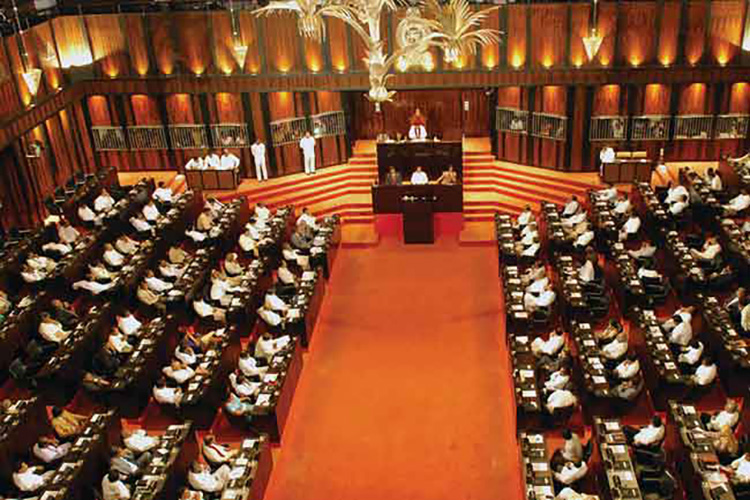
Parliament passed 26 Government Bills during the First Session of the Tenth Parliament in the one-year period from January 1 to December 31, 2025, according to official records.
The legislation covered a wide range of fiscal, governance, social welfare and regulatory reforms, including amendments to key revenue laws, labour protections and sector-specific statutes.
Among the Acts passed were the Local Authorities Elections (Special Provisions) Act No. 01 of 2025; Inland Revenue (Amendment) Act No. 02 of 2025; and the Appropriation Act No. 03 of 2025. Parliament also approved amendments to the Value Added Tax Act, the Code of Criminal Procedure, the Companies Act and the Bills of Exchange Act.
Fiscal and economic measures featured prominently, with the passage of the Budgetary Relief Allowance of Workers Act No. 10 of 2025, the National Minimum Wage of Workers Act No. 11 of 2025, the Social Security Contribution Levy (Amendment) Act No. 24 of 2025, and the Betting and Gaming Levy (Amendment) Act No. 25 of 2025.
Key regulatory and institutional reforms included the Proceeds of Crime Act No. 05 of 2025, the Gambling Regulatory Authority Act No. 17 of 2025, the National Audit (Amendment) Act No. 19 of 2025, and the National Building Research Institute Act No. 20 of 2025. Parliament also repealed the Foreign Loans Act through Act No. 06 of 2025 and the Presidents’ Entitlements Act through Act No. 18 of 2025.
Other measures enacted during the year included amendments to the Sri Lanka Electricity Act, Samurdhi Act, Rubber Control Act and Personal Data Protection Act, as well as legislation giving effect to the Convention Against Doping in Sports.
The legislative programme for 2025 concluded with the passage of the second Appropriation Act No. 23 of 2025 and the Strategic Development Projects (Amendment) Act No. 26 of 2025, rounding off a year of extensive parliamentary activity.

By Norman Palihawadane
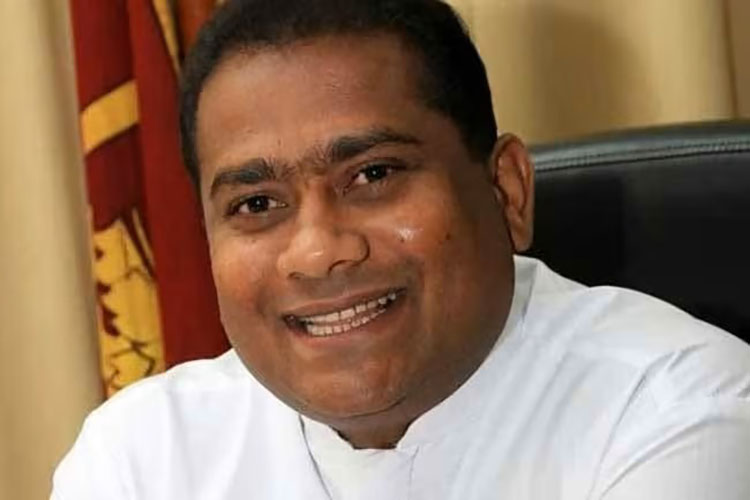
The CID recently found that former SLPP Deputy Minister Premalal Jayasekara, better known as ‘Choka Malli’, had left for Thailand when the Supreme Court imposed an overseas travel ban on him last Friday.
The CID discovered that Jayasekara had left Sri Lanka on August 31, while authorities were taking steps to enforce the travel restriction imposed by the Supreme Court. The Department has subsequently informed the Attorney General’s Department of the development.
The Supreme Court last Friday ordered Jayasekara, and two other men, to appear before court on October 21, and imposed a ban on their overseas travel.
The orders were made as the Supreme Court considered an appeal challenging the acquittal of the three men in connection with the 2015 murder of Shantha Dodangoda, also known as D.G. Sunil Perera.
The appeal was filed by Dodangoda’s wife against a decision of the Court of Appeal to acquit and release Jayasekara and the two other accused, who had previously been convicted and sentenced to death by the Ratnapura High Court.
Dodangoda was killed in a shooting in Kahawatta town, in the early hours of January 5, 2015, while a group of people were putting up decorations for an election rally in support of then common Opposition presidential candidate Maithripala Sirisena.
Two others, Karunadasa Weerasinghe and Mohamed Ilfan, were seriously injured in the shooting.
Following the incident, the Ratnapura High Court convicted Jayasekara, former Chairman of the Kahawatta Pradeshiya Sabha Wajira Darshana de Silva, and former Sabaragamuwa Provincial Council member Nilanta Jayakody, sentencing all three to death.
The Court of Appeal subsequently acquitted the three men and ordered their release.
The victim’s wife later challenged the acquittal before the Supreme Court.
The appeal was taken up before a Supreme Court bench, comprising Justice Preethi Padman Surasena and Justices Achala Wengappuli and Gihan Kulatunga.
During the proceedings, Deputy Solicitor General Janaka Bandara requested that the court impose overseas travel restrictions on Jayasekara and the other respondents.
The Supreme Court subsequently ordered all three to appear before the court on October 21 and imposed travel bans on them.
President’s Counsel Nalin Ladduwahetty, President’s Counsel U.R. de Silva and President’s Counsel Anuja Premaratne appeared for the respondents. President’s Counsel Saliya Peiris represented the aggrieved party.
Police sources said that the discovery that Jayasekara had already left for Thailand, on August 31, has raised concerns over the timing and enforcement of the travel ban.
Sources said that the CID had notified the Attorney General’s Department and was taking further action in relation to the development.

By Pradeep Prasanna Samarakoon
The number of deaths from dengue fever in Sri Lanka has risen to 73 this year, with 96,228 cases reported across the country so far, according to the Dengue Control Unit.
The latest figures indicate that dengue continues to pose a significant public health concern, with 737 new cases recorded during the first four days of September alone.
Dengue infections peaked in July, when 29,964 cases were reported, according to the latest data. June recorded the second-highest monthly total, with 21,533 cases, while 10,155 cases were reported in August.
Earlier in the year, 8,590 cases were recorded in May and 7,866 cases in January.The Western Province remains the worst-affected area, accounting for more than half of all dengue cases reported nationwide. A total of 50,851 cases have been recorded in the province, representing 52.84% of the country’s total.
The Southern Province has recorded 13,950 cases, followed by the Central Province with 8,818 cases and Sabaragamuwa Province with 7,925 cases.
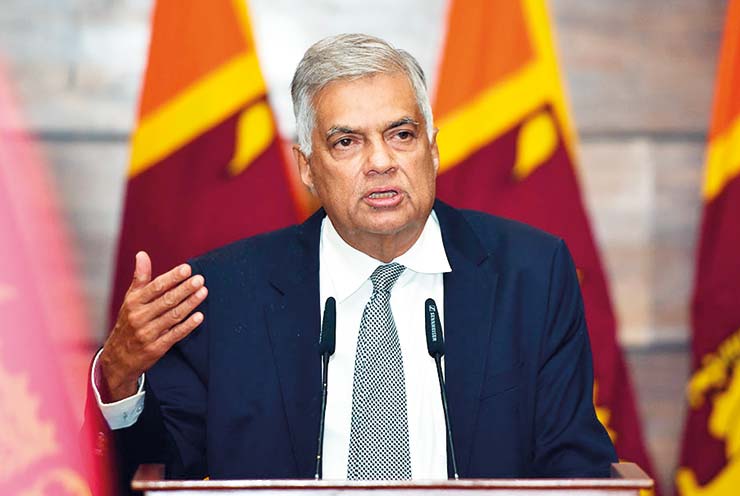
Former President Ranil Wickremesinghe yesterday accused the government of seeking to undermine Sri Lanka’s democratic system and weaken the Opposition.Addressing a ceremony at the UNP Headquarters, at Sirikotha, to mark the party’s 80th anniversary, Wickremesinghe said the country’s democratic system was facing a serious threat.
He traced Sri Lanka’s constitutional and political development since Independence in 1948, noting that the Republican Constitution had been introduced in 1972.
“The UNP proposed several amendments to the Constitution, but those proposals were not accommodated,” he said.
Wickremesinghe said the UNP government subsequently introduced the 1978 Constitution. “Today, this system is under threat. There is also an attempt by the present government to destroy the Opposition,” he said.
His remarks came as he reflected on the UNP’s eight-decade political history and what he described as the party’s contribution to Sri Lanka’s constitutional and democratic development.
The former President also highlighted the evolution of the country’s constitutional framework, linking the UNP’s political history to major changes in Sri Lanka’s system of governance.
The anniversary event brought together UNP members and supporters to commemorate the party’s 80 years in Sri Lankan politics.

Harshitha’s composed knock seals Sri Lanka’s semi-final berth

‘Choka Malli’ slips out of country before travel ban

Dengue death toll rises to 73

Ranil accuses govt. of undermining democracy

Lanka records 467,000 blood donations in 2025

El Niño dry spell leaves 115,000 affected as water distribution continues

‘Dates have the highest sugar content to fight Coronavirus’

Sunday Island 27 December – Headlines

#SundayIsland 17th December – Headlines

Sunday Island – 28th March

Sunday Island Headlines – 21 March

Sunday Island – 21st February – Headlines
-

 News4 days ago
Denied of promotion to SC despite vacancies, justice Gurusinghe retires
-

 Latest News5 days ago
Grade 5 scholarship exam results released
-

 News4 days ago
22A: SC urged to suspend hearing, appoint full bench
-

 Midweek Review5 days ago
The local and global dynamics of Sri Lanka’s 22nd Amendment
-
 News4 days ago
Govt. seeks NATO assistance
-

 News5 days ago
40 professional organisations and TU oppose proposed 22A
-

 News2 days ago
Namal remanded until Sept. 18 over Airbus deal investigation
-

 News5 days ago
Ai-CHA expands Lankan footprint with new Negombo outlet