
News
Campaign expenditure: How JRJ Constitution paved way for corruption


…continuing need for finger painting with indelible ink and ‘silent period’ questioned, EC reminded of risks taken by media
Text and pics by Shamindra Ferdinando
Chairman of Election Commission Attorney-at-Law Nimal Punchihewa on Tuesday (16) explained how the 1978 Constitution had abolished specific laws meant to ensure financial integrity of lawmakers. In terms of the pre-1978 laws, those who had acted in violation of them not only lost their parliamentary seats but civic rights, as well, Punchihewa, one-time member of the Human Rights Commission of Sri Lanka, said. Punchihewa cited several examples while pointing out even the losers faced punitive measures in case of transgressions. However, the 1978 Constitution had changed the situation overnight.
Punchihewa made the above observations at a workshop arranged by the Election Commission at its Rajagiriya Secretariat where senior lecturer Tudor Weerasinghe, Asoka Dias, Director MTV/MBC, Ariyananda Dombagahawatte, Chief Editor, Irida Lankadeepa, and Saman Sri Ratnayaka, Commissioner General of Elections, discussed the role of the media in the coverage of national election process and related matters. The opening remarks were made by Channa P de Silva, Director, research and policy planning.
Punchihewa compared the powers enjoyed by his Commission and that of India as he explained the weakness of the EC here. Punchihewa pointed out EC in Sri Lanka lacked the power to reject even a candidate who had been found guilty by court in respect of a bribery charge. “Therefore, we have no option but to accept nominations handed over by such persons,” he said.
Punchihewa succeeded Mahinda Deshapriya as the Chairman of EC after the last general election, in Aug 2020.
Having flayed a section of the media for pursuing agendas inimical to free and fair election process, Punchihewa emphasized the responsibility, on the part of both print and electronic media, to ensure what he called a level playing field. The media should never be a cat’s paw of racketeers. The lawyer discussed the coverage of elections in terms of the 17th, 18th, 19th and 20th Amendments while asserting both the print and electronic media failed to live up to expectations of those who desired neutrality on their part.
Emphasizing that any elected government should follow the basic principle that it was only the caretaker andcertainly not the proprietor, lawyer Punchihewa said that the democracy depended on free and fair elections. However, the absence of incidents on the day of the election didn’t mean a free and fair election, Punchihewa said, urging the media to respond courageously to challenging situations. Referring to Sri Lanka’s international commitments, lawyer Punchihewa said that the country couldn’t afford not to adhere to agreements, including ICCPR accepted over the years.
Pointing out that the law prevented lawmakers from engaging in business with the government, Attorney-at-Law Punchihewa mentioned two cases of members of Parliament losing their seats. Albert de Silva lost the Galle seat he won at the 1977 general election after one-time Prime Minister Wijayananada Dhanayake filed an election petition over the former having a government license to deal in kerosene, Punchihewa said. Dr. Rajitha Senaratne, too, lost his seat on the same grounds though he was immediately accommodated on the UNP National List.
Punchihewa categorized the 1981 Jaffna District Development Council polls, the 1982 referendum, and the 1999 Wayamba Provincial Council poll as having had the worst abuses in Sri Lanka’s electoral history.
Citing a Supreme Court ruling in respect of a case filed against the then President Chandrika Bandaranaike Kumaratunga putting off a scheduled election, lawyer Punchihewa said that even the President couldn’t interfere with the people’s right to exercise their franchise.
The EC Chairman also referred to another court ruling in respect of the Army preventing those living in LTTE controlled areas from entering the ‘cleared’ area to vote at the 2001 general election to underscore the privileged status of voters to exercise their franchise under any circumstances.
The Island
drew the attention of EC Chairman Punchihewa to his failure to act in spite of the inordinate delay in the UNP not filling its solitary National List slot, privileged status given to ex-lawmakers to contest presidential election thereby causing a sharp increase in public expenditure (the EC was reminded its former Chairman Mahinda Deshapriya on record as having said that the cost of the 2019 presidential poll went up to Rs 8 bn from 4 bn due to doubling of the number of contestants), the Election Department/Election Commission and Parliament turning a blind eye to the Tamil National Alliance (TNA) ordering Northern electorate not to vote at the 2005 presidential election and recognition of the LTTE, in late 1989, as a registered political party.
We also sought an explanation from the EC as regards the responsibility on its part as well as that of the Parliament. The meeting was also told how the two largest political parties, represented in Parliament, the SLPP and the SJB, with 145 and 54 lawmakers, respectively, happened to be unknown political parties. The EC owed an explanation as to how registered political parties were re-registered under controversial circumstances in spite of tough measures to prevent registration of new political parties, The Island pointed out.
Responding to criticism of the media directed by EC Chairman Punchihewa, Asoka Dias reminded the risks taken by the media in the performance of their duty. Declaring that the Dec 1999 presidential had been the first national poll that received high profile coverage by state and privately owned media, Dias recollected the Dec 18, 1999 election night suicide bomb attack directed at the then People’s Alliance final rally at the Town Hall.
The LTTE suicide attack claimed the lives of two media persons, namely Indika Paththiniwasam (Sirasa, assistant cameraman) and Anura Priyantha (ITN, assistant cameraman). In addition to them, five media men, including three foreigners, received injuries. A separate suicide attack at Ja-Ela, directed at an UNP rally, also on the same day, claimed the lives of several persons, including retired Army Chief of Staff Maj. Gen. Lakshman Algama.
Dias said Sirasa faced a dilemma whether to report the death of Paththiniwasam before informing his 25-year-old wife. The CID, however, found fault with Sirasa over the delay in reporting the Town Hall blast. Dias said that the ITN, too, would have been in a quandary. “We were repeatedly asked why Sirasa has not reported the blast immediately”. Dias questioned the rationale behind the CID questioning Sirasa over the delay in reporting the blast.
Dias compared the experience gained by the Sri Lankan media in covering elections under exceptionally difficult circumstances and that of the foreign journalists. Referring to a spate of attacks on the media over the years, Dias asserted that the Sri Lankan media faced far more challenges in covering elections than their foreign counterparts.
Commenting on what Dias called lethargic attitude of political parties, he said that in 2000 Sirasa had offered three free minutes each to political parties contesting the general election. In spite of receiving free air time, Sirasa found it difficult to convince political parties to make use of the opportunity, Dias said.
Responding to almost doubling of the public expenditure as a result of the number of candidates at the last presidential poll being closer to 40, Dias said that the electorate found it difficult to identify genuine contestants and dummy candidates.
Dias raised a number of questions including one on the usefulness of marking voters fingers with ink to prevent organised impersonation against the backdrop of national identity card or some other official document being made compulsory for voting. The Sirasa representative said that a substantial amount of public money could be saved by doing away with futile marking of little fingers. Dias emphasized the need to revisit the whole process, including the contentious of ‘silent period’ in the run-up to elections as social media platforms, satellite TV et al continued to campaign. According to him, the 48-hour ‘silent period’ was irrelevant due advancements made by the media.
Dias recollected how media openly backed selected candidates in 1902 at the Kotahena local government poll. At the first legislative council election in 1912, two newspapers backed P. Ramanathan (The Ceylonese) and Dr. H. M. Fernando (Morning Leader).
The Island
pointed out the media had been conveniently silent on some contentious issues. The media largely remained silent when the EU alleged in 2004 the Illankai Tamil Arasu Kadchi (ITAK) led TNA, won 22 seats at the April 2004 general election with the LTTE’s support. Another instance of media apathy was war-winning Army Commander Gen. Sarath Fonseka contesting the 2010 Presidential, poll under the Swan symbol, a political party that hadn’t been represented in either local government institutions or provincial councils or Parliament. The Swan alliance contested 2015 (Maithripala Sirisena) and 2019 (Sajith Premadasa) presidential polls though the media never bothered to examine the story behind such political projects.
Tudor Weerasinghe explained how media, too, contributed to the gradual deterioration of public sector institution. Weerasinghe discussed the responsibility on the part of the media to recognize real issues. The failure to do so could be catastrophic, the lecturer said, urging the media to take on institutions instead of targeting individuals. Misdirected criticism of individuals could have a devastating impact on the entire electoral process, Weerasinghe warned. The academic explained how in spite of the change of governments the systems continued much to the dismay of those who expected genuine transformation. According to him, foreign electorates experienced the same dilemma.
The collapse of the Soviet Union in the 1980s further deteriorated the global balance of power. Referring to the Suez Canal and Cuban missile crises, Weerasinghe pointed out how the West exploited the collapse of the Soviet Union to take unilateral decisions in respect of Iraq, Afghanistan and Kosovo. Weerasinghe discussed how the media exploited situations as part of various political and other strategies regardless of consequences. According to him, Sri Lankan media is no exception.
At the conclusion, Saman Sri Ratnayaka explained the role of the EC, difficulties and challenges as the electorates continued to expand as the system came under increased pressure. Ratnayake discussed responsibilities and accountability on their part to ensure a level playing field. The Island asked Ratnayake who would take responsibility –the EC or the parliament-for increasing the number of Local Government members from 4,000 to 8,600 at a massive unbearable burden to the taxpayer. The official explained the circumstances leading to the increase. According to him, the parliament took the decision.

… America-Pakistan developed required ‘intel’ for operation
By Shamindra Ferdinando
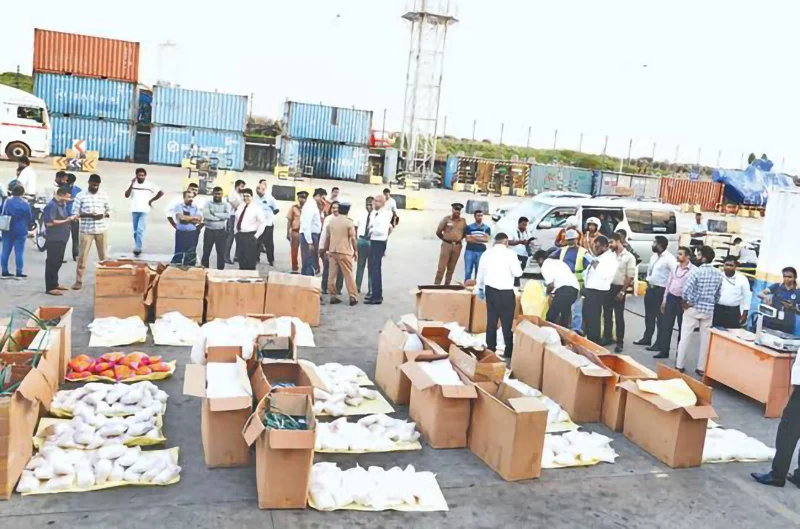
The US Embassy in Colombo declined to comment on a special police probe into the recent narcotics detection, jointly made at the China-managed Colombo International Container Terminal (CICT) by the US Drug Enforcement Administration’s (DEA) New Delhi Country Office and Sri Lanka Police..
US Embassy spokesperson said that the mission wouldn’t add to their press release, issued on 2 Sept., in the immediate aftermath of the raid.
Police Headquarters, on 11 Sept., declared that the Central Crime Investigation Bureau (CCIB) was conducting investigations into the recovery of 473 kg of Crystal Methamphetamine (‘Ice’). Police never acknowledged the role played by the US in the operation.
According to Police Headquarters, on a directive given by IGP Priyantha Weerasooriya, the Special Investigation Unit has launched an internal probe into, what it called, shortcomings and irregularities in the Colombo Port raid.
The Island:
Have you (relevant US authorities) received an update of Sri Lanka’s investigations from the Police?
US Embassy:
U.S. and Sri Lankan law enforcement authorities maintain close and ongoing cooperation on counternarcotics matters, including the exchange of information that helps both countries combat transnational drug trafficking. We don’t have anything further to share on communications with Sri Lankan authorities beyond what we’ve already said publicly about the successful operation.
The Island:
Did the Police seek clarification regarding DEA, New Delhi Country Office role in the successful raid?
US Embassy:
As the Embassy noted publicly following the seizure, cooperation with the U.S. Drug Enforcement Administration contributed to the Sri Lanka Police Narcotics Bureau’s successful seizure of approximately 463 kilograms of methamphetamine at the Port of Colombo.
The seizure demonstrates the value of close U.S.-Sri Lankan cooperation in disrupting transnational narcotics trafficking.
The Island:
Before we raised this issue were you aware of the internal investigation into the drug bust which was also raised in Parliament last week?
The US Embassy:
We don’t have anything further to share beyond what we’ve already said publicly about the successful operation.
Our focus remains on the strong U.S.-Sri Lanka law enforcement partnership and the concrete results our cooperation can deliver—disrupting transnational criminal organisations, cutting off the profits that fuel illicit drug trafficking, and protecting our citizens from the dangers of narcotrafficking.
The US Embassy attributed the success of the counternarcotics operation to the US-Sri Lanka partnership
The US Embassy statement, dated 2 Sept: The U.S. Drug Enforcement Administration’s (DEA) New Delhi Country Office and Sri Lanka’s Police Narcotics Bureau (PNB) conducted a successful joint operation disrupting a Pakistan-based narcotrafficking network attempting to smuggle crystal methamphetamine through Sri Lanka to international markets.
Acting on intelligence developed by DEA’s Foreign Counterparts Unit Pakistan Anti-Narcotics Force Special Investigations Cell between August 14–29 on suspicious maritime containers moving from Pakistan to Colombo, PNB seized approximately 463 kg of crystal methamphetamine with a street value of $21 million, concealed in bath towels, and arrested several suspects, including Pakistani nationals. This operation underscores the strength of the U.S.-Sri Lanka partnership in dismantling transnational criminal organisations that fund terrorism and threaten communities in both our countries. This cooperation builds on long-standing training and technical assistance provided through the U.S. Department of State’s Bureau of International Narcotics and Law Enforcement Affairs (INL) to the Sri Lanka Police and Customs. The United States remains committed to working with Sri Lanka and regional partners to aggressively pursue transnational criminal organizations, deny them the revenue from illicit drug trafficking, and protect our citizens from the dangers of narcotrafficking.”
SLPP National Organiser Namal Rajapaksa, in Parliament, raised questions about the internal investigation into the raid. However, Rajapaksa, too, hasn’t mentioned the US role in the operation. The Special Investigation Unit has recorded a statement from Senior DIG Ranmal Kodituwakku regarding the Colombo Port raid.
MP Rajapaksa questioned the rationale behind questioning the officer who led the raid against the backdrop of controversial releasing of 323 containers from the Colombo Port in January 2025. The failure to question those responsible for the releasing of 323 containers indicated who was behind that operation, MP Rajapaksa told Parliament.
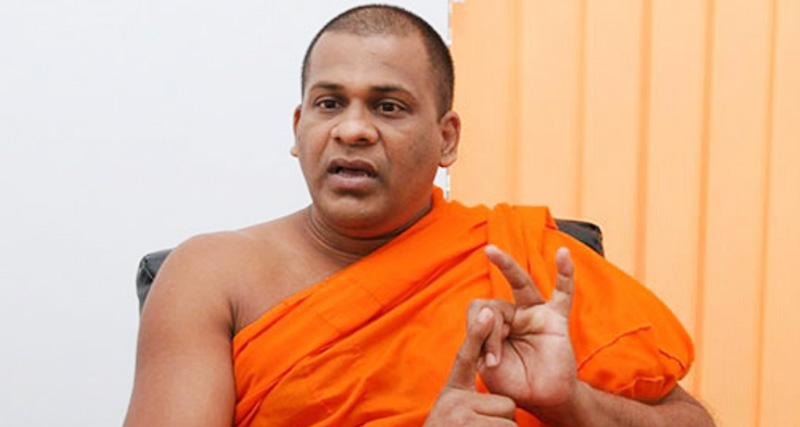
Bodu Bala Sena (BBS) General Secretary Ven. Galagodaaththe Gnanasara Thera appeared before the Colombo High Court yesterday in a case filed by the Attorney General over statements allegedly insulting Islam.
The case was taken up before Colombo High Court Judge Buddhika C. Ragala, who ordered that it be called again on September 30.
His appearance came six days after the Supreme Court invalidated the presidential pardon granted to Gnanasara Thera by former President Maithripala Sirisena in 2019.
Speaking to journalists outside the court, Gnanasara Thera said he was prepared to face the legal process and would abide by the law, rejecting reports that he had gone into hiding following the Supreme Court judgment.
“It is the weak who disappear and flee. We worked for the country and are facing the consequences for that. We are not afraid and will not flee,” he said, noting that he would surrender to the court and face whatever legal consequences following the Supreme Court decision.
The Supreme Court, on September 10, ruled that the presidential pardon granted to Gnanasara Thera by Sirisena was invalid. The judgment followed fundamental rights petitions challenging the legality of the pardon. A three-judge bench, comprising Justices Janak de Silva, Sobhitha Rajakaruna and Sampath Abeykoon, delivered the ruling.
Gnanasara Thera was convicted by the Court of Appeal in 2018 for contempt of court and sentenced to a total of 19 years’ imprisonment to run concurrently as six years. The conviction related to his conduct during proceedings at the Homagama Magistrate’s Court concerning the disappearance of Prageeth Eknaligoda.
He was released from Welikada Prison on May 23, 2019, after then President Maithripala Sirisena had granted him a presidential pardon.
The Supreme Court found the pardon to be arbitrary and invalid in law, following its consideration of the petitions challenging the exercise of the presidential power of clemency.
Meanwhile, police have said they are awaiting the Supreme Court judgment before determining what further action should be taken following the invalidation of the pardon.
The proceedings before the Colombo High Court yesterday are separate from the contempt of court case that resulted in the six-year sentence. They concern alleged statements made by Gnanasara Thera regarding Islam.
In June this year, the Colombo High Court rejected an appeal by Gnanasara Thera against a nine-month prison sentence imposed by the Colombo Magistrate’s Court in connection with statements made at a 2016 media briefing that were found to have disrupted religious coexistence.
The latest High Court proceedings, therefore, form part of separate legal action concerning his alleged remarks about Islam, while the Supreme Court ruling relates specifically to the legality of the 2019 presidential pardon granted in connection with his contempt of court conviction.
The case before the Colombo High Court will be called again on September 30.
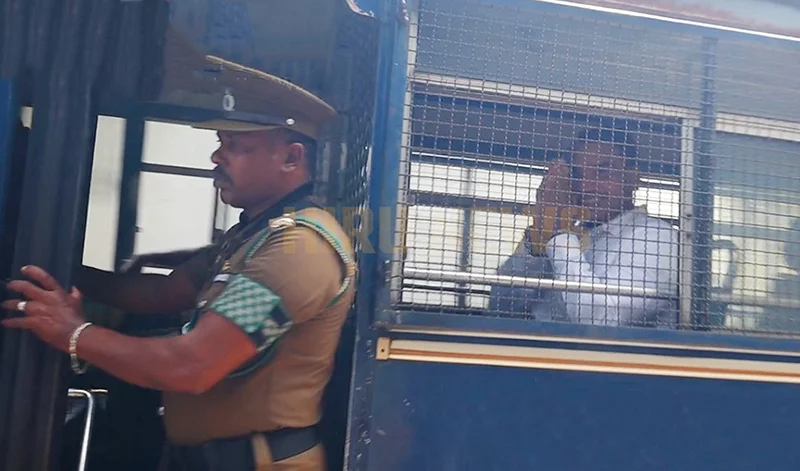
Colombo Fort Magistrate Pasan Amarasena yesterday (16) ordered SLPP National Organiser Namal Rajapaksa, MP, to be further remanded, until September 23. The Magistrate issued the order when Rajapaksa was produced before the court as a suspect in an investigation into an alleged USD 2 million bribe case connected to the acquisition of aircraft for SriLankan Airlines.
The Magistrate issued the order following the submissions made by Deputy Solicitor General Janaka Bandara, appearing on behalf of the Criminal Investigation Department (CID).
President’s Counsel Anil Silva, along with other attorneys representing Rajapaksa, also made submissions before the court.
The Magistrate also announced that a decision on Rajapaksa’s bail application would be announced on 23 September.

Showers in most parts of the island today (17)

US embassy won’t comment on IGP’s probe into joint drug raid

Gnanasara Thera declares outside High Court that he wouldn’t flee

Namal further remanded

22A: LAWASIA questions compostion of five-judge bench

Sri Lanka’s lifestyle coffee culture boom and the two faces of its economy

‘Dates have the highest sugar content to fight Coronavirus’

Sunday Island 27 December – Headlines

#SundayIsland 17th December – Headlines

Sunday Island – 28th March

Sunday Island Headlines – 21 March

Sunday Island – 21st February – Headlines
-

 Sports6 days ago
DDS set to lose Test captaincy
-

 News6 days ago
Sri Lanka faces new grid challenge as rooftop solar surges: former CEB GM
-

 Latest News6 days ago
Shafali, Deepti power India into sixth T20 Asia Cup final
-

 Latest News5 days ago
Sri Lanka thwart Fatima Sana challenge to secure Asia Cup final spot
-

 News4 days ago
Gnanasara Thero absconding after SC ruling
-

 News5 days ago
Ammunition cache found in old Kandy bungalow
-

 Editorial6 days ago
A flight of fancy
-

 News5 days ago
Green Climate Fund (GCF) Regional Dialogue for East and South Asia will be held from 14 to 17 September 2026 at Cinnamon Life at City of Dreams Hotel, Colombo