
News
British MP calls on Foreign Secretary to expand sanction package against ‘Sri Lankan war criminals’

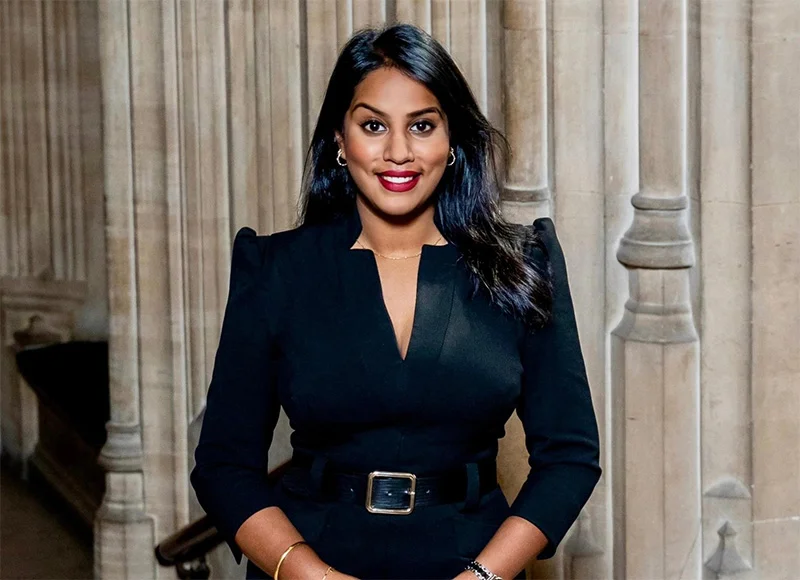
British MP of Sri Lankan origin, Uma Kumaran, called on the UK’s Foreign Secretary to expand on the government’s sanctions on those accused of war crimes during the conflict in Sri Lanka.
During a Foreign Affairs Committee meeting on Dec 16, the MP for Stratford and Bow highlighted the lack of accountability and political will from the current Sri Lankan government to address war crimes and mass atrocities committed in Sri Lanka.
UK Foreign Secretary Yvette Cooper expressed the need for “sustained action” to improve human rights in Sri Lanka and address the “longstanding issues” related to the legitimate concerns of the Tamil community.
“When your predecessor appeared before the committee in November 24 and again in July 25, I asked him about justice for the Tamil community,” began Kumaran, speaking on previous calls made to then Foreign Secretary David Lammy on the need to refer Sri Lanka to the International Criminal Court and ensure proper investigations around mass graves on the island.
“An investigation by the Office of High Commissioner for Human Rights at the UN found that there were reasonable grounds to believe that Sri Lankan forces committed war crimes and crimes against humanity, including torture, sexual violence, and forced disappearances… against the civilian population. It’s been 15 years since the war’s end and there’s not been a special court or any criminal investigations into those war crimes, crimes against humanity, or genocide.”
“The victims, their families, the survivors, no one’s been listened to. Given that the Sri Lankan state has failed to prosecute the perpetrators of war crimes, they won’t ratify the Rome Statute of the ICC, and there’s a lack of political will. Will the UK continue to push the Sri Lankan government to make sure that there is justice and accountability for Tamils?”
In response, Cooper acknowledged the “deep long-standing” and the “legitimate concerns” of the Tamil community. She expressed that the government had “pressed” the Sri Lankan government to address “troubling” issues around human rights, but noted that sustained action is required.
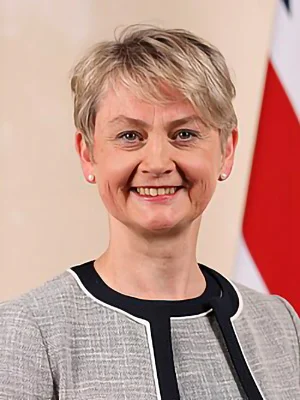
Yvette Cooper
“So obviously, as you say, this is a deep, long-standing and troubling issue. We do continue to encourage the Sri Lankan government to recognise the legitimate concerns around the need for truth and reconciliation here, and to properly recognise and address some of those long-standing serious problems and grievances as well.”
“So we will continue to raise this.”
“We have also pressed the Sri Lankan government to take transformational action and sustained action in terms of improving human rights, and I think, as you’ll probably know, that we had sanctions, four individuals back in March of this year as well, on those grounds. So we see this as an issue moving forward as well.”
Kumaran, in response, welcomed the government’s commitment to sustained action and called on the Foreign Secretary to expand a sanction package on Sri Lankan war criminals.
“I welcome that, and if you’re looking at further sanctions as a package, please do consider some of the other individuals that have been put forward too.”
Earlier this year the United Kingdom announced sanctions against four individuals implicated in “serious human rights violations”, in a move it says is aimed at promoting accountability and challenging the culture of impunity that continues to shield perpetrators.
The sanctions, unveiled by the former UK Foreign Secretary David Lammy, targeted senior figures from both the Sri Lankan military and a government-affiliated paramilitary group, including individuals linked to extrajudicial killings, torture, and sexual violence.
Those sanctioned are:
• Shavendra Silva, former Head of the Sri Lankan Armed Forces;
• Wasantha Karannagoda, former Navy Commander;
• Jagath Jayasuriya, former Commander of the Sri Lankan Army;
• Vinayagamoorthy Muralitharan, also known as Karuna Amman, who led the pro-government Karuna Group, a paramilitary unit that operated in collaboration with the Sri Lankan military.
The Sri Lankan military has been accused of extensive rights abuses, particularly during the final stages of the Mullivaikkal genocide in 2009. Investigations by the UN and human rights organisations have detailed mass civilian killings, enforced disappearances, and widespread use of sexual violence—none of which have led to domestic prosecutions of senior military or political figures.

Latest News
Sun directly overhead Madampe, Thorayaya, Thotagamuwa, Rattota and Kalavanchikudy about 12.09 noon today (03)


The sun is going to be directly over the latitudes of Sri Lanka from 28th of August to 07th of September due to its apparent southward relative motion.
The nearest places of Sri Lanka over which the sun is overhead today (03) are Madampe, Thorayaya, Thotagamuwa, Rattota and
Kalavanchikudy about 12.09 noon.
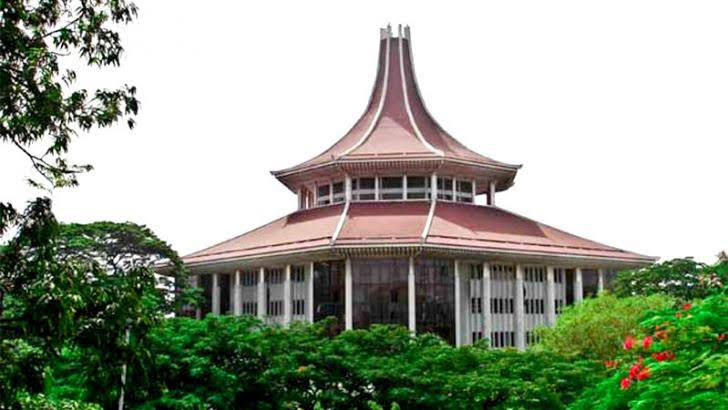
Attorney-at-Law Sugandhika Fernando, on behalf of the Vinivida Foundation, petitioned the Supreme Court yesterday (02), seeking a full bench, excluding Chief Justice Preethi Padman Surasena, to hear the petitions challenging the 22nd Amendment Bill. She also requested that the hearing be suspended immediately until the matter was fully heard and determined.
Among the respondents are Chief Justice Surasena, the first respondent, and Attorney General Parinda Ranasinghe. Justices Yasantha Kodagoda, Shiran Gooneratne, Achala Wengappuli and Priyantha Fernando have also been named as respondents.
The petitioner has sought to have quashed the decision of the first respondent to appoint a five-member bench, which she alleged was made in violation of the norms of public law. She also sought a bench comprising all Supreme Court judges, excluding those cited as respondents, to hear the special determination applications on the 22nd Amendment.
The petitioner further contended that Chief Justice Surasena, who is due to retire on December 1, 2026, would be the main beneficiary of the 22nd Amendment.
The hearing of the petitions continued for a second day yesterday (02) before a five-member Supreme Court bench comprising Chief Justice Preethi Padman Surasena and Justices Achala Wengappuli, Arjuna Obeyesekere, Sampath Abeykoon and Gihan Kulatunga.
The hearing, which commenced on Tuesday morning, continued for nearly 12 hours, until 10:30 p.m.
Solicitor General Viraj Dayaratne, appearing for the Attorney General, submitted yesterday that the Government had presented the 22nd Amendment Bill to the Constitution and the Judicature (Amendment) Bill with the objective of expanding and streamlining the country’s judicial system.
After the Solicitor General’s submissions concluded, counsel representing the petitioners requested an opportunity to respond to the Solicitor General and the intervening petitioners. However, the Chief Justice declined to allow the petitioners’ counsel to make further oral submissions, concluded the determination hearing and directed them to file written submissions instead.
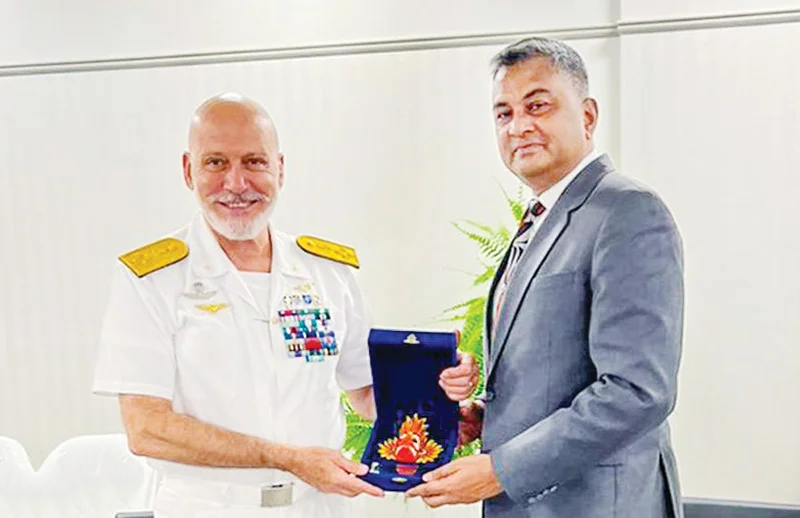
Sri Lanka has formally requested assistance from the North Atlantic Treaty Organisation (NATO).
According to a press release issued by the Defence Ministry, Defence Secretary Air Vice Marshal (retd) Sampath Thuyakontha has discussed defence cooperation with NATO, with discussions focusing on military modernisation, advanced technology, cyber capabilities and disaster response.
This was during talks between AVM Thuyakontha and NATO Military Committee Chairman Admiral Giuseppe Cavo Dragone on the sidelines of the Chiefs of Defence Conference in Victoria, Canada.
During the meeting, Secretary Thuyacontha outlined Sri Lanka’s defence requirements and areas of interest, including the modernisation of military hardware, acquisition of advanced technologies, and strengthening cyber capabilities and surveillance platforms, the Ministry of Defence said in a statement.
The two sides also discussed opportunities for greater technical cooperation, including the exchange of military personnel, expanded education and training programmes, and increased sharing of expertise and information.
Humanitarian Assistance and Disaster Relief (HADR) was also identified as an area for potential cooperation. The discussions included the exchange of expertise and the effective use of unmanned aerial vehicles (UAVs) in disaster response and related operations.
Defence Secretary Thuyacontha invited NATO to further strengthen its engagement with Sri Lanka, emphasising sustained dialogue, information sharing and practical cooperation in areas of mutual interest.

India to host inaugural Women’s Champions Trophy in February

Sun directly overhead Madampe, Thorayaya, Thotagamuwa, Rattota and Kalavanchikudy about 12.09 noon today (03)

Afternoon thundershowers in the Northern, North-central, Eastern and Uva provinces in next few days, starting from today (03).

22A: SC urged to suspend hearing, appoint full bench

Govt. seeks NATO assistance

Recent ‘Ice’ detection at the Colombo Port made on US intelligence – Embassy

‘Dates have the highest sugar content to fight Coronavirus’

Sunday Island 27 December – Headlines

#SundayIsland 17th December – Headlines

Sunday Island – 28th March

Sunday Island Headlines – 21 March

Sunday Island – 21st February – Headlines
-

 News6 days ago
Eight politicians in drug kingpin probe
-

 Features5 days ago
“Wrap Me Up in My Blazer”— A Gentlemanly Bradby Reminiscence
-

 Business7 days ago
Sri Lanka opens up: A new season of direct connectivity
-
 Features4 days ago
When Sri Lankan stories find their own voice
-
 Features6 days ago
Redefining ageing in Sri Lanka
-

 Editorial7 days ago
The toxic legacy of two lakes
-
 Business7 days ago
Jaffna Teaching Hospital secures lifeline water supply via ADB-funded Thalaiyadi sea water desalination plant
-
 Features5 days ago
JVP/NPP government as seen from outside by Lionel Bopage now domiciled in Australia