
News
Suspension of Indian drug part of cover-up by NMRA: Academy of Health Professionals

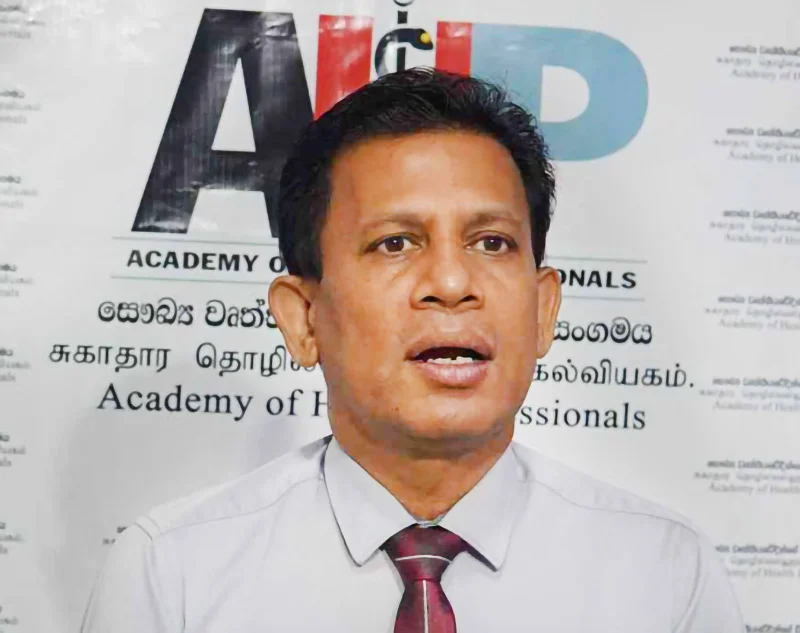
President, Academy of Health Professionals, Ravi Kumudesh, yesterday (22), alleged that the National Medicines Regulatory Authority’s (NMRA) decision to suspend several batches of Ondansetron Injection USP 8 mg/4 mL (Batch Nos: OD24021E, OD25009E, OD25024E, OD25023E), following suspicions of patient complications, and a few reported deaths, seemed to be a bid to cover-up the latest public health sector crisis.
Kumudesh said so responding to The Island queries.
Kumudesh pointed out that the Chief Executive Officer of the NMRA, and other responsible officials of the Ministry of Health, were on record as having said that the alleged bacterial contamination in the medicine in question was based on laboratory test results generated at the Microbiology Laboratory of the National Hospital, Kandy.
He, however, emphasised that the Kandy facility lacked legally mandated facilities, validated systems, or regulatory accreditation required to conduct pharmaceutical sterility testing in accordance with internationally accepted regulatory standards.
“The Academy of Health Professionals is aware that the Microbiology Laboratory of the National Hospital, Kandy, does not possess the required facilities,” Kumudesh said, urging the government to come clean in this matter.
Kumudesh said the regulatory action taken by the political authority was aimed at deceiving the public, and theAcademy of Health Professionals had raised the issues with Health Minister Dr. Nalinda Jayatissa, Health Secretary Dr. Anil Jasinghe, NMRA head Dr. Ananda Wijewickrama and Director General Health Services (DGHS) Dr. Asela Gunawardena.
Kumudesh pointed out that the Kandy facility was meant to meet requirements within the Kandy National Hospital and not a world standard testing lab. Kumedesh sought an explanation as to how the suspended Ondansetron Injection had been administered on 13 December to a person warded at the hospital where NMRA head is based, a day after the NMRA decided to suspend it.
Public health sector trade union activist Kumudesh said that the Health Ministry couldn’t turn a blind eye to the disclosure that post-mortem reports of two persons, who allegedly died after being given the same medicine by the National Institute of Infectious Diseases, did not identify the medicine as the cause of death. According to him, the National Institute of Infectious Diseases administered the same medicine to patients, on multiple occasions, in the wake of the controversy.
Kumudesh said that it would be the responsibility of the government to ensure a comprehensive technical, legal, and administrative investigation into, what he called, Ondansetron affair. Having lambasted all previous governments of waste, corruption and irregularities, at the expense of the hapless public, the NPP couldn’t, under any circumstances, side-step the issue. “In the interest of transparency, regulatory credibility, and the protection of public health, this should be properly investigated,” Kumudesh said.
The crux of the matter was that the very basis of NMRA’s suspension of Ondansetron batches seemed to be irregular and questionable, Kumudesh said.
The Academy of Health Professionals, in its letter to Dr. Jayatissa, sought the Health Ministry’s response to the following questions: 1. Who requested the Microbiology Laboratory of the National Hospital, Kandy, to conduct sterility testing on this medicinal product?
2. Under what legal provisions was such a request made, and on what basis was the laboratory authorised to accept and perform such testing?
3. Who conducted the test, and who issued the report? Did those individuals possess the requisite professional qualifications, regulatory authorisation, and legal mandate to do so?
4. Did the laboratory possess the required infrastructure, validated testing systems, quality assurance mechanisms, and specialised training necessary to perform pharmaceutical sterility testing in compliance with regulatory standards?
5. If patient complications were attributed to microbial contamination, were all related materials—including syringes, IV lines, infusion fluids, and other associated devices—systematically tested? If not, on what scientific basis was it concluded that the contamination originated exclusively from the medicine?
6. Given that the NMRA is legally empowered to suspend a medicine as a precautionary measure, even without laboratory confirmation, when serious safety concerns arise, what was the justification for relying on an irregular and non-regulatory laboratory test instead?
Kumudesh stressed that Ondansetron, and nine other injectable medicines that had been suspended, were all ordered by the State Pharmaceutical Corporation (SPC) from an Indian manufacturer, Maan Pharmaceuticals.
By Shamindra Ferdinando




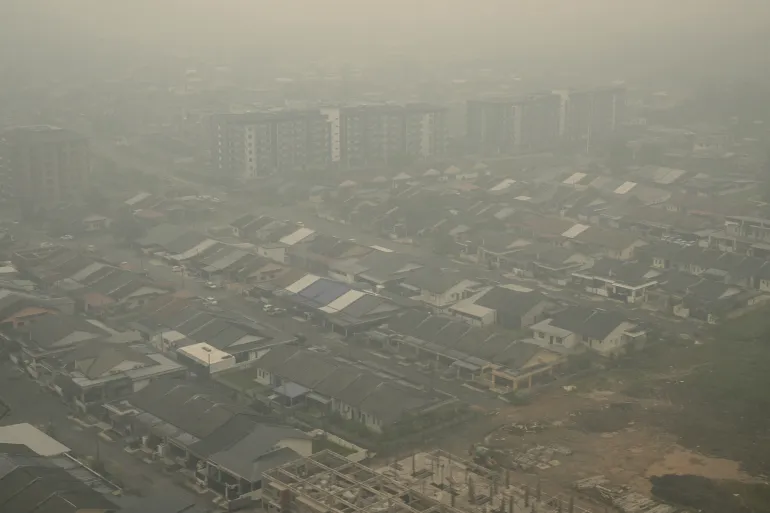
Malaysia has declared a state of emergency in a district in Sarawak state after haze caused by wildfires in neighbouring Indonesia increased air pollution to “hazardous” levels.
King Sultan Ibrahim “has consented to the declaration of emergency throughout Serian Division, Sarawak, following haze conditions that have reached air pollution levels hazardous to public health and safety”, Prime Minister Anwar Ibrahim’s office said in a statement on Thursday.
The declaration followed a formal request from the Sarawak Disaster Management Committee after the region’s Air Pollutant Index reached levels warranting consideration of a local emergency.
Under the order, 647 schools in Serian will close from Monday until at least the end of next week, alongside government and private offices, plantations, construction sites and quarries, with only essential services continuing to operate.
The state’s disaster management authorities said a three-day cloud-seeding operation launched on Thursday would be extended to at least Monday, citing forecasts of “more conducive cloud formations” during that period.
Sarawak State Disaster Management Committee chairman Douglas Uggah Embas, speaking at a news conference in Kuching, stressed that the emergency applied only to Serian, not the entire state, but urged residents there to take the situation seriously.
“Please minimise outdoor activities and avoid strenuous activities outdoors,” he said.
Sarawak, in the northern part of Borneo island, has been heavily affected by haze for weeks, as have the neighbouring states of Sabah and Peninsular Malaysia.
(Aljazeera)
Latest News
Sun directly overhead Moratuwa, Kesbewa, Handapangoda, Idalgashinna, Yudhaganawa, Kotiyagala and Panama about 12.08 noon today (05)


The sun is going to be directly over the latitudes of Sri Lanka from 28th of August to 07th of September due to its apparent southward relative motion.
The nearest places of Sri Lanka over which the sun is
overhead today (05) are Moratuwa, Kesbewa, Handapangoda, Idalgashinna, Yudhaganawa, Kotiyagala and Panama about 12.08 noon

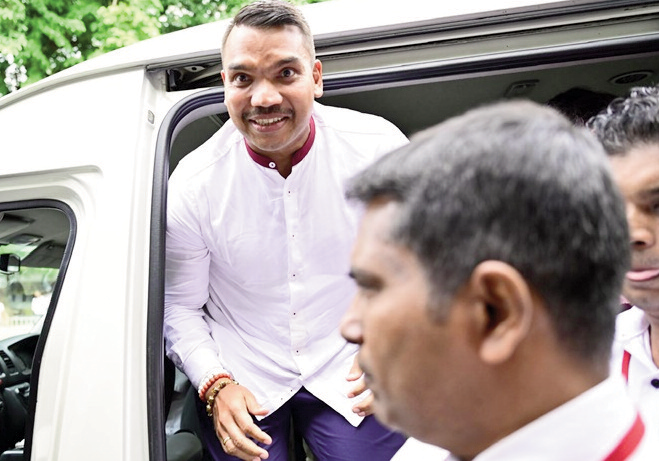
Sri Lanka Podujana Peramuna (SLPP) National Organiser and Parliamentarian Namal Rajapaksa was yesterday remanded until September 18 by the Colombo Chief Magistrate’s Court following his arrest by the Commission to Investigate Allegations of Bribery or Corruption (CIABOC) in connection with an investigation into the controversial SriLankan Airlines Airbus aircraft transaction.
Rajapaksa appeared before the CIABOC at around 9.15 am yesterday to record a statement after being summoned over the transaction. He was taken into custody following several hours of questioning and subsequently produced before the Colombo Chief Magistrate.
The investigation centres on allegations surrounding the acquisition of six Airbus A330 and eight A350 aircraft by SriLankan Airlines in 2013, in connection with an alleged USD 2 million bribe.
Former SriLankan Airlines Chief Executive Officer Kapila Chandrasena and his wife, Priyanka Niyomali Wijenayake, had previously been named in connection with the alleged bribery.
Chandrasena was arrested on March 12 as part of an investigation launched by the CIABOC under the Anti-Corruption Act and was subsequently released on bail. He was later found dead on May 8 while on bail, with police suspecting that his death was a suicide.
Open warrants have been issued for the arrest of Wijenayake, who is named as the second suspect, and Shamindra Rajapaksa, named as the third suspect, in the case pending before the Fort Magistrate’s Court in connection with the Airbus transaction.
The investigation has also received assistance from Airbus, with a delegation from the company’s parent group in France visiting Sri Lanka during the first week of August. The delegation provided statements and other assistance to the CIABOC as part of the ongoing inquiry.
Rajapaksa’s arrest and remand yesterday mark a further development in the widening investigation into the controversial aircraft deal.

Malaysia declares emergency in Sarawak as haze from Indonesia worsens

UAE keep semi-final hopes alive after convincing win over Indonesia

Sun directly overhead Moratuwa, Kesbewa, Handapangoda, Idalgashinna, Yudhaganawa, Kotiyagala and Panama about 12.08 noon today (05)

Showers above 75 mm are likely at some places in the Uva, Central and Eastern provinces and in Polonnaruwa and Mullaittivu districts after 2.00 p.m

Namal remanded until Sept. 18 over Airbus deal investigation

Dengue cases surpass 96,000 this year

‘Dates have the highest sugar content to fight Coronavirus’

Sunday Island 27 December – Headlines

#SundayIsland 17th December – Headlines

Sunday Island – 28th March

Sunday Island Headlines – 21 March

Sunday Island – 21st February – Headlines
-

 Features7 days ago
“Wrap Me Up in My Blazer”— A Gentlemanly Bradby Reminiscence
-

 Features6 days ago
When Sri Lankan stories find their own voice
-
 Features7 days ago
JVP/NPP government as seen from outside by Lionel Bopage now domiciled in Australia
-

 News6 days ago
BASL takes exception to Justice Ganepola being denied a place in SC
-
 Features7 days ago
Prof. Savitri Goonesekere: What has she done?
-

 News3 days ago
Denied of promotion to SC despite vacancies, justice Gurusinghe retires
-

 Latest News3 days ago
Grade 5 scholarship exam results released
-

 News3 days ago
22A: SC urged to suspend hearing, appoint full bench