
News
Officials of NMRA, SPC, and Health Minister under pressure to resign as drug safety concerns mount


Mounting concerns over drug safety and regulatory oversight have triggered strong calls from medical professionals and trade unions for the resignation of senior officials at the National Medicines Regulatory Authority (NMRA) and the State Pharmaceutical Corporation (SPC), following patient deaths, allegedly linked to the administration of Ondansetron injections.
Medical and civil rights groups say the incident has exposed deep systemic failures in Sri Lanka’s drug regulatory framework, with critics warning that the collapse of quality assurance mechanisms is placing patients’ lives at risk.
The Medical and Civil Rights Professional Association of Doctors (MCRPA), and allied trade unions have accused health authorities of gross negligence and demanded the immediate resignation of senior NMRA and SPC officials.
MCRPA President Dr Chamal Sanjeewa said the Health Ministry, NMRA and SPC had collectively failed to ensure patient safety, citing, what he described as, a failed drug regulatory system.
“These are not isolated incidents. Over the past two years, more than 100 batches of medicines, imported from India, have been either temporarily, or permanently, withdrawn due to quality concerns,” he said.
The controversy intensified after the NMRA announced the temporary withdrawal of several batches of Ondansetron Injection USP 8 mg/4 ml (Ondanman 8), manufactured by Maan Pharmaceuticals Ltd., India, following reports of serious adverse reactions and at least one confirmed death at the Infectious Diseases Hospital (IDH). Social media reports have also claimed two deaths at the National Hospital, Kandy, though these have not been officially confirmed.
The NMRA subsequently ordered hospitals nationwide to suspend the use of 10 injectable medicinal products until their manufacturing processes are verified to meet required safety and quality standards.
NMRA Chairman Dr Ananda Wijewickrema said the decision followed recommendations made by the authority’s Safety and Risk Evaluation Subcommittee on 16 December, 2025, in response to continuing reports of adverse drug reactions, including fatal cases.
An urgent circular was issued to PTC Medical (Pvt.) Ltd.,
instructing the company to immediately withhold all parenteral products manufactured by MAAN Pharmaceuticals Ltd of India, pending further investigations. PTC Medical is the market authorisation holder for the products in question.
Dr Wijewickrema clarified that while the reported death at IDH occurred after the administration of Ondansetron, a direct causal link to the drug has not yet been conclusively established. However, he said the precautionary withdrawal was necessary in the interest of patient safety.
Further laboratory testing is currently underway at the National Medicines Quality Assurance Laboratory (NMQAL) to assess the quality, safety and efficacy of the affected products.
Dr Sanjeewa added that the drugs currently under suspension included essential medicines such as antibiotics, Ondansetron for vomiting, Haloperidol for psychiatric and seizure-related conditions, and Iron Sucrose for iron deficiency. Most of the affected products, he said, were imported between 2024 and 2025.
He also criticised the continued use of senior officials allegedly responsible for regulatory lapses, arguing that accountability must extend to the political leadership.
“The Minister says these medicines were imported under previous governments. But the same officials responsible for this criminal mishap are still in office. If he continues to be served by errant officials, the Minister, too, must bear responsibility,” Dr Sanjeewa said, calling for the resignation of Health and Mass Media Minister Dr Nalinda Jayatissa.
The MCRPA announced that it would lodge a formal complaint with the Criminal Investigation Department (CID) today (18), seeking a criminal probe into the matter.
Medical associations have also raised alarm over regulatory changes that allow medicines approved under Indian Pharmacopoeia (IP) standards to be used in Sri Lanka without mandatory local retesting.
Dr Sanjeewa said that after the current government assumed office, provisions were introduced permitting the direct use of IP-approved medicines in the state hospital system, bypassing additional local quality testing.
“This has created a dangerous loophole. Imported medicines must be retested locally before they are administered to patients,” he said, urging authorities to urgently reinstate local verification procedures.
Deputy Minister of Health Hansaka Wijemuni told the media that investigations were ongoing into the specific batch of Ondansetron under scrutiny, following reports of two deaths that raised safety concerns.
Suspicion intensified after a patient died on 12 November. A medical specialist at the National Hospital, Kandy, conducted laboratory tests and shared findings that prompted the NMRA to immediately suspend the relevant batch nationwide.
The Government Medical Officers’ Association (GMOA) confirmed that the use of the affected Ondansetron batch had been suspended across the country.
GMOA Spokesman Dr Chamil Wijesinghe said investigations at the National Hospital, Kandy, identified the drug as a quality failure after several patients developed adverse reactions.
Sri Lanka records between 80 and 100 cases of substandard or low-quality medicines annually, he said, stressing the need to determine whether such failures arise from manufacturing defects, poor storage and transportation, or inadequate regulatory screening at entry points.
“When medicines enter the country, NMRA laboratories are responsible for testing them. If quality failures are detected later, serious questions arise about whether proper checks were conducted in the first place,” Dr Wijesinghe said.
by Sujeewa Thathsara and Chaminda Silva







Advisory for strong winds and rough seas for Multi-day boats in the Bay of Bengal deep sea areas
Issued by the Natural Hazards Early Warning Centre
Issued at 05.00 p.m. 18 September 2026, valid for the next 24 hours.
PLEASE BE AWARE!
The atmospheric disturbance to the North of the Andaman Islands in the Bay of Bengal, is likely to develop into a low pressure area within the next 24 hours.
Due to its influence, wind speed over the Bay of Bengal sea areas will increase during the next few days starting from
tomorrow (19th).
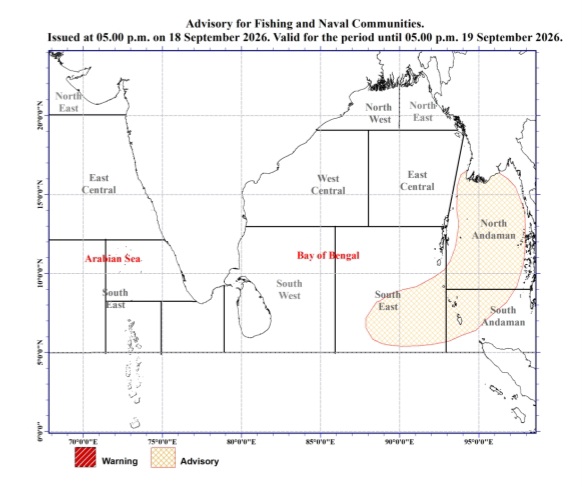
The wind speed in the sea areas marked under the “Advisory” category on the map below will increase to 55-65 kmph at times and those sea areas will be rough or very rough at times.
Navel and fishing communities engaging the activities over this sea area are advised to be vigilant and be attentive to the future forecasts and bulletins issued by the department of Meteorology in this regards.


Text and Pic by Priyan de Silva
Director General of the Commission to Investigate Allegations of Bribery and Corruption (CIABOC) Ranga Dissanayake has questioned whether some promises contained in the National People’s Power (NPP) manifesto, A Thriving Nation – A Beautiful Life, could be fulfilled even if the government wanted to implement them.
Dissanayake raised the issue during a discussion following the release of the third biannual report on manifesto monitoring by the March 12 Movement, at the BMICH, on Wednesday.
He questioned whether the report had taken into account legal and institutional constraints affecting the implementation of certain pledges.
Citing the proposal to establish Anti-Corruption Investigation Offices in each district, Dissanayake said such offices could be established only with the agreement of CIABOC and that amendments to the Anti-Corruption Act would be necessary.
He also referred to the pledge to abolish the Executive Presidency, noting that successive governments had made similar commitments since 1994. He questioned whether there had been adequate consideration of where the powers vested in the Executive President would be transferred if the system were abolished.
On the proposal to establish a Public Prosecutor, Dissanayake questioned whether the Government intended to maintain the office alongside the Attorney General, who currently performs prosecution-related functions.
Executive Director of the Institute for Democratic Reforms and Electoral Studies (IRES) Manjula Gajanayake said Dissanayake’s remarks should be regarded as his personal views and not as Government policy.
Monitoring and Evaluation Consultants M. Thilakarajah and D.D. Mataharaarachchi presented the third-phase findings, covering January to June 2026.
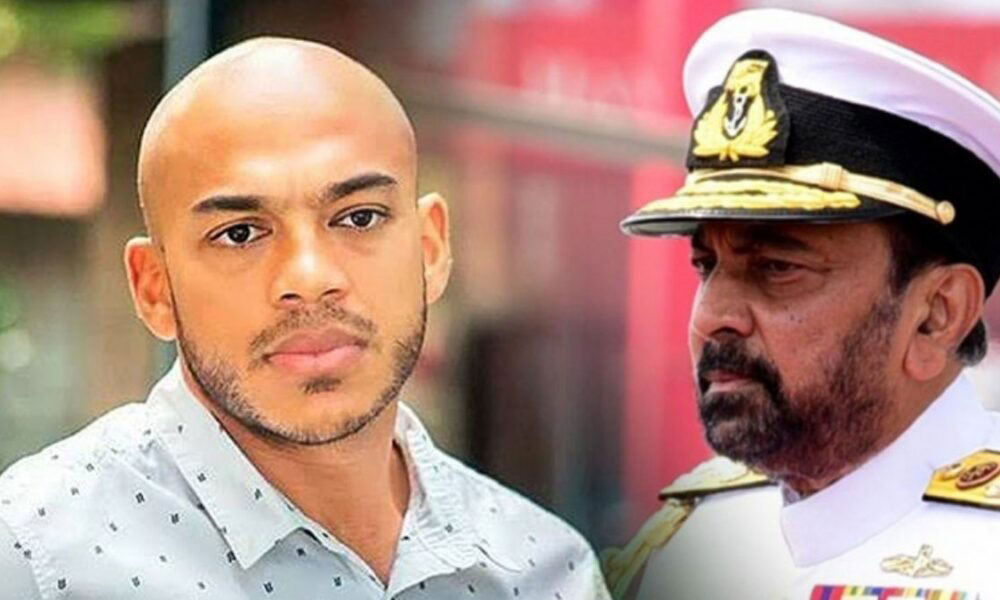
The corruption case filed by the Commission to Investigate Allegations of Bribery or Corruption (CIABOC) against former Navy Commander, Admiral of the Fleet Wasantha Karannagoda, and Yoshitha Rajapaksa was set for a pre-trial conference by the Colombo High Court.
The case was taken up before the Colombo High Court on Thursday (17), when the accused, who are currently out on bail, appeared before the court. After considering the submissions made, the court ordered that the case be called for a pre-trial conference.
The CIABOC had filed the case against the accused, alleging that a corruption offence was committed by sending Yoshitha Rajapaksa, son of former President Mahinda Rajapaksa, for training at the Royal Naval College in the United Kingdom despite him not having the required qualifications.

Advisory for strong winds and rough seas for Multi-day boats in the Bay of Bengal

Showers in the Western, Sabaragamuwa and North-western provinces and in Galle, Matara, Kandy and Nuwara-Eliya Districts

Some NPP manifesto promises may be difficult to fulfil – CIABOC DG

Yoshitha and ex-Navy chief Karannagoda’s case fixed for PTC

Court orders probe into Wimal’s rally speech

Court to rule on Dilith’s writ petition on September 30

‘Dates have the highest sugar content to fight Coronavirus’

Sunday Island 27 December – Headlines

#SundayIsland 17th December – Headlines

Sunday Island – 28th March

Sunday Island Headlines – 21 March

Sunday Island – 21st February – Headlines
-

 News6 days ago
Gnanasara Thero absconding after SC ruling
-

 Opinion5 days ago
From Galkissa (Mount Lavinia) to Tambuttegama
-

 Business6 days ago
HNB Finance strengthens Board with four independent directors
-

 Latest News7 days ago
ITS Giuseppe Garibaldi’ departs Colombo
-

 News2 days ago
US embassy won’t comment on IGP’s probe into joint drug raid
-

 Sports6 days ago
Culture within cricket team worrying authorities
-

 Features4 days ago
The emptying university: why are academics leaving?
-

 Features5 days ago
Sri Lanka’s university crisis: Brain drain and union action demand urgent reform