
Features
Sri Lanka and Global Climate Emergency: Lessons of Cyclone Ditwah

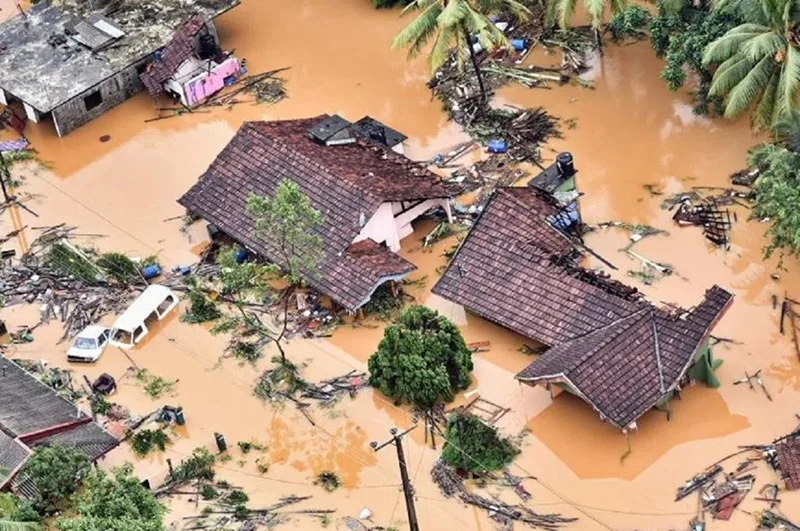
Tropical Cyclone Ditwah, which made landfall in Sri Lanka on 28 November 2025, is considered the country’s worst natural disaster since the deadly 2004 tsunami. It intensified the northeast monsoon, bringing torrential rainfall, massive flooding, and 215 severe landslides across seven districts. The cyclone left a trail of destruction, killing nearly 500 people, displacing over a million, destroying homes, roads, and railway lines, and disabling critical infrastructure including 4,000 transmission towers. Total economic losses are estimated at USD 6–7 billion—exceeding the country’s foreign reserves.
The Sri Lankan Armed Forces have led the relief efforts, aided by international partners including India and Pakistan. A Sri Lanka Air Force helicopter crashed in Wennappuwa, killing the pilot and injuring four others, while five Sri Lanka Navy personnel died in Chundikkulam in the north while widening waterways to mitigate flooding. The bravery and sacrifice of the Sri Lankan Armed Forces during this disaster—as in past disasters—continue to be held in high esteem by grateful Sri Lankans.
The Sri Lankan government, however, is facing intense criticism for its handling of Cyclone Ditwah, including failure to heed early warnings available since November 12, a slow and poorly coordinated response, and inadequate communication with the public. Systemic issues—underinvestment in disaster management, failure to activate protocols, bureaucratic neglect, and a lack of coordination among state institutions—are also blamed for avoidable deaths and destruction.
The causes of climate disasters such as Cyclone Ditwah go far beyond disaster preparedness. Faulty policymaking, mismanagement, and decades of unregulated economic development have eroded the island’s natural defenses. As climate scientist Dr. Thasun Amarasinghe notes:
“Sri Lankan wetlands—the nation’s most effective natural flood-control mechanism—have been bulldosed, filled, encroached upon, and sold. Many of these developments were approved despite warnings from environmental scientists, hydrologists, and even state institutions.”
Sri Lanka’s current vulnerabilities also stem from historical deforestation and plantation agriculture associated with colonial-era export development. Forest cover declined from 82% in 1881 to 70% in 1900, and to 54–50% by 1948, when British rule ended. It fell further to 44% in 1954 and to 16.5% by 2019.
Deforestation contributes an estimated 10–12% of global greenhouse gas emissions. Beyond removing a vital carbon sink, it damages water resources, increases runoff and erosion, and heightens flood and landslide risk. Soil-depleting monocrop agriculture further undermines traditional multi-crop systems that regenerate soil fertility, organic matter, and biodiversity.
In Sri Lanka’s Central Highlands, which were battered by Cyclone Ditwah, deforestation and unregulated construction had destabilised mountain slopes. Although high-risk zones prone to floods and landslides had long been identified, residents were not relocated, and construction and urbanisation continued unchecked.
Sri Lanka was the first country in Asia to adopt neoliberal economic policies. With the “Open Economy” reforms of 1977, a capitalist ideology equating human well-being with quantitative growth and material consumption became widespread. Development efforts were rushed, poorly supervised, and frequently approved without proper environmental assessment.
Privatisation and corporate deregulation weakened state oversight. The recent economic crisis and shrinking budgets further eroded environmental and social protections, including the maintenance of drainage networks, reservoirs, and early-warning systems. These forces have converged to make Sri Lanka a victim of a dual climate threat: gradual environmental collapse and sudden-onset disasters.
Sri Lanka: A Climate Victim
Sri Lanka’s carbon emissions remain relatively small but are rising. The impact of climate change on the island, however, is immense. Annual mean air temperature has increased significantly in recent decades (by 0.016 °C annually between 1961 and 1990). Sea-level rise has caused severe coastal erosion—0.30–0.35 meters per year—affecting nearly 55% of the shoreline. The 2004 tsunami demonstrated the extreme vulnerability of low-lying coastal plains to rising seas.
The Cyclone Ditwah catastrophe was neither wholly new nor surprising. In 2015, the Geneva-based Internal Displacement Monitoring Centre (IDMC) identified Sri Lanka as the South Asian country with the highest relative risk of disaster-related displacement: “For every million inhabitants, 15,000 are at risk of being displaced every year.”
IDMC also noted that in 2017 the country experienced seven disaster events—mainly floods and landslides—resulting in 135,000 new displacements and that Sri Lanka “is also at risk for slow-onset impacts such as soil degradation, saltwater intrusion, water scarcity, and crop failure”.
Sri Lanka ranked sixth among countries most affected by extreme weather events in 2018 (Germanwatch) and second in 2019 (Global Climate Risk Index). Given these warnings, Cyclone Ditwah should not have been a surprise. Scientists have repeatedly cautioned that warmer oceans fuel stronger cyclones and warmer air holds more moisture, leading to extreme rainfall. As the Ceylon Today editorial of December 1, 2025 also observed:
“…our monsoons are no longer predictable. Cyclones form faster, hit harder, and linger longer. Rainfall becomes erratic, intense, and destructive. This is not a coincidence; it is a pattern.”
Without urgent action, even more extreme weather events will threaten Sri Lanka’s habitability and physical survival.
A Global Crisis
Extreme weather events—droughts, wildfires, cyclones, and floods—are becoming the global norm. Up to 1.2 billion people could become “climate refugees” by 2050. Global warming is disrupting weather patterns, destabilising ecosystems, and posing severe risks to life on Earth. Indonesia and Thailand were struck by the rare and devastating Tropical Cyclone Senyar in late November 2025, occurring simultaneously with Cyclone Ditwah’s landfall in Sri Lanka.
More than 75% of global greenhouse gas emissions—and nearly 90% of carbon emissions—come from burning coal, oil, and gas, which supply about 80% of the world’s energy. Countries in the Global South, like Sri Lanka, which contribute least to greenhouse gas emissions, are among the most vulnerable to climate devastation. Yet wealthy nations and multilateral institutions, including the World Bank, continue to subsidise fossil fuel exploration and production. Global climate policymaking—including COP 30 in Belém, Brazil, in 2025—has been criticised as ineffectual and dominated by fossil fuel interests.
If the climate is not stabilised, long-term planetary forces beyond human control may be unleashed. Technology and markets are not inherently the problem; rather, the issue lies in the intentions guiding them. The techno-market worldview, which promotes the belief that well-being increases through limitless growth and consumption, has contributed to severe economic inequality and more frequent extreme weather events. The climate crisis, in turn, reflects a profound mismatch between the exponential expansion of a profit-driven global economy and the far slower evolution of human consciousness needed to uphold morality, compassion, generosity and wisdom.
Sri Lanka’s 2025–26 budget, adopted on November 14, 2025—just as Cyclone Ditwah loomed—promised subsidised land and electricity for companies establishing AI data centers in the country.
President Anura Kumara Dissanayake told Parliament: “Don’t come questioning us on why we are giving land this cheap; we have to make these sacrifices.”
Yet Sri Lanka is a highly water-stressed nation, and a growing body of international research shows that AI data centers consume massive amounts of water and electricity, contributing significantly to greenhouse gas emissions.
The failure of the narrow, competitive techno-market approach underscores the need for an ecological and collective framework capable of addressing the deeper roots of this existential crisis—both for Sri Lanka and the world.
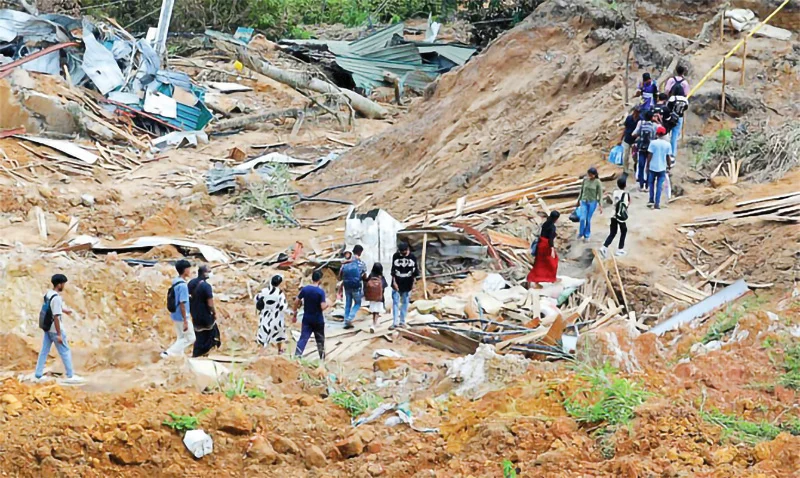
A landslide in Sri Lanka (AFP picture)
Ecological and Human Protection
Ecological consciousness demands
recognition that humanity is part of the Earth, not separate from it. Policies to address climate change must be grounded in this understanding, rather than in worldviews that prize infinite growth and technological dominance. Nature has primacy over human-created systems: the natural world does not depend on humanity, while humanity cannot survive without soil, water, air, sunlight, and the Earth’s essential life-support systems.
Although a climate victim today, Sri Lanka is also home to an ancient ecological civilization dating back to the arrival of the Buddhist monk Mahinda Thera in the 3rd century BCE. Upon meeting King Devanampiyatissa, who was out hunting in Mihintale, Mahinda Thera delivered one of the earliest recorded teachings on ecological interdependence and the duty of rulers to protect nature:
“O great King, the birds of the air and the beasts of the forest have as much right to live and move about in any part of this land as thou. The land belongs to the people and all living beings; thou art only its guardian.”
A stone inscription at Mihintale records that the king forbade the killing of animals and the destruction of trees. The Mihintale Wildlife Sanctuary is believed to be the world’s first.
Sri Lanka’s ancient dry-zone irrigation system—maintained over more than a millennium—stands as a marvel of sustainable development. Its network of interconnected reservoirs, canals, and sluices captured monsoon waters, irrigated fields, controlled floods, and even served as a defensive barrier. Floods occurred, but historical records show no disasters comparable in scale, severity, or frequency to those of today. Ancient rulers, including the legendary reservoir-builder King Parākramabāhu, and generations of rice farmers managed their environment with remarkable discipline and ecological wisdom.
The primacy of nature became especially evident when widespread power outages and the collapse of communication networks during Cyclone Ditwah forced people to rely on one another for survival. The disaster ignited spontaneous acts of compassion and solidarity across all communities—men and women, rich and poor, Buddhists, Christians, Muslims, and Hindus. Local and international efforts mobilized to rescue, shelter, feed, and emotionally support those affected. These actions demonstrated a profound human instinct for care and cooperation, often filling vacuums left by formal emergency systems.
Yet spontaneous solidarity alone is insufficient. Sri Lanka urgently needs policies on sustainable development, environmental protection, and climate resilience. These include strict, science-based regulation of construction; protection of forests and wetlands; proper maintenance of reservoirs; and climate-resilient infrastructure. Schools should teach environmental literacy that builds unity and solidarity, rather than controversial and divisive curriculum changes like the planned removal of history and introduction of contested modules on gender and sexuality.
If the IMF and international creditors—especially BlackRock, Sri Lanka’s largest sovereign bondholder, valued at USD 13 trillion—are genuinely concerned about the country’s suffering, could they not cancel at least some of Sri Lanka’s sovereign debt and support its rebuilding efforts? Addressing the climate emergency and the broader existential crisis facing Sri Lanka and the world ultimately requires an evolution in human consciousness guided by morality, compassion, generosity and wisdom. (Courtesy: IPS NEWS)
Dr Asoka Bandarage is the author of Colonialism in Sri Lanka: The Political Economy of the Kandyan Highlands, 1833-1886 (Mouton) Women, Population and Global Crisis: A Politico-Economic Analysis (Zed Books), The Separatist Conflict in Sri Lanka: Terrorism, Ethnicity, Political Economy, ( Routledge), Sustainability and Well-Being: The Middle Path to Environment, Society and the Economy (Palgrave MacMillan) Crisis in Sri Lanka and the World: Colonial and Neoliberal Origins, Ecological and Collective Alternatives (De Gruyter) and numerous other publications. She serves on the Advisory Boards of the Interfaith Moral Action on Climate and Critical Asian Studies.

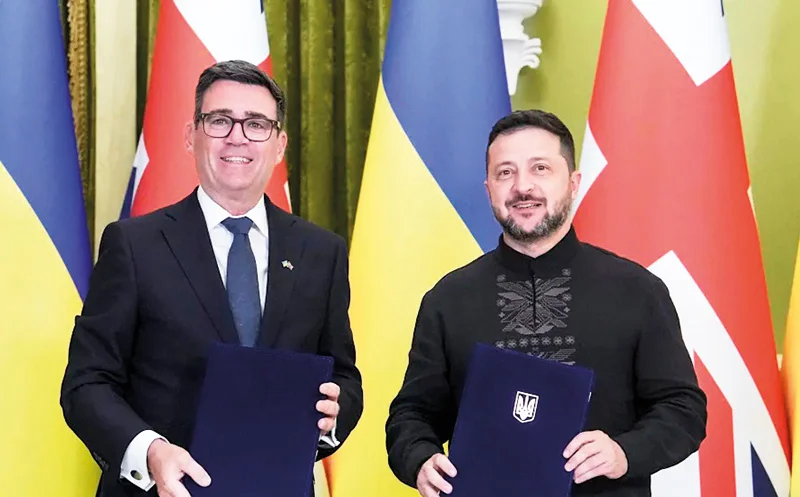
 The present offer by the UK to strengthen Ukraine’s defense capabilities in the missile technology field in particular comes as ‘a stitch in time’ and the initiative is also likely to be appreciated considerably by democratic opinion world wide for the possible morale-boosting effect it would have on Ukraine. Besides continuous arms support, the conviction that the world’s frontline democracies are behind it would prove a huge plus in Ukraine’s eyes in its grinding fightback against the Russian invasion.
While continued US support for Ukraine could not be considered ‘a given’ any more, British Prime Minister Andy Burnham’s words during a recent visit to Kyiv that the UK would stand by Ukraine ‘for as long as it takes’ is the kind of assurance that Ukraine needs at present. For, the conflict in Ukraine is essentially a war of liberation conducted by the latter against an invader and deeply at issue here is the upholding of International Law and its foundational concepts, such as national sovereignty and a nation’s right to political self-determination. The world of democracy is of the firm view that the latter ideals cannot be compromised, come what may.
The UK has its work cut out in this connection. It would find it difficult to convince the Trump administration that it should staunchly stand by Ukraine but it could campaign vigorously with the rest of the West and the EU fold in particular to unflaggingly support the embattled and over-run country.
Ukraine has shown an impressive adeptness in using drone technology in particular against her enemy and has even manufactured her own hardware in this respect but using the relevant blueprints handed over by the UK for the manufacture of more sophisticated cruise missiles, for instance, may prove financially difficult, going forward. It is left to be seen whether the UK and the rest of the West who are with Ukraine will continue to be with her, considering their own rising financial constraints.
The latter impediments could only multiply in the future. Oil, gas and energy prices are on the rise and the latter costs are glaringly reflected in kitchens and meal tables the world over. As we go along consumer discontent would steadily intensify and governments, East and West, would need to figure out with considerable rigour and foresight how such disaffection could be ably managed. Failing which, in most democratic societies, the chances are that publics would be out on the streets demanding that their grievances be redressed forthwith.
These rising concerns are reflected in a recent move by some EU governments to consider imposing what is described as ‘a windfall tax’ on the profits specified major oil companies operating within their shores have made in the wake of the US-Israel war on Iran. The rationale apparently is to use such tax earnings to cushion the rising cost of living of their publics and bolster the respective countries’ social expenditure.
In a recent letter to the president of the EU Council the EU governments referred to said, among other things, while drawing attention to the ‘discontent that is growing over the rising cost of living’: ‘A common approach’ is needed that ‘ensures those who profit from the crisis contribute their share to reducing the burden on the general population.’ Meanwhile, Oxfam with reference to the above development is on record as calling for a ‘permanent windfall tax of at least 50% on profits exceeding a 10% return on investment.’
Such are the rising economic pressures on the majority of Western governments. The question to be posed is how consistent they would be in their assistance to Ukraine if they decide consensually to stand by her. The soaring cost of living in the West compels the conclusion that there could be no guarantee that Western assistance to Ukraine, particularly in the defense and security fields, would be of a longstanding kind.
Of particular concern would be the fact that the weapons systems on offer from the UK to Ukraine could be increasingly costly to manufacture going forward. Besides they would need to be manufactured and put into action without delay.
However, these considerations should in no way deflect Ukraine’s supporters from the principled policy stance of defending her to the extent possible. Because at issue is the defense of International Law and the democratic system of government from their enemies; fascism and authoritarian rule.
While during World Wars 1 and 2 the US was with the major democracies of the West, this time around with regard to Ukraine, the US has chosen to be at cross-purposes with them. For instance, in relation to tariff matters and defense expenditure, in the NATO context, the US is pursuing a hard line which puts it at polar opposites with the West. Thus it is no longer possible to talk unreservedly of a ‘Western democratic alliance’. Put plainly, the cause of democratic development has been weakened.
A measure of relief for the supporters of Ukraine in the West could come by way of the upcoming mid-term polls in the US. If the Democratic Party fares well in them the pressure would be on the Trump administration to defer to opposition opinion at home, accommodate the best interests of Ukraine in its West European policy and perhaps even work towards a diplomatic solution to the Ukraine crisis in cooperation with Russia. Accordingly, the Democratic Party would need to put the Trump administration on the defensive, so to speak.
Until such time Ukraine’s Western supporters have no choice but to remain committed to it, ensure its steadfast defense against the invasion and work judiciously towards keeping the economic pressures at home in check.
Interestingly, at the present juncture in international politics the US could be said to be more weak than strong. For example, it has to some extent been militarily humbled by Iran; so much so it is resorting to economic means to keep Iran in check.
In keeping with this strategy, the US has launched ‘a new big wave of anti-Iran economic sanctions’ at the time of writing, aimed at cutting Iran away from all its major income sources. Some of these relate to digital assets, technology, gold, aviation and shipping. The hoped for result is the complete severance of Iran from the US dollar system.
However, while the UK and EU have no choice but to adhere to their policy of backing Ukraine, going forward they would need to dialogue more closely with the US and ensure that it cooperates with them on outstanding questions, such as Ukraine and the strengthening of democracy. The well being of the world is served when the latter aim is pursued.

OPA 39th Annual Conference calls for Sri Lanka to move Beyond Recovery towards Sustainable Transformation
The Orgnisation of Professional Associations (OPA) successfully concluded its 39th Annual Conference, held recently at the Cinnamon Grand Colombo, under the theme “Envisioning Sri Lanka: Beyond Recovery”.
Held under the patronage of Jayantha Gallehewa, President of the OPA, with the leadership and guidance of Tisara De Silva, President-Elect and Chairman of the 39th Annual Conference, the Conference brought together leading professionals, academics, business leaders and representatives of the public and private sectors to deliberate on Sri Lanka’s next phase of national development.
The Inaugural Session, on August 2026, was graced by Prime Minister Dr. Harini Amarasuriya, as the Chief Guest; Andrew Patrick, British High Commissioner to Sri Lanka, as the Guest of Honour; and Murtaza Jafferjee, Chairman of the Advocata Institute, Sri Lanka, as the Keynote Speaker.
In her address, Prime Minister Dr. Harini Amarasuriya emphasised that overcoming the economic crisis alone should not be Sri Lanka’s ultimate objective, stressing that recovery must serve as the foundation for a broader economic and institutional transformation necessary for sustainable national progress. Reflecting on the difficult period experienced by the country, the Prime Minister noted that Sri Lanka had faced significant economic, social and institutional challenges, which had weakened public confidence and created uncertainty about the country’s future.
She stressed that “recovery only provides the foundation” and that Sri Lanka can move forward sustainably only by using that foundation to bring about meaningful transformation.
The Prime Minister observed that the theme of the OPA’s 39th Annual Conference, “Envisioning Sri Lanka: Beyond Recovery,” aptly encapsulated these national aspirations. She emphasised that Sri Lanka’s objective should not merely be to return to the conditions that existed before the crisis, but to forge a stronger national foundation characterised by robust institutions, a resilient economy, high-quality public services and an enabling environment in which every citizen has the opportunity to thrive.
She further underscored that Sri Lanka’s future development cannot be secured through economic growth and physical development alone. She emphasised that the effective mobilisation of the country’s knowledge, skills and professional expertise, is equally essential to achieving sustainable and inclusive national progress
The Technical Sessions held on 12 August 2026 brought together 19 distinguished experts and professionals representing academia, industry, banking and finance, public health, technology, management and business leadership. Their diverse expertise provided a multidisciplinary platform to examine the critical challenges, emerging opportunities and strategic choices that will shape Sri Lanka’s next phase of development, with particular emphasis on economic transformation, institutional strengthening, digitalisation, private-sector growth, human capital and sustainable development.
The deliberations were structured around four principal sub-themes: “Resilient Recovery and Sustainable Economic Development”; “Future Readiness: Innovation & Transformation”; “Policy for Impact: Advancing Equity, Sustainable Living, and National Well-Being”; and “Leadership, Governance and National Responsibility.”
Across these thematic areas, the sessions explored the structural reforms, institutional requirements and policy choices necessary to move Sri Lanka beyond economic stabilisation towards a more productive, competitive, resilient and inclusive economy. The discussions brought together diverse professional perspectives, enabling participants to examine national priorities through economic, technological, industrial, financial, social and governance lenses.
Particular emphasis was placed on the need to move beyond the diagnosis of problems towards pragmatic, evidence-based and implementable solutions. The deliberations recognised that sustainable national progress requires not only sound policies, but also effective institutions, professional competence, innovation, responsible leadership and the capacity to translate policy into tangible outcomes.
The sessions further underscored the importance of collaboration across sectors, recognising that Sri Lanka’s complex development challenges cannot be addressed in isolation. Stronger engagement among Government, private sector, professional associations, academia and civil society was identified as essential to fostering a coherent national response and ensuring that professional knowledge and expertise are effectively translated into policy and action.
Collectively, the Technical Sessions provided a substantive platform for knowledge exchange, critical reflection and forward-looking dialogue, reinforcing the OPA’s commitment to bringing the country’s professional expertise to bear on the task of building a resilient, innovative, equitable and prosperous Sri Lanka.
The OPA expressed its sincere appreciation to Prime Minister Dr. Harini Amarasuriya, the Chief Guest; Andrew Patrick, British High Commissioner to Sri Lanka and Guest of Honour; and Murtaza Jafferjee, Chairman of the Advocata Institute, Sri Lanka and Keynote Speaker, for their distinguished contributions to the Conference.
Much of what the 39th Annual Conference achieved would not have been possible without the leadership, commitment and generous contributions of Jayantha Gallehewa, President of the OPA; Tisara De Silva, President-Elect and Chairman of the 39th Annual Conference; Eng. Ravi Rupasinghe, General Secretary; Dharshana Wijemanne, Treasurer; Bhanu Wijayaratne, Convener & the Chairman of the Session Planning Committee of the 39th Annual Conference Committee, Past Presidents and Office Bearers; Presidents and representatives of Member Associations; members of the Executive Councils and General Forum; and the distinguished Session Chairmen, Resource Persons and professionals who shared their time, expertise and insights in pursuit of the Conference’s shared vision. The OPA remains immensely grateful to all those whose collective contributions enriched the 39th Annual Conference and strengthened its role as a meaningful platform for professional exchange, informed dialogue and national reflection.

 For Sri Lankans living 14,000 kilometres from home, the sound of home has never felt closer — and that’s thanks to one man and his band.
Since stepping into the spotlight, Gamini Hemalal and the Ceymphony Band have turned into the heartbeat of the Sri Lankan community in Toronto.
Their mission is simple: bring the music, bring the memories, bring the people together. And it’s working.
What turned out to be the talk-of-the-town was their intimate musical evening with Sri Lanka’s legendary crooner Sohan Weerasinghe.

Sohan Weerasinghe: Had
everyone on their feet at the
Angus Glen Golf Club, in
Toronto, Canada
It was a ‘full house’ long before the big date. Tickets vanished within days — demand was that overwhelming.
According to those who were there, it was a truly amazing evening. The hall was packed, the energy electric. Sohan didn’t just sing — he owned the stage.
With his velvet vocals, his charm, and that signature style, he had everyone on their feet. The ladies, especially, couldn’t get enough. No wonder they call him “The Ladies’ Man!”
One attendee summed it up perfectly:
“We had so much fun. It is truly a blessing to have our kids around us, enjoying these beautiful moments together. Thank you, Gamini Hemalal, for such a wonderful evening, with an amazing crowd and an incredible atmosphere. Your hard work and dedication truly made it a special night.
“We also need to say a big thank you to the Ceymphony Band for delivering such an outstanding performance. You all were absolutely amazing! Our entire family had a fantastic time, and we truly enjoyed every moment.

Ceymphony Band: Extremely popular in the scene in Toronto
“Wishing you all continued success. Keep up the amazing work, we can’t wait for the next.”
And the next is already on the cards: ‘Halloween Pissu Baila Party 2026,’ on Friday, 30th October, at the famous Angus Glen Golf Club.
Gamini promises a crazy night of baila, music, dancing and Halloween vibes with the Ceymphony Band. Action runs from 8:00 PM to 12:00 midnight, with plenty of prizes to be won.

Gamini Hemalal: Amazing work for the Sri Lankan community,
in Toronto, Canada
Gamini is also putting together a special event, connected with the 2027 Avurudu celebrations — ‘Avurudu Musical Show 2027,’ a uniquely styled musical Avurudu celebration … Ceymphony Band style.
It’s scheduled to be held on Saturday, 10th April, 2027, also at the Angus Glen Golf Club.
Through music, Gamini Hemalal and Ceymphony are doing what diaspora bands do best — they’re shrinking the distance between two worlds.
One baila beat at a time, one full house at a time, they’re making sure that even in Canada, Sri Lankans feel like home.
Yes, there is plenty of action, indeed, for the Sri Lankan community in Toronto, Canada.

More than 360 dead, 1,400 missing in Nepal and Tibet after Himalayan floods

Bosnian Serb convicted war criminal Ratko Mladic dies

Prince of Wales to celebrate 150th anniversary with six-a-side cricket

Unyielding Dinusha, spirited tail hold off India to save Colombo Test

US golfer Gogel gets six-month ban for betting

UAE’s Asif Khan handed 15-month ban for using a banned substance

‘Dates have the highest sugar content to fight Coronavirus’

Sunday Island 27 December – Headlines

#SundayIsland 17th December – Headlines

Sunday Island – 28th March

Sunday Island Headlines – 21 March

Sunday Island – 21st February – Headlines
-
 News7 days ago
Country’s first woman Surveyor General appointed
-

 Business6 days ago
SriLankan Airlines makes ShakthiSAT Mission possible for talented Sri Lankan student
-
 Features7 days ago
Medical education in Sri Lanka: Then and now
-
 Latest News6 days ago
Imran Khan moved to private hospital amid deteriorating health
-

 Latest News7 days ago
Government has declared 21, 22 and 23 August 2026 as national days of mourning
-
 Features5 days ago
My secondary schooling after Royal Primary
-

 Features5 days ago
From the First to the 22nd: A short history of Amendment Politics and Reform Frustrations
-
 News7 days ago
22A: Opp. demands all available SC judges hear petitions