
News
UNDP assessment paints a frightening picture in the aftermath of Cyclone Ditwah


Areas flooded 1.1 hectares
Population exposed 2.3 mn
Landslides recorded 1.2 k = Buildings exposed 919 k
The UNDP has estimated that almost 720 thousand buildings were exposed to cyclone-related flooding across Sri Lanka. According to UNDP analysis, this includes 243 hospitals (as estimated by the Sri Lankan Ministry of Health) and hundreds of educational facilities. Overall, about 1 in every 12 buildings in Sri Lanka was exposed to flooding during Cyclone Ditwah, the UNDP stated.
At the level of divisional secretariats, Ja-Ela in the Gampaha district recorded the highest number of affected buildings with more than 44 thousand structures exposed. Kolonnawa and Kaduwela in the Colombo District as well as Katana and Wattala in the Gampaha District also recorded over 35 thousand exposed buildings each, according to the UNDP.
The flooding was so severe Cyclone Ditwah resulted in 1.1 million hectares of flooding across Sri Lanka – equal to about 20% of Sri Lanka’s land mass, the UN agency stated.
Based on the Department of Surveys’ 2024 national road dataset, the UNDP analysis estimated that more than 16 thousand kilometers of roads were exposed to flooding across the country, enough to circle Sri Lanka’s coastline 12 times over. The cyclone has also exposed over 480 road bridges nationwide.
At the level of divisional secretariats, Katana, Gampaha, and Ja Ela in the Gampaha District all recorded over 300 km of exposed roads each. Other secretariats like Kaduwela in the Colombo District and Wattala in the Gampaha District also registered high levels of road exposure.
Railways and railway bridges (railroad system), too, suffered significant damages according to the UNDP analysis. Accordingly, over 278 km of railways were exposed to cyclone-related flooding, including 35 railroad bridges nationwide. The UNDP emphasized that this figure reflected flooding only, but other hazards (such as localized debris, landslides, or damage to a single bridge) could also disrupt operations, meaning that even relatively small obstructions could render long stretches of railway non-operational. Like road exposure, railway exposure limits mobility and the capacity of affected populations to access key services and infrastructure.
At the level of divisional secretariats, Colombo and Thimbirigasyaya in the Colombo District, Ja Ela in the Gampaha District, as well as Mannar Town and Nanaddan in the Mannar District all registered over 10 km of exposed railways each.
The UNDP has warned the removal of debris posed quite a challenge with preliminary estimates indicating that Cyclone Ditwah generated more than 240,000 tonnes of non-construction waste and over 60,000 m³ of construction-related debris. These figures were expected to increase and evolve as field verification advances and more areas become accessible, the UNDP stated.
The UNDP dealt with the crisis experienced by the agriculture sector.
The UNDP stated: “It is estimated that Cyclone Ditwah has exposed over 530 thousand hectares of paddy lands to flooding across Sri Lanka. The most impacted divisional secretariat is Dimbulagala (Polonnaruwa District) with almost 19 thousand hectares of exposed paddy lands. Other secretariats like Welikanda and Medirigiriya, also in the Polonnaruwa District, as well as Horowpathana (Anuradhapura District) and Dehiattakandiya (Ampara District) have also been heavily affected by cyclone-related flooding. There are also areas where 20 to 30% of households do not have sufficient stocks of dry food (such as rice) to last at least a week. Therefore, it is clear that the cyclone’s agricultural impacts are also located in areas with a high degree of food-related vulnerability.”
A key finding of latest UNDP analysis is that over half of the people in flooding areas were already living in households facing multiple vulnerabilities before Cyclone Ditwah, including unstable income, high debt, and a limited capacity to cope with disasters. These communities face heightened challenges in recovery, underscoring the need for targeted interventions.
According to the UNDP major recovery needs were concentrated in areas where cyclone impacts intersect with preexisting multidimensional vulnerability. “This pattern is evident across the central highlands and the northern, western, eastern, and central regions. Among the divisional secretariats with the highest recovery needs are Mundel and Arachchikattuwa in the Puttalam District, as well as Kandavalai in the Kilinochchi District.”

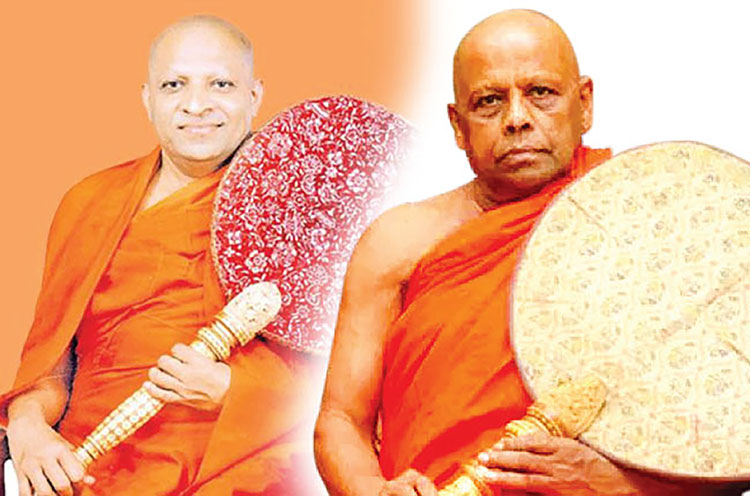
MONETABRIEF– Sri Lanka’s two most senior Buddhist chapters, Malwatte and Asgiriya, demanded special concessions for monks serving prison sentences, following the disrobing of convicted monk Ven. Galagodaatte Gnanasara in line with established procedures.
The chief prelate of the Asgiriya chapter, Most Venerable Warakagoda Sri Gnanarathana, told Prisons Commissioner Senaka Palletenna that Ven. Gnanasara, who is serving a six-year sentence for contempt of court, must be released immediately.
Prison authorities have no power to release or pardon convicts, but Palletenna told the monk in Kandy on Friday that he would convey his request to the relevant government authorities.
“There is no point in talking about this and that… The entire country has been shaken (??????? ) . He must be released,” the Asgiriya chief prelate said.
The Malwatte chief prelate, Most Venerable Thibbatuwawe Sri Siddhartha Sumangala, appeared to accept the court verdict against Ven. Gnanasara, but asked the prisons chief whether a separate section could be established for convicted monks.
Palletenna noted that a special ward for the clergy already existed at Welikada Prison.
At least 63 convicted Buddhist monks are currently incarcerated within Sri Lanka’s criminal justice system.
Meanwhile, a group of 34 Buddhist monks named in a Colombo Fort Magistrate’s Court order to vacate the vicinity of the Presidential Secretariat ended their protest and dispersed after lunch on Friday.The monks are demanding an unconditional pardon for Ven. Gnanasara, who has previously been imprisoned, making him a reconvicted prisoner.
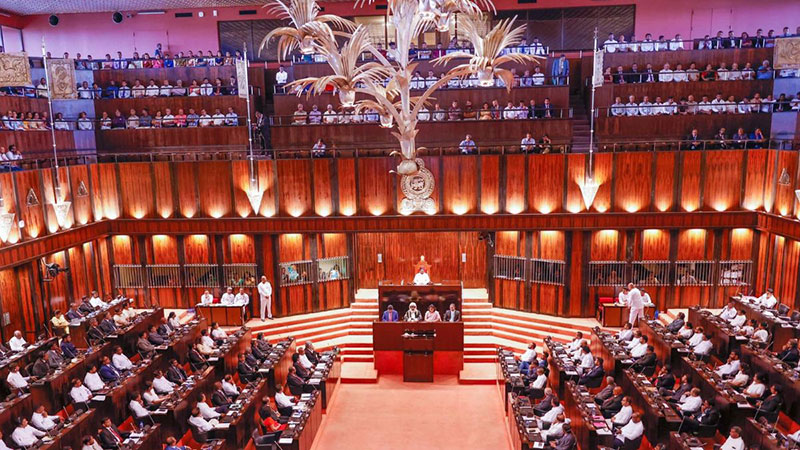
The debate on the no-confidence motion against Speaker Dr. Jagath Wickramaratne, submitted by the Samagi Jana Balawegaya (SJB), has been postponed indefinitely pending the Attorney General’s opinion on certain technical issues in the motion.
Government representatives raised the matter at a meeting of the Committee on Parliamentary Business, pointing out that several provisions of the motion required clarification and that the Attorney General’s advice should be obtained.
As obtaining the opinion would take time, the debate could not be scheduled for the next parliamentary week, parliamentary sources said.
Chief Opposition Whip Gayantha Karunatilaka said a date for the debate would be decided after the Attorney General’s advice was received.
Meanwhile, Parliament is scheduled to meet from October 20 to 23, Secretary General of Parliament Kushani Rohanadeera announced.
The parliamentary business for the week was finalised at a meeting of the Committee on Parliamentary Business held on Friday (16) under the chairmanship of Deputy Speaker Dr. Rizvie Salih.
On each sitting day, the period from 9.30 a.m. to 10 a.m. will be allocated for parliamentary business under Items 1 to 6 of Standing Order 22. Questions for Oral Answers will be taken up from 10 a.m. to 11 a.m., followed by questions under Standing Order 27(2) from 11 a.m. to 11.30 a.m.
On Tuesday, October 20, an Opposition-sponsored Adjournment Motion will be debated from 11.30 a.m. to 5.30 p.m.
On Wednesday, October 21, a resolution under the Public Debt Management Act and a Supplementary Estimate will be taken up for debate and approval from 11.30 a.m. to 5 p.m. The annual reports of five statutory institutions will subsequently be presented for approval without debate, while questions at the Adjournment Time will be taken up from 5 p.m. to 5.30 p.m.
On Thursday, October 22, the Second Reading debates on two Bills to amend the Poisons, Opium and Dangerous Drugs Ordinance (Bills Nos. 79 and 80) will be held from 11.30 a.m. to 5 p.m.
The annual reports of five statutory institutions will then be taken up for approval without debate, followed by an Opposition-sponsored Adjournment Motion from 5 p.m. to 5.30 p.m.
On Friday, October 23, the Second Reading debate on the Elimination of Rabies and Registration of Dogs Bill will be held from 11.30 a.m. to 5 p.m. A Government-sponsored Adjournment Motion will be debated during the final half-hour of the sitting.

Former Navy Commander Admiral Wasantha Karannagoda had, by letter dated May 19, 2014, requested the Secretary to the Ministry of Defence to approve the funds required for former Navy Lieutenant Yoshitha Rajapaksa, son of former President Mahinda Rajapaksa, to attend the Royal Navy Young Officers Course at the Royal Navy Training College in the United Kingdom, the Colombo High Court was told on Thursday (15).
The court was informed that £24,536 in public funds had been spent on the training programme. The details emerged during testimony by a Navy representative appearing on behalf of former Navy Commander Admiral Travis Sinniah before Colombo High Court Judge Udesh Ranatunga, when the money laundering case against Rajapaksa was taken up for hearing.
Responding to questions during cross-examination, the witness explained that payments for Navy officers attending overseas training programmes were generally made in foreign currencies, including US dollars and British pounds.
Meanwhile, Navy Captain Nuwan Thushara Arangala, testifying for the prosecution, told court that Rajapaksa had received a total of Rs. 5,159,626.37 in salaries and allowances during his nine years of service in the Navy.
The court was informed that Rajapaksa had served as a Navy Lieutenant from December 14, 2006, to February 28, 2017, although his service had been suspended on February 28, 2016.
According to the testimony, his monthly gross salary was Rs. 16,390, in addition to allowances for food, uniforms, housing and special duties.
The witness clarified that these allowances did not include payments made for overseas training programmes or participation in sporting events while representing the Navy.
During the proceedings, the prosecution also submitted Rajapaksa’s annual declarations of assets and liabilities for the period from 2009 to 2015.
A National Savings Bank official also testified regarding savings accounts and fixed deposits maintained by Rajapaksa, stating that no withdrawals had been made from the accounts since they were opened.
Rajapaksa is facing charges under the Prevention of Money Laundering Act over his alleged failure to explain the source of nearly Rs. 735 million acquired between August 1, 2012, and August 29, 2013, in Rajagiriya and Bambalapitiya.
The prosecution alleges that funds suspected to have been derived from unlawful activities were deposited in bank accounts and fixed deposits.
The court also heard testimony concerning the appointment of a guardian for Daisy Forrest, the second defendant in the case, and matters relating to the clearance of an imported outside broadcasting (OB) truck associated with CSN television.
Further examination of witnesses was scheduled for October 30, with the court directing 11 prosecution witnesses to appear on that date.

Half a million people join protests in France, but some turn violent

Deadly fire breaks out at Canada military base

Showers or thundershowers will occur in most parts of the island after 1.00 p.m.

Buddhist hierarchy demands prison perks for monk convicts

Debate on NCM against Speaker postponed indefinitely

Karannagoda pushed for £24,536 for Yoshitha’s UK training, Court told

‘Dates have the highest sugar content to fight Coronavirus’

Sunday Island 27 December – Headlines

#SundayIsland 17th December – Headlines

Sunday Island – 28th March

Sunday Island Headlines – 21 March

Sunday Island – 21st February – Headlines
-

 Latest News5 days ago
Nissanka’s return headlines Sri Lanka’s Test squad against Pakistan
-

 Latest News6 days ago
Farhan and Sadaqat help Pakistan seal series in style
-

 Features6 days ago
Intake 16: 45 years of duty and honour
-
 News6 days ago
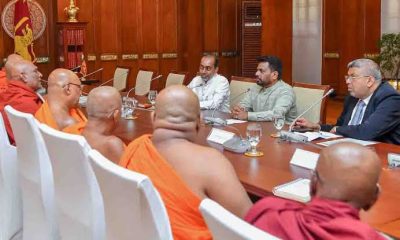
Malwathu Chapter issues statement on talks with President over Gnanasara Thera’s robes
-
 News6 days ago
CP alleges NPP has taken the blame for illegal US sanctions on Iranian vessels
-

 News4 days ago
Sri Lanka, India caught in US-Iran ship crisis
-

 Opinion6 days ago
How long can Sri Lanka remain silent on its demographic crisis?
-

 Latest News4 days ago
Kusal Mendis’ unbeaten 87 hands Sri Lanka consolation win