
Business
Sri Lanka betting its tourism future on cold, hard numbers


National Airport Exit Survey tells quite a story
Australia’s role here is strategic, not charitable
In a quiet but significant shift, Sri Lanka’s tourism sector is moving beyond traditional destination marketing and instinct-based planning. The recent launch of the “From Data to Decisions” initiative jointly backed by Australia’s Market Development Facility and the Sri Lanka Tourism Development Authority, sent an unambiguous message: sentiment is out, statistics are in.
The initiative is anchored by a 12-month National Airport Exit Survey, a trove of data covering 16,000 travellers. The findings sketch a new traveller profile: nearly half are young (20–35), independent, and book online. Galle, Ella, and Sigiriya are the hotspots; women travellers outnumber men; and a promising 45% plan to return. This isn’t just trivia. It’s a strategic blueprint. If Sri Lanka Tourism listens, it can tailor everything from infrastructure to marketing, moving from guesswork to precision.

Tourists have a real sense of achievement after hiking the trail to Ella Rock
The keynote speaker, Deputy Minister Prof. Ruwan Ranasinghe called data “a vital pillar of tourism transformation.” Yet the unspoken truth is that Sri Lanka has long relied on generic appeals -beaches, heritage, smiles. In today’s crowded market, that’s no longer enough. As SLTDA Chairman Buddhika Hewawasam noted, this partnership is about “elevating how we collect, analyse, and use data.”
Australia’s role here is strategic, not charitable. By funding research and advocating for a Tourism Satellite Account, it is helping Sri Lanka build a tourism sector that is both sustainable and measurable. Australian High Commissioner Matthew Duckworth linked this support to “global standards of environmental protection” – a clear nod to the growing demand for green travel. This isn’t just aid; it’s influence through insight.
“The real test lies ahead,” a tourism expert told The Island. “Data is only as good as the decisions it drives. Will these insights overcome bureaucratic inertia? Will marketing budgets actually follow the evidence toward younger, independent, female travellers?,” he asked.
“The comprehensive report promised for early 2026 must move swiftly from recommendation to action. In an era where destinations are discovered on Instagram and planned with algorithms, intuition alone is a high-stakes gamble. This forum made one thing clear: Sri Lanka is finally building its future on what visitors actually do – not just what we hope they’ll do. The numbers are in. Now, the industry must dare to follow them,” he said.
By Sanath Nanayakkare


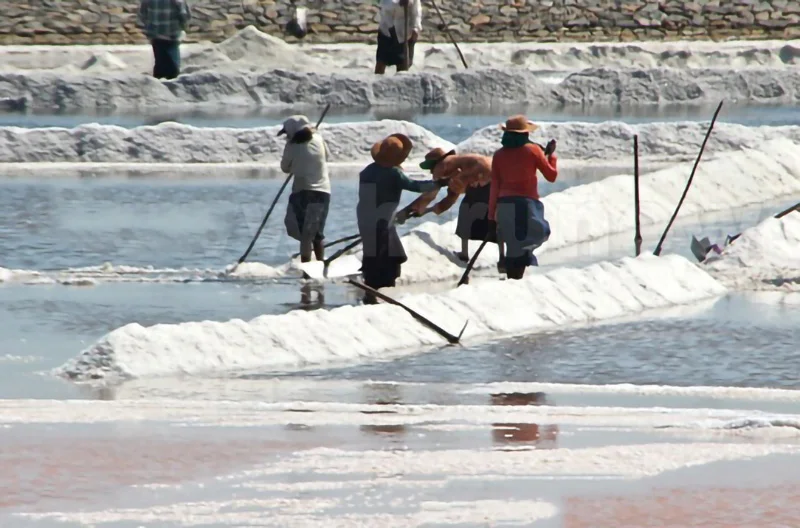
…Business impact worsens as 50,000 MT remain idle
The government has suffered an estimated foreign exchange loss exceeding USD100 million following a delay of more than a year in deciding the fate of over 50,000 metric tonnes of imported salt, raising fresh concerns over policy uncertainty, regulatory inefficiencies and their impact on trade, logistics and food security.
According to the Customs House Agents & Traders Association (CHATA), approximately 42,000 metric tonnes of salt imported in around 1,500 containers, together with another 10,000 metric tonnes brought in as bulk cargo, remain stranded due to the absence of a final government decision.
When contacted, CHATA president Mohamed Niyas said the prolonged delay has resulted in mounting financial losses through container detention, shipping line demurrage, port storage charges and deterioration in product quality, while tying up valuable foreign exchange.
“The country has already paid for these imports, yet neither businesses nor consumers have derived any benefit from them. The longer the delay, the greater the economic loss to the country, he noted.
The imports were originally permitted after severe rainfall disrupted local salt production during the first quarter of 2025, prompting the government to temporarily relax import licensing requirements through Extraordinary Gazette No. 2437/04 to prevent shortages.
However, while the emergency measure eased import restrictions, it did not impose a ceiling on import volumes, resulting in substantially larger quantities entering the country than required.
The Association said several consignments subsequently failed to comply with shipment deadlines or mandatory quality standards, particularly iodine content requirements, leaving authorities with complex regulatory issues that remain unresolved more than a year later.
From a business perspective, industry observers warn that the delay has also affected shipping, logistics and port operations, with thousands of containers occupying valuable storage space while importers continue to incur escalating charges.
Adding to the challenge is the expiry of the recommended shelf life of much of the iodised salt. With an average shelf life of around 18 months, prolonged storage has reduced the commercial value of the consignments and may require further testing and processing before any possible release to the market.
Niyas urged the government to adopt a practical solution by transferring the consignments to the National Salt Limited for technical evaluation, possible reprocessing and controlled utilisation instead of pursuing re-export, which he said is no longer commercially viable.
He said such a move could help recover part of the economic value locked in the consignments, minimise further financial losses and ease the burden on both importers and the national economy.
By Ifham Nizam
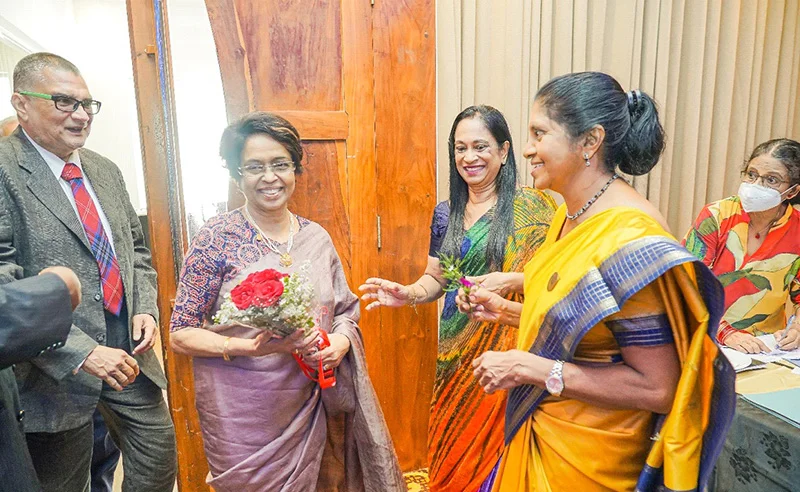
Y’s Men International, Sri Lanka Region officially celebrated its landmark 50th Annual Convention at the Hotel Ramadia, Moratuwa on June 20, 2026. The milestone event brought together members from across the island to celebrate half a century of community empowerment and international fellowship.
Originally founded in 1922 in Ohio, USA, Y’s Men International established its footprint in Sri Lanka in 1930. The movement experienced rapid local growth, leading to its 95 years of existence. The organization celebrates 95 years of uninterrupted, dedicated service to vulnerable communities through diverse humanitarian projects.
Its 50th Annual Convention paid tribute to the region’s foundational leadership. It also recognized the long line of dedicated leaders who headed the Sri Lanka region.
The 50th Regional Convention was headed by Regional Director Y’s Man Ranarajh Serasinhe, who guided the 2025/26 term with immense devotion and distinction.
Past Asia Area President, Y’s Lady Rita Hettiarachchi, graced the event as the Chief Guest. Her address featured a unique, retrospective video presentation capturing the history and impact of the past 50 Regional Directors with their regnal years.
The highlight of the evening was the official installation of the 2026/27 Regional Council by the Chief Guest Rita Hettiarachchi, ushering in a new year themed around “Caring and Sharing where God sends us.” The newly appointed office bearers include:
Regional Director: Y’s Lady Jayanthi Rodrigo
Immediate Past Regional Director: Y’s Man Ranarajh Serasinhe
Regional Director Elect: Y’s Man Anton Kandiah
Regional Secretary: Y’s man Heshan Dissanayake
Regional Treasurer: Y’s man V. Rajendran
The incoming office bearers alongside the newly appointed Service Directors pledged to continue the organization’s legacy of uplifting the needy and expanding its civic footprint across Sri Lanka in the coming years.
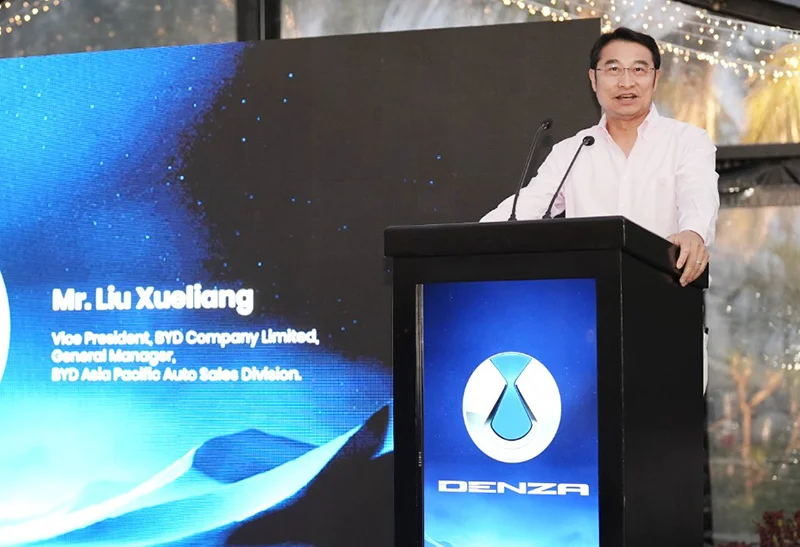
John Keells CG Auto (JKCG Auto), the authorised distributor of BYD and DENZA, recently welcomed BYD Vice President, Liu Xueliang to Sri Lanka as part of an official visit reviewing the remarkable growth of both brands across sales and aftersales.
The visit reflects the company’s long-term confidence in Sri Lanka’s transition towards New Energy Mobility and its place within that broader global momentum.
“Sri Lanka holds a strategic place in BYD’s regional outlook for South Asia. What stands out to us is the enthusiasm and loyalty Sri Lankan customers have shown towards the brand, and that response has shaped how seriously we view this market’s potential
“We recognise and are grateful for the trust placed in BYD and DENZA by our valued Sri Lankan customers. Our focus going forward is to ensure that they will continue to have access to the same quality products and technology that have earned us recognition globally, and backed by robust customer support. We also commend the JKCG Auto team for their outstanding work in seamlessly giving life to our brand in Sri Lanka,” Liu said.
His visit follows another landmark year for BYD, which in 2026 emerged as the globally dominant leader in New Energy Vehicles (NEVs), recording 4.6 million units in sales in 2025, and well on track to surpass that figure in 2026.
BYD was also celebrated as the World’s Most Innovative Automotive Group in the Automotive INNOVATIONS Report 2026 by Germany’s Center of Automotive Management (CAM) — the first time a Chinese automaker has topped the ranking in its 21-year history.
Locally too, BYD is become a fast favourite with Sri Lankan customers. Within nine months of vehicle imports resuming, BYD accounted for approximately 37% of all brand-new vehicle registrations and over 70% of electric vehicle registrations in Sri Lanka.

Several spells of showers will occur in the Western and Sabaragamuwa provinces and in Galle, Matara, Kandy and Nuwara-Eliya districts

Prison officers urge Justice Minister to protect their colleague who opened fire

Negombo Prison riot: Ensuring protection of prisoners fundamental responsibility of the state – UN

Govt. considers banning or restricting social media for children under 16: PM

Brandix donates vital ECG machine to Mirigama Base Hospital Emergency Care Unit

High-scoring draw gives West Indies rare series win

‘Dates have the highest sugar content to fight Coronavirus’

Sunday Island 27 December – Headlines

#SundayIsland 17th December – Headlines

Sunday Island – 28th March

Sunday Island Headlines – 21 March

Sunday Island – 21st February – Headlines
-

 News4 days ago
Singapore-based Buddhist monk marks nearly four decades of humanitarian service
-

 News6 days ago
CIABOC to question Harak Kata on Rs. 200 mn bribery allegation
-

 News5 days ago
Freedom 250: US Embassy celebrates America’s 250th Independence Day through magic of American cinema
-
 News6 days ago
SLAF conducts successful rescue mission under UN command in Central African Republic
-

 News3 days ago
AI concerned over proposed SL military deployment in Haiti
-

 Business6 days ago
‘Dialog Air Fibre powers a new era of Ultra Fast Home WiFi’
-
 News6 days ago
UNEP support pledged to strengthen Sri Lanka’s Environmental Priorities
-

 Features4 days ago
The NPP’s New Challenge: Balancing Easter Lawfare and Economic Welfare