
Latest News
Staff and tourists among 25 killed in Goa nightclub fire


Twenty five people have been killed in a fire at a popular nightclub in the coastal region of Goa, India, local officials say.
The majority of victims are believed to be staff at the club in Arpora, North Goa, while tourists are also among the dead.
Police believe a gas cylinder exploded in the club’s kitchen, causing a blaze to rip through the venue on Saturday at midnight local time.
On Sunday morning, officials said the death toll had risen from an earlier figure of 23. Six more people are in a stable condition in hospital.
The BBC has spoken to witnesses at the scene who described scenes of panic in the bustling nightlife area.
“The fire was mainly concentrated around the kitchen area on the ground floor,” said Alok Kumar, Goa’s Director General of Police.”The fire occurred around midnight. It has now been brought under control.” Most of the bodies were found around the kitchen “suggesting that the victims were employed at the club,” Alok Kumar added.
Goa’s chief minister Pramod Sawant told journalists three people died from burn injuries, while others died by suffocating. He said “three to four” tourists had died but did not provide their ages or nationalities.
The Indian Express reports the fire broke out at a club called Birch by Romeo Lane at Baga, located at the one of the coastal region’s most popular beaches.
The area where the fire occurred is lined with similar nightlife hotspots, where tourists and partygoers can be seen pouring out of the bustling clubs.
A chef who works at a nearby venue told the BBC he knew some of the workers at the Birch club. “People from all over the country and also from Nepal work in different clubs in Goa,” he said. “I am really worried for some people who I knew at the club. Their phones are off.”
Rescue efforts were still ongoing in the early hours of Sunday morning. Crews were combing through the charred wreckage to determine the cause of the blaze.
A heavy security presence remained at the scene on Sunday morning, with the doors to the nightclub shut and no one allowed inside.
The BBC saw what appeared to be charred and melted remains of chairs, tables and plants in one corner of the club.
One eyewitness said that it was a usual Saturday night and holidaymakers were enjoying themselves. He said: “I was outside the club when I heard screams, I didn’t initially understand what was going on. “In a bit, it became clear that a massive fire had broken out. Nobody could do much. The scenes were just horrific.”
Rescue workers have taken the bodies of the victims to Goa Medical College in Panaji.
One of the firefighters at the scene told the BBC they are still identifying the victims and will then notify their families.
A formal inquiry into the cause of the fire has been launched, the chief minister said.
“Those found responsible will face most stringent action under the law – any negligence will be dealt with firmly,” Dr Sawant said. “I am deeply grieved and offer my heartfelt condolences to all the bereaved families in this hour of unimaginable loss.”
Prime Minister Narendra Modi called the Goa fire “deeply saddening” in a post on social media.
Goa is former Portuguese colony on the Arabian Sea. Its nightlife, sandy beaches, and resorts attract millions of tourists annually.
About 5.5 million tourists visited Goa in the first half of the year, government data showed, with 270,000 visiting from abroad.
India has seen a number of deadly fires at entertainment venues in recent years.
A fire at a three-storey building killed 17 in the southern city of Hyderabad in May, while a hotel blaze in north-east Kolkata left 15 dead a month earlier.
Last year, 24 died at an amusement park arcade in the western state of Gujarat after visitors were trapped inside due to the collapse of a temporary structure at the entrance. An official review later found poor safety standards contributed to a higher death toll.
[BBC]

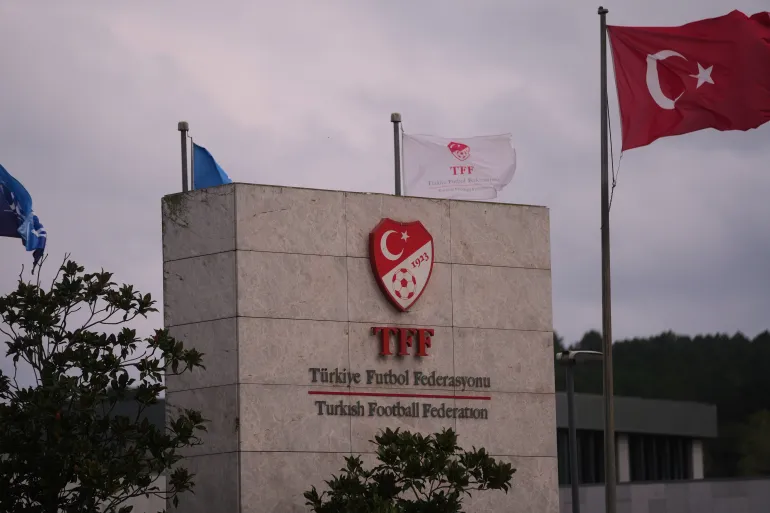
The head of Turkiye’s football refereeing body and four other officials have been placed in pretrial detention by a court as part of a corruption investigation, the state news agency Anadolu reports.
Ferhat Gundogdu, head of the Central Referees Committee, and six others appeared before a judge over allegations of manipulation of the referee administration process, Anadolu said on Saturday.
They appeared on Friday before a judge at Istanbul’s Caglayan courthouse on several charges, including forgery of official documents, breach of trust and illegal acquisition of personal data, the report said.
The judge remanded five people in custody and granted the other two conditional release, Anadolu said.
It was the latest scandal to shake football in Turkiye, coming exactly a year after the Turkish Football Federation (TFF) suspended 149 referees on charges of illegal betting.
On Thursday night, police from the illegal betting and sports crime unit also detained Yasin Kol, a referee from Turkiye’s top-flight Super Lig, as well as an assistant referee, media reports said.
Justice Minister Akin Gurlek said prosecutors are examining claims about “interference in the processes of referee classification, assignments, scoring and appointments as well as the exams on rules”.
During raids on Tuesday, police searched the VAR room at TFF’s headquarters in Istanbul. Observers said the investigation was likely linked to last year’s betting scandal and would have implications for the federation.
“It does seem to be a continuation of 2025, and it looks like it will continue further,” sports journalist Ayhan Sensoy told the AFP news agency.
Sensoy, who wrote a 2024 book on the issue called The Gambling Pit, said it was unlikely that federation bosses “have any chance of staying in office”.
So far, the TFF has not directly addressed the arrests as its top officials are due to fly home on Saturday after attending Friday night’s Belgium-Turkiye UEFA Nations League clash in Liege, which Turkiye lost 3-0.
[Aljazeera]
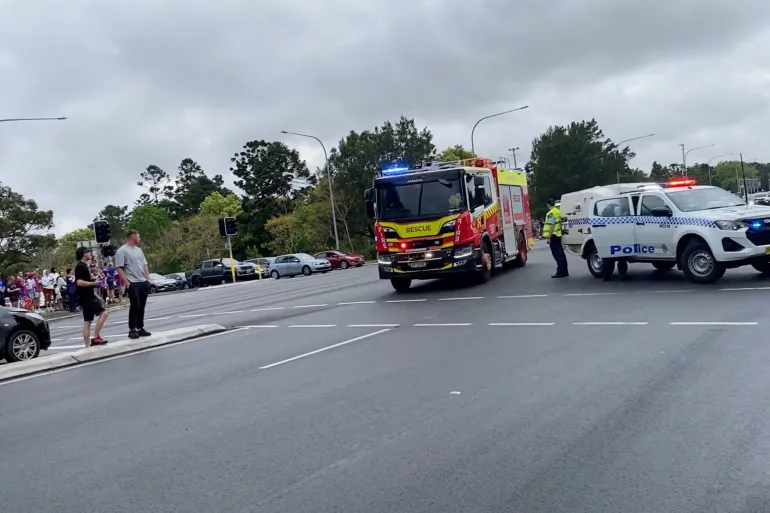
A car has crashed into a crowd of rugby league supporters in the eastern Australian city of Newcastle, injuring 10 people, including three children.
New South Wales police said on Saturday that two of the injured – a five-year-old girl and a 67-year-old man – were in a critical condition and the other eight were in stable condition in hospital.
Police said they had arrested the 18-year-old man driving the vehicle and were investigating what happened. They said the crash was not believed to be related to “terrorism”.
The crowd had gathered to farewell the local rugby league side, the Newcastle Knights, ahead of their grand final against the Sydney Roosters on Sunday.
Newcastle Lord Mayor Gavin Morris said the driver, a rugby league fan, had lost control of his vehicle and had been taken into custody.
“He was revving the car, he was excited, he was a supporter, he was there for the joy of the moment,” Morris told the national broadcaster ABC.
“Somehow he lost control of the car … and he’s gone into the crowd,” he added.
Prime Minister Anthony Albanese said: “My thoughts are with everyone injured or involved in the horrible incident this morning in Newcastle.”
“Rugby league brings people together, and this should have been a weekend of excitement and pride for Newcastle fans,” he wrote in a social media post.
[Aljazeera]
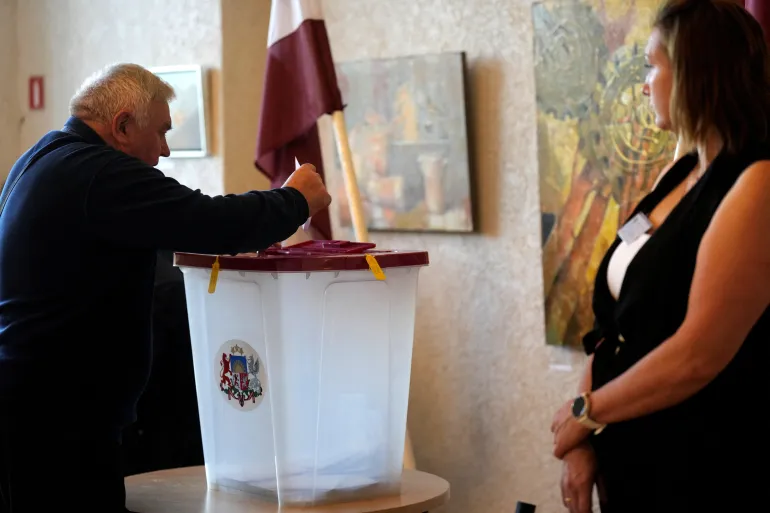
Polls have opened in Latvia for an election taking place against the backdrop of perceived security threats from Russia and a nationwide cost-of-living squeeze.
Saturday’s vote is the first electoral test for Prime Minister Andris Kulbergs after coming to power in May this year when his predecessor resigned due to a backlash from stray drone incursions from Ukraine.
Kulbergs, whose right-wing United List party is currently polling at about 20 percent, is expected to hold onto his position, but the decline of two allies in his current coalition means he is set for a complicated negotiation over the makeup of any future government.
Polls opened at 05:00 GMT and will close at 17:00 GMT. The results are not expected to change Latvia’s pro-European and pro-Ukrainian course.

About 1.5 million people are eligible to vote in the country’s 11th parliamentary election since independence from the Soviet Union in 1991.
Latvian politics are highly fragmented, with parties rarely seeing above 20 percent vote share and coalitions being the norm.
This year, 14 electoral lists are contesting the election, but polls indicate only seven are likely to enter parliament, with the rest expected to fail to meet the minimum 5 percent vote threshold.
Rising living costs, low wages, strains on the healthcare system and long-term population decline have all featured prominently in campaign debates.
Most parties in Latvia are pro-Ukraine; however, the populist Sovereign Power party – which says it wants Ukraine to win but argues money spent supporting Kyiv would be better spent at home – looks likely to become the country’s second-biggest party, with more than 9 percent of the vote. Most other parties have ruled out forming a coalition with Sovereign Power.
Latvia First, a pro-Ukraine and populist nationalist party currently polling at about 9 percent, could be a potential coalition partner for PM Kulbergs.
The Progressives, a pro-European social democratic party, are polling at 6 percent.
Ethnic Russians make up roughly one in four Latvian citizens, but their vote, which has traditionally been cast along identity-based lines, looks set to be made according to economic and social issues.
Latvia is the poorest of the Baltic states, and it has sharply increased its defence spending since Russia invaded Ukraine, now allocating nearly 5 percent of its gross domestic product (GDP) to defence.
[Aljazeera]

No handshakes and a delayed ceremony as India beat Pakistan at Asian Games

Showers or thundershowers will occur in most parts of the island after 1.00 p.m

Lanka enters new phase of prosecutions as hurdles clear

Police warn: Court evaders face property seizure

Nearly 20 Iranian tankers stranded off Lanka amid US sanctions

IRD tax revenue rises 24% to Rs. 2.04 trillion

‘Dates have the highest sugar content to fight Coronavirus’

Sunday Island 27 December – Headlines

#SundayIsland 17th December – Headlines

Sunday Island – 28th March

Sunday Island Headlines – 21 March

Sunday Island – 21st February – Headlines
-

 News6 days ago
Police remove Thileepan statue in Jaffna
-

 Features6 days ago
The 22nd Amendment, constitutional recovery and illiberal slippage
-

 Features6 days ago
Of foreigners as CEOs of Lankan ventures
-

 Latest News4 days ago
Gold winner Tharanga gets brand-new Honda Vezel from SLAAJ
-

 News6 days ago
Sajith rejects Jt. Opp. protest sabotage claim; SJB TU chief demands remedial action
-

 Features4 days ago
Why Sri Lanka needs an Inclusive Civic Nationalism – urgently
-

 Features5 days ago
Thailand’s biggest new global star …
-

 News3 days ago
US-assisted ‘Ice’ detection: NPC to examine IGP’s move to transfer drug-busting team