
News
Cyclone Ditwah and India-Sri Lanka relations: playbook for diplomacy in the neighbourhood

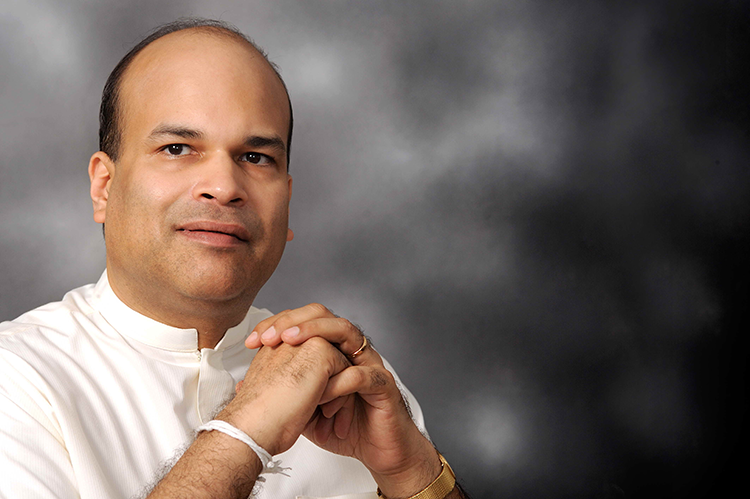
I vividly remember boarding the then INS Vikrant — formerly HMS Hercules — with my father during a special port call to Colombo in the 1970s. I was a young boy then, absorbed in a hobby of building model airplanes and ships, especially aircraft carriers. The encounter was unforgettable. It was my first time aboard a carrier — a steel giant that captured both my imagination and my awe.
INS Vikrant, along with INS Udaygiri, was already berthed in Colombo as cyclone Ditwah struck. INS Sukanya soon joined them to strengthen the operation.
So, the announcement that the newly built, fully indigenous INS Vikrant would make its maiden overseas visit to Sri Lanka for the International Fleet Review 2025 and the Sri Lanka Navy’s 75th anniversary celebrations stirred nostalgia. But, only afterward did I fully grasp how fortuitous and meaningful her arrival would prove to be.
Cyclone Ditwah struck Sri Lanka with devastating force, leaving hundreds dead and hundreds of thousands displaced, alongside widespread destruction to infrastructure and housing. This prompted the government to request international assistance. India responded within hours. Humanitarian relief operations under Operation Sagar Bandhu were swiftly mobilised.
By extraordinary circumstance, INS Vikrant, along with INS Udaygiri, was already berthed in Colombo. INS Sukanya soon joined them to strengthen the operation. This marked the third major instance in recent years in which India, guided by Prime Minister Narendra Modi’s Neighbourhood First policy, has stepped forward to support Sri Lanka: First, during the Covid-19 pandemic through the Vaccine Maitri initiative; next, during the economic collapse of 2022, when India extended more than $4 billion in financial assistance; and, now again in 2025, through rapid disaster relief.
On this occasion, an aircraft carrier group — traditionally associated with warfighting or geopolitical signalling — became a platform for humanitarian action, supporting the delivery of emergency supplies, medical assistance, logistical support, and search-and-rescue operations.
These initiatives in Sri Lanka offer India an increasingly relevant model for neighbourhood diplomacy in an emerging multipolar world. The Indo–Lanka relationship has evolved beyond episodic gestures into a form of cooperation that is flexible, responsive, and multidimensional — capable of addressing humanitarian, economic, and strategic challenges simultaneously. The symbolism of INS Vikrant being present during one of Sri Lanka’s gravest moments cannot be overstated.
In global discourse, aircraft carriers are commonly portrayed as instruments of coercion or power projection. In Colombo, however, Vikrant reframed naval capability as an instrument of peace, humanitarian service, and confidence-building. This is soft power supported by hard power — expressed through empathy and pragmatism rather than intimidation.
Post Ditwah, Sri Lanka remains acutely vulnerable. While recovery efforts continue under the IMF programme following the 2022 economic collapse, a disaster of this scale risks reversing fragile stabilisation gains. India’s rapid response has provided critical support to Sri Lanka’s experienced disaster management and military teams, but sustained reconstruction will require broader international engagement, resource mobilisation and investment. India can consider leading a coordinated post-disaster reconstruction and recovery initiative for Sri Lanka, which might also serve as a prototype for future regional cooperation.
In this, Japan can be a natural partner. It is a long-standing development collaborator in Sri Lanka and a trusted strategic partner of India within the Indo-Pacific region. Coincidentally, the 4th India–Japan Forum convenes in New Delhi this weekend, bringing together officials, scholars, and policy thinkers from both countries. Sri Lanka’s rebuilding could become a pilot project demonstrating how India and Japan might work together in the emerging multipolar order- combining strategic coordination with complementary development strengths.
Successive governments and the wider public have expressed profound gratitude for India’s steadfast support during moments of national adversity. The events of the past week have once again underscored the value of a neighbour that responds not with hesitation, calculation, or rhetoric, but with swift and concrete action. As INS Vikrant – symbol of a confident and self-reliant India — transformed from a warship into a humanitarian lifeline, it also signalled the emergence of a new paradigm in regional leadership. If Sri Lanka becomes the testing ground for an India–Japan collaborative model of reconstruction and resilience, it may well mark the opening of a more consequential chapter in Asian strategic cooperation — one shaped not by rivalry, but by responsibility.
(Milinda Moragoda is a former Sri Lankan cabinet minister and diplomat, and founder of the Sri Lankan strategic affairs think tank, Pathfinder Foundation, can be contacted via email@milinda.org -Courtesy Hindustan Times 2025.12.02)
By Milinda Moragoda

Approval has been granted at the Cabinet meeting held on 22.07.2024 to publish the draft bill of State Assets Management Act in the government gazette notification and thereby present it to the Parliament for its concurrence.
However, the draft bill couldn’t be passed in Parliament as a result of the Parliament being dissolved in the month of October 2024.
Thereafter, the draft bill was subject to further inspection by a
committee appointed which comprised of officials and authorities on the subject.
The said Committee has recognized the amendments to be made and a fundamental draft has been prepared including the proposed amendments.
Accordingly, the Cabinet of Ministers approved the resolution furnished by the President in his capacity as the Minister of Finance, Planning and Economic Development to suspend further activities regarding the draft bill of State Assets Management Act published in the extraordinary gazette of 02.08.2024, and to direct the Legal Draftsman to prepare a draft bill based on the fundamental draft prepared by the subject specialists’ committee.
Considering the compliance of the Cooperative Societies’ operations with the concurrent socio – economic circumstances as well as the changes in the common law, the requirement of amending the Cooperative Employees Commission Act No. 12 of 1972 has been recognized.
A fundamental draft including proposed amendments based on the experience gained by that Commission as well as the opinions and proposals of Cooperative societies, their director board members, cooperative employees and other interested parties has been prepared.
Accordingly, the Cabinet of Ministers granted approval to the resolution furnished by the Minister of Trade, Commerce, Food Security and Cooperative development to provide instructions to the Legal draftsman to prepare a draft bill to amend the Cooperative Employees Commission Act No. 12 0f 1972, based on the said fundamental draft.
Latest News
Dilki Wathsala Marambage appointed as Director General of the Department of Technical Education and Training

The Cabinet of Ministers granted approval to the proposal forwarded by the Prime Minister in her capacity as the Minister of Education, Higher Education and Vocational Education to appoint Mrs. Dilki Wathsala Marambage to the post of Director General of the Department of Technical Education and Training.

Cabinet approves redrafting of State Assets Management Act
Cooperative Employees Commission Act No. 12 of 1972 to be amended
Dilki Wathsala Marambage appointed as Director General of the Department of Technical Education and Training
Declaration of Naakolagane Sanctuary under the Fauna and Flora Protection Ordinance
Cabinet approves transfer and maintenance of selected roads presently under PC’s and Local Authorities to the RDA
Obtaining financial facilities for the Water Supply and Sanitation Improvement Program (Sub-program 2) from the ADB

‘Dates have the highest sugar content to fight Coronavirus’

Sunday Island 27 December – Headlines

#SundayIsland 17th December – Headlines

Sunday Island – 28th March

Sunday Island Headlines – 21 March

Sunday Island – 21st February – Headlines
-

 Features6 days ago
The Sri Lankan who made Scottish history
-

 Sports6 days ago
Nissanka absence opens door for Sri Lanka’s young guns
-

 News5 days ago
NDB fraud Rs 60mn more than reported
-

 News7 days ago
Gnansara Thera to be assigned to prison printing section: Officials
-

 News5 days ago
Removing monk’s robes matter for Sangha to decide: Mahanayake Theras
-
 News7 days ago
OIC of FCID summoned before Maligakanda Magistrate
-

 Features6 days ago
Future of Sri Lanka’s state university system: Should it be shut down and reopened?
-
 News6 days ago
Shiranthi R remanded until 13 Oct.