
Sports
Sri Lanka’s costly wake-up call in Pakistan


The three-week tour of Pakistan may not have delivered the results Sri Lanka desperately wanted, but it certainly dished out a basket of valuable lessons. Over the last two years, white-ball cricket had taken a promising upward swing, only for the last three months, Asia Cup included, to unravel much of that hard graft.
The reaction after the Asia Cup was as knee-jerk as they come. The coaching staff was swept aside. Charith Asalanka, already carrying the weight of captaincy, found himself further under the pump when former skipper Dasun Shanaka was appointed his deputy in T20s — a move that dripped with insecurity.
Granted, Sri Lanka didn’t cover themselves in glory during the Asia Cup. But the margins of defeat were wafer-thin and crucially, every loss came after a proper scrap. Asalanka’s bowling changes misfired, his batting deserted him and he ended up tightening the noose around his own neck.
Then came Pakistan, where the captain performed cricketing hara-kiri. How he failed to read the signs remains baffling. But when swagger overtakes sense, cricket has a habit of slapping you back to earth.
The ODI series was a sore point — Sri Lanka repeatedly snatched defeat from the jaws of victory.
The tri-nation series, however, was the real bitter pill. Having fought back admirably to reach the final, they unravelled on Saturday, paying a steep price for misreading the surface. Yes, it was a tricky pitch. But at 84 for one at the halfway stage, Kusal Mendis — with all his experience — should have known it wasn’t a 160 wicket. Instead of knocking it around and running hard, he hurled the kitchen sink and handed the opposition a gift.
The other Kusal fared no better. The most experienced batter in the side managed just one double-figure score all tour. Calls for both Kusals axing will grow louder, but Sri Lanka must play the long game. Having invested heavily in Kusals, you cannot toss them aside with a World Cup on the horizon. They must be backed, not banished.
This tour also underlined Sri Lanka’s growing dependence on Pathum Nissanka. When he fires, Sri Lanka cruise. When he misfires, the whole side looks like a wagon with a missing wheel.
Kamil Mishara was the find of the tour, producing back-to-back half-centuries and showcasing maturity beyond his years.
Veteran speedster Dushmantha Chameera was equally instrumental — striking with the new ball and delivering ice-cold overs at the death. With the World Cup looming, he must be preserved like fine china, not dragged through every fixture.
Fielding, once Sri Lanka’s brightest improvement, also took a dip. They were the standout unit at the Asia Cup, effecting run-outs and plucking catches that shifted the tide of matches. In Pakistan, that edge dulled. They must quickly figure out why the wheels came off.
by Rex Clementine ✍️




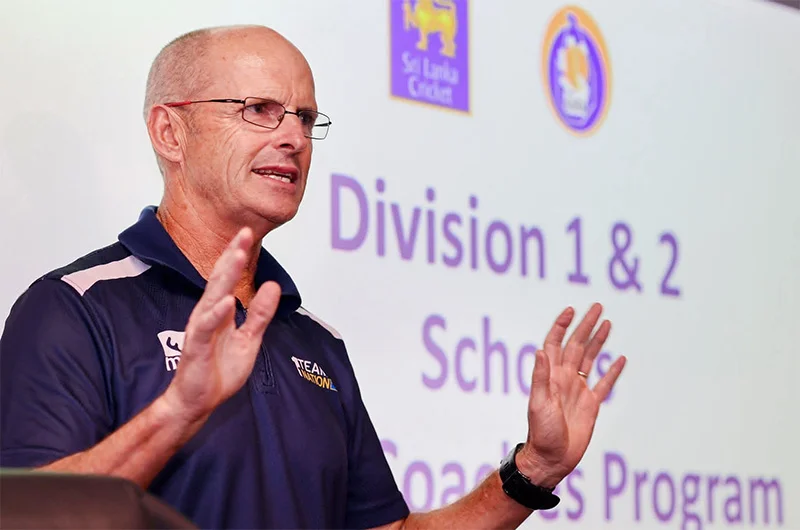
Sri Lanka Cricket (SLC), under the direction of the Cricket Transformation Committee launched a special program aimed at educating and developing school cricket coaches in the country.
The inaugural session of the program was held on Monday, 25th May, at the High Performance Center of the SLC with the participation of 74 coaches representing Division ‘1’ and ‘2’ schools.
The Head Coach of the Sri Lanka Men’s Team Gary Kirsten conducted a two-hour session for the participating coaches. During the session, Kirsten shared valuable insights into modern coaching methods and highlighted key areas coaches should focus on in order to nurture talented and promising young cricketers.
He emphasized the importance of creating a friendly and supportive environment for children while teaching them cricketing skills. Kirsten also noted that coaches must continuously improve their own skill levels in order to develop successful players. He encouraged school coaches to focus more on producing good cricketers rather than simply concentrating on winning matches.
Joining Kirsten at the program were Ryan van Niekerk, National Bowling Coach, and Jordan Gregory, National Fielding and Spin Bowling Coach, who also shared their expertise and experiences with the school coaches.
Sidath Wettimuny, Chairman of the Cricket Committee of Sri Lanka Cricket, who is also a member of the Cricket Transformation Committee, did the introductory speech of the program.
The program also featured an interactive Question-and-Answer session, giving participants the opportunity to engage directly with Gary Kirsten and further enhance their knowledge.
This program will continue periodically, with the objective of developing highly skilled and knowledgeable coaches within the Sri Lankan school cricket system.
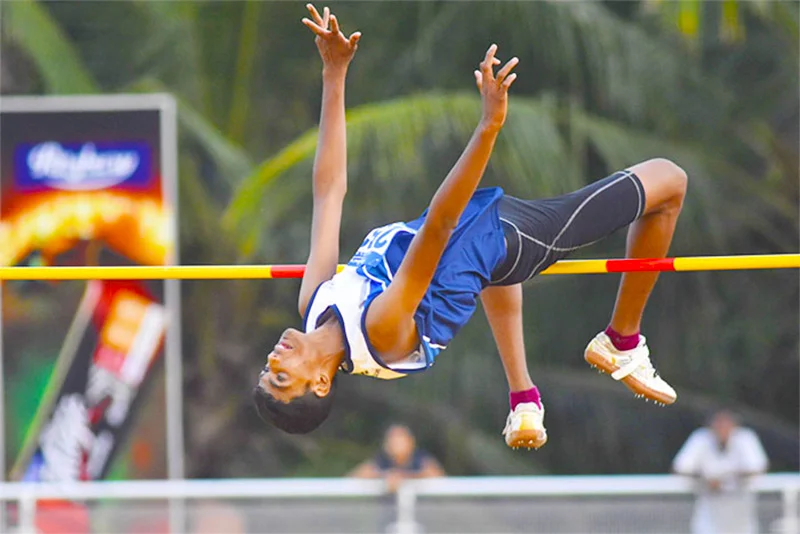
The 400 metres relay quartet inclusive of Sadew Rajakaruna and Omel Shashintha and 800 metres specialist Tharushi Abisheka will lead the country’s medal quest in the boys and girls categories when the Asian Junior Athletics Championship starts in Hong Kong today.
After having run sub 46 seconds in the 400 metres recently, Rajakaruna is expected to carry huge expectations to the regional event alongside Shashintha who too came almost close to clock sub 46.
They will compete in both the 400 metres and the 200 metres apart from playing lead roles in the relay.

Tharushi Abisheka
Both athletes are among the top sprinters in the Asian region and were a part of the nationl record setting quartet in the short track 4×400 metres relay along side seniors. They are expected to use their experience in competing at top international level to good effect.
In the girls’ category Abisheka is the leading contender for medals.
The Asian Youth Champion is scheduled to compete in both the 800 metres and the 1,500 metres.
In the field events, Tharusha Mendis has high hopes of bringing his best in the high jump.
Team
Under 20 Men’s:
Omel Shashintha Silva – 400m, 200m, 4x400m Relay, Sadew Rajakaruna – 400m, 200m, 4x400m Relay, Thisen Ranvidu Pathirage – Mixed Relay, 4x400m Relay, Iresh Bogoda – 4x400m Relay, Mixed Relay, Irosha Edirisingha – 4x400m Relay, Mixed Relay, Nethsara Dineth Liyanage – 800m, 1500m, Vidushan Rajendran – 3000m, Kaveesha Kulathunga – 110mH, Shavindu Nimasha Dias – 400mH, Kalpadith Hansaja Uyanwaththa – 400mH, Deesara Sendil Herath – Long Jump, Tharusha Mendis – High Jump, Nethra Chandupa Fernando – High Jump, Thehara Ravishka Fernando- Triple Jump, Sasindu Hansana Jayasingha – Triple Jump.
Under 20 Women’s:
Risansa Hirupama Silva – 200m, Dilanma Ransini Perera – 200m, Tharushi Abhisheka – 800m, 1500m, Mixed Relay, Mihinsa Dewmini Abeyrathna – High Jump, Oshini Kavindya Kodikara – Triple Jump, Ronalee Anne Pieris – 400m, Mixed Relay, Warsha Devmini Wimalasekara – Mixed Relay.

Sri Lanka is preparing to host one of the biggest international martial arts events ever staged in the country, as the International and Thai Martial Arts (Asian Games) Sri Lanka 2026 comes to Goldi Sands Hotel, Negombo, from 28 May to 1 June 2026. The prestigious championship will feature Muaythai and UBF Boxing contests, bringing together elite fighters, coaches, and martial arts enthusiasts from around the world.
The event is officially sanctioned by the World Muaythai Organization (WMO), the World Muay Boran Federation (WMBF), and the Union Boxing Federation (UBF), making it a major global platform for both traditional and modern martial arts disciplines. It has also received approval from the Sri Lanka Tourism Promotion Bureau under the Ministry of Tourism, with the support of the Royal Thai Embassy in Sri Lanka and local authorities.
A total of 14 countries have already confirmed participation, including Indonesia, Korea, Singapore, the USA, England, Uzbekistan, India, Afghanistan, Hong Kong, Australia, Vietnam, Russia, the Philippines, and Thailand.
Fight nights are scheduled for 30 May, 31 May, and 1 June 2026, with each evening running from 4:30 PM to 10:00 PM. Ticket prices are Rs. 3,000 for Saturday and Monday, and Rs. 3,500 for Sunday’s opening ceremony show.
Organizers say the event will offer a unique beachfront atmosphere, live DJ entertainment, food and beverages, international seminars, and opportunities to meet world-class fighters and legendary grand masters. With elite athletes now being selected, the championship is expected to become a historic sporting highlight for Sri Lanka.

Let us all build a society valued with peace and harmony, guided by unity and solidarity beyond all differences – PM

Showers will occur at times in the Western, Sabaragamuwa and North-western provinces and in Galle, Matara, Kandy and Nuwara-Eliya districts

Rajitha calls for combined lists, denounces those unwilling to join as traitors

20 lawmakers, four officials visiting China

More Japanese funds for demining operations in the north

Clingendael Institute delegation visits Pathfinder Foundation

‘Dates have the highest sugar content to fight Coronavirus’

Sunday Island 27 December – Headlines

#SundayIsland 17th December – Headlines

Sunday Island – 28th March

Sunday Island Headlines – 21 March

Sunday Island – 21st February – Headlines
-

 Business6 days ago
Historic launch of CCWE Fashion Week & International Summit 2026
-

 News4 days ago
All-New GRAVITE launches at LKR 6.99 Mn
-

 Features4 days ago
The NPP’s pivot to the past
-
 News3 days ago
Police probe underway to ascertain links between criminals deported from UAE and local politicians
-
 News2 days ago
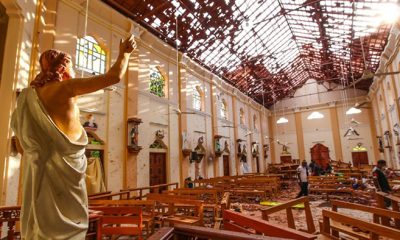
Easter Sunday carnage: Court told Maulana’s statement cannot be accepted without cross-examination
-

 Opinion6 days ago
The need to reform Buddhist ecclesiastical order
-
 Features4 days ago
End of Peacekeeping
-
 Opinion2 days ago
Undermining the democratic political framework