
Latest News
Australia on the ropes after frenetic 19-wicket opening day

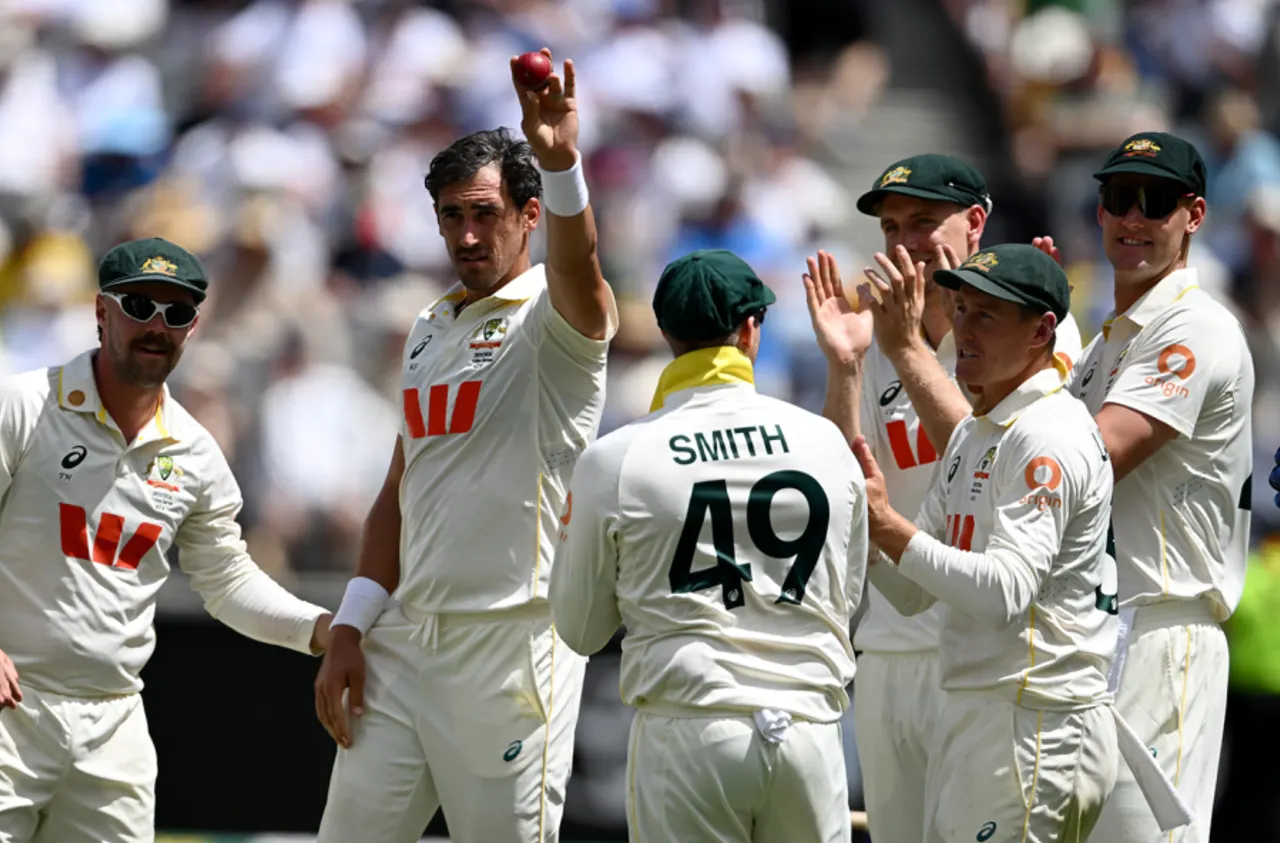
Living up to the hype after such a prolonged build-up, the first Ashes Test started in frenetic fashion with wild momentum swings as pace bowlers from both attacks dominated on a bouncy Perth Stadium surface.
By the end of a thoroughly entertaining opening day, England have amazingly finished with the edge after 19 wickets fell in front of 51,531 fans.
Stepping up in the absences of fellow quicks Pat Cummins and Josh Hazlewood, Mitchell Starc had initially given Australia a sensational start to the series with career-best bowling figures of 7 for 58 as England were dismissed for just 172 in their first innings.
In the lead-up to the Test, Starc had stated his preference for series-openers to be played in Australia’s traditional fortress of the Gabba, while he was also dubious about a Perth surface dubbed as a “green monster”. Bowling consistently around 145 kph, Starc relished a green-tinged surface he was able to find some extra zing off to tear through England’s batting.
Learning from Starc’s efforts, England’s all-out pace attack hit back against a reshuffled Australia batting order after Usman Khawaja was unable to open having spent time off the field during England’s innings with back stiffness.
After months of speculation over who would open, Marnus Labuschagne did end up partnering debutant Jake Weatherald, who at the start of the day had received his cap from David Warner.
Much like Nathan McSweeney a year ago against India on the same ground, Weatherald faced a baptism of fire and was trapped lbw by quick Joffra Archer to fall for a second-ball duck.
Khawaja was still not able to bat by this point, meaning Steven Smith walked out at No. 3 for the first time in a Test since 2017. He had a torrid time, smacked on the elbow by a vicious short ball from Gus Atkinson that required medical attention.
Bowling at speeds around 150kph, Archer was a handful and he conjured awkward bounce that accounted for Labuschagne, who was bowled off the under-edge.
Having copped another painful blow, Smith battled hard with 17 off 49 balls before edging a sharp delivery from Brydon Carse to second slip. Batting at No. 4 for just the second time in his Test career, Khawaja could do little against a rapid short delivery from Carse that hit the bat handle and he was caught behind.
Feeling in much better spirits than he had earlier in the day, Ben Stokes finished with five wickets in his six-over spell, including Travis Head and Cameron Green – who had threatened with a 45-run partnership – in the shadows to cap England’s remarkable rally.
There are eerie parallels to the corresponding India Test from 12 months ago when 17 wickets fell on the opening day. This surface did not appear to be quite as challenging, but sharp bounce and pace was evident with a slew of top-order batters falling behind the wicket.
England’s first attempts of unfurling their aggressive batting style on Australian soil did not go to plan after winning the toss. They did score at 5.3 runs per over but were bowled out in just 32.5 overs, capitulating to lose 5 for 12 in 18 deliveries by the drinks break of the second session.
It was the shortest innings of an Ashes Test since Trent Bridge 2015 when Australia were routed for 60 on the opening day. Three of England’s top-six batters were caught behind the wicket – by the keeper or in the well-stocked cordon – in a mode of dismissal that has been common in Perth over the years, while the other three were beaten by pace.
England’s fightback later in the day has vindicated their decision to go in with an all-out pace attack, with offspinner Shoaib Bashir missing out in a rarity when fit.
There had been an expectation that Australia would bat regardless of which side the coin landed, given Stokes’ preference of bowling first. But he opted to follow the brief history of the ground, where batting first had proven advantageous before the surface cracked up later in the match.
Openers Zak Crawley and Ben Duckett walked to the crease amid some jeers from Australian fans, who only just outnumbered their English counterparts in the terraces. Given the high drama over first deliveries of several previous Ashes series, there was a swirl of anticipation as Starc charged in with thundering clapping reverberating around the massive ground.
Crawley, of course, had famously swatted Cummins for a boundary on the first delivery of the last Ashes series, but he blocked Starc into the off side in an anti-climax.
It didn’t take long for drama to ensue with Crawley, who effectively collared Starc in the 2023 series, playing and missing on the third delivery before being unable to see out the opening over after edging to Khawaja at first slip.
There had been concerns over Crawley’s ability to drive on a length in Perth and the shorter length from Starc undid him. While Starc was a handful from the jump, a nervous looking Scott Boland struggled with his lengths in his first red-ball match at Perth Stadium as Duckett pounced with several lovely drives down the ground.
After a strong hit-out in the Lilac Hill warm-up cemented his No. 3 spot, Ollie Pope underlined his confidence with several crisp punches down the ground, striking the right mix of balance and aggression.
The runs flowed despite the outfield being particularly sluggish after a Metallica concert was held on the ground just three weeks ago. Even though he cruised at run-a-ball pace, Duckett was never at ease against Starc and on 21 was beaten by pace to fall lbw after an unsuccessful review.
Joe Root arrived at the crease in the ninth over, with a tough task ahead to produce an elusive century in Australia. But Starc was on a roll and had Root turned inside out to nick to third slip with a cracking delivery that pitched on leg and nipped across. It was Starc’s 100th Ashes wicket and his celebration was fitting.
To that stage, Starc had the figures of 3 for 10 from five overs, but Harry Brook was undaunted in his first Test innings in Australia as he unfurled trademark cavalier shots, some of which failed to connect.
Brook and Pope combined for a brisk 55-run partnership to steady the ship briefly for England. Starc was playing a lone-hand amid Boland’s struggles, while debutant Brendan Doggett, who came on first change just before the drinks break, bowled sharper than his pace in the 130s suggested.
Pope appeared to be cruising to his first half-century in Australia before being trapped by a full delivery on leg stump from Green, who proved his full fitness in his return to Test bowling since March 2024.
There was the expectation that batting would be easier after the lunch break and Brook wasted no time by flaying a hapless Boland for six over extra cover that had spectators ducking for cover.
But Starc’s momentum was not halted by the interval and he rattled the stumps of Stokes with a cracking delivery that nipped back through the gate as Stokes dropped to one knee in disbelief. It was the tenth time Starc has dismissed Stokes in Tests, heightening the burden on Brook who punched his way to a half-century off 58 balls with the Australian bowlers resisting bowling short.
But Brook soon walked off after gloving a short delivery from Doggett, who had only appealed half-heartedly before being swamped by his teammates in a memorable first Test wicket celebration.
Doggett, who had earlier received his cap from Boland and his former South Australia coach Jason Gillespie, also dismissed Carse with a short ball as England collapsed.
Starc claimed the final two wickets in consecutive deliveries, walking off the ground to a loud ovation from the home fans. But just three hours later he trudged off the field after his dismissal as the match took a dramatic turn.
Brief scores:
Australia 123 for 9 in 39 overs (Alex Carey 26; Ben Stokes 5-23, Joffra Archer 2-11, Brydon Carse 2-45) trail England 172 in 32.5 overs (Harry Brook 52, Ollie Pope 46, Jamie Smith 33, Mitchell Starc 7-58, Brendan Doggett 2-27) by 49 runs
[Cricinfo]


The Asian Youth Games gold medallist who has run sub four minutes previously returned a time of 3:55.97 seconds to become the first athlete in his age category at these championships to run the distance under four minutes.
Achintha who has a personal best of 3:53.05 from last year was representing Prince College Ratnapura today.
In another impressive 1,500 m feat Tharushi Abhisheka of Lyceum International School, Wattala established a new meet record in the Under-20 Girls’ 1,500m as she returned a time of 4:34.59 seconds to win.
By the end of the second day of the meet seven new meet records had been established.
D. V. C. de Soysa (of Galewela Central College) Under-16 Boys’ Discus Throw – 55.83m.
D. G. Lahiru Achintha (of Ratnapura Kumara Vidyalaya) Under-18 Boys’ 1,500m – 3:55.97 secs.
W. P. Nethula Induwara (Rahula College, Matara) Under-14 Boys’ 100m – 11.70 seconds
K. V. R. Gayesha (Ira Handa Kotuwa Wewa Maha Vidyalaya, Polonnaruwa) Under-16 Girls’ High Jump – 1.70m
H. M. D. S. Herath (Maris Stella College, Thimbirigaskatuwa) Under-20 Boys’ Long Jump – 7.65m
P. M. Amaya Semindi (Vijitha Central College, Dikwella) Under-14 Girls’ High Jump – 1.58m
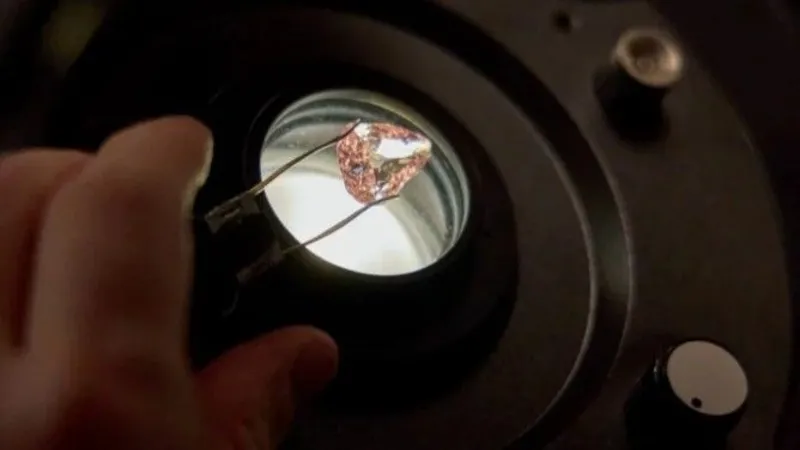
A rare pink diamond is going on display in France for the first time since it was stolen almost 100 years ago to the day – the last time it was shown to the public.
The nine-carat, pear-shaped gemstone known as the “Grand Condé” was pilfered in an overnight raid on the Château de Chantilly in October 1926 and concealed in a hollowed-out apple.
The diamond – one of few royal jewels to survive the French Revolution – was recovered a few weeks later when a hungry maid at the hotel in which the thieves were staying took a bite of the apple.
It will once again be on display in the Condé Museum at the Château de Chantilly until 3 January.
The museum’s director Mathieu Deldicque said that while the apple story may sounds far-fetched, it was widely covered by newspapers at the time.
Deldicque has faced questions about whether the exhibition may be tempting fate, especially given the string of heists on European cultural institutions in the past 12 months, including the daring daylight robbery of jewellery from the Louvre museum in Paris.
While he declined to reveal to CNN how much the diamond was insured for, he noted that extensive academic study into the properties of the diamond had taken place to make it uniquely identifiable.
The results of this analysis, as well as previously unseen archive material about the gem’s history and theft, form part of the exhibition, according to the museum.
Naturally occurring pink diamonds are exceptionally rare and often sell for tens of millions of dollars. The highest price ever fetched for one at auction was $71.2m (£53.6m) in 2017, according to Sotheby’s.
The exact origins of the Grand Condé remain a mystery.
It was first mentioned in 1740 in an inventory of Louis Henri de Bourbon, Prince of Condé, drawn up following his death, the Château de Chantilly said.
It then became part of the collection of Queen Marie-Amélie of Bourbon-Sicily, the wife of French King Louis Philippe I, and then her son, Prince Henri of Orléans, the Duke of Aumale.
He bequeathed it to the Institut de France, which now owns the Château de Chantilly, 50km (31 miles) north of Paris, along with thousands of artworks and manuscripts which became the Musée Condé collection.
(BBC)
Sri Lanka’s men begin this match having won an international in the past week. This is more significant than it sounds. Their 2026 has been abysmal, with the team losing 22 matches to the 10 they have won. New captain Kusal Mendis had carried his team to that victory with his 87 not out off 48 balls, after Sri Lanka’s seamers had also had an encouraging outing.
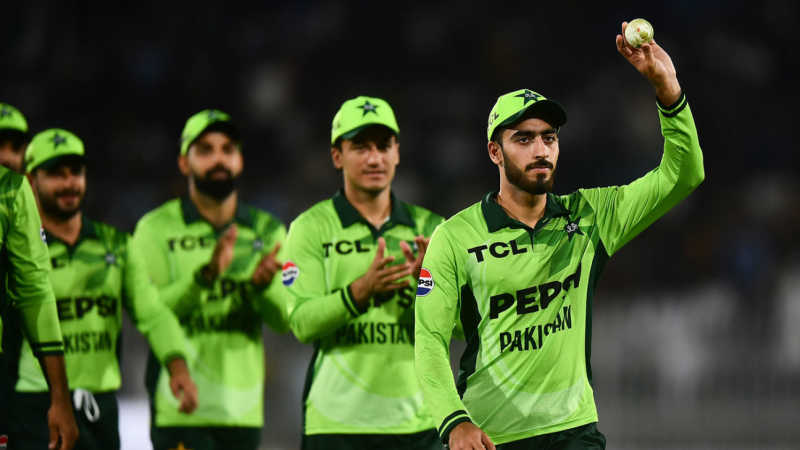
But the game was only a dead rubber, Pakistan having sewn up the T20I series already. Pakistan have hardly been lighting up 2026 either, but they have had substantially more success than Sri Lanka. They had won their most recent ODI series, against Australia, 2-1. In that series, Pakistan may even have discovered a bright young all-round talent, left-arm spinner and lower-order batter Arafat Minhas, who claimed the Player of the Series award for his seven wickets at an average of 12.28. He has been in penetrative form in the past 10 days as well, having claimed five wickets across the three T20Is against Sri Lanka. Against Australia, Pakistan had also had excellent performances from Shaheen Afridi and legspinner Abrar Ahmed. It had, in fact, been Pakistan’s bowlers who dominated in a low-scoring series.
The tri-series is important for all three sides because there is now officially less than 12 months before the World Cup, which is set to begin on October 2 next year. Sri Lanka still have plenty to figure out – their white-ball squads having been in serious flux this year, as a new set of selectors searches (often fruitlessly) for a winning combination. Pakistan have players and stratetgies to trial as well.
In the series against Australia, Babar Azam had top-scored for Pakistan, hitting 40, 16, and 69 to average 41.66 across the matches. No one will call it a return to his heyday, but it was an encouraging sign following a modest run in 2025, in which he averaged 34 across 17 innings. Sri Lanka has been one of his favoured opponents over the years, Babar having struck four of his 20 centuries against them, averaging 58.33. The tracks in Rawalpindi at least are expected to be good for batting. Can he build up some form in the one format he now plays?
Lahiru Udara has reason to feel miffed at the selectors, many think. Having hit 188 against West Indies three Tests ago, he was left out of the squad entirely for the forthcoming Test series. But with Pathum Nissanka having been ruled out of the ODIs through an ongoing hamstring problem, Udara has surged into ODI contention on the back of a good T20I innings last week. At age 32, he knows his chances at this level are numbered. With the World Cup on the horizon, there is perhaps no better format to impress in right now than ODIs.
With neither Sahibzada Farhan nor Maaz Sadaqat in the ODI squad, Saim Ayub and Fakhar Zaman may open.
Pakistan (possible): Saim Ayub, Fakhar Zaman, Hasan Nawaz, Babar Azam, Salman Ali Agha, Shadab Khan, Ghazi Ghouri (wk), Minhas Arafat, Shaheen Afridi (capt.), Haris Rauf, Naseem Shah
Sri Lanka may bring Avishka Fernando straight into the XI, with Kamil Mishara having had a run of modest scores. Sri Lanka also have some decisions to make on the spin-bowling front, although they are likely to favour Maheesh Theekshana over legspinner Sachindu Colombage.
Sri Lanka (possible): Lahiru Udara, Avishka Fernando, Kusal Mendis (capt, wk), Kamindu Mendis, Sahan Arachchige/Pavan Rathnayake, Janith Liyanage, Dasun Shanaka, Dunith Wellalage, Dushmantha Chameera, Eshan Malinga, Maheesh Theekshana, Asitha Fernando
(Cricinfo)

Showers or thundershowers will occur in most parts of the island after 1.00 p.m.

Buddhist hierarchy demands prison perks for monk convicts

Debate on NCM against Speaker postponed indefinitely

Karannagoda pushed for £24,536 for Yoshitha’s UK training, Court told

Flu cases surge across Lanka

Lankan rubies among treasures of London’s Cheapside Hoard

‘Dates have the highest sugar content to fight Coronavirus’

Sunday Island 27 December – Headlines

#SundayIsland 17th December – Headlines

Sunday Island – 28th March

Sunday Island Headlines – 21 March

Sunday Island – 21st February – Headlines
-

 Latest News6 days ago
Farhan and Sadaqat help Pakistan seal series in style
-

 Latest News5 days ago
Nissanka’s return headlines Sri Lanka’s Test squad against Pakistan
-

 Features6 days ago
Intake 16: 45 years of duty and honour
-

 News6 days ago
Malwathu Chapter issues statement on talks with President over Gnanasara Thera’s robes
-

 News6 days ago
CP alleges NPP has taken the blame for illegal US sanctions on Iranian vessels
-

 News4 days ago
Sri Lanka, India caught in US-Iran ship crisis
-

 Opinion6 days ago
How long can Sri Lanka remain silent on its demographic crisis?
-

 Latest News4 days ago
Kusal Mendis’ unbeaten 87 hands Sri Lanka consolation win