
2025-11-01



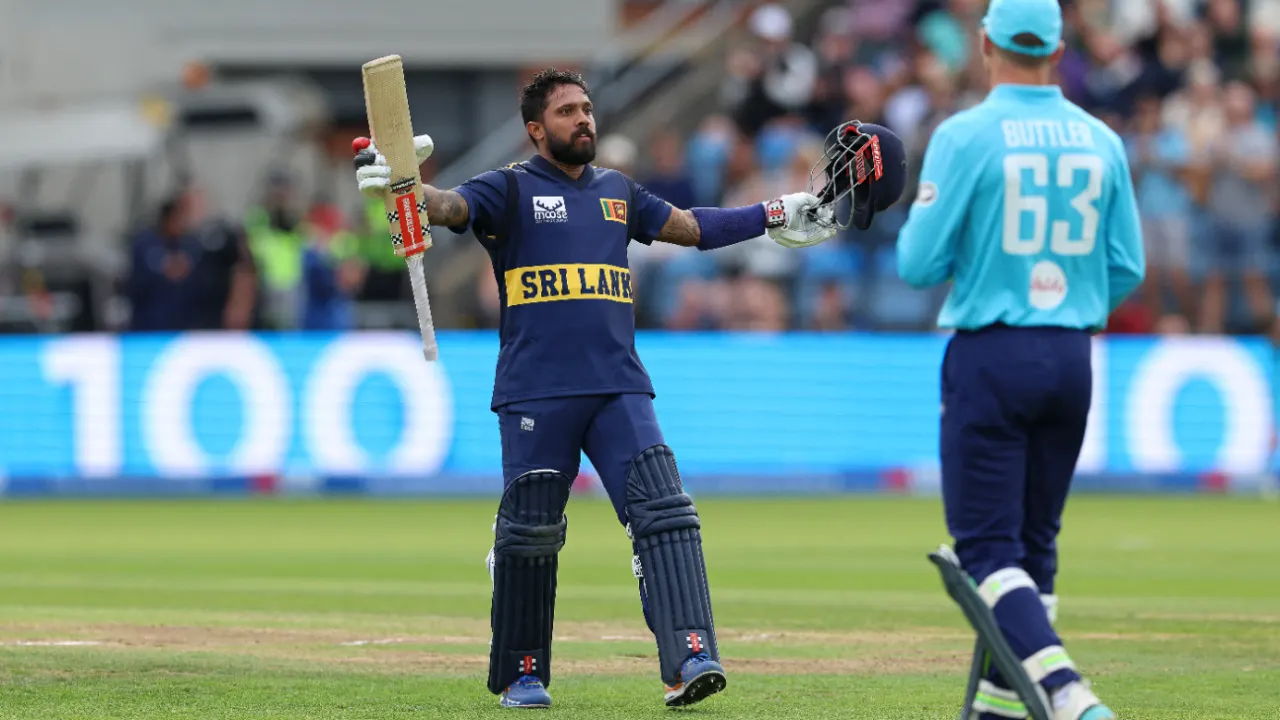
Seven years on from their last away ODI victory against England. – also at Headingley – Sri Lanka repeated the trick, and kept the series alive, ahead of the decider at The Oval on Sunday with a hard fought 16-run win.
On a true surface that offered plenty of runs, Sri Lanka executed their plan A with the kind of gusto that has been sorely lacking across this tour. Kusal Mendis’ seventh ODI ton led the way, and he was sufficiently backed up by the likes of Pathum Nissanka (25), Kamindu Mendis (54), Pavan Rathnayake (48) and Janith Liyanage (32).
Then with the ball, Sri Lanka survived a potentially game-breaking opening stand, a Jos Buttler onslaught, and a Will Jacks rearguard salvo to snag what seemed at times a rather improbable win. Dunith Wellalage took many of the plaudits, with his 3 for 49 paving the way for Sri Lanka’s fightback with the ball, as did Asitha Fernando for a spell of exemplary death bowling.
Arguably the defining moment of the chase, however, came when Buttler had to retire hurt on 67 from 45 balls with what the ECB described as a hamstring “twinge”. Though he later limped back out to resume his innings, he was visibly hampered as he lasted just four more balls. In between whiles, a chase that had been cruising at 253 for 4 skidded off course. England had needed 68 off 75 at the moment of Buttler’s injury. They managed just 52 for 5 in the remainder of their innings.
The common consensus at the halfway point was that Sri Lanka’s 321 for 6 was par for the course, but considering it was their highest first-innings total against England in ODIs since 2018 – and just their third score of 320 or more since the start of 2024 – it was still cause for minor celebration.
The broadcaster’s win predictor at the start of the England chase – 70-30 in favour of the hosts – highlighted just what they thought of this type of surface, and the type of batting England possessed. That England had never actually chased a total this high against Sri Lanka mattered less so.
And once Ben Duckett and Tom Banton had blitzed 82 runs inside the opening powerplay – two fewer, incidentally, than Sri Lanka managed in their final 10 – on the way to a substantial opening stand of 143 off 119, the result all but seemed a formality.
The breakthrough came utterly against the run of play too, as Wellalage found a foothole outside the left-hander’s off stump and ripped one through bat and pad, as Duckett reached out in vain for the flashy drive.
Then, at the end of Wellalage’s next over, Banton waltzed right past another one that gripped on the surface as Kusal swiftly dislodged the bails. And just like that both openers were back in the pavilion.
Even so, Sri Lanka might not have dared believe, given how far ahead of the game England were at this point. But when Wellalage struck a third time in three overs, this time trapping their serial tormentor, Harry Brook, leg before – a decision upheld on review – the old muscle memory of spin-strangled chases under lights at the Khettarama in Colombo perhaps began to stir. Particularly with the pitch also beginning to exude some hallmarks of those dry Colombo pitches.
But, just as swiftly as Sri Lanka had thought about clawing their way back in, England reclaimed control of the chase. And they were led unerringly by Buttler. Across partnerships of 46 from 28 with Joe Root, and 51 from 56 with Will Jacks, Buttler was in utter command of the contest. But then, in the 38th over, his hamstring went, and after battling on for two more balls, he limped off.
At that point, the required rate was less than a run-a-ball with six wickets in hand. By the time he was forced to return to the middle, the equation had flipped to 27 needed off 14. In between whiles, Sri Lanka throttled like they’ve never throttled before, giving up just one boundary in the 60 deliveries between Buttler walking off and walking back on.
With England seven-down by this point, the odds had firmly shifted in favour of Sri Lanka, but with Jacks and Buttler both capable of knocking off the required runs with just a few swings, the game was still in the balance. A six to the end the 48th over proved as much. But that would be the last boundary of the game as Eshan Malinga and Dilshan Madushanka squeezed through the final two overs to complete a famous victory.
What the result showed more than anything else is that, while Sri Lanka might be quite a way off the pinnacle of T20 cricket, in ODIs – as they have shown over recent years – they certainly have the capacity to kick it with the best, albeit not on as consistent a basis as they would like. Most of their best performances however have come at home, and on that front Thursday’s performance might be particularly heartening.
Sri Lanka’s best white-ball batting efforts in recent times have invariably coincided with significant input from either Nissanka or Kusal, and that trend wasn’t about to change here. Nissanka had looked promising during 33-ball 25, but his time in the middle was cut short by a fuller one from Atkinson that nipped back and trapped him lbw – a tight call that was held up upon review after replays showed umpire’s call on wickets hitting.
This brought Kusal to the crease, and he along with his namesake, Kamindu, proceeded to put on a 137-run stand from 120 deliveries, an innings-defining partnership that set the platform for Sri Lanka’s highest first-innings total against England in ODIs since 2018.
But it was one that might have been snuffed out before it had ever found its legs had Atkinson held on to a skier off Kusal when the Lankan skipper was on 18. Sri Lanka ensured they would exact the full toll for that drop, as Kusal proceeded to dine on a much more welcoming surface than the one at Chester-le-Street in the first ODI.
In the 20 overs between the 10th over – when Kusal entered – and the start of the 30th over – when Kamindu was caught at long-on – 11 of them saw Sri Lanka manage at least one boundary. And it meant that Sri Lanka’s 200 came up in the 32nd over, at which point a score in the region of 340 was on the cards.
The near seven-an-over scoring between the two Mendises owed much to one particularly expensive over taken off Josh Tongue, in which Kusal banished him for three fours and a six. Nineteen came off it – it was Sri Lanka’s most fruitful of the entire tour, such has been the dour nature of their batting efforts.
It was also a boundary that brought up Kusal’s century, a sumptuous drive through the covers off a luckless Jamie Overton, off whose bowling it was that Kusal had been dropped.
Following Kamindu’s dismissal there was a run-a-ball stand of 40 between Kusal and Pavan Rathnayake, but the former was unable to see the game through to the death overs, finding deep midwicket instead with an attempted slog sweep off Rehan. This brought about Sri Lanka’s first real lull in scoring, as they trudged to 237 for 4 by the end of the 40th over.
The innings seemed at a crossroads at this point, but Rathnayake and then Liyanage ensured that Sri Lanka would not completely squander the platform their skipper had helped set. Better sides might have managed to push for maybe 20-30 runs more, but that is a problem for another day; for now, Sri Lanka will savour a rare perfect evening.
Scores:
Sri Lanka 321 for 6 in 50 overs (Kamindu Mendis 54, Kusal Mendis 121, Pavan Rathnayake 48; Gus Atkinson 2-55, Rehan Ahmed 2-48 ) beat England 305 for 9 in 50 overs (Tom Banton 73, Ben Duckett 67, Jos Buttler 69, Will Jacks 52; Dilshan Madushanka 2-54, Eshan Malinga 2-50, Dunith Wellalage 3-49) by 16 runs
[Cricinfo]
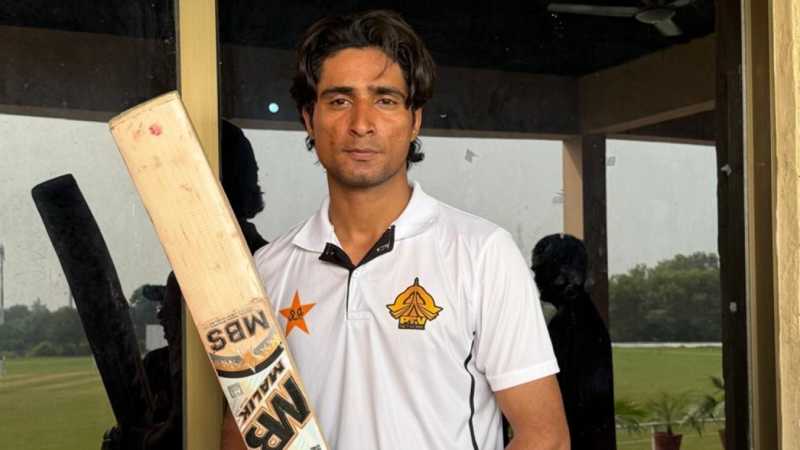
Muhammad Shazad has broken the record for the fastest first-class century by a Pakistani batter, reaching the mark in just 49 balls.
The right-hander smashed eight sixes and 12 fours in his innings of 114 off 62 balls for Pakistan Television against Kingsmen Academy at the Diamond Cricket Ground in Islamabad on the opening day of the third round of the President’s Trophy.
This is Shahzad’s sixth first-class century in 21 matches. Batting at No. 5, he walked out when PTV were struggling at 34 for 3 and struck a 143-run stand with Mohammad Taha, who made 43. Shahzad has also played 22 List A matches and 26 T20s. He made his PSL debut for Islamabad United in the 2025 season, playing six matches.
Misbah-ul-Haq previously held the record for the fastest first-class century by a Pakistan batter for his 56 ball effort against Australia in the second Test at Abu Dhabi in 2014. Misbah, at the time, levelled Viv Richards’ record for the fastest Test century. But that record was broken two years later by Brendon McCullum, when he made a 54-ball century against Australia in Christchurch in the second Test of the series.
Shahzad has come through the PCB’s age-group programme, playing for Pakistan’s Under-16 and Under-19 sides. He played in the 2020 Under-19 World Cup in South Africa.
(Cricinfo)
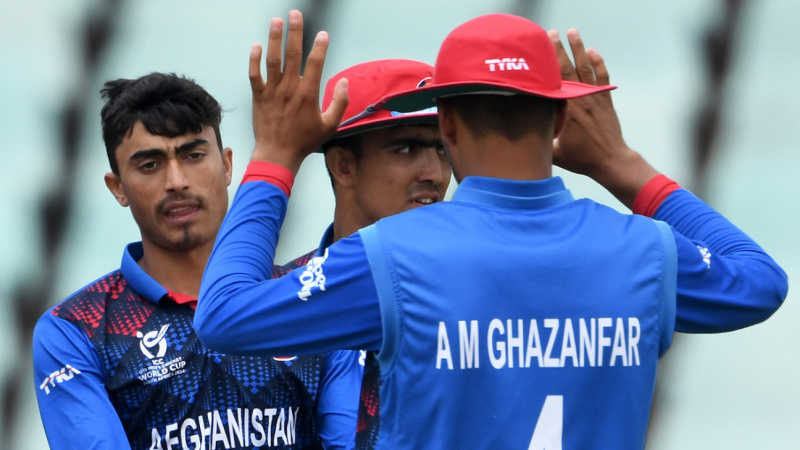
Right-arm wristspinner Arab Gul, took 4 for 8 on T20I debut and left-arm spinner Nangeyalia Kharote picked up 3 for 19 as Afghanistan successfully defended a modest 129 against Japan to open their Asian Games men’s competition campaign with two points in Group A.
Two days after nearly beating India in a rain-shortened game in Sano, hosts Japan made a steady start to the chase and reached 53 for 2 in the eighth over before losing their way.
Gul did much of the damage, taking two wickets apiece in the 12th and 14th overs as Japan slid from 60 for 4 to 63 for 8. Abdollah Ahmadzai and Kharote then finished off the lower order, with Japan bowled out for 81 in 19.3 overs.
Asked to bat first, Afghanistan had posted 129 for 6, with Mohammad Akram making 34, captain Darwish Rasooli 29 and Karim Janat 21.
But it was Mohammad Ishaq’s unbeaten 25 off 17 balls from No. 6 that provided the late impetus after Japan had kept Afghanistan to under six an over for the first 15 overs. Right-arm seamer Shoma Sugaya-Slater and offspinner Ibrahim Takahashi took two wickets apiece for Japan.
The two sides have games against Nepal lined up in Group A. The top two teams from the group will proceed to the quarter-finals.
Scores:
Afghanistan 129 for 6 in 20 overs (Mohhamad Akram 34, Karim Janat 21, Darwish Rasooli 29, Mohammad Ishaq 25*; Reo Sakurano Thomas 1-05, Shoma Sugaya-Slater 2-18, Ibrahim Takanashi 2-19) beat Japan 81 in 19.3 overs (Reo Sakurano- Thomas 23, Kendel Kadowwaki Fleming 14, Benjamin Ito Davis 17; Arab Gul 4-8, Abdullah Ahmadzai 2-13, Nangeyalia Khan 3-19, Najibullah Zadran 1-07 ) by 48 runs
(Cricinfo)

Kusal, Wellalage star as Sri Lanka defend 322 in Headingley thriller

Muhammad Shahzad smashes fastest first-class hundred by a Pakistani batter

Gul, Kharote spin Afghanistan to victory over Japan in Asian Games opener

Showers above 100 mm are likely at some places in the Western, Sabaragamuwa, Central and North-western provinces and in Galle and Matara Districts

Mirabai Chanu wins Asian Games silver as Ri breaks weightlifting record

Trump greets China’s Xi Jinping on arrival for three-day US

‘Dates have the highest sugar content to fight Coronavirus’

Sunday Island 27 December – Headlines

#SundayIsland 17th December – Headlines

Sunday Island – 28th March

Sunday Island Headlines – 21 March

Sunday Island – 21st February – Headlines
-

 News6 days ago
Shanakiyan urges urgent action over reported death sentence for Lankan in Saudi Arabia
-

 News7 days ago
Bid for Basil’s extradition nears final stage: Police
-

 News5 days ago
Namal Rajapaksa Buddhist gambit fails, bail denied
-

 Features5 days ago
Why the spelling Sri Lankan names in English vary
-

 Features5 days ago
Three bands, a new identity: Sri Lankan wolf snake recognised as distinct species
-

 Business5 days ago
SLIIT holds largest-ever convocation
-

 News5 days ago
Govt monitors reported Saudi death sentence – Foreign Ministry
-

 News5 days ago
Vehicle prices drop by up to Rs. 1 mn, says importers’ body