
News
Ten lawyers complain to Bribery Commission against PCoI that probed political victimisation

By Saman Indrajith
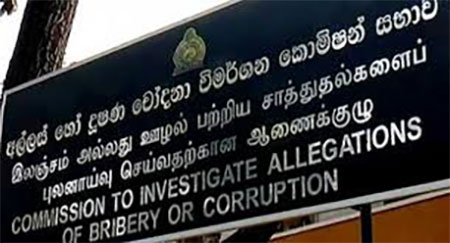
Ten lawyers yesterday complained to the Commission to Investigate Allegations of Bribery or Corruption against the Presidential Commission of Inquiry that looked into the incidents of political victimisation under the previous government.
The lawyers alleged in their complaint that the PCoI had exceeded its mandate and thereby caused waste of public funds. The complaint was lodged under the provisions of the CIABOC Act No 19 of 1994.
The President appointed the Presidential Commission to investigate the incidents of political victimisation alleged to have taken place from Jan 08, 2015 to Nov 16, 2019.
The PCoI acted in a manner exceeding its mandate and thereby caused a loss of public funds, the lawyers have alleged. As per the gazette giving it the mandate, the PCoI was entrusted with the task of investigating the incidents of political victimisation of persons of categories of public sector officials, state sector corporation officials, members of armed forces and the members of the Police. However, the PCoI had gone beyond its given mandate by widening its scope to provide relief to persons of alleged political victimisation including Sivanesathurai Chandrakanthan, who does not belong to any of the aforementioned categories. The Commission exceeded its mandate to recommend relief for some other politicians as well, the lawyers have complained.
The attorneys-at-law who lodged the complaint are Senaka Perera, Namal Rajapaksa, Tambiah Jeyaratnarajah, Sainool Latufi, Achala Seneviratne, Hemantha Wickramasinghe, Upali Ratnayake, Ashoka Wijewardena and Chula Adikari.

Latest News
Sun directly overhead Mannar, Periyamadu, Puliyankulam, Welioya and Pulmoddai about 12.11 noon today (30)


The sun is going to be directly over the latitudes of Sri Lanka from 28th of August to 07th of September due to its apparent southward relative motion.
The nearest places of Sri Lanka over which the sun is overhead today (30) are Mannar, Periyamadu, Puliyankulam, Welioya and
Pulmoddai about 12.11 noon.

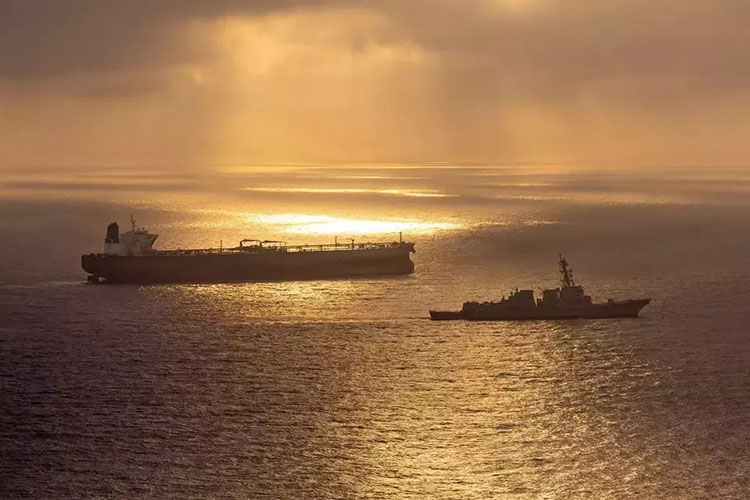
(AFP) Sri Lanka’s maritime authorities were monitoring a fleet of 11 US-sanctioned Iranian oil tankers just off the island’s southern coast, the foreign minister said Wednesday.
The tankers were spotted close to the Galle harbour where an Iranian frigate, IRIS Dena, was sunk by a US submarine in March, killing 104 sailors. Sri Lanka’s navy rescued 32 Iranian sailors from that frigate.
Iranian vessels have been in limbo, unable to return to their home port because of a US blockade.
Sri Lanka’s Foreign minister Vijitha Herath said the tankers were in international waters where they had freedom of navigation.
“These ships are away from our territorial waters… we have no hold on them, nor have we facilitated them,” Herath told AFP.
The military deployed reconnaissance aircraft and patrol boats to monitor the vessels outside Sri Lanka’s 12-nautical-mile territorial waters, a military official told AFP on condition of anonymity.
“There is no indication of any ship-to-ship transfer of oil or illegal discharge of pollutants, so there is no basis for Sri Lankan authorities to take action against them,” the official said.
Many Iranian merchant vessels moved east towards the Strait of Malacca and Singapore due to US sanctions, while several remained near Sri Lankan waters, authorities said.
Sri Lankan officials said Washington had not formally notified Colombo about sanctioned Iranian-flagged vessels
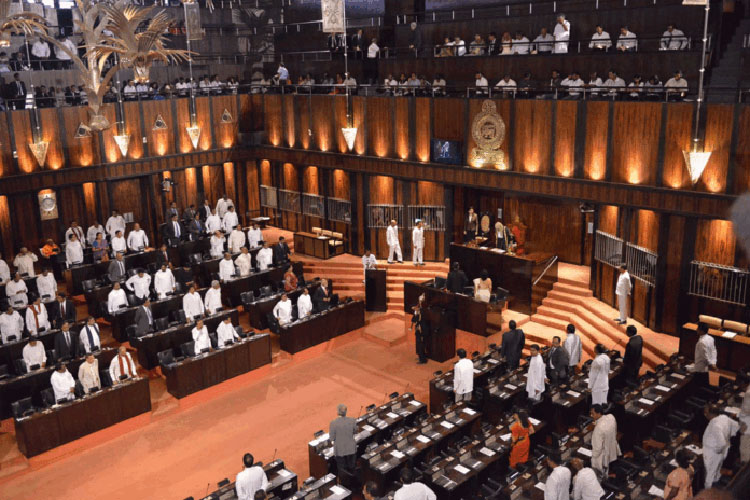
Parliament is to debate next Wednesday the Government’s proposal to abolish the post of Chief of Defence Staff (CDS), with the Second Reading of the Chief of Defence Staff (Repeal) Bill scheduled for September 9.
The Bill seeks to repeal the Chief of Defence Staff Act No. 35 of 2009, which was introduced shortly after the end of the armed conflict.
According to Secretary General of Parliament Kushani Rohanadeera, Parliament will meet from September 8 to 11, with the business for the week approved by the Committee on Parliamentary Business chaired by Speaker Dr. Jagath Wickramaratne.
The debate on the Chief of Defence Staff (Repeal) Bill is scheduled to take place from 11.30 a.m. to 5 p.m. on Wednesday, following questions to the Prime Minister and other parliamentary business.
The CDS post was established under the 2009 Act as part of the country’s higher defence command structure.
On Tuesday, September 8, the House will consider two Orders published in Extraordinary Gazettes under the Motor Traffic Act from 11.30 a.m. to 5 p.m., followed by an Opposition motion at the adjournment.
On Thursday, September 10, Parliament will debate a Resolution under the Women’s Empowerment Act.
The final sitting day of the week, Friday, September 11, has been allocated from 11.30 a.m. to 5.30 p.m. for several Private Members’ Motions.
The motions will cover issues including regulation of the petroleum, fuel and water industries, measures to increase the birth rate, protection of the Diyagama Forest, pension deductions affecting Pirivena teachers, food-crop cultivation in mountainous areas, development of the Kithul industry and the establishment of a Faculty of Medicine at South Eastern University.
Questions at the adjournment will be taken up at the end of each sitting day.

Voting closes in Iceland’s knife-edge EU referendum

Showers in the Sabaragamuwa, Western and North-western provinces and in Galle, Matara, Kandy and Nuwara-Eliya districts

Sun directly overhead Mannar, Periyamadu, Puliyankulam, Welioya and Pulmoddai about 12.11 noon today (30)

Lanka tracks 11 US-sanctioned Iranian tankers off coast

House to debate abolition of Chief of Defence Staff post

Mass graves tragic evidence of failed states – Rathnayake

‘Dates have the highest sugar content to fight Coronavirus’

Sunday Island 27 December – Headlines

#SundayIsland 17th December – Headlines

Sunday Island – 28th March

Sunday Island Headlines – 21 March

Sunday Island – 21st February – Headlines
-

 News5 days ago
Missing doctor’s body found in Mahiyanganaya
-
 News5 days ago
Australia declines to release Finance Secy Suriyapperuma’s citizenship details
-

 News5 days ago
22A: BASL suggests CJ recuse himself from hearing petitions
-

 News2 days ago
Eight politicians in drug kingpin probe
-

 Editorial6 days ago
Govts. drag feet as undergrads age
-
 Features4 days ago
Insights from Chieftains of Uva: Genealogy of two Kandyan Families – Part II
-

 Features4 days ago
Export diversification: Missing the wood for the trees – Part I
-

 Business2 days ago
Sri Lanka opens up: A new season of direct connectivity