
Editorial
Missing guns


Friday 31st October, 2025
The government yesterday launched a campaign, Nation United – National Drive, to rid the country of the drug menace. There is no doubt a pressing need to neutralise the netherworld of crime and drugs. This task is best carried out without big shows, which might give the wrong impression to the rest of the world that Sri Lanka finds itself in the same predicament as countries like Colombia and is not safe for investors. Nevertheless, the public must fully cooperate with the law enforcement authorities to achieve the goal of liberating the country from the clutches of the drug Mafia.
President Anura Kumara Dissanayake, speaking at the launch of the countrywide drug bust, yesterday, lamented that a large number of firearms had found their way into the underworld. Disarming the underworld is half the battle in breaking the back of the narcotics problem. The President said: “Some of the firearms used by these groups come from our own state weapon stockpiles. Reports show that 73 T-56 rifles went missing from army camps — 35 have been recovered, but 38 are still in criminal hands. Even a senior army colonel has been found supplying ammunition in exchange for money. Some police officers have sold their own weapons and fled … This shows that organised groups, empowered by financial might, have managed to penetrate the state machinery. We cannot continue to ignore or hide this situation any longer.” One cannot but agree with the President that everything possible must be done to recover those lethal weapons. A special investigation must be conducted to seize all illegal firearms.
In 2023, the then State Minister of Defence Premitha Bandara Tennakoon revealed in Parliament that the defence authorities had issued about 700 firearms to 154 politicians in the late 1980s, when the JVP went on a killing spree, but none of them had been returned. This figure, we believe, is a gross underestimate.
Immediately after last year’s regime change, the MPs were asked to return the repeater guns they had obtained from the Defence Ministry, and they readily complied for obvious reasons. But those guns account for only a fraction of the weapons issued to politicians and others over the decades. In January 2019, the then Defence Secretary Hemasiri Fernando disclosed in Colombo that about 4,700 9mm pistols and revolvers had been licensed, but there was no information about those who had obtained them, and, worse, some of them possessed as many as 15 small firearms, each!
Besides, from 1987 to 1989, the then UNP government issued thousands of firearms with ammunition and a large number of grenades to politicians including Opposition figures threatened by the JVP. In his report, ‘In the Shadow of a Cease-fire: The Impacts of Small Arms Availability and Misuse in Sri Lanka’, Chris Smith, an expert on the proliferation of firearms, especially in South Asia, has said the weapons distributed among politicians during the aforementioned period numbered more than 11,000. Many of them were not returned.
The spread of illicit firearms in Sri Lanka can be attributed to several key factors, according to researchers; they include gunrunning, illegal operations carried out by rogue elements in the police and the armed forces, local arms manufacturing, and criminals gaining access to arms caches of the LTTE. It may be recalled that the Colombo Crime Division produced 12 suspects before the Colombo Chief Magistrate on March 22, 2019, for having supplied weapons retrieved from some buried LTTE arms caches in Kilinochchi to criminal gangs elsewhere.
The National Commission against the Proliferation of Illicit Small Arms, established by President Chandrika Bandaranaike Kumaratunga in 2004, dealt extensively with the issue of illegal weapons in circulation in Sri Lanka, as we pointed out in a previous editorial comment. Its survey report contains valuable information, which, however, needs to be updated. Defence authorities should study this document thoroughly and commission a fresh survey on illicit firearms while carrying out operations to neutralise criminal gangs and seize lethal weapons in their possession.
The police must go all out to find the illegal firearms used by the JVP during its second uprising (1987-89). Most of the JVP’s arms caches have not been traced. SJB MP Dayasiri Jayasekara told Parliament on 27 February 2025 that more than 2,000 illegal firearms looted by the JVP between 1987 and 1989 had gone missing. One may recall that the JVP attacked several police stations and military camps and grabbed weapons. In April 1987, it seized the arsenal of the Pallekele army camp. Now that the JVP-led NPP has formed a government and launched a campaign to eliminate gun violence, the Defence Ministry may be able to ascertain information about the firearms used by the JVP in the late 1980s.



Wednesday 22nd July, 2026
Nicaragua’s long-serving President Daniel Ortega, 80, is always in the news for the wrong reasons. He has captured the headlines again by declaring that Nicaragua will not have elections hereafter as he wants to “build a wall” against the Opposition. A former Marxist guerrilla, he made this announcement during a recent ceremony to mark the 47th anniversary of the Sandinista revolution, which overthrew Anastasio Somoza’s dictatorship.
It is said that Russia got rid of the Tsar but had too many Commissars to contend with thereafter. The Nicaraguan people, who ousted the U.S.-backed right-wing dictator Somoza, hoping for liberation from the clutches of that dictator, have been languishing under the family dictatorship of Ortega and his wife, Murillo, who is the Co-President; they now face the threat of being deprived of their franchise.
Politicians may espouse different ideologies, but they behave similarly after savouring power, which drives them to act out of expediency rather than principle and do everything possible to perpetuate their hold on it. In Sri Lanka, a left-leaning government went to the extent of misusing its two-thirds majority to extend its parliamentary term by two years from 1975 to 1977. In doing so, the SLFP-led United Front cooked its own goose. The UNP, which came to power in 1977, made a general election disappear in 1982, and President J. R. Jayewardene, a full-blooded capitalist, even considered ‘rolling back electoral democracy’. Democracy has suffered at the hands of other Presidents as well.
The NPP government led by the JVP, a former ‘Marxist’ guerrilla outfit, too, has chosen to postpone elections as it is wary of facing an electoral contest any time soon. Some political commentators are of the view that the PC polls may not be held next year as well. More worryingly, some JVP leaders often quote the Chinese Communist Party leaders as having said that a government should be in power for about 15 to 20 years to develop a country. Their rhetoric and action lend credence to the Opposition’s claim that they are working towards establishing a one-party rule. They unleashed mindless terror in a bid to scuttle elections and capture power through extra-parliamentary means in the late 1980s and tried to storm the parliament complex in 2022.
In an interview with The Guardian, Tiziano Breda, Latin America senior analyst at the NGO, Armed Conflict Location and Event Data, has explained why the Ortega and Murillo regime is wary of facing elections: “Ortega and Murillo are evidently afraid of the idea that the slightest political opening could create the conditions for dissent to manifest and threaten their grip on power, possibly suggesting that their already feeble domestic support is further falling.” This is the predicament of a former Marxist rebel and his associates in Nicaragua.
Participation in democratic elections as well as gaining representation in political institutions is no guarantee of one’s commitment to democracy. Ortega returned to power in 2006 by winning a presidential election, 16 years after losing parliamentary polls. He has since retained power through successive elections that critics say have become increasingly undemocratic. Adolf Hitler employed a similar method. He exploited public anger over the Great Depression, unemployment and the Treaty of Versailles, enabling the Nazi Party to expand its support through relentless propaganda, mass rallies and appeals to German nationalism and capture power democratically. In the July 1932 parliamentary election, the Nazis emerged as the largest party in the Reichstag, although they never secured an outright majority. Hitler then passed the Enabling Act on March 23, 1933 by intimidating legislators and excluding many opposition deputies, allowing his government to enact legislation without parliamentary approval, effectively dismantling Germany’s constitutional democracy. All other political parties in Germany were banned and independent trade unions dissolved; the press was censored and political dissent ruthlessly crushed. The Nazis thus transformed Germany into a one-party dictatorship.
Eternal vigilance is said to be the price of liberty. Sri Lankan voters do not act rationally when they elect their representatives. They go to the polls in search of political messiahs and wish for governments with mammoth majorities to improve their lot. Be careful what you wish for.
Tuesday 21st July, 2026
The National Council for Road Safety (NCRS) is reportedly planning to launch a countrywide campaign to inspect vehicles in the public transport sector. This is something long overdue. The police, politicians and transport authorities spring into action in the aftermath of a tragic accident and formulate strategies to ensure road safety, but they lose interest in their ad hoc initiatives, with the passage of time. Road safety programmes should be sustained over the long term to produce the desired results.
Following the tragic Garandi Ella bus crash last year, transport authorities took action to ramp up vehicle roadworthiness and passenger safety regulations. They ordered mandatory condition checks on buses to prevent mechanical defects and driver fatigue from endangering the lives of passengers. But nothing has since been heard of that vehicle inspection programme.
There have been a couple of tragic road accidents during the past several days. Two lives were lost on Sunday when a car collided with a moving truck in Matara. Road fatality statistics are chilling. The police recorded 2,231 fatal accidents and 2,341 deaths in 2023, and the number of fatal accidents increased to 2,403, with 2,521 deaths, the following year. Last year, 2,597 fatal accidents claimed 2,746 lives. Road accidents in Sri Lanka claim an average of 2,500 to 2,700 lives annually.
Announcing that the inspection of public transport vehicles will get underway in September, the NCRS has identified drivers’ negligence and mechanical defects in vehicles as leading causes of road accidents. True, undisciplined drivers and vehicle defects are responsible for road accidents. However, there are other causative factors that must not be overlooked if roads are to be made safe. The causes of road accidents in Sri Lanka, identified by road safety experts, include speeding, distractions, recklessness, fatigue, driving under the influence of alcohol or narcotics, inclement weather, inadequate road conditions, tailgating, improper lane changes, inexperience of drivers, overtaking dangerously, poor visibility, unroadworthy vehicles, lack of proper road signage, and jaywalking. One of these factors or a combination of them could lead to road accidents. Hence, a campaign to make roads safe should not be limited to drug screening and vehicle inspections.
Most buses operating in Sri Lanka are not purpose-built. They are truck chassis fitted with passenger vehicle bodies and seats. One wonders whether this could be the reason why bus owners and their workers treat passengers like cargo. Successive governments have not done anything about this issue though experts have pointed out that ‘truck-chassis buses’ cannot provide the comfort, stability and safety of the buses built specifically for transporting people. In this country, transporting cattle in cramped conditions is a punishable offence. The police take trucks with cattle packed tightly in them into custody and prosecute their drivers and owners––and rightly so. But no such action is taken against overcrowded buses.
The NCRS programme to inspect public transport vehicles should be coupled with regular random drug screening. Some bus and truck drivers are addicted to drugs. According to media reports, a raid at the Bastian Mawatha private bus terminal in Colombo some time ago, revealed that nearly 18 percent of the drivers and conductors were under the influence of narcotic drugs. Similar inspections in Piliyandala, Horana, Nugegoda and Navinna also resulted in the arrest of several drivers and conductors who tested positive for substances such as heroin, cannabis and crystal methamphetamine, commonly known as “ice”. Truck drivers must also be subjected to regular random drug screening. They are also responsible for many road accidents.
The NCRS vehicle inspection programme is bound to run into stiff resistance from the private bus operators who have become a law unto themselves. Many passenger buses, both private and state-owned, are badly maintained and therefore unroadworthy. Truckers are also likely to protest. It is hoped that the transport authorities and the police will have the courage to tell such bus and truck operators where to get off.
Monday 20th July, 2026
The Court of Appeal (CA) has granted bail to a man held on remand for about 15 years under the Prevention of Terrorism Act (PTA). The CA overturned a Colombo High Court order refusing bail to the accused. Stressing that protracted pre-trial detention should not amount to punishment before conviction, and the presumption of innocence remains a cornerstone of criminal justice, the court ruled that there was an exceptional circumstance warranting the accused’s release on bail in keeping with an amendment introduced to the PTA in 2022. However, this amendment has not effectively diluted the draconian character of the PTA to make it rights-compliant; its sweeping powers leave room for abuse. A country needs anti-terror laws to ensure national security and public safety, but they must necessarily conform to international human rights standards and best practices.
It is sad but true that successive governments, bent on suppressing democratic dissent, have manipulated the legal system to ‘punish’ their political opponents by having them remanded or detained for extended periods. They unashamedly invoke the PTA, the Offences against Public Property Act, etc., for this purpose. One can understand why dangerous criminals who pose a threat to public safety are detained for extended periods, but it defies comprehension why others, especially political activists, should be detained or held on remand indefinitely purportedly until the conclusion of investigations. The practice of the police arresting suspects even before investigations into complaints get underway in earnest to ascertain evidence, and having them remanded or detained for long periods, has severely eroded public confidence in the legal system. It must be discontinued forthwith.
In this country, detention is tantamount to punishment for all intents and purposes. Imagine being kept in an overcrowded, squalid prison, where sanitary facilities are scarce and inmates cannot sleep for want of space. Some remand prisoners are housed with convicts. They live in eternal fear of being assaulted or even killed. All 21 inmates killed during the recent riots at the Negombo Prison, which accommodated remand prisoners and convicts, were suspects, as we reported, quoting prison officers, last Wednesday (15). The majority of the injured inmates were also suspects. This alone is proof of the vulnerability of remand prisoners.
There is no gainsaying that Sri Lanka’s prison system is badly in need of a radical shake-up, which remains pie in the sky despite promises made by successive governments to introduce comprehensive prison reforms. The need for much more space and better facilities for the current prison population cannot be overstated. There are more than 41,000 prisoners at present although the prison system has a capacity to hold only 10,000 to 11,000 inmates, according to the government. The Negombo Prison, which was designed to accommodate about 650 prisoners, was holding around 2,400 inmates at the time of the recent riots. However, the physical development of prisons alone will not help evolve a lasting solution to the ever-worsening issue of overcrowding. It is imperative to formulate a comprehensive strategy to overcome the problem and adopt the modern methods already used by other countries.
One may recall that various alternative measures have been proposed, over the past so many years, to ease prison overcrowding due to pre-trial remand or detention. They include expanding bail, introducing electronic monitoring for those who pose no serious risks to the public. They are already used internationally, and Sri Lanka can adopt them easily by introducing necessary legal amendments.
What one gathers from the various views expressed by experts during the previous debates on prison reforms is that well-designed community sanctions can reduce reoffending more effectively than short jail terms. They make sense in that they help not only reduce prison overcrowding and escalating costs but also prevent those convicted for minor offences from networking with criminals in prisons and graduating to serious crimes.

True leadership is not about titles or power, but about acting responsibly for the well-being of others – Prime Minister

A few showers will occur in the Western, Sabaragamuwa and North-western provinces and in Kandy, Nuwara-Eliya, Galle and Matara districts

Customs asked to resume probe or face legal action

Outgoing Chinese Ambassador Qi Zhenhong bids farewell to Mahanayake Theras

Move to extend retirement age of top judges: BASL asks govt. to stop process pending meaningful consultations

Govt. mum on identities of JVP founder’s wife and children

‘Dates have the highest sugar content to fight Coronavirus’

Sunday Island 27 December – Headlines

#SundayIsland 17th December – Headlines

Sunday Island – 28th March

Sunday Island Headlines – 21 March

Sunday Island – 21st February – Headlines
-
 Features3 days ago
Two memorable excerpts from a former SLAF commander’s memoir
-
 Business3 days ago
‘Giving up was never an option’: The fisherman who fought back after losing millions in SL
-

 Latest News4 days ago
Davis cup Asia/Oceania Group IV 2026 to be held in Colombo from 20th to 25th July
-

 Features3 days ago
Erdoğan’s New Republic
-
 Life style3 days ago
Taste of the Swiss Alps comes to Colombo
-
 News4 days ago
Evidence recorded in money laundering case against Yoshitha Rajapaksa
-
 News4 days ago
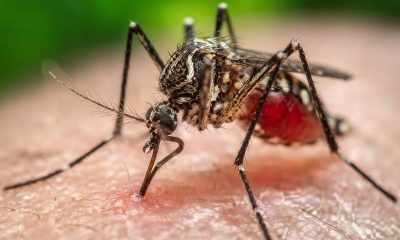
Dengue outbreak gallops ahead: Infections surpasses 73,455, leaving 50 dead
-

 News5 days ago
Money laundering case against Yoshitha, fixed for pre-trial conference