
Latest News
WWC 2025: Radha shines in washout between India and Bangladesh

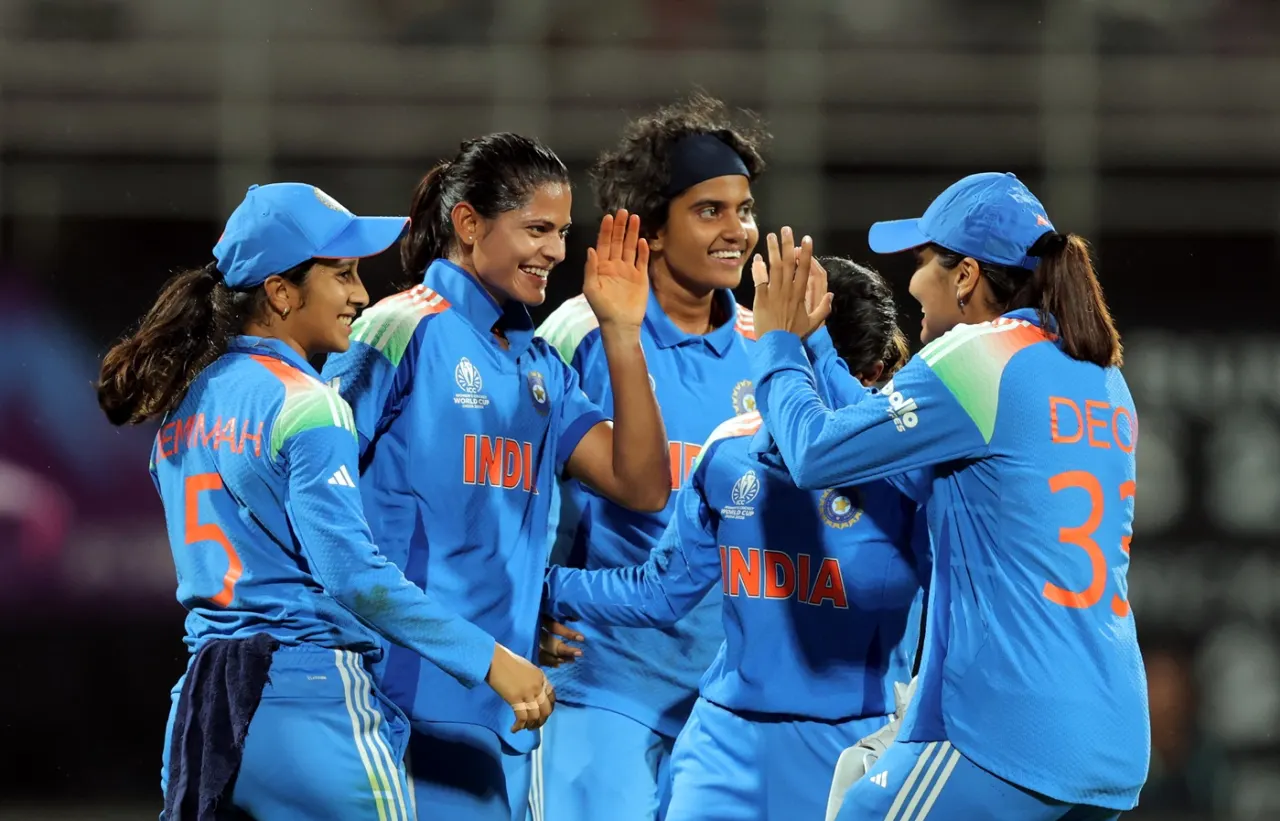
Unseasonal rain washed out the final group stage match of the Women’s World Cup with India well-poised to complete a big win over Bangladesh. The weather played more games than the cricketers after the start of play was delayed for two hours, which initially reduced the match to 43-overs-a-side. A further two-hour stoppage 12.2 overs into Bangladesh’s innings made it a 27-overs-a-side match and India were set a revised target of 126.
They were on track at 57 for 0 in the ninth over but more showers meant the minimum 20 overs could not be completed.
With more rain forecast for the rest of the week in Mumbai, this match may have been a taste of things to come, especially for India’s semi-final against Australia on Thursday but that could be the least of their concerns. Opening batter Pratika Rawal suffered an injury to her knee and ankle while fielding and could not take her place at the top of the line-up in the chase. With a three-day turnaround before the knockout, she is being monitored by the Indian medical staff. In Rawal’s absence, Amanjot Kaur partnered Smriti Mandhana in the chase.
That India had such a modest target was largely due to their left-arm spinners, who shared five wickets between them. Radha Yadav, playing in her first match of the tournament, picked up 3 for 30 while Shree Charani iced the cake with 2 for 23 included. Only four Bangladesh batters got into double-figures as they stumbled to 119 for 9 in 27 overs.
Bangladesh were under pressure from the first ball when Renuka Singh produced an inswinging yorker that tested Sumaiya Akter’s defence. She finished the over with a wide ball outside off that Sumaiya slashed at, only to find Charani at short third. Deepti Sharma opened the bowling from the other end but had to wait until the tenth over to break through. She went around the wicket to Rubya Haider and induced a leading edge which was caught at mid-off.
There were 17 more balls bowled as the drizzle became a downpour and players were taken off the field at 5.50pm. Heavy rain followed and it looked increasingly unlikely the game could go ahead by 8.05pm, but the weather cleared leaving the players to deal with a wet ball.
Sharmin Akhter should have been run out when she thought a single was on even as Nigar Sultana sent her back from more than halfway down. Jemimah Rodrigues’ throw was good but Charani could not collect cleanly. Four overs later, Radha made no mistake. Sharmin hit the ball to her at point. Nigar, from the non-striker’s end, ran and Radha’s clean pick-up and throw found her short of her ground.
Bangladesh also struggled to find the boundary on resumption and it took 41 balls before they breached it with Sobhana Mostary taking advantage of a hint of width to cut Deepti for four. She stayed on the back foot to pull Radha through midwicket and inject some intent into the innings. Bangladesh were 73 for 3 after 20 overs and set up to go big.
Mostary took back-to-back boundaries off Deepti at the start of the 21st over and then Sharmin joined in. She swung hard and sent the ball towards long-on, where Rawal ran to collect but injured herself and had to be helped off the field.
Harleen Deol took a simple catch at mid-off when Mostary attempted to force the issue and hit Radha over the top. She was dismissed for a 21-ball 26 and featured in Bangladesh’s highest partnership of 38.
Shorna Akter was bowled by Amanjot before Nahida Akter swiped across the line and was bowled by Radha. Substitute fielder Arundhati Reddy sprinted in from deep midwicket when Sharmin slog-swept Charani, then flung herself forward as she took the catch. Later in the over, Radha over-ran trying to field the ball and also seemed to tweak an ankle. It didn’t stop her bowling the penultimate over and picking up her third wicket as Rabeya Khan was bowled.
Bangladesh collapsed from 91 for 3 to 117 or 9, which meant their total could hardly be considered competitive, even with Rawal unavailable. Marufa Akter found swing, and sometimes too much, but India established their chase when Amanjot short-arm pulled her with exquisite timing for the first boundary. Mandhana helped herself to a series of fours off Nishita Akter, using her feet well against the spin. After they had each faced 15 balls, Mandhana was on 23, and Amanjot just 7. They were both also dropped by Sultana, who could not hold on to difficult chances: Mandhana on 28 off Nahida, Amanjot on 15 off Rabeya.
The rain returned after that chance and the captains shook hands at 10.20pm. Bangladesh gained a point, which allowed them leapfrog Pakistan into seventh place, on net run-rate.
Brief scores: Match abandoned
India Women 57 for 0 in 8.4 overs (Mandhana Ismail 34*, Amanjot Kaur 15*) vs Bangladesh Women 119 for 9 in 27 overs (Sharmin Akhter 36, Sobhana Mostray 26; Radha Yadav 3-30, Shree Charani 2-23)
[Cricinfo]

Latest News
Dilki Wathsala Marambage appointed as Director General of the Department of Technical Education and Training

The Cabinet of Ministers granted approval to the proposal forwarded by the Prime Minister in her capacity as the Minister of Education, Higher Education and Vocational Education to appoint Mrs. Dilki Wathsala Marambage to the post of Director General of the Department of Technical Education and Training.
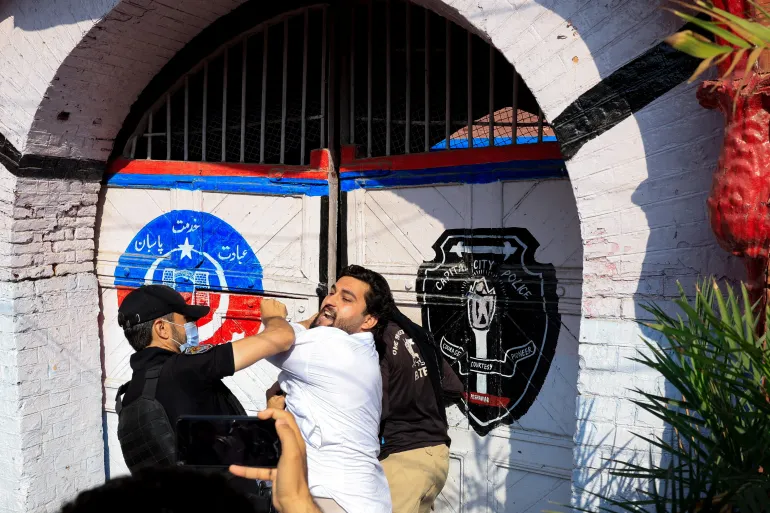
The Pakistan Tehreek-e-Insaf party of jailed ex-Prime Minister Imran Khan is planning to legally challenge the federal government’s Sunday takeover of Khyber Pakhtunkhwa, a province that the party governed.
Sheikh Waqas Akram, the PTI’s central information secretary, told Al Jazeera that the party would challenge the imposition of emergency laws — suspending civil liberties — and governor’s rule in the province in court on Tuesday. A petition had been drafted by a legal committee headed by PTI secretary general Salman Akram Raja, but Akram did not say whether it would be filed in the Supreme Court or the Federal Constitutional Court.
The federal government’s moves have emerged as Pakistan’s latest political flashpoint, with competing narratives from the government and the PTI, at a time when the party was in the middle of a delayed march towards Islamabad, aimed at pressuring authorities to release former PM Khan, who has been in incarceration for more than three years.
Interior Minister Mohsin Naqvi on Monday justified the government’s moves by arguing that federal rule in Khyber Pakhtunkhwa was needed for Pakistan to effectively combat “terrorism” in the province that shares a porous border with Afghanistan.
“No war can be won, however many resources you bring, whatever you do, until the government there leads it,” Naqvi said in Peshawar on Monday.
On Sunday, President Asif Ali Zardari imposed emergency rule and governor’s rule, suspending the PTI government in the northwestern province. The party has governed Khyber Pakhtunkhwa since 2013.
[Aljazeera]

Pathum Nissanka’s return to the red-ball fold provides a downtrodden Sri Lanka with a timely boost, while debuts are also in the offing for wicketkeeper Anjala Bandara and seamer Eshan Malinga after both were named in Sri Lanka’s 15-man squad for the upcoming two-Test series against Pakistan.
The 22-year-old Bandara is tipped to make the playing XI following Kusal Mendis’ promotion to captain, with the longtime Test keeper now likely to play solely as a specialist batter. Malinga’s inclusion is less certain, with Asitha Fernando, Lahiru Kumara, Milan Rathnayake and Dilshan Madushanka – who returns to the squad having been omitted from the one named for the second Test against India – all in line to make up Sri Lanka’s pace contingent. Dinesh Chandimal, who missed the second India Test with an injury, is also in the squad.
Making way are Kamil Mishara and Sahan Arachchige – both of whom had drafted in for the second Test against India – as well as Lahiru Udara, Niroshan Dickwella and Vishwa Fernando.
Malinga’s inclusion comes as Sri Lanka’s red-ball fast-bowling stocks had been waning. Former skipper Dhananjaya, who has been retained in the squad, had been vocal during the India tour of Sri Lanka’s need for more express seamers in the playing XI – aside from Lahiru Kumara, who is capable of clocking speeds in the 140kph range, most other options tend to veer around the low 130s. Malinga is certainly capable of matching Kumara on the speed gun, and that could point towards a potential first Test cap.
Bandara has been a player of genuine promise since making his debut in 2022, with his 31 first-class matches fetching 2239 runs at an average 65.85. There had been a clamour among fans for The Colombo CC keeper to be included in the squad to face India, but that spot was eventually taken by Dickwella.
The rest of the squad pans out as expected, with Nissanka’s return the headline. Pasindu Sooriyabandara, who made his debut earlier this year against India, retains his place ahead of the more experienced Udara. However if Bandara does take up wicketkeeping duties as expected, it Dhananjaya could be the odd man out, with Chandimal, Kamindu Mendis, Sonal Dinusha and Kusal Mendis all assured a spot in the playing XI. Sri Lanka have two spin bowling options in Prabath Jayasuriya and Keshara Nuwantha.
The first Test will take place in Rawalpindi on November 9.
Sri Lanka squad for Pakistan Tests
Pathum Nissanka, Pasindu Sooriyabandara, Dinesh Chandimal, Kamindu Mendis, Sonal Dinusha, Kusal Mendis (capt), Dhananjaya De Silva, Anjala Bandara, Keshara Nuwantha, Prabath Jayasuriya, Milan Rathnayaka, Lahiru Kumara, Asitha Fernando, Dilshan Madushanka, Eshan Malinga
[Cricinfo]

Cabinet approves redrafting of State Assets Management Act
Cooperative Employees Commission Act No. 12 of 1972 to be amended
Dilki Wathsala Marambage appointed as Director General of the Department of Technical Education and Training
Declaration of Naakolagane Sanctuary under the Fauna and Flora Protection Ordinance
Cabinet approves transfer and maintenance of selected roads presently under PC’s and Local Authorities to the RDA
Obtaining financial facilities for the Water Supply and Sanitation Improvement Program (Sub-program 2) from the ADB

‘Dates have the highest sugar content to fight Coronavirus’

Sunday Island 27 December – Headlines

#SundayIsland 17th December – Headlines

Sunday Island – 28th March

Sunday Island Headlines – 21 March

Sunday Island – 21st February – Headlines
-

 Features6 days ago
The Sri Lankan who made Scottish history
-

 Sports6 days ago
Nissanka absence opens door for Sri Lanka’s young guns
-

 News5 days ago
NDB fraud Rs 60mn more than reported
-

 News7 days ago
Gnansara Thera to be assigned to prison printing section: Officials
-

 News5 days ago
Removing monk’s robes matter for Sangha to decide: Mahanayake Theras
-
 News7 days ago
OIC of FCID summoned before Maligakanda Magistrate
-

 Features6 days ago
Future of Sri Lanka’s state university system: Should it be shut down and reopened?
-
 News6 days ago
Shiranthi R remanded until 13 Oct.