
Features
Dry and Dull Skin …


 Lots of my readers seem to be having a problem with dry and dull skin.
Yes, such problems can be a nuisance … annoying and uncomfortable, as well.
Well, this week I’m giving you some home remedies … for Dry and Dull Skin:
* Yoghurt and Honey:
Those searching for graceful skin should rely upon the saturating properties of honey as it eliminates dullness by making the skin look delicate, radiant and full.
Use 01 tablespoon of honey, with half a bowl of yoghurt, as an organic face pack, and leave it on the skin to dry and, after 15-20 minutes, wash it off with lukewarm water.
* Aloe Vera:
Aloe vera hydrates the skin and getting aloe vera gel straight from the plant is exceptionally useful in disposing of the dull skin.
Apply aloe vera gel and wait 15-20 minutes for it to dry up and then rinse normally with lukewarm water.
* Cucumber:
Blend half a cucumber and mix it with your favourite face mask and leave it to dry. Once done, remove it with water and experience the rejuvenation from the cucumbers.
* Banana:
Banana is a good source of potassium, which helps to reduce inflammation and heal the skin. Banana also contains vitamin C, which is an antioxidant that helps to protect the skin from free radicals.
Mash a ripe banana and mix it with 01 tablespoon of honey and rub the paste to the dry skin affected area.
Leave it for 15-20 minutes before rinsing off.
* Avocado:
Avocado masks are well-known for their hydrating and nourishing properties in homemade skincare treatments.
You will need a ripe avocado, 01 tablespoon honey (optional, for extra moisture) and a few drops of lemon juice (optional, for brightness).
Scoop out the flesh of half an avocado and mash it in a bowl until it forms a smooth paste. Add honey for extra moisture and a few drops of lemon juice for a brightening effect, if desired, and thoroughly combine the ingredients.
Cleanse and pat dry your face before applying an even layer of the avocado mask.
Allow the mask to sit on your face for about 10-15 minutes and then remove the mask with lukewarm water and pat your skin dry gently.



Tales of Mystery and Suspense 22
by Prof. Rajiva Wijesinha
I return now to J K Rowling of Harry Potter fame, writing under the pseudonym Robert Galbraith about Cormoran Strike. There are several books in this series of off-beat detective stories, featuring a private investigator who lost a leg while serving in the army, and his assistant Robin Ellacott, who had been raped when a student, with lasting psychological effects. Strike himself was the child of a rock band groupie, who had lived a sordid life, her last attachment being to a failed rock star of relatively aristocratic provenance and brutal habits.
Career of Evil is the third in the Strike series, and markedly different from the two books I read previously, the first and the fifth. Those were relatively speaking classic whodunnits, with a range of possible murderers, the solution in the end being quite unexpected but also convincing. The murderers in both cases are unhinged, but this does not become obvious until Strike has put two and two together and revealed a history of aberrant behaviour.
This novel has just a few suspects, all of them bizarre, as is made clear from the moment they are introduced. The case begins with Robin being sent a severed leg from a dead body, or rather it begins with the thoughts of the murderer who seeks revenge from Strike, which it seems he intends to achieve by first terrifying and then killing the woman he calls Strike’s Secretary. He also evinces a horrid desire to mutilate women after abusing them.
The first person Strike thinks of as a possible suspect is a member of a crime syndicate known to have sent body parts through the post, but Strike soon decides that he cannot be the perpetrator, in part because he is not likely to have known that Strike was responsible for his conviction earlier. Rather Strike is convinced it is one of three people who hate him, two of them individuals he helped to prosecute when he was in the investigating unit of the army, the third his step-father whom he suspected had killed his mother.
Unfortunately, Wardle, the policeman assigned to the case, who gets on well with Strike, is convinced it is the first person Strike had suggested, and does not seem interested in the rest, so Strike sets about trying to find out what they are up to.
They are not easy to trace, but Strike eventually tracks them down. He finds Laing’s mother in Scotland, although she is no longer able to provide any useful information. He then tracks down the mother of Laing’s first wife, Rona, whom Strike had found tied up and tortured. It was this incident that led to Laing’s conviction and imprisonment, and ultimately fuelled his hatred of Strike.
He finds the sister of the second suspect, Noel Brockbank, and learns that she and her brother were both abused as children by their stepfather. Brockbank later went on to abuse young girls himself. When Strike went to arrest him over the abuse of his stepdaughter, Brockbank attacked him with a broken bottle, and Strike knocked him out. Brockbank subsequently suffered seizures and was found to have a serious brain injury. Although Strike was initially blamed for the injury, it was later established that Brockbank had fractured his skull in a rugby match before the confrontation. Brockbank was therefore never convicted of the abuse allegations, while Strike was cleared of responsibility for his brain injury.
Strike’s third suspect is his former stepfather, Jeff Whittaker, whom he describes as unutterably filthy and abusive, yet strangely attractive to women. When Strike tracks him down, he finds Whittaker living with Stephanie, a woman who supports him with what she earns as a sex worker. Despite being abused by Whittaker, she remains devoted to him.
In his musings, the killer refers to the woman he lives with as “It”, suggesting that he could be Whittaker, who lives off Stephanie’s earnings. But when Robin is attacked by a man dressed differently from Whittaker, whom she had seen shortly before, it becomes clear that Whittaker is not the killer. Laing, the first of Strike’s three suspects, is also apparently ruled out when Robin sees him on crutches and learns that he is claiming disability benefits. Strike and Robin therefore concentrate on the third suspect, Noel Brockbank, whom they eventually trace to a home he shares with his girlfriend, Alyssa, and her two young daughters. Robin has seen the younger girl and becomes increasingly worried about what Brockbank might do to her. Although Strike has ordered her to leave Brockbank alone, Robin continues investigating because of her concern for the child. She eventually discovers that Brockbank has been sexually abusing the older of the two girls.
Meanwhile, Strike and Robin manage to identify the girl whose leg was sent to the agency. Among the bizarre letters Strike had received in the past was one from a young woman who fantasizes about having her healthy leg amputated and believed that Strike had deliberately had his own leg removed. Robin realises that the girl was suffering from a condition known as body integrity identity disorder, or BIID, in which a person has a persistent desire to have a healthy limb or other body part removed. Strike simply ignored the letter, unaware that the girl was suffering from a recognised condition and that her request was serious. The girl, Kelsey Platt, is subsequently found to have been murdered, and the police discover forged letters apparently written by Strike in response to her.
Wardle has his suspicions of the man married to the girl’s sister, with whom she had lived. Strike thinks this absurd, and it turns out that the man has an alibi for the time of the murder, but Strike does go along when the sister asks to see him and is overwhelmed by the sense of grief she and her husband evince.
The girl is evidently a godsend to the murderer, whose desire to remove body parts could not be controlled. He chops fingers off a girl he almost kills, and then removes the nose and ears of a girl he kills soon afterwards. And previously he had sent Robin the toe of the girl whose leg had been sent earlier.
All this horror can seem over the top, and one may wonder how Rowling could bring herself to wallow in such grim material. But perhaps she felt very strongly about the abuse women were subject to, and though her depiction of the way women played into the hands of abusive men seems excessive, she feels that awareness of that increases the need for support groups and other mechanisms to provide safety nets.
But there is also another side to the novel, namely the relationship between Strike and his partner Robin, which verges on the romantic though neither wishes to move on the matter. Strike feels diffident about taking advantage of his position as her employer, while Robin is engaged to a young man she has known for years, and whom she was virtually engaged to while at university. He has stood by her after the rape, when she could barely face society, and she finally decides to accept him and they are planning their wedding at the beginning of this book. But she finds that he is jealous of Strike, and hence his resentment of her commitment to her work, she breaks off the relationship when they are staying with her parents to finalize arrangements for the wedding.
But they still share a flat, and given the threat looming over her she cannot really move to live by herself. And gradually his misery wears her determination down, and she agrees again to marry him. The novel ends with their wedding, which Strike just manages to get to, causing her to beam, though she ‘had not once smiled in the entire service’.
But they still share a flat, and with the threat hanging over her, Robin cannot really move out and live by herself. Gradually, Matthew’s misery wears down her determination, and she agrees to marry him after all. The novel ends with their wedding. Strike arrives just in time, battered and bloodied after his confrontation with the killer. Robin has not smiled once during the ceremony, but when she sees Strike, she suddenly beams.
Before that, in the kerfuffle caused by Robin’s attempt to rescue the children of the woman Brockbank was living with, Strike sacks her. This turns out to be useful to him, because he subsequently enlists the children’s mother, Alyssa, to help trap the killer, whom he has by then identified as Donald Laing. With Shanker’s help, Strike arranges for Alyssa to pose as his new secretary and lure Laing into the open while he gains access to the flat Laing has been using as a hideout. There he discovers the evidence of the murders, including the severed body parts kept in a refrigerator.
This leads to a dramatic climax in which the murderer turns up. Strike has difficulty subduing him, partly because of his missing leg, but he is helped by Shanker, a man whom his mother, Leda, had taken in as a neglected and badly beaten boy and who has remained deeply grateful to the family. With the murderer captured and the case effectively wrapped up, Strike asks Shanker to drive him to Yorkshire, where Robin’s wedding is taking place. They arrive while the ceremony is still in progress, and Strike manages to get into the church just as Robin is making her vows. When she sees him, she beams and says “I do” while looking at him rather than at Matthew.
Clearly, this suggests that the relationship between Strike and Robin is far from settled. Indeed, as I discovered when I read the fifth book in the series, the story certainly does run and run.

by Dr Upul Wijayawardhana
It was with a great sense of sadness that I received the news about the death of Ananda Ganegoda at the age of 80 years; the last of the famous industrialist Ganegoda brothers to depart. Ananada was a businessman par excellence but he ought to be remembered specially for his outstanding contribution to popularising Sinhala music by founding the music label Singlanka in 1980. Unfortunately, I lost touch with him, having seen him only once since I left Sri Lanka in May 1988. As I mentioned in my article on statins (Cholesterol lowering statins: Scope for use widens – The Island; 18 September) I have met some remarkable people in my practice of medicine and Ananda was certainly one of them.
The Ganegoda brothers were actually two sets of first cousins though they worked as a single family. Nandajeewa, Sumanalatha, Wimalajeeva, Karunajeewa and Ratnajeeva were the children of Jineris Ganegoda whilst Chandrasiri, Jinadri and Ananda were the children of Jineris’ younger brother Johanis. Sadly, it seems to have been forgotten by many that the Ganegoda brothers were instrumental in changing our export economy by starting garment factories in 1954, one of the first groups of non-traditional exports. According to a family post on Facebook, the visionary leader was Wimalajeewa, who started Noortex, Mayura, GIL and Eurolanka garment factories. Others followed suit and they presided over a vast business empire.
My first contact was not with Ananda but Karunajeeva, if my memory serves me right. After a consultation and a friendly chat, he invited me to a factory visit, which I readily agreed to. He took me to one of the factories in Ratmalana and I was very pleasantly surprised with the high standards maintained in the factory including workers’ welfare. I was able to taste the delicious food served to the workers. The icing on the cake was his measuring me out for shirts and trousers which I wore for a very long time!
Maybe around late 1983 or early ‘84, Ananda ‘channelled’ me for a consultation in the Central Hospital for chest pain and was accompanied by his wife, Nandani. I noted that, in addition to the cigarette smell, he had heavy nicotine staining of fingers. After having ensured that his pain was not cardiac, I tore into him stating, “What is wrong with you? You are among the Sri Lankan businessman doing well and you seem determined to commit suicide with chain smoking,” Then I started wondering whether I had been too blunt, but Ananda said “Dr, Thank you very much. I will stop smoking” and his calm response took me by surprise. On a subsequent social occasion, Nandani whispered in my ear that he had an occasional ‘secret smoke’ and when I encountered, Ananda said “Dr, hari amarui” but promised he would give up completely. I do not know whether he did so but the significant reduction of consumption, hopefully, contributed to his longevity.
I met him last in 1995, in the role of a peacemaker when he was in open conflict with a close relative of mine. I pleaded with him to stop the battle, pointing out that one of his nieces was being courted by the son of my relative. Though shocked, he promised to make peace.
Ananda’s crowning achievement was the founding of Singlanka which made Sinhala songs accessible to the masses. Those of us, old enough to remember, know how difficult it was to listen to music. As a child, I had to go to the village Community Centre to listen to the radio, which is in utter contrast to what is happening today. With just a click on the smartphone anyone can listen to music of any choice, anytime, anywhere as long as you are connected to the internet! Recording with the ability to playback, started with the Phonograph invented by Thomas Edison in 1877, Vinyl records being available from the early twentieth century. They came in various speeds and sizes but needed cumbersome players.
The real breakthrough came in 1963, when the Dutch company Philips introduced the Compact Cassette with more convenient players. Singlanka gave everyone the opportunity to listen to their favourite artists on Compact Cassettes. When the Compact Disc format, developed jointly by Philips and Sony, released in 1983, gathered momentum, Singlanka too moved to this format but most of us are still in possession of Singlanka cassettes. I still occasionally listen to Nanda Malini’s “Pavana”, which has become relevant because of the recent death of Nanda Malini and the ascent of JVP to power, but that is another story.
Most of our famous singers, including the greats like Amaradeva and Nanda Malini, owe at least a significant part of their fame and fortune to Singlanka, which was Ananda’s brainchild. Looking at the discography of Singlanka is like looking at a list of all favourite singers. In addition, Ananda gave the opportunity to the less known in the field of music also to showcase their talent, the best example being Carlo Fonseka’s Calochita Gee, which was a compilation of songs sung by various artists to the lyrics and melodies of Carlo. Who would have imagined multi-talented Carlo having musical creativity as well!
As for me, one event illustrated his generosity and his sense of gratitude. When Dr N J Wallooppillai retired, and I succeeded him as Cardiologist, I arranged for an international conference “Cardiology Update”, which was held on 6th and 7th of June 1985 at Galadari Meridien Hotel, culminating in a banquet. When I rang Ananda about this, he immediately offered to sponsor music for the evening and arranged for Patrick Denipitiya Combo to play and Ivor Dennis, Indrani and Sisira Senaratna to sing. It was a memorable evening, with plaudits from attendees, though we did not have an opportunity to rehearse. I compeered and we selected the songs as we went on. When Indrani wanted to sing Gaya Geethayan I had to stop as it was a Hindi tune and Indians were in the audience! My wife Primrose joined Ivor Dennis to duet “Olu Pipila Wela Lela Denawa”. We ended the banquet with Ivor Dennis singing, and the audience joining, the patriotic song Dakuna, Negenahira, Batahira, Uturada, Eka Kodiye Sevene thanks to Ananda. I am eternally grateful to him.
May Ananda attain the Supreme Bliss of Nibbana!
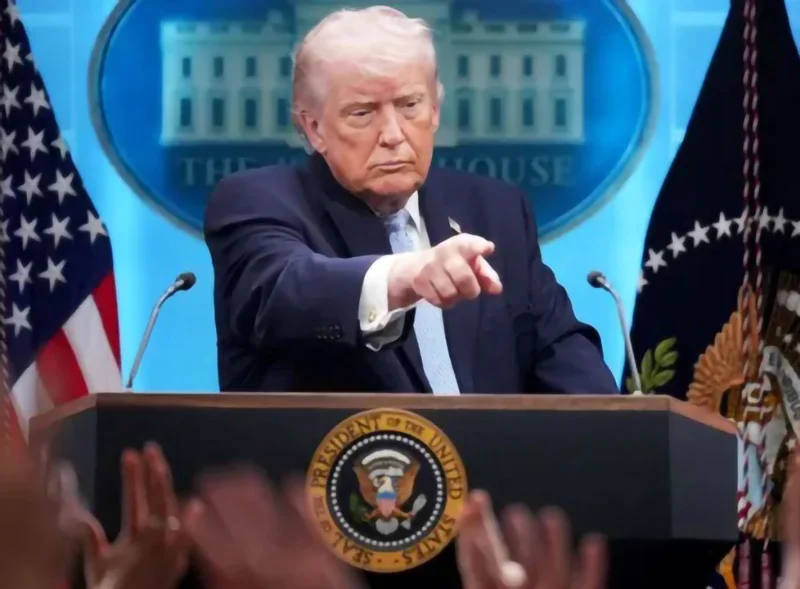
 Some fundamental freedoms seen to be at the heart of democracy in the US – religion, speech, the press, assembly and the right to petition the government – are at risk of being undermined at present by the country’s Executive President. However, the latter is being legally challenged on this score by some sections of the US media and the citizenry of the country could take heart from this notable defense of media freedom.
In fact this is good news for the world of democracy. The push back is coming from organizations such as CNN, ABC, CBS, Fox, NBC who constitute the nucleus as it were of the US media and their solidarity no less than their resourcefulness calls for commendation.
Following a recent White House decision to suspend CNN from what was referred to as ‘participation in presidential pool coverages’, the other media organizations mentioned refused to replace it in the pool. Their position was that the public had a right to receive ‘accurate and independent information about the government.’
Earlier, the White House decided to bar MS NOW and Politico from entering its premises following the restrictions imposed on CNN. The organizations were accused of publishing “FAKE NEWS’ , ‘Fiction’ and ‘lies’ in respect of the administration. These organizations lost no time in initiating a federal lawsuit accusing the central administration of violating their rights guaranteed by the First Amendment.
However, the latter litigating organizations could now consider themselves as having been vindicated because the federal court hearing their case has ordered the Trump administration to temporarily restore White House press access to journalists from the mentioned media institutions. Notably, the court has declared that the ban is ‘likely unconstitutional’. The case is proceeding.
The mass media of the most vibrant democracies of the West ought to be no strangers to such inspirational acts of solidarity and exemplifications of independence but there are lessons here for the democracies of the South that could stand them in good stead. Minus the right of a people to be informed, the rest of fundamental rights featuring in Southern Bills of Rights and legislation of the kind are bereft of substance and meaning.
It is informed decision-making on the part of a citizenry that makes for democratic vibrancy and on this score many a Southern democracy fails. While Southern publics generally demand of their governments continuous economic well being and substantive material benefits they are not equally desirous of being informed and knowledgeable.
This lacuna in the consciousness of many Southern publics enables their governments ‘to get off the hook’, so to speak and govern, or more often misgovern, their countries with impunity. Among other factors, this species of mass ignorance makes it possible for governments to dismantle democracy and rule in perpetuity.
Accordingly, an educated and constantly informed public is an essential precondition for the flourishing of democracy and independent media are integral to this process. Minus an independent mass media sector that meets the knowledge needs of the people responsibly, democracy is as good as dead.
Needless to say, those sections of the US media that are currently taking the Trump administration to task over its media curbs are acutely aware of the cruciality of these fundamental knowledge requirements.
The hope of democratic opinion worldwide and locally is likely to be that media independence would thrive in the manner in which it is flourishing in the most vibrant and accountable democracies of the West.
Southern countries such as Sri Lanka that lay claim to democratic credentials, but are democracy-deficient in many ways, need to be particularly cognizant of these requirements. The publics of these countries need to go the extra mile to ensure the thriving of an independent but responsible mass media sector.
In fact it is veritably a matter of life and death. It is only an independent media sector that could, while ensuring the existence of an informed public, impress on the latter the need to protect and perpetuate its fundamental rights. In the absence of these campaigns, such publics could be eventually having on their hands governments that boast of ruling in perpetuity.
Taking a leaf from the sections of the US media referred to independent media organizations in Southern states need to act in solidarity as well. They would need to act on the basis of the principle that acts of victimization suffered by members in their fold at the hands of governments, for instance, are in fact inimical acts directed at their collectivity and which call for united remedial action. In short, no independent mass media institution could see itself as ‘an island’.
Besides some general guidance on the importance of media independence and solidarity, the message coming from the US with regard to media praxis is that power must be stood-up to unblinkingly. The mentioned sections of the US media are primarily in a struggle to ward off encroachments on their independence in the areas of policy and practice by the political executive, that is the President.
The latter would ride rough-shod over the media in the absence of robust opposition by the media itself to inimical executive action of this kind.
While media independence needs to be seen as crucial to democratic development, an obligation is cast on the media to ensure that it uses such independence responsibly and constructively.
The worst that could afflict a media sector is for it to fall prey to the clichetic ‘freedom of the wild ass’. In fact recurring irresponsibility on the part of the media could lend credence to the perception that a tightly regulated media is best for a country. It is a short step from this misguided view to the position that political authoritarianism is best for a state. That turn of events would be of course catastrophic for a democracy.
The issues discussed thus far point to the need for a broad discourse among Southern democracies in particular on what is best for them in this connection. Given the risks underscored earlier for Southern countries in particular a broad discussion on the matters at hand, which includes the public, emerges as a must for Sri Lanka. Besides, media solidarity within democratic countries and internationally is a must.

‘Career of Evil’

Homer’s Odyssey

Ex-minister Johnston alleges some officials fabricating evidence against political opponents

Ananda Ganegoda: Pioneer in popularising Sinhala music

ICC introduces pink-ball daytime Test trial, new time-wasting penalties

USD 40.84m pipeline to secure aviation fuel supplies to BIA

‘Dates have the highest sugar content to fight Coronavirus’

Sunday Island 27 December – Headlines

#SundayIsland 17th December – Headlines

Sunday Island – 28th March

Sunday Island Headlines – 21 March

Sunday Island – 21st February – Headlines
-

 Editorial6 days ago
Birth of a bad law
-

 News4 days ago
Police remove Thileepan statue in Jaffna
-

 Features7 days ago
Beyond traditional jobs: Why Sri Lanka needs to facilitate the gig economy
-
 News6 days ago
TIN mandatory for key transactions from Nov. 1
-

 Features4 days ago
The 22nd Amendment, constitutional recovery and illiberal slippage
-

 Features4 days ago
Of foreigners as CEOs of Lankan ventures
-

 News4 days ago
Sajith rejects Jt. Opp. protest sabotage claim; SJB TU chief demands remedial action
-

 Editorial7 days ago
PST: Old devil in new costume?