
Latest News
WWC 2025: England in semi-finals after India unravel in tense finish


Indore was a giant party waiting to take off on Diwali eve. Smriti Mandhana and Harmanpreet Kaur had put together a century stand. Deepti Sharma knocked off a measured half-century after picking up four wickets with the ball.
When India needed 57 off 57 balls, with seven wickets in hand, their attempt to scale down their highest-successful chase in women’s ODIs was well on track. But big-match nerves took centre stage, like it often has in the recent past. They collapsed sensationally, and fell short by four runs. England joined Australia and South Africa in the semi-finals.
India have now lost their third straight game, their campaign threatening to derail swiftly as they next face New Zealand in a crucial clash on Thursday.
England’s win was set up by Heather Knight, whose 109 helped overcome a wobble when England were tested by India’s slower bowlers. Her century stand with Nat Sciver-Brunt gave them the platform for a lift-off towards the end. But a late collapse meant they managed 289 when 320 was within their reach.
For much of India’s chase, it seemed as if that collapse would come back to haunt England. Haunt it did, but to India, who have lots to ponder – not least the composition of their line-up, after they took a bold call of playing with a batter short – Jemimah Rodrigues dropped in favour of Renuka Singh.
India were rocked early, losing Pratika Rawal for 6 in the third over. Harleen Deol started slowly, and managed just 4 off 26 balls outside of her five boundaries as the asking rate crept up. Having spent time at the crease, like she had in each of her four previous knocks in the tournament, she threw it away – lbw playing back to Charlie Dean’s indrifter.
Mandhana was far from fluent, but Harmanpreet’s arrival took some pressure off her. The Indian captain was off the mark with a sumptuous flick off Sciver-Brunt, and looked seemingly keen on not allowing Sophie Ecclestone to settle by opening up the off side and repeatedly lofting her inside-out.
Harmanpreet’s enterprise helped Mandhana, who had faced just 18 balls in the first 12 overs of India’s chase, settle in. Mandhana was watchful, but every now and then, there were flashes of brilliance – like when she picked off two boundaries behind square off Ecclestone.
Once she got those two fours, Mandhana switched gears to raise her half-century off 60 balls, barely acknowledging the applause. On 43 at that point, Harmanpreet also turned up the tempo and moved to 70 before she glided Sciver-Brunt to short third, England breathing a sigh of relief at breaking a 125-run stand.
Deepti and Mandhana then knocked the ball into the gaps, seemingly intent on taking the chase deep. Deepti’s sensible approach also took pressure off Mandhana, forcing Sciver-Brunt to bring back Linsey Smith for another spell a tad earlier than she might have otherwise. This proved to be a masterstroke as she had Mandhana hole out to long-off on 88. Even so, at 234 for 4 in 41.2 overs, this was India’s game to lose.
However, nerves took over. Richa Ghosh drilled one straight to cover, Deepti miscued a slog, reminiscent of the shot she played in that 2017 final, and suddenly Sneh Rana and Amanjot Kaur were left with too much to do. Smith conceded just four in a clutch 48th over, leaving India needing 23 off 12. Then with 14 needed, she came back to finish off India, ensuring none of her first four deliveries went to the boundary.
As well as the spinners bowled, it would be hard to look beyond Knight’s century that gave England a chance in the first place. If her unbeaten 79 in Guwahati helped England overcome Bangladesh’s spin strangle, Sunday’s innings was a masterclass in sweeps and reverse sweeps.
After Amy Jones did the early running to construct a measured half-century, it was Knight who injected momentum through the middle overs, putting on 113 with Sciver-Brunt. Having begun sedately, she only shifted gears after the pair raised the fifty of their partnership.
While the sweep was Knight’s calling card – no spinner was spared – to say her knock was only about that stroke wouldn’t do justice to her running between the wickets, a mark of the work she’s had to put in to improve her fitness following a career-threatening injury. She also displayed her brute bottom-handed power in shovelling Kranti Gaud for six, the only one of the innings, in the 38th over.
Knight was reprieved twice in her nineties, but she soon brought up her century off 86 deliveries before her dismissal led to a meltdown with England managing just 36 off the last five overs. This would’ve cost them on most nights, but Sunday was their night. Thanks to their spinners, England remain unbeaten in the tournament.
Brief scores:
England Women 288 for 8 in 50 overs (Heather Knight 109, Amy Jones 56; Shree Charani 2-68, Deepti Sharma 4-51) beat India Women 284 for 6 in 50 overs (Smriti Mandhana 88, Harmanpreet Kaur 70, Deepti Sharma 50; Nat Sciver-Brunt 2-47) by four runs
[Cricinfo]

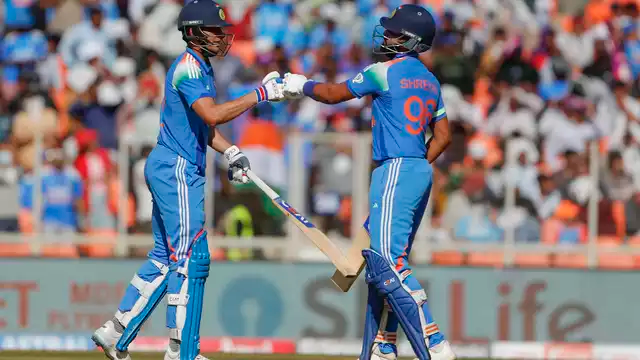
Squad for the first three ODIs: Shubman Gill [C], Rohit Sharma, Virat Kohli, Shreyas Iyer [VC], KL Rahul [WK], Nitish Kumar Reddy, Axar Patel, Naman Dhir, Anshul Kamboj, Gurnoor Brar, Ruturaj Gaikwad, Arshdeep Singh, Ishan Kishan [WK], Mohammed Siraj, Prasidh Krishna*, Kuldeep Yadav
Squad for fourth and fifth ODIs: Shreyas Iyer [C], Rohit Sharma, Virat Kohli, Tilak Varma, Ishan Kishan [WK, VC], Nitish Kumar Reddy, Axar Patel, Naman Dhir, Auqib Nabi, Gurnoor Brar, Ruturaj Gaikwad, Arshdeep Singh, Kumar Kushagra [WK], Mohammed Siraj, Yash Thakur, Kuldeep Yadav
[Cricbuzz]
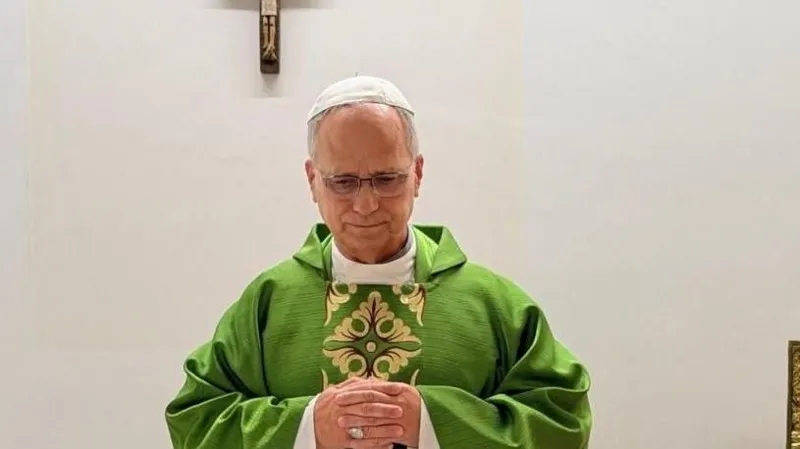
Pope Leo XIV has been pictured celebrating Mass from hospital, in the first images of him released by the Vatican since he underwent lung surgery.
The 71-year-old pontiff was diagnosed with lung cancer after the surgery at Rome’s Gemelli Hospital on Tuesday afternoon, which the Vatican said had been “successful” and proceeded without complications.
The images shared on Friday showed the Chicago-born Pope wearing a green robe while standing behind a makeshift altar on the tenth floor of the hospital.
Pope Leo “celebrated with the medical and nursing staff” and thanked workers for their service, the Vatican press office said.
On Friday, the Pope’s doctors said tests had shown “a steady improvement in his general condition” since his procedure.
His doctors said that a chest X-ray indicated “good recovery of the operated lung”.
The whole lower lobe of the Pope’s right lung was removed “to ensure the procedure was radical”, the Vatican said following the surgery.
“After the operation, the Pope awoke normally and returned after a brief period of observation to his room,” it said earlier, before he spent a “peaceful night” at the hospital.

Pope Leo first announced that he would be having the operation during his weekly Sunday prayers, telling the crowd in St Peter’s Square that doctors had found a “well-contained” nodule on his lung “at an early stage” and advised him to have it removed.
Nodules are quite common and not necessarily cancerous, but after it was examined the medical team confirmed it was, “as suspected by pre-operative tests”, the Vatican said. He was diagnosed with lung adenocarcinoma.
The Vatican has stressed that the Pope had shown no symptoms of infection or illness prior to the procedure.
[BBC]
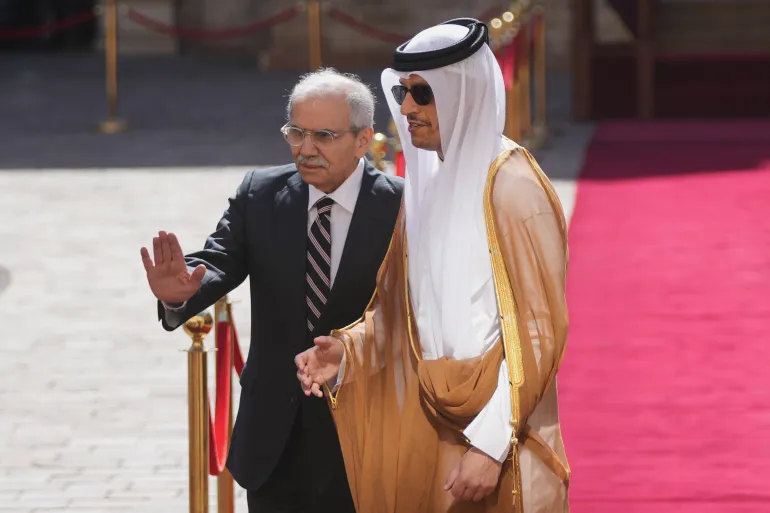
Qatar’s prime minister has announced plans to set up what he described as a “massive” solar plant in Lebanon to help ease its energy crisis.
Sheikh Mohammed bin Abdulrahman bin Jassim Al Thani made the announcement during his visit to Beirut on Friday, after meeting his Lebanese counterpart, Nawaf Salam.
“We have agreed to establish a comprehensive framework for cooperation in the energy sector and to present viable solutions,” Sheikh Mohammed said.
QatarEnergy has reached an agreement with French company TotalEnergies to jointly develop a solar power plant in Lebanon as an initial project.
The aim is to develop a major investment project “that would benefit the Lebanese economy, as well as the Qatari companies and entities participating in it”, he added.
Prime Minister Salam said he would put the plans for Lebanon’s electricity sector to the Lebanese Cabinet soon.
“The Qatari side will fund, implement and activate the project without any cost on the Lebanese state,” Lebanon’s leader said, adding that such a move is important because of the country’s financial crisis.
Lebanon’s state electricity company is one of the biggest sources of debt, haemorrhaging about $40bn over past decades with a bloated workforce and outdated infrastructure. The company provides only a few hours of electricity a day and the state, until a year ago, took advances from the Central Bank when diesel fuel ran out.
Sheikh Mohammed said Doha stands in “solidarity with the Lebanese people” and the entire region “in this dire hour”. Lebanon has been struggling with multiple energy crises in recent years and the situation has been compounded by the country’s financial collapse and Israel’s ongoing assault.
Earlier in the day, the Qatari PM also met Lebanon’s president and parliament speaker.
Among the topics discussed was the situation in southern Lebanon, where Israel continues its assault, capturing dozens of towns and villages.
Sheikh Mohammed said “Israeli violations within the Lebanese territories” were a large part of his talks.
He said that Israel should withdraw from Lebanon and cease its attacks, adding that Qatar is working in coordination with the United States to help lay the groundwork for future reconstruction in southern Lebanon to allow displaced people to return to their homes.
Israeli attacks on southern Lebanon have continued despite a ceasefire agreed in June. Under the agreement brokered by the US, the Lebanese government is to disarm Iran-backed Hezbollah. In return, Israeli forces will gradually withdraw from southern areas that they occupy. However, Hezbollah is not part of the agreement and has refused to disarm until Israel withdraws from the country.
Lebanese authorities say Israeli attacks have killed more than 4,300 people in the country since March. About 1.2 million people were also displaced in Lebanon at the height of the war.
Although most have returned home since the June ceasefire, more than 300,000 people remain displaced, according to the International Organization for Migration.
Lebanon’s PM Salam thanked Qatar for its “continuous” support during some of Lebanon’s “darkest hours”.
[A;jazeera]

Cut power bills by 3-5%, don’t hike them, consumers demand

Asgiri Mahanayake calls for immediate release of Gnanasara Thera

Lanka Air Force joins multinational exercise in India

Shiranthi granted bail in ‘Siriliya Saviya’ fund probe

Three Thai nationals arrested with hashish at BIA

Beyond arrivals: Can tourism and hospitality power Sri Lanka’s next growth phase?

‘Dates have the highest sugar content to fight Coronavirus’

Sunday Island 27 December – Headlines

#SundayIsland 17th December – Headlines

Sunday Island – 28th March

Sunday Island Headlines – 21 March

Sunday Island – 21st February – Headlines
-

 News6 days ago
Sri Lanka escalates anti-graft drive with Shiranthi’s jailing
-

 Latest News5 days ago
Farhan and Sadaqat help Pakistan seal series in style
-

 News6 days ago
Iranian ships stranded, Lanka fears US sanctions
-

 Latest News4 days ago
Nissanka’s return headlines Sri Lanka’s Test squad against Pakistan
-
 Features5 days ago
Intake 16: 45 years of duty and honour
-
 News5 days ago
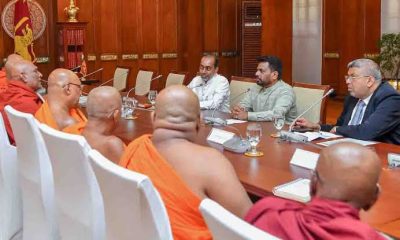
Malwathu Chapter issues statement on talks with President over Gnanasara Thera’s robes
-
 News5 days ago
CP alleges NPP has taken the blame for illegal US sanctions on Iranian vessels
-
 News6 days ago
Navi Pillay’s Lankan affairs in focus as she wins 2026 Nobel Peace Prize