
News
Everyone involved in the transport sector must be committed to improve the country’s transport services – Prime Minister

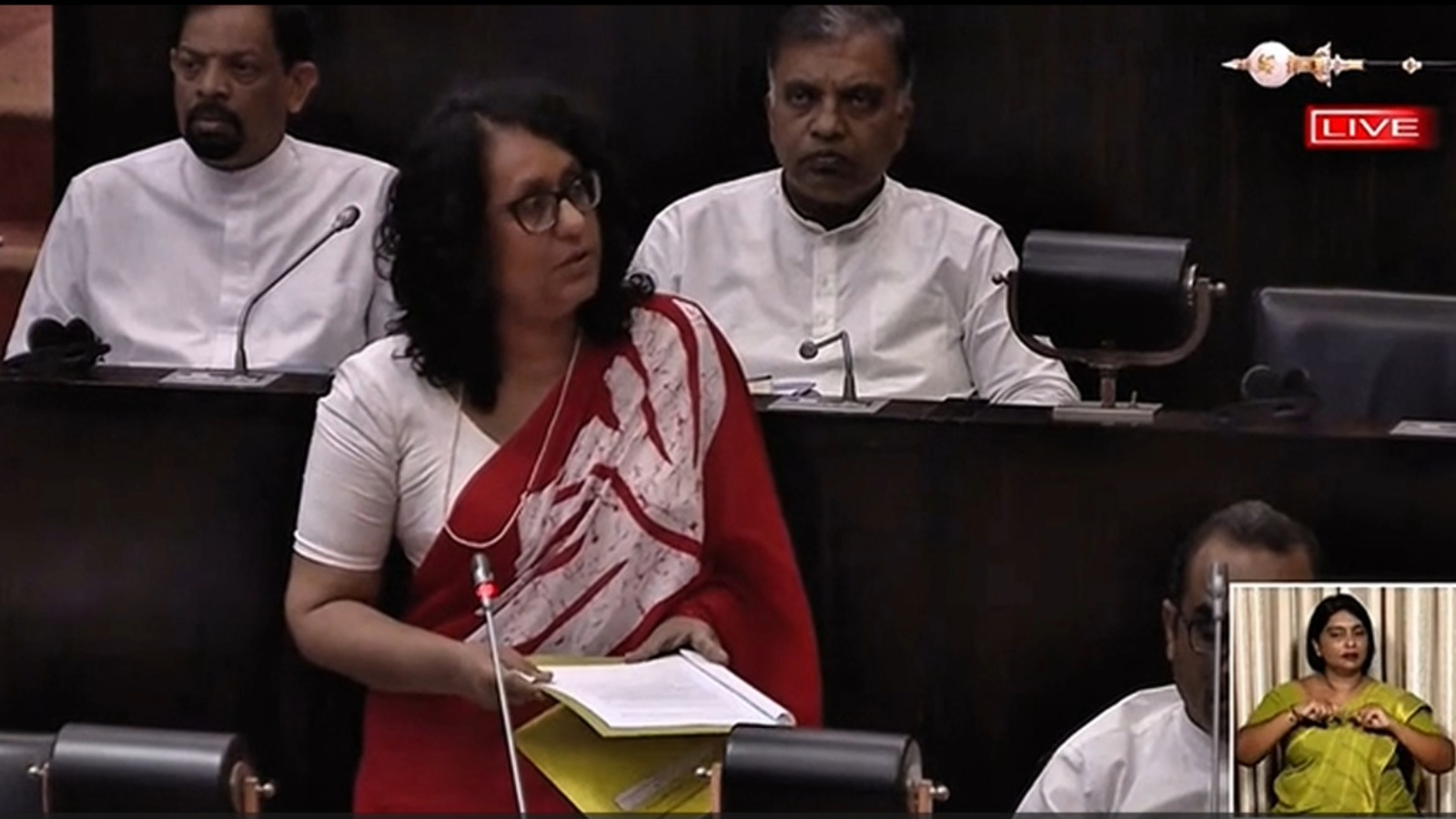
Prime Minister Dr. Harini Amarasuriya stated that officials engaged in the transport sector, together with all others working in the field, are dedicated to improving the country’s transport services as a sector that is responsive to the needs of the people.
The Prime Minister made these remarks on Wednesday (October 8) in Parliament, participating in the debate on the supplementary estimates of the Ministry of Transport related to the 2026 Budget.
The Prime Minister further stated that the supplementary estimate proposal presented by the Ministry of Transport serves as a good example of transparency and financial discipline within a ministry. When certain projects face obstacles toward the end of the year, obtaining allocations through a supplementary estimate reflects sound financial management and accountability.
She noted that in the past, projects were not always carried out through proper budgetary allocations, and the Ministry of Transport had long been perceived as one of the most corrupt institutions in the country. However, this perception is now changing, with steps being taken to eliminate corruption and malpractice.
The Prime Minister emphasized that the Ministry of Transport, which is responsible for public transportation and highways, two critical areas of national infrastructure, is now being systematically strengthened to better serve the needs of the public. The Prime Minister commended the Ministry’s efforts to identify its challenges and implement appropriate solutions, adding that this supplementary allocation provides an opportunity to further transform the Ministry into an efficient, people-oriented institution that works in the public interest.
Highlighting the connection between poor financial management and the country’s economic crisis, the Prime Minister stated that weaknesses in project identification and implementation had caused serious setbacks to sectors such as transport and highways. Many projects in the past were poorly planned or executed due to decisions made for personal or corrupt motives rather than in the public interest. Consequently, numerous projects were delayed or left incomplete.
She further explained that similar issues were observed across other ministries as well, requiring the Government to reallocate funds to continue or complete previously suspended or abandoned projects. This, she noted, is one of the underlying factors of the broader economic challenges the country faces. The supplementary allocations, therefore, are intended to complete projects in a way that minimizes harm to the country and its people.
The Prime Minister also underscored the importance of improving public transportation so that people can travel safely, efficiently, and comfortably. She stressed that public transport must be accessible to all, including children, women, the elderly, and persons with disabilities, and expressed appreciation for the steps taken by the Ministry to address these needs.
The Prime Minister Dr. Harini Amarasuriya mentioned that the Ministry of Education has submitted a proposal to the Ministry of Transport as part of efforts to improve school infrastructure. The Prime Minister noted that developing school infrastructure is not limited to constructing buildings—it also involves improving roads leading to schools, enhancing public transport services for students, and ensuring their quality and safety.
The Prime Minister stated that discussions have been initiated with the Ministry of Transport to address transportation issues affecting remote and rural schools that lack proper access roads. These efforts are essential to safeguard the transportation rights and safety of children in those areas.
She added that in the past, school transport drivers and attendants showed a strong sense of responsibility and care toward their passengers, ensuring children’s safety with dedication. She emphasized that this sense of responsibility and attitude should be revived and welcomed the Ministry’s current efforts to encourage such positive change.
The Prime Minister further highlighted the importance of improving facilities for persons with disabilities and senior citizens at railway stations and within trains, as well as ensuring adequate sanitary facilities for passengers.
(Prime Minister’s Media Division)

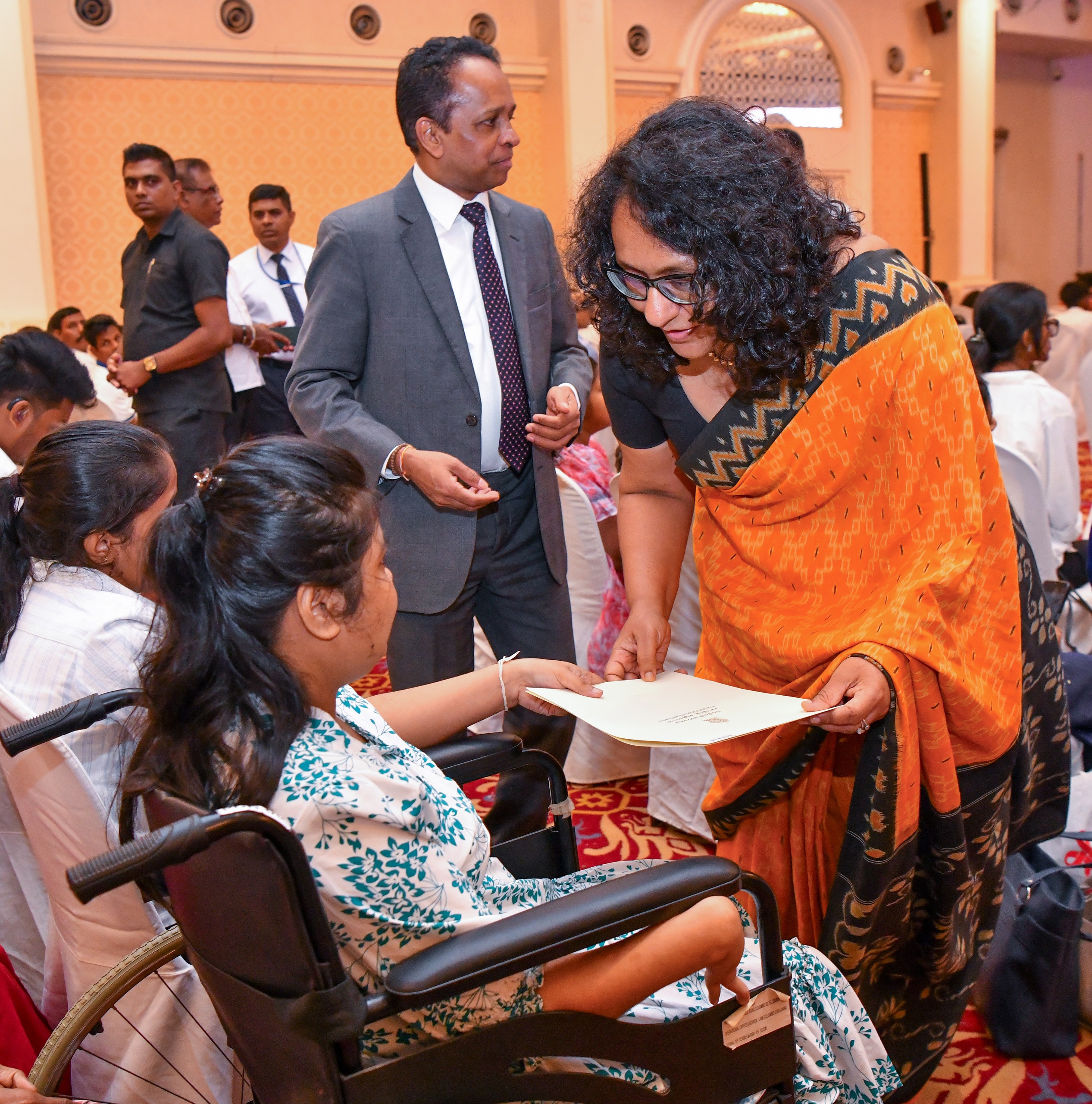
Prime Minister Dr. Harini Amarasuriya stated that the President’s Fund has been transformed into a people-centred fund and that ensuring equal access to education for all children is a key policy of the Government.
The Prime Minister made these remarks on 11th of July at Temple Trees while participating in the “Sarasavi Diriya Abhiman 2026” programme, organised to recognise students with special needs pursuing university education.
The President’s Fund has decided to provide financial assistance of Rs. 100,000 each to 370 students admitted under the special needs category through the University Grants Commission, and under the first phase of the programme, cheques were presented to 236 students.
Addressing at the event, Prime Minister stated:
“It is the Government’s policy to ensure equal access to education for all children, including those with special needs, such as neurodivergent and those with autism or dyslexia, without leaving any child behind in the education system. Vice-Chancellors and other education authorities bear a responsibility to ensure that the necessary practical accessibility facilities are available to these students within universities. In addition, the Government is taking steps to digitalise the education system through assistive technologies and to develop public transport and physical infrastructure in a manner that is accessible and inclusive for persons with special needs.These students are not a burden to the country; they are valuable human resources capable of contributing to sustainable development. The ultimate objective is to build a civilised society that recognises and respects the value of every individual.
The occasion was attended by the Speaker Dr. Jagath Wickramaratne, Minister of Rural Development, Social Security and Community Empowerment Upali Pannilage, Member of Parliament Sugath Wasantha de Silva, and several others.
[Prime Minister’s Media Division]
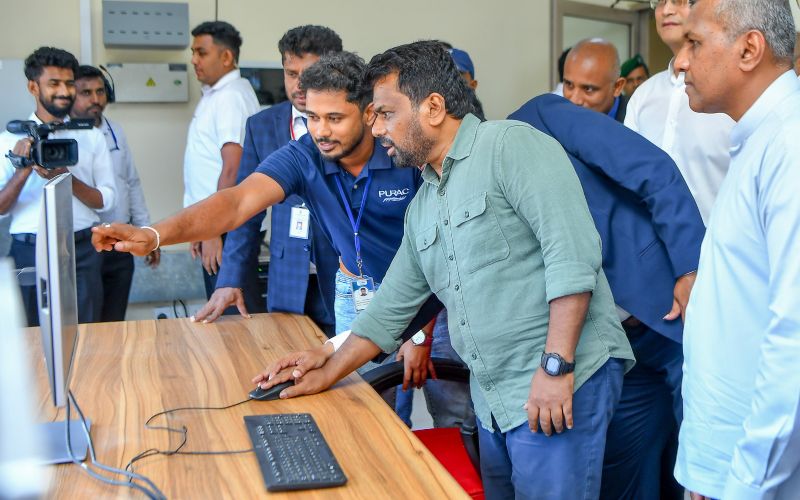
The Thambuttegama Water Supply Project, which will benefit 91,810 people in the Thambuttegama, Thalawa and Galnewa Divisional Secretariat divisions, was officially commissioned by President Anura Kumara Dissanayake on Friday (10) afternoon .
The project, which was launched under a concessional loan from the China Development Bank (CDB), was suspended between May 2022 and May 2024 due to the country’s debt restructuring process. However, recognising its national importance, the current Government allocated additional funding from the Government of Sri Lanka to successfully complete the project.
Constructed as a long-term solution to the chronic kidney disease that has spread rapidly across the region, the water supply project is also expected to improve the social and economic well-being of local communities.
The project aims to provide 25,000 new household with water connections.
Built at a cost of Rs. 32 billion, the project comprises a water treatment plant with a daily capacity of 18,000 cubic metres, three water towers with a capacity of 1,500 cubic metres each, a 12.75-kilometre water transmission pipeline and a 158-kilometre water distribution network.
Speaking at the event, Minister of Housing, Construction and Water Supply Susil Ranasinghe said:
“The Thambuttegama Water Supply Project, which was declared open today by the President, has the capacity to provide safe drinking water to 25,000 families. The project has been completed at a cost of Rs. 32 billion. It was implemented with the assistance of the China Development Bank, but construction came to a standstill due to the economic crisis experienced in recent years. Over the past two years, we allocated funds through the national budget and have now successfully completed the project.
At the initial stage of the project, concerns were raised over drawing water from the Rajanganaya Reservoir. Farmers protested against the proposal. However, today this project is being commissioned with the blessing and support of the Rajanganaya farmer leaders, who are present here. They presented their concerns to us and we are committed to addressing them.
Their foremost concern was to ensure that no farmer in Rajanganaya would face a shortage of irrigation water as a result of water being diverted for this project. I can assure you without hesitation that there is absolutely no reason for concern. Not even a single drop of water required for agriculture will be denied in order to supply drinking water. This project is, after all, intended to provide clean drinking water to farming families themselves.
They also requested that compensation be paid if cultivation is affected due to any water-related issue. I assure you that there is no cause for concern on that front either. This Government has consistently compensated farmers affected by disasters. We paid Rs. 1.2 billion in compensation for losses suffered by farmers over the past seven cultivation seasons due to the Nilwala saltwater barrier. We also resolved long-standing issues relating to land acquisition under the Yan Oya Project and allocated Rs. 180 million to the District Secretary to compensate the affected landowners. In addition, Rs. 12 billion has been paid in compensation to around 200,000 farmers whose farmlands were damaged by Cyclone Ditwah. Therefore, if farmers suffer any losses or damage to their lands in the future, this Government stands ready to provide compensation.
Another request made by the farming community was the construction of the Ginipetti Bridge if water is to be drawn for this project. We have already allocated Rs. 240 million to build a new bridge capable of accommodating vehicular traffic and foundation work will commence shortly. At the same time, a team of experts has been appointed to determine whether the existing Ginipetti Bridge can be rehabilitated or whether an entirely new bridge is required. Therefore, I assure the farming community once again that we will not allow them to suffer any hardship or loss as a result of this project.”
Minister of Trade, Commerce, Food Security and Cooperative Development Wasantha Samarasinghe, Governor of the North Central Province Wasantha Jinadasa, public representatives of the province, Chinese Ambassador Qi Zhenhong, officials of the Ministry of Housing, Construction and Water Supply and the National Water Supply and Drainage Board, together with a large number of local residents, were also present at the event.
[PMD]
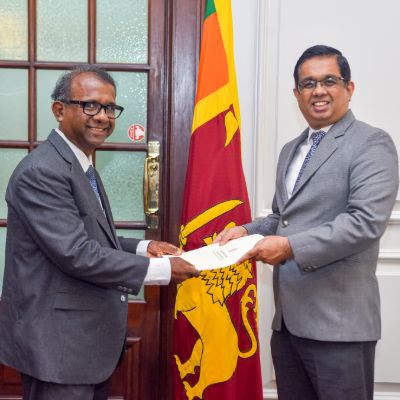
President Anura Kumara Dissanayake has appointed S. A. Nimal Saranatissa as the new Chairman of the Public Service Commission.
The other members appointed to the Commission are B. Sanath Poojitha, E. R. Weerakoon, R. Ketheeswaran, J. M. R. Jayasundara, E. A. P. N. Edirisinghe, Dr S. A. A. N. Jayasekara and M. H. Mohammed Sameel.
The letters of appointment were presented to the newly appointed Chairman and members by Secretary to the President Dr Nandika Sanath Kumanayake at the Presidential Secretariat Thursday (09) afternoon .
The appointments have been made to fill the vacancies that arose following the expiry of the previous term of office of the Public Service Commission
[PMD]

Noskova defeats Muchova in Wimbledon final to record first Grand Slam title

Former Emir of Qatar Sheikh Hamad bin Khalifa Al Thani dies aged 74

Sourav Ganguly, Kevin Pietersen and Anjum Chopra inducted into ICC Hall of Fame

The President’s Fund has been transformed into a people-centred fund – PM

Wanyonyi breaks world 1000m record with 2:11.83 in Monaco

Gaud makes her Lord’s mark as India surge into dominant position

‘Dates have the highest sugar content to fight Coronavirus’

Sunday Island 27 December – Headlines

#SundayIsland 17th December – Headlines

Sunday Island – 28th March

Sunday Island Headlines – 21 March

Sunday Island – 21st February – Headlines
-
 News3 days ago
Herath warns prospective migrant workers not to get fleeced by racketeers
-

 News7 days ago
AI concerned over proposed SL military deployment in Haiti
-

 Midweek Review5 days ago
Unexpected focus on ‘pieces of tin’ worn by military men
-
 Latest News6 days ago
Nyamhuri and Ngarava stun Bangladesh by defending 141
-

 News4 days ago
Negombo Prison riot: Ensuring protection of prisoners fundamental responsibility of the state – UN
-
 Features3 days ago
Devanesan Annan – in Memoriam
-

 Editorial2 days ago
What’s the world coming to?
-
 Foreign News3 days ago
Tensions erupt in Indian state after 11-year-old raped and murdered