Connect with us

News

Steps taken by the Government to end the dark rule that dragged society into ruin through the drug trade and the power of arms will not, be reversed under any circumstances – President

Published

on

President Anura Kumara Dissanayake emphasized that while the Government has undertaken the task of rebuilding the nation’s collapsed economy, it has also assumed the responsibility of restoring a society that has deteriorated on many fronts. The President stressed that the decisive steps taken by the Government to end the dark rule that dragged society into ruin through the drug trade and the power of arms will not, under any circumstances, be reversed.

The President pointed out that the Maha Sangha have been entrusted with a major role in this social renewal, noting that throughout history, whenever the State was challenged, it was always the Maha Sangha who stepped forward in response.

The President made these remarks on Friday afternoon (03) while addressing the religious ceremony held at the historic Magul Maduwa (Audience Hall) in Kandy, to mark the presentation of the Scroll of Appointment (Śrī Sannas Pathra) to the Most Venerable Naranpanawe Ananda Nayake Thero, the newly appointed Anunayake of the Asgiri Chapter of the Siyam Maha Nikaya.

Commending the service rendered by the Most Venerable Naranpanawe Ananda Nayake Thero, a prelate distinguished as a guardian of the Dhamma (Dharmadhara), a custodian of the Vinaya (Vinayadhara) and a pursuer of exemplary learning (Supeshala Shikshakami), the President observed that this is an era in which the country needs thousands of such venerable monks.

The President further stated that the Government intends to launch a national campaign to eradicate drug menace from the country. In this effort, the Maha Sangha will have a significant role to play, particularly in travelling from village to village to raise awareness among the people.

The President also reaffirmed that in developing the tourism sector, it is the Government’s policy to avoid doing anything harmful to the country. The President explained that the Government’s goal is to build the tourism industry upon the nation’s historical heritage, natural beauty, wildlife reserves and the world’s recognition of the warm hospitality of the Sri Lankan people.

At the ceremony, President Dissanayake presented the Scroll of Appointment (Sannas Pathra) to the newly appointed Anunayake Thero and the newly appointed Anunayake Thero, in return, presented a commemorative gift to the President.

President Anura Kumara Dissanayake further stated:

“Our Venerable Naranpanawe Ananda Thero assumes this office of Anunayake at a time when both our society and the Sasana are facing great challenges. I firmly believe that his qualities of patience, compassion and courage will serve as a powerful source of strength in guiding us successfully on this journey.

Our society is confronted with numerous crises. While we may be able to rebuild a collapsed economy, restoring a society that has suffered deep moral degredation is far more difficult. Our society has been fractured on many fronts. People have become insensitive, failing to show empathy towards the suffering of others. Wealth and power have come to be regarded as the ultimate measure of right and wrong. Therefore, what we now need is the re-establishment of a righteous value system.

Buddhism has always taught us a noble framework of values. Today, however, that framework has been eroded and a distorted value system has emerged in society. It is imperative that we re-establish within society a clear sense of what is right and good. As a State, we understand our responsibility in this regard and are committed to fulfilling it. Yet, in the task of healing society, the greatest role will fall upon the Maha Sangha.

At present, our country has a government established by the Constitution. At the same time, however, there exists a parallel dark regime, not as legitimate or powerful, but possessing the trappings of governance, built upon the force of arms. To safeguard the lawful, constitutional government, it is essential to dismantle this dark regime. Our Government has chosen this path and I solemnly pledge here today that the steps we have taken in this regard will never be reversed.

The devastating consequences of that dark regime are evident from recent events. Through drugs, illicit weapons, unlawful assets, amassed wealth, armed groups and a youth culture willing to kill with firearms, a destructive social order has been created. If we are to reform society, this dark regime must be brought to an end and as a Government, we are determined to fulfill that duty with strength and resolve.

However, to prevent such conditions from arising again through successive regimes, our society must be purified and guided towards a new renaissance. In this endeavour, the Maha Sangha has been entrusted with a profound responsibility. Therefore, the guidance and counsel of our Nayake Thero will be of immense importance in the mission to restore our society.

Secondly, as a society, we need spirituality. The foundation for nurturing our spiritual life lies in Buddhist culture. The values and guidance that our spiritual life receives through Buddhist culture cannot be replaced or erased by laws and regulations, they represent a historical bond.

The enduring strength of our Buddhist culture lies in its deep integration into the daily lives of the people. The Maha Sangha has been the guardian of our proud religion and cultural heritage. However, some of the news and events concerning monks, the protectors of this religion, are not consistent with the dignity and continuity of the Buddhist order.

Our Mahanayaka Theros have consistently emphasized the need to establish the necessary legal framework to uphold this. In particular, they have requested amendments to Sections 41 and 42 of the Buddhist Temporalities Ordinance. These amendments have been prepared and returned to the Mahanayaka Theros for their input. Following their guidance, the revisions have now been submitted to the Legal Draftsman’s Department. We will soon enact this law, providing the legal protection required to maintain the discipline necessary for the perpetuation of the order. As a government, we consider this our solemn duty.

However, legal protection alone is not enough. Today’s society requires the guidance of monks like the Most Venerable Naranpanawe Ananda Anunayake Thero, leaders with deep knowledge, extensive education and decades of dedicated service. Over nearly four decades of monastic life, he has contributed significantly to the people, to the preservation of the order and to the protection of the motherland, taking on and accomplishing the most difficult challenges. Monks of such calibre are essential today for the continuation of the Buddhist order and for the betterment of society.

In times of societal disturbance, our Mahanayaka Theros must actively intervene, offering advice and guidance. A government cannot function effectively based solely on the executive powers of the President and a parliamentary majority; it must represent all segments of society. While the government, particularly the Executive President, enjoys certain powers, there are practical and legal limits to governance. This principle underscores that a government is not a place for unrestricted authority.

Historically, our leading monks have provided counsel to strengthen and protect the state. Whenever the nation faced threats, they intervened for its security. This heritage of the Maha Sangha is one we are fully prepared to uphold and respect.

During discussions on the tourism industry, it was emphasized that our historical heritage offers significant potential to strengthen this sector. Additionally, Sri Lanka’s natural beauty, its wildlife, and the hospitality of its people are crucial assets in promoting tourism. These factors, rather than trends alone, form the backbone of a successful tourism industry.

Regarding the Penal Code, although amendments prepared in advance were presented to Parliament, they have not yet been passed. We now have the opportunity to propose further amendments if necessary, or to maintain the current provisions. These laws are not intended for personal gain; their focus is the common good. Our vision is to build a stronger and better state, a goal that can only be realized by recognizing and fulfilling the responsibilities entrusted to us as the ruling party, with significant roles assigned to our Mahanayaka Theros.

We also face the urgent need to combat the drug menace, which is claiming the lives of millions of young people. We call on those involved in drug use and trafficking to cease these activities. This effort requires societal awakening and we urge the Maha Sangha to lead this initiative, raising awareness and guiding communities at the village level.

Venerable Anunayake Theros of the Malwathu and Asgiri Chapters (Maha Viharas), along with the Members of the Karaka Maha Sangha Council, clergy from other religions, Ministers and MPs, foreign Ambassadors and High Commissioners, government officials, and other invited guests, including the Diyawadana Nilame of the Sri Dalada Maligawa (Temple of the Sacred Tooth Relic) in Kandy and Basnayaka Nilames of the Devales, were  present at the ceremony.

[PMD]



Continue Reading
Advertisement
Click to comment

Leave a Reply

Your email address will not be published. Required fields are marked *

News

Bambalapitiya Railway Station renovated under the “Dream Destination” project opened to the public

Published

on

By

Prime Minister Dr. Harini Amarasuriya stated that Sri Lanka is now creating a common dream as a nation and that the Government’s objective is to make public transport the convenient choice for the people. The Prime Minister made these remarks while participating in the ceremony held to open the renovated Bambalapitiya Railway Station under the “Dream Destination” project.

The renovated Bambalapitiya Railway Station was opened to the public on 10 September under the “Dream Destination” project, jointly implemented by the Ministry of Transport, Highways and Urban Development and the Sri Lanka Railways Department in line with the Clean Sri Lanka national programme. Prime Minister Dr. Harini Amarasuriya participated in the occasion.

The Prime Minister also inspected the renovated railway station, as well as the new pedestrian overpass providing access to the railway station, constructed by the Road Development Authority for which the Dawoodi Bohra community in Sri Lanka contributed Rs. 60 million.

Addressing the gathering, the Prime Minister expressed her special appreciation to the Bohra community for taking the initiative to renovate and provide the people with improved facilities at the Bambalapitiya Railway Station, a busy and well-known location in the Colombo District.

She stated that the renovation of public spaces and the provision of improved facilities have contributed to generating greater interest and a more positive perception of public transport among the people.

The Prime Minister also expressed her appreciation to the Minister of Transport, Highways and Urban Development, the Deputy Ministers and the staff for their contribution towards improving public transport services and attracting greater public interest towards these services.

The development of a country is not determined by the number of private vehicles it has. It is determined by the manner in which people use public transport. The Government’s objective is to improve the public transport service, which has disappointed the people for many years, and create a situation where people feel that public transport is more convenient and safer than using a private vehicle. The Government’s commitment to public transport is clearly demonstrated by the increased allocation of funds for the sector. The ’Dream Destination’ programme is another significant initiative under this effort, bringing together State institutions and the private sector to contribute to national development,” the Prime Minister stated.

“A country does not belong only to the Government. A country is the home for everyone who lives in it. It is the responsibility of all of us to contribute to that home through our knowledge, labour or resources. For a long time, we did not have a common dream as a country. Today, we feel that such a dream is beginning to emerge.

“We have a collective dream. The journey towards that dream is the collective journey we have begun together to build our country, which is our common home.

“What we witness here today is the active participation of our people, our diverse communities and the private sector in this journey. Such collective participation is essential to moving a country forward. Therefore, we deeply appreciate this contribution.

“The Bohra community reminds us today of the importance of this collective spirit. We have now embarked on a collective journey. We share a common dream of what our country should be, what the future of our country should look like and what kind of experience life in our country should offer. The Clean Sri Lanka national programme further strengthens these objectives,” the Prime Minister further stated.

Addressing the gathering, Deputy Minister of Urban Development Eranga Gunasekara stated that increased funding would be allocated to the Sri Lanka Railways Department for development activities next year. He noted that public transport and railway services had not previously received sufficient attention from the Government, but that this would change moving forward.

“Our transport services are progressing step by step, and the railway system is a key component of this development. Accordingly, on the instructions of the President, we will commence the electric railway system, which has long been a dream for our country, next year. We expect to introduce electric railway services from Maradana to Makumbura, from Maradana to Panadura and from Maradana to Ragama. We will also commence work to extend the Kelani Valley railway line from Avissawella to Ratnapura.

He also appreciated the contribution made by private institutions towards the “Dream Destination” project without seeking any promotional benefits in return.

Speaking on behalf of the Dawoodi Bohra community, Khuzaimah Jefferjee stated that the Dawoodi Bohra community, which has been part of Sri Lanka’s social, cultural and economic landscape for more than 150 years, believes that being a citizen of the country means more than simply living in the country. It means contributing to the country, caring for it and leaving behind a better country for future generations.

He said that, as part of this responsibility, the community had taken steps to renovate, modernise and beautify the Bambalapitiya Railway Station. He added that the community hopes these efforts will make the daily journeys of passengers a cleaner, safer, more convenient and dignified experience.

The occasion was attended by the Deputy Speaker of the Parliament of Sri Lanka Dr. Rizvie Sally, Deputy Minister of Religious and Cultural Affairs Muneer Mulaffer, Mayor of the Colombo Municipal Council Vraie Cally Balthazar, Secretary to the President Dr. Nandika Sanath Kumanayake, Secretary to the Prime Minister Pradeep Saputhanthri, General Manager of Sri Lanka Railways Padmapriya, Janab Amil Saheb Ibrahim and representatives of the Dawoodi Bohra community, officials of the Clean Sri Lanka programme and several others.

[Prime Minister’s Media Division]

Continue Reading

News

Steps being taken to reduce paper usage in parliament and the public sector through digitalisation – PM

Published

on

By

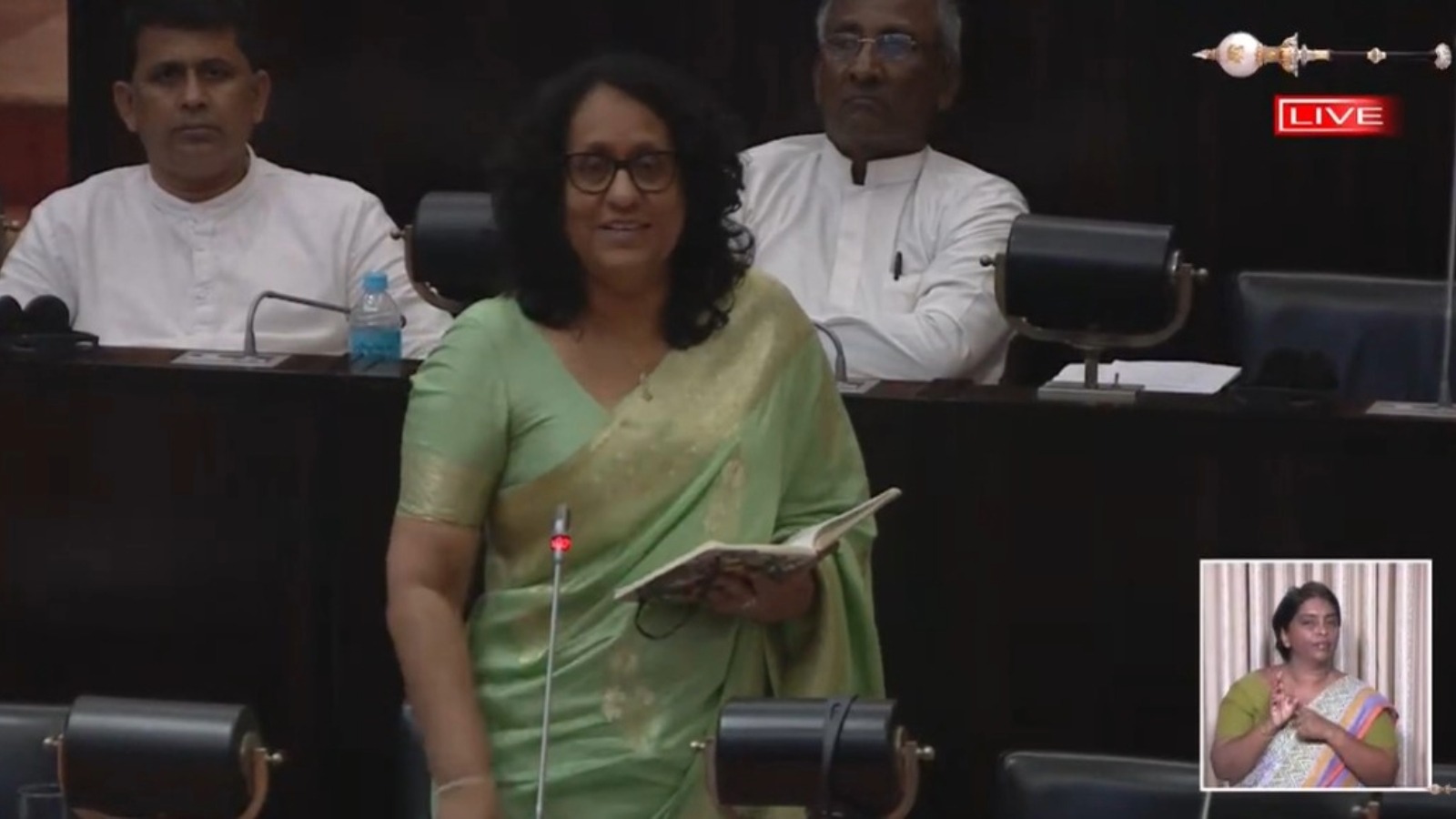
Prime Minister Dr. Harini Amarasuriya stated that steps are being taken to reduce the use of paper in Parliament and the public sector through digitalisation.

The Prime Minister made these remarks in Parliament on Thursday (10 September) in response to a question raised regarding digitalisation and the use of paper.

The Prime Minister  further stated:

“The total expenditure incurred in 2023, 2024 and 2025 for the provision of Hansard reports, Order Books, Agendas and other parliamentary printed materials provided to Members of Parliament and Ministers for use within the Chamber is Rs. 45.3 million in 2023, Rs. 58.7 million in 2024 and Rs. 73.1 million in 2025.

All these printed materials have been produced based on requests made by Parliament. At the same time, a programme is currently being developed to reduce the use of paper.

In accordance with a request made by the Secretary to the Treasury to the Secretary-General of Parliament, the Committee on Parliamentary Business considered the possibility of submitting reports to Parliament solely in digital format in the future. It was decided to conduct a survey to ascertain the preference of each Member of Parliament. Based on the results of the survey, arrangements will be made to provide relevant documents digitally to Members who prefer digital copies, while printed copies will be provided to those who prefer printed versions.

Following the completion of this survey, arrangements will be made to implement the programme on a date to be determined by the Committee on Parliamentary Business.

Similarly, all ministries and government institutions are currently taking steps towards digitalisation while reducing their use of paper. However, this process will take some time. In this manner, particularly the exchange of files and many other such processes can be facilitated through digital systems in the future.

For example, in the Ministry of Education, applications for leave submitted by university lecturers for overseas travel were previously submitted to the Ministry in printed form. The entire process has now been digitalised. The Ministry, through the University Grants Commission, provides approval for such leave applications through a digital process. Ministries across the government are taking similar measures. We believe that once digital systems are fully established, we will be able to significantly reduce the use of paper.

Responding to a question regarding measures to reduce the weight of schoolchildren’s bags, the Prime Minister stated:

The weight of students’ books will be reduced through the activity-based learning process introduced under the new education reforms. Since the books will be kept in the classroom, students will no longer need to carry them back and forth. They will only need to take the books home at the end of the term after completing their work.

From 2027, a module-based learning process will be introduced for Grade 6. Modules will not consist of large textbooks; instead, students will be provided with modules relevant to each subject for the particular term. Therefore, this system will significantly reduce the weight of schoolchildren’s bags.

[Prime Minister’s Media Division]

Continue Reading

Latest News

INS Udaygiri departs Colombo concluding formal visit

Published

on

By

The Indian Naval Ship (INS) Udaygiri departed the Port of Colombo today, 11 September 2026, following the successful completion of a four day official visit.

On her departure, the Sri Lanka Navy bade farewell to the ship in accordance with time-honoured naval traditions.

During the visit, naval personnel from both navies engaged in joint initiatives to strengthen bilateral ties. These included a friendly volleyball match, a beach cleanup along the Galle Face
promenade, and a training exercise on Visit, Board, Search, and Seizure (VBSS) conducted by the Sri Lanka Navy Special Boat Squadron (SBS).

As part of the visit, the Indian Navy handed over a consignment of spares and supplies to the Sri Lanka Navy. Visiting crew members also toured key tourist attractions in and around Colombo.

Official interactions of this nature aim to enhance cooperation and knowledge-sharing between the two maritime forces, supporting joint responses to evolving regional maritime challenges.

Continue Reading

Trending