
Business
Govt. speeding development of hydrogen as renewable energy source


Sri Lanka is gearing up to embrace hydrogen as a renewable energy source, with the government pledging to provide all possible support for its development, Power and Energy Minister Eng. Kumara Jayakody announced recently.
Addressing the Stakeholder Consultation on the Draft Renewable Hydrogen Policy of Sri Lanka in Colombo, Minister Jayakody said hydrogen energy will be central to the country’s long-term power strategy. He underscored that the government’s commitment lies not only in adopting new technologies but also in ensuring that renewable energy resources are harnessed to their maximum potential.
“Our government’s policy direction is to fully utilize renewable energy and advanced technology to achieve our energy goals. Hydrogen will be of immense importance for electricity generation in the future. Preparing a national policy is the first crucial step, and today’s stakeholder consultation is a key milestone,” Jayakody said.
Sri Lanka’s renewable energy potential is considered high, particularly in solar and wind, yet challenges in transmission, storage, and infrastructure have hindered large-scale integration into the national grid. Jayakody acknowledged these obstacles, stressing that the government is prioritizing investments to modernize the power sector.
“We are working with dedication to improve transmission and storage capacity as well as strengthen the necessary infrastructure so that renewable energy can flow seamlessly into the electricity system,” he said.
The consultation, organized by the Ministry of Power and Energy together with the Sri Lanka Sustainable Energy Authority, drew participation from top policymakers, academics, energy experts, and international partners.
Minister Jayakody noted that building a robust hydrogen policy requires both local input and international expertise. “This is not a journey we can take alone. It is important to gain insights from developed nations that have already made significant progress in this field. Equally, it is vital to engage Sri Lankan scientists and professionals abroad who have long been working in renewable energy and hydrogen technology,” he said.
“Securing the support of global experts and our own diaspora scientists is a significant achievement. I also wish to extend my gratitude to the institutions and specialists who are contributing in various ways to this national effort,” the Minister added.
The event brought together senior government officials including Ministry Secretary Prof. Udayanga Hemapala, Transport and Highways Secretary Prof. Kapila C.K. Perera, and Environment Secretary K.R. Uduwawala. International partners were also represented, with UNDP Deputy Resident Representative Marina Ten underscoring the organization’s support for Sri Lanka’s clean energy transition.
Heads of key energy institutions such as the Ceylon Petroleum Corporation, the Sri Lanka Atomic Energy Board, and the Lanka Electricity Company were also present, signaling the cross-sectoral importance of hydrogen development.
Globally, hydrogen is gaining recognition as a critical component of decarbonization strategies. Countries such as Japan, Germany, and Australia have invested heavily in hydrogen technologies, positioning themselves as leaders in the energy transition. For Sri Lanka, adopting hydrogen is seen not only as a step towards energy security but also as an opportunity to align with global markets and attract green investment.
By Ifham Nizam ✍️

By Ifham Nizam
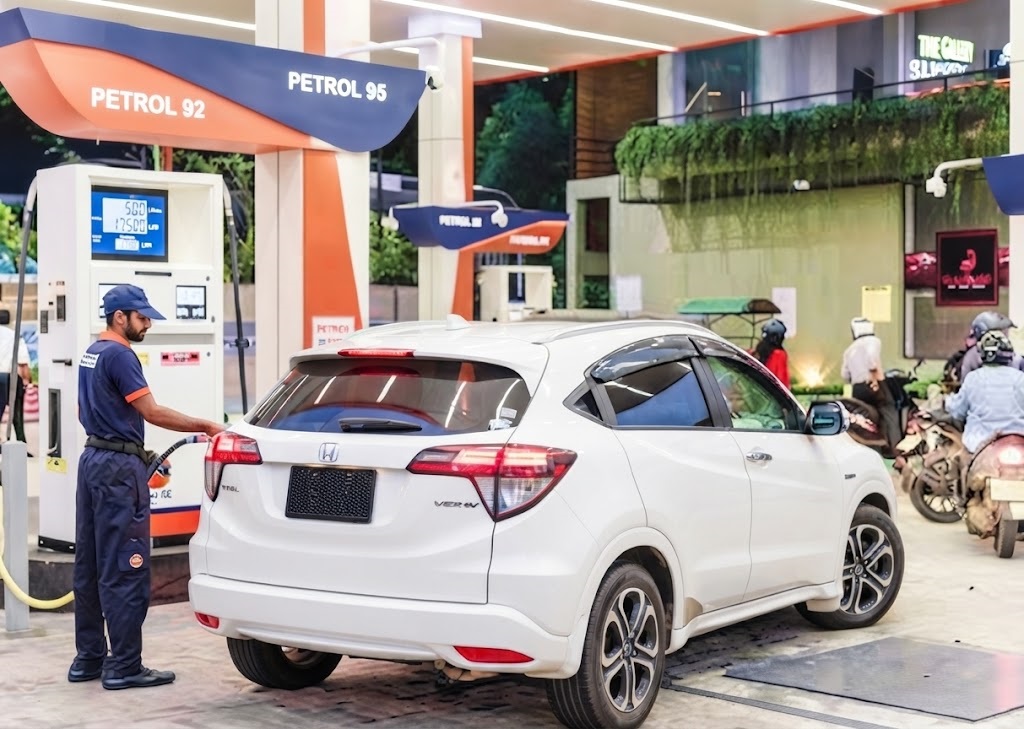
Sri Lanka’s fuel market is coming under renewed pressure as the escalating West Asian conflict and disruption to key oil-shipping routes push up international crude and refined-fuel prices, with a top Ceylon Petroleum Corporation (CPC) official saying the Corporation is closely monitoring developments and the potential impact on domestic fuel costs.
A top CPC official said the sharp rise in international oil prices was being driven by the conflict and disruptions to energy infrastructure and shipping routes in the region.
The official said Sri Lanka’s exposure to the international price shock would also depend on the timing of fuel purchases, as petroleum cargoes are ordered well before they arrive in the country and the final landed cost is determined when the cargo is delivered.
The CPC is also seeking to cushion consumers from the full impact of international price increases while maintaining uninterrupted supplies, the official said.
The latest developments come as Brent crude remains above USD 100 a barrel despite a recent retreat in prices following efforts by Saudi Arabia to maintain exports through alternative routes.
Brent crude futures fell to USD 104.74 a barrel yesterday, while West Texas Intermediate was trading at USD 101.60, according to Reuters. Saudi Arabia has been offering additional crude cargoes to Asian refiners through Oman to offset disruptions caused by attacks on its East-West pipeline.
The immediate concern for Sri Lanka is the potential impact on the country’s petroleum import bill, foreign-exchange requirements and inflation.
Higher international crude and refined-product prices mean that more dollars are required to finance fuel imports, while higher domestic energy costs can feed into transportation, manufacturing, agriculture, fisheries and logistics.
The pressure is already being felt elsewhere in Asia.
Pakistan has raised petrol prices by Pakistani Rs. 4.42 a litre and high-speed diesel by Rs. 6.10, taking the prices to Rs. 380.24 and Rs. 409.42 respectively. The latest increase is reported to be the sixth consecutive fuel price increase in the country.
The Philippines has also raised fuel prices, with petrol increasing by 5.68 Philippine pesos a litre, diesel by 4.31 pesos and kerosene by 4.62 pesos for the latest pricing period.
The developments provide an indication of how quickly international energy-market disruptions can feed into domestic fuel markets across fuel-importing Asian economies.
For Sri Lanka, the issue is particularly significant because petroleum remains a major component of the country’s import bill. The CPC’s current prices stand at Rs. 399 a litre for 92-octane petrol and Rs. 382 for auto diesel, according to the Corporation’s latest published prices.
The government is meanwhile facing pressure to balance consumer protection with the financial sustainability of fuel suppliers.
The Energy Minister has said several options are being considered, including fuel subsidies, price limits for private distributors and adjustments to retail prices. Private operators have reported substantial losses on diesel under prevailing prices, while the CPC has said it is currently absorbing losses on diesel through earnings from other petroleum operations.
A prolonged international oil-price shock could therefore have consequences extending well beyond the pump.
Higher fuel costs would raise operating expenses for transport-dependent businesses and could increase the cost of moving goods throughout the economy. For manufacturers and exporters, higher energy and logistics costs could also affect margins and competitiveness.
At the macroeconomic level, a sustained increase in petroleum prices could increase Sri Lanka’s foreign-exchange requirements and place additional pressure on the trade balance and inflation.
The international oil market, however, remains highly fluid. Saudi Arabia’s efforts to redirect crude exports through Oman have eased some immediate supply concerns, while expectations that its damaged East-West pipeline could return to operation within days have also helped push crude prices lower.
But shipping through the Strait of Hormuz remains severely disrupted and the wider conflict continues to pose risks to crude and refined-product supplies.
For Sri Lanka, the coming weeks will therefore be closely watched by fuel suppliers, importers and businesses as the country assesses whether the current international price shock proves temporary or develops into a more prolonged increase in the cost of energy.
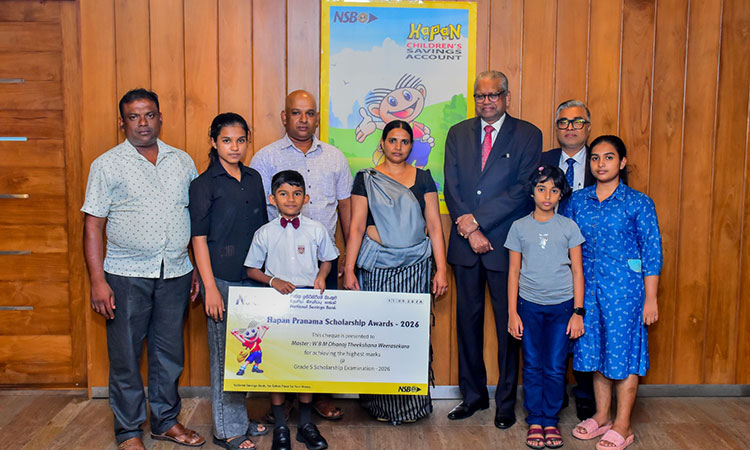
The student, who obtained the highest marks in the Sinhala medium, at the Grade 5 Scholarship Examination – 2026, was felicitated by the National Savings Bank (NSB), recently, at the NSB Head Office, under the Hapan Pranama Scholarship Program -2026, organized by the Bank.
The Chairman of the Bank, Dr. Harsha Cabral PC, the Actg. General Manager/CEO, Rohana Bandara Weerakoon and the Corporate Management were present at the occasion.
Danoj Theekshana Weerasekara, a student of Ahatuwewa Model Primary School in Kurunegala District, has won the first place in Sinhala Medium at Grade 5 Scholarship Examination this year, with 193 marks. His remarkable achievement reflects not only his personal talents, but also the commitment of his family members, guidance of his teachers and support of the entire school community, who came together to make his triumph a reality.
The National Savings Bank, while complimenting his achievement, wishes him good luck, strength and courage for his future academic endeavors.
Being always committed towards realizing the educational goals of the children of the country, NSB organizes a seminar series, well in advance of the Examination, every year, to support them in preparation for the exam. The Bank has been able to hold more than 100 seminars islandwide this year as well.
Through these seminars, it is expected to provide the students with knowledge, guidance and mental strength, required to be successful at the Examination and the Bank has joined hands with them at an important juncture of their lives, assuring support and strength to face the exam with confidence. (NSB)

The Colombo Stock Exchange (CSE) has received the ‘Great Place to Work’ Certification’ for the 5th consecutive year in a row. Since 2022 the bourse has been continually awarded the certification in recognition of its commitment to providing a welcome, inclusive and safe environment.
“At CSE, our people remain our greatest strength.” remarked Rajeeva Bandaranaike, CEO of the CSE “Receiving the Great Place to Work Certification for the fifth consecutive year is a meaningful recognition of our commitment to creating a workplace culture founded on trust, respect, and collaboration. It is an achievement shared by every member of the CSE team and reflects the passion, commitment, and teamwork that continue to drive our success.”
The certification was awarded by Great Place to Work®, a global organization that grants this recognition across more than 180 countries and regions and represents over 20 million employees and 22,000 companies worldwide. The certification was based on the results of an anonymous, company-wide survey that evaluated workplace culture across five key dimensions: credibility, respect, fairness, pride, and camaraderie.
The certification reaffirms CSE’s commitment to its foundational values of Professionalism, Integrity, Care, Teamwork, Passion and Agility. By championing equity and inclusion, the CSE has built a welcoming, discrimination-free culture where every individual can thrive. A cornerstone of this success is CSE’s leadership in workplace diversity as an equal opportunity employer and signatory to the UN Women’s Empowerment Principles, alongside its close collaboration with the UN Global Compact and Respectful Workplaces initiatives. Additionally, the exchange fosters dynamic young talent, with early-career professionals accounting for 57% of its workforce.

Charani, Shafali power India past Japan and into Asian Games semi-finals

Athapaththu and Dilhari muscle Sri Lanka past Malaysia in mismatch

Abhishek Sharma hits record T20 ton as India beat Afghanistan by 127 runs

Trump administration approves sale of F-35 jets to Saudi Arabia

Banton steers England into unassailable 2-0 series lead

Showers expected in the Western, Norrh-western and Sabaragamuwa provinces and in Galle, Matara, Kandy and Nuwara-Eliya Districts.

‘Dates have the highest sugar content to fight Coronavirus’

Sunday Island 27 December – Headlines

#SundayIsland 17th December – Headlines

Sunday Island – 28th March

Sunday Island Headlines – 21 March

Sunday Island – 21st February – Headlines
-

 Latest News7 days ago
Sri Lanka thwart Fatima Sana challenge to secure Asia Cup final spot
-

 News5 days ago
Gnanasara Thero absconding after SC ruling
-

 News6 days ago
Ammunition cache found in old Kandy bungalow
-

 News6 days ago
Prof. Pieris says Buddha Dhamma recognised as source of law under Constitution
-

 News6 days ago
Green Climate Fund (GCF) Regional Dialogue for East and South Asia will be held from 14 to 17 September 2026 at Cinnamon Life at City of Dreams Hotel, Colombo
-

 Opinion4 days ago
From Galkissa (Mount Lavinia) to Tambuttegama
-

 News7 days ago
Bambalapitiya Railway Station renovated under the “Dream Destination” project opened to the public
-

 Latest News6 days ago
ITS Giuseppe Garibaldi’ departs Colombo