
Latest News
Military shuts down streets in bid to quell Nepal unrest


Armed soldiers have been patrolling the streets of Kathmandu, ordering people to remain in their homes, following a wave of deadly protests in Nepal’s capital.
The Nepali army checked vehicles and people on Wednesday amid an indefinite curfew, imposed in a bid to “normalise” the capital after mass unrest saw demonstrators set fire to several government buildings and forced Prime Minister KP Sharma Oli to resign.
The protests, triggered by a social media ban, have escalated since Monday, when security forces killed 19 demonstrators and injured hundreds. Tens of thousands filled Kathmandu’s streets on Monday and Tuesday as the protests expanded to target corruption and unemployment in the country’s most violent tumult in decades.
“We are trying to normalise the situation first,” army spokesman Raja Ram Basnet has told the Reuters news agency. “We are committed to protect the life and property of people.”
The army’s emergence from the barracks after Oli’s resignation seemed to do little to ease the uproar across the capital.
Late into Tuesday evening, demonstrators blocked roads and stormed the parliament, presidential house and central secretariat, while videos showed protesters beating Nepali Congress party leader Sher Bahadur Deuba and his wife, Arzu Rana Deuba, the foreign minister.
Prompted initially by a now-rescinded government plan to block most popular social media platforms, protesters were galvanised by the deaths on Monday and widespread frustrations with alleged corruption and joblessness.
Pabit Tandukar, 22, was among those shot by live ammunition. “We were there for a peaceful protest. They were initially firing tear gas at us, and we were pushing back. Suddenly, I was shot,” Tandukar told Al Jazeera.
While so-called “Nepo Kids” — the children of top politicians and government officials — show off lives of luxury on platforms like TikTok and Instagram, most common people have been struggling with an unemployment rate of nearly 11 percent, according to the World Bank. Millions have migrated abroad to Malaysia, the Middle East and South Korea to find jobs.
Home Minister Ramesh Lekhak was the first to resign on Monday, followed by Agriculture Minister Ramnath Adhikari and then Oli on Tuesday. President Ram Chandra Poudel, the ceremonial head of state, moved to appoint Oli to lead a caretaker government — though his location was unclear — and appealed to protesters to “focus on resolving the crisis without further bloodshed or destruction”.
Meanwhile, army helicopters ferried ministers to safe locations.
The protests have led to concern across South Asia over regional stability, with governments having been unseated in recent youth-led uprisings in Bangladesh and Sri Lanka.
Neighbouring China weighed in on the unrest on Wednesday. A Ministry of Foreign Affairs spokesman told journalists that Chinese citizens in Nepal should “pay close attention to safety” and that Beijing hopes Kathmandu “can properly handle domestic issues and quickly restore social order and national stability”.
China has sought to increase its influence in Nepal in recent years with diplomatic efforts and the Belt and Road Initiative.
[Aljazeera]


The Rose Bowl, which has been awarded to the winner of ODI series between the women’s teams of Australia and New Zealand since 1985, has now been expanded to include T20Is as well.
New Zealand’s three match T20I tour of Australia, which begins on Sunday at the North Sydney Oval, will be the first T20I edition of the Rose Bowl. The teams will get to face off again for the trophy in March 2027 when they meet again for three ODIs, also in Australia.
For Rose Bowl series that include matches in both white-ball formats, the trophy will go to the team with the most wins overall. In case of a drawn series, the current holder will retain the trophy.
“The Rose Bowl is a prestigious trophy that holds a lot of meaning to current and past players, and it’s a series we’ve always taken a lot of pride in competing in,”Catherine Campbell, NZC’s chief cricket operations officer and a former New Zealand player, said. “With so much T20I cricket now being played, this is a brilliant opportunity to keep the Rose Bowl relevant and to build on the history between us and our Australian rivals.”
New Zealand captain Melie Kerr was excited by the broadening of opportunities to compete for the Rose Bowl.
“We’re all aware of what the Rose Bowl represents and the importance it holds in the White Ferns whakapapa [genealogy],” said Kerr. “Great players and teams have fought for it over the years and we’d love the opportunity to claim our own piece of that history.”
Australia have held the Rose Bowl continuously since wresting it back from New Zealand in 2000. Since that 3-0 win, Australia have won 18 times with one series – in 2008-09 – shared 2-2. Overall, Australia have won 26 of the 31 ODI series played for the Rose Bowl, with New Zealand winning three times and three series drawn.
North Sydney will host all three T20Is of the upcoming Rose Bowl series, on October 18, 20 and 22.
[Cricinfo]
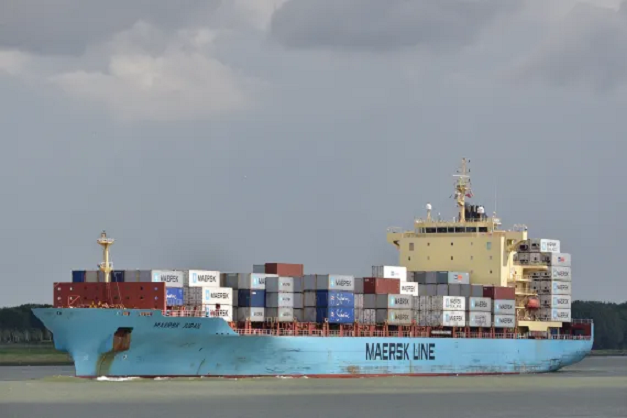
US President Donald Trump claims the US Navy’s “effective” blockade has stopped all Iranian ships from crossing the Strait of Hormuz.
Iran’s Islamic Revolutionary Guard Corps (IRGC) navy says a supertanker carrying more than two million barrels of crude oil has struck a sea mine while attempting to cross the Strait of Hormuz through an “unauthorised” route.
The collision caused a huge explosion and a major fire on board the vessel, the IRGC said in a statement reported by semi-official Tasnim news agency.
It alleged that the tanker had turned off all tracking and radar systems, attempting to pass through the strait using deception and with US military support.
‘The Strait of Hormuz is closed’, the IRGC navy warned, adding that vessels violating Iranian regulations would face severe consequences for relying on US backing.
[Aljazeera]
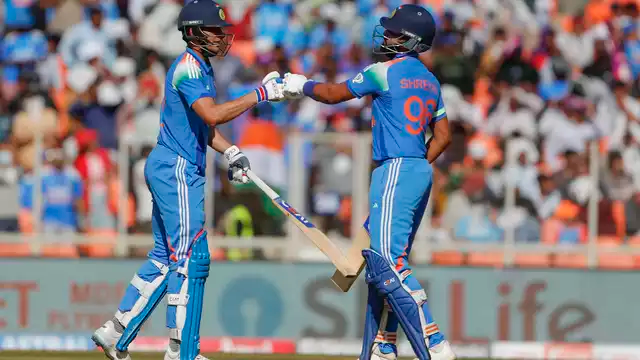
Squad for the first three ODIs: Shubman Gill [C], Rohit Sharma, Virat Kohli, Shreyas Iyer [VC], KL Rahul [WK], Nitish Kumar Reddy, Axar Patel, Naman Dhir, Anshul Kamboj, Gurnoor Brar, Ruturaj Gaikwad, Arshdeep Singh, Ishan Kishan [WK], Mohammed Siraj, Prasidh Krishna*, Kuldeep Yadav
Squad for fourth and fifth ODIs: Shreyas Iyer [C], Rohit Sharma, Virat Kohli, Tilak Varma, Ishan Kishan [WK, VC], Nitish Kumar Reddy, Axar Patel, Naman Dhir, Auqib Nabi, Gurnoor Brar, Ruturaj Gaikwad, Arshdeep Singh, Kumar Kushagra [WK], Mohammed Siraj, Yash Thakur, Kuldeep Yadav
[Cricbuzz]

Rose Bowl expanded to include Australia vs New Zealand T20Is

Trump claims US Navy blockade stops Iranian ships in Hormuz

Showers above 75 mm are likely at some places in the Western, Sabaragamuwa, Central and North-central provinces and in Trincomalee and Mullaitivu districts

Cut power bills by 3-5%, don’t hike them, consumers demand

Asgiri Mahanayake calls for immediate release of Gnanasara Thera

Lanka Air Force joins multinational exercise in India

‘Dates have the highest sugar content to fight Coronavirus’

Sunday Island 27 December – Headlines

#SundayIsland 17th December – Headlines

Sunday Island – 28th March

Sunday Island Headlines – 21 March

Sunday Island – 21st February – Headlines
-

 News6 days ago
Sri Lanka escalates anti-graft drive with Shiranthi’s jailing
-

 Latest News5 days ago
Farhan and Sadaqat help Pakistan seal series in style
-

 News6 days ago
Iranian ships stranded, Lanka fears US sanctions
-

 Latest News4 days ago
Nissanka’s return headlines Sri Lanka’s Test squad against Pakistan
-

 Features5 days ago
Intake 16: 45 years of duty and honour
-

 News5 days ago
Malwathu Chapter issues statement on talks with President over Gnanasara Thera’s robes
-

 News5 days ago
CP alleges NPP has taken the blame for illegal US sanctions on Iranian vessels
-

 News6 days ago
Navi Pillay’s Lankan affairs in focus as she wins 2026 Nobel Peace Prize