
Latest News
Nepal parliament set on fire after PM resigns over anti-corruption protests


Prime Minister KP Sharma Oli has resigned amid Nepal’s worst unrest in decades, as public anger mounts over the deaths of 19 anti-corruption protesters in clashes with police on Monday.
On Tuesday, crowds set fire to parliament in the capital Kathmandu, sending thick black smoke billowing into the sky. Government buildings and the houses of political leaders were attacked around the country.
Three more deaths were reported on Tuesday. Amid the chaos, jail officials said 900 inmates managed to escape from two prisons in Nepal’s western districts.
The demonstrations were triggered by a ban on social media platforms. It was lifted on Monday – but by then protests had swelled into a mass movement.
Nepal’s army chief issued a statement late on Tuesday accusing demonstrators of taking advantage of the current crisis by damaging, looting and setting fire to public and private property.
It said if unrest continued, “all security institutions, including the Nepal Army, are committed to taking control of the situation,” effective from 22:00 local time (16:15 GMT; 17:15 BST), without detailing what this might entail.
While the prime minister has stepped down, it’s not clear who will replace him – or what happens next, with seemingly no-one in charge. Some leaders, including ministers, have reportedly taken refuge with the security forces.
So far, the protesters have not spelt out their demands apart from rallying under the broader anti-corruption call. The protests appear spontaneous, with no organised leadership.
Inside parliament, there were jubilant scenes as hundreds of protesters danced and chanted slogans around a fire at the entrance to the building, many holding Nepal’s flag.
Some entered inside the building, where all the windows have been smashed. Graffiti and anti-government messages have been spray painted on the exterior.
Kathmandu resident Muna Shreshta, 20, was among the large crowd outside parliament.
Corruption has been a long-term issue, she told the BBC, adding that it is “high time our nation, our prime minister, and anyone in power changes, because we need to change”.
“It has happened now and we are more than happy to witness this and fight for this. I hope this change will bring something that is positive to us.”
Ms Shreshta thinks taxes paid by working people need to be used in ways that will help the country grow.
Last week, Nepal’s government ordered authorities to block 26 social media platforms for not complying with a deadline to register.
Platforms such as Instagram and Facebook have millions of users in Nepal, who rely on them for entertainment, news and business.
The government justified its ban in the name of tackling fake news, hate speech and online fraud.
But young people criticised the move as an attack on free speech.
Although the ban was hastily lifted on Monday night, the protests had already gained unstoppable momentum, targeting the political elite and plunging the nation into chaos.
A government minister said they lifted the ban after an emergency meeting late on Monday night to “address the demands of Gen Z”.
In the weeks before the ban, a “nepo kid” campaign, spotlighting the lavish lifestyles of politicians’ children and allegations of corruption, had taken off on social media.
Thousands of young people first attempted to storm the parliament building on Monday. Several districts were put under curfew. Most of the deaths occurred around parliament and government buildings on that day.
On Tuesday, protests continued unabated. A crowd in Kathmandu torched the headquarters of the Nepali Congress Party, which is part of the governing coalition, and the house of its leader, Sher Bahadur Deuba.
The house of KP Oli – a 73-year-old four-time prime minister who leads the Communist Party – was also set on fire.
He said he had resigned to pave the way for a constitutional solution to the current crisis.
“In view of the adverse situation in the country, I have resigned effective today to facilitate the solution to the problem and to help resolve it politically in accordance with the constitution,” Oli wrote in his letter to President Ramchandra Paudel.
An aide to Paudel told Reuters news agency the president had accepted the resignation and begun the “process and discussions for a new leader”.
[BBC]

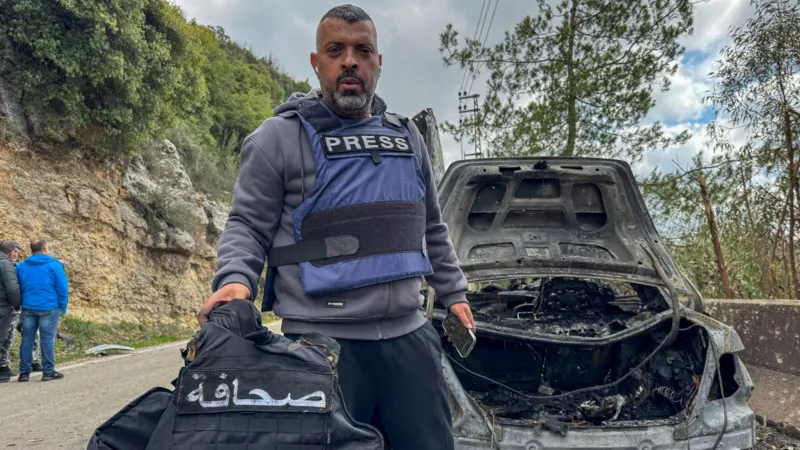
Three Lebanese journalists were killed in a targeted Israeli strike in southern Lebanon on Saturday, their employers have said.
Ali Shoeib, a reporter for the Hezbollah-affiliated Al Manar TV, was killed in the town of Jezzine alongside reporter Fatima Ftouni and her brother, cameraman Mohamed Ftouni, both from the channel Al Mayadeen, according to the stations.
The strike reportedly hit the journalists’ car just before noon local time (10:00 GMT).
The Israel Defense Forces (IDF) confirmed it had killed Shoeib, describing him as a “terrorist” from Iranian-backed Hezbollah’s elite Radwan Force who had “operated for years under the guise of a journalist”.
It said he had worked to “expose the locations of IDF soldiers operating in southern Lebanon and along the border”, including during the current fighting, and had used his position “to disseminate Hezbollah propaganda materials”.
The IDF provided no evidence to support its claim that Shoeib had a military role. It did not comment on the deaths of Fatima or Mohamed Ftouni.
Hezbollah denounced the strike as the “deliberate criminal targeting of journalists”.
(BBC)
Latest News
Heat Index likely to increase up to ‘Caution level’ at some places in the Western, Sabaragamuwa, Southern, Eastern, North-western, Northern and North-central provinces and in Monaragala district
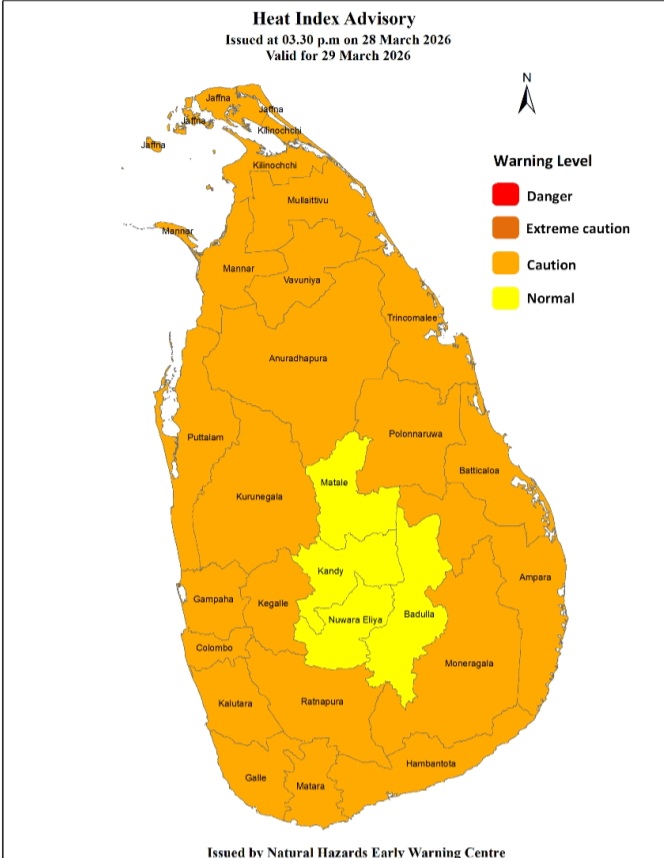
Warm Weather Advisory
Issued by the Natural Hazards Early Warning Centre of the Department of Meteorology
Issued at 3.30 p.m. on 28 March 2026, valid for 29March 2026.
Heat index, the temperature felt on the human body is likely to increase up to ‘Caution level’ at some places in the Western, Sabaragamuwa, Southern, Eastern, North-western, Northern and North-central provinces and in Monaragala district.
The Heat Index Forecast is calculated by using relative humidity and maximum temperature and this is the condition that is felt on your body. This is not the forecast of maximum temperature. It is generated by the Department of Meteorology for the next day period and prepared by using global numerical weather prediction model data.
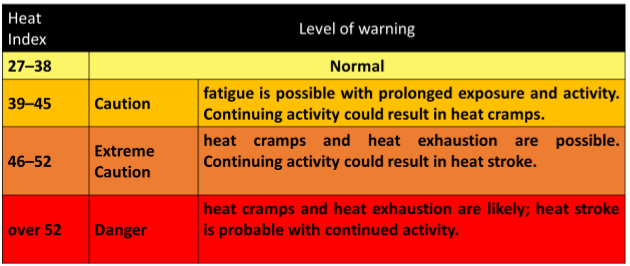
Effect of the heat index on human body is mentioned in the above table and it is prepared on the advice of the Ministry of Health and Indigenous Medical Services.
ACTION REQUIRED
Job sites: Stay hydrated and takes breaks in the shade as often as possible.
Indoors: Check up on the elderly and the sick.
Vehicles: Never leave children unattended.
Outdoors: Limit strenuous outdoor activities, find shade and stay hydrated.
Dress: Wear lightweight and white or light-colored clothing.
Note:
In addition, please refer to advisories issued by the Disaster Preparedness & Response Division, Ministry of Health in this regard as well. For further clarifications please contact 011-7446491.
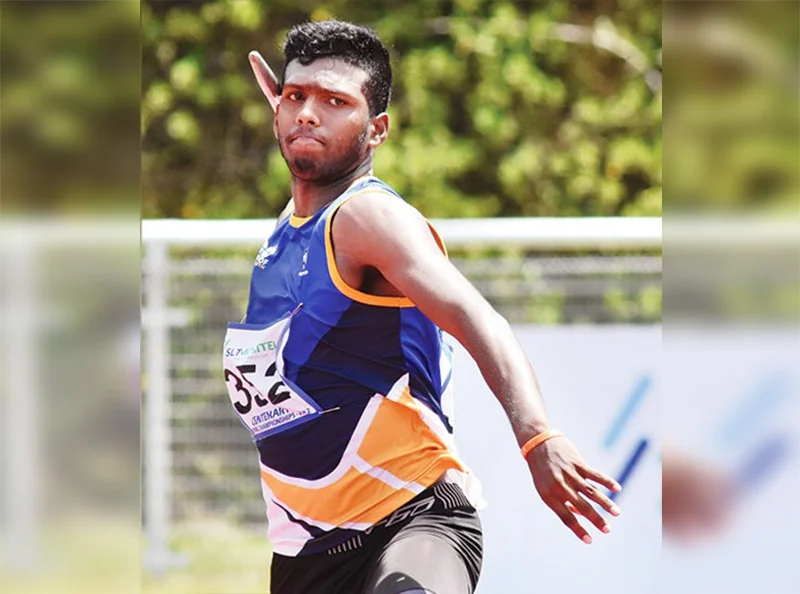
Rumesh Tharanga created history with yet another world leading throw that shattered his own national javelin record at the Champions Track and Field event at Diyagama on Saturday.
The massive 89.37 metres throw, when recognized by World Athletics is set to become the fourth furthest throw in the history of the Asian region.
Despite little competion from his rivals, Tharanga rose like a champion of an entirely different league when he delivered the record breaking feat in his final attempt.
Tharanga had a world leading mark of 83.07 metres for the year coming into this meet. His national record of 86.50 metres was from August 2025. (RF)

One ant for $220: the new frontier of wildlife trafficking

Three Lebanese journalists killed in Israeli strike, say broadcasters

Showers will occur at a few places in the Sabaragamuwa province and in Colombo, Kaluthara, Galle, and Matara districts after 2.00 pm

War-linked power crunch pushes Lanka to four-day week

Lanka to swelter through April and May, Met Dept warns

Pathfinder Foundation launches Proposal for a National Security Strategy for Sri Lanka

‘Dates have the highest sugar content to fight Coronavirus’

Sunday Island 27 December – Headlines

#SundayIsland 17th December – Headlines

Sunday Island – 28th March

Sunday Island Headlines – 21 March

Sunday Island – 21st February – Headlines
-

 News4 days ago
Senior citizens above 70 years to receive March allowances on Thursday (26)
-

 Features1 day ago
A World Order in Crisis: War, Power, and Resistance
-

 Features6 days ago
Trincomalee oil tank farm: An engineering marvel
-

 News2 days ago
Energy Minister indicted on corruption charges ahead of no-faith motion against him
-

 News3 days ago
US dodges question on AKD’s claim SL denied permission for military aircraft to land
-

 Features6 days ago
The scientist who was finally heard
-

 Business3 days ago
Dialog Unveils Dialog Play Mini with Netflix and Apple TV
-

 Sports2 days ago
SLC to hold EGM in April