
News
Colombo HC to hear case against former Ministers Mahindananda Aluthgamage, Nalin Fernando on October 10


The Colombo High Court on Thursday fixed October 10 for hearing a case filed under the Public Property Act against former Ministers Mahindananda Aluthgamage, Nalin Fernando, and former Sports Ministry Secretary, retired Major General Nanda Mallawarachchi.
The case was called before High Court Judge Manjula Thilakaratne. Aluthgamage and Fernando, both serving 25-year sentences in a separate bribery case, were produced in open court, while Mallawarachchi was absent. His counsel submitted a medical report claiming illness and sought permission for him to appear only once the trial began.
A similar request was made by President’s Counsel Sanjay Rajaratnam on behalf of Nalin Fernando, citing possible distress to the accused’s family from media coverage.
Judge Thilakaratne rejected both requests, stressing that all accused were required to be present at every hearing under the Code of Criminal Procedure, unless exceptional circumstances arose. He noted that the medical report submitted on behalf of Mallawarachchi was inadequate.
The charges relate to the alleged misuse of Rs. 3.9 million in public funds between September and December 2014, during the procurement of 14,000 carrom boards and 14,000 checkers boards for sports clubs.
By AJA Abeynayake ✍️


President To Lam, President of the Socialist Republic of Vietnam, General Secretary of the Central Committee of the Communist Party of Vietnam, accompanied by a delegation of 209 members arrived in Sri Lanka on Thursday (07) night on a state visit.

It has been reported quoting the Police, that former Chief Executive Officer (CEO) of SriLankan Airlines, Kapila Chandrasena, has been found dead under suspicious circumstances at a residence in Colpetty.
Latest News
Heat index likely to increase up to ‘Caution level’ in the Sabaragamuwa, Northern, North-central, North-western, Eastern provinces and in Hambantota and Monaragala districts during the daytime


Warm Weather Advisory
Issued by the Natural Hazards Early Warning Centre
Issued at 3.30 p.m. on 07 May 2026, valid for 08 May 2026.
The Heat index, the temperature felt on the human body is likely to increase up to ‘Caution level’ at some places in the Sabaragamuwa, Northern, North-central, North-western, Eastern provinces and in Hambantota and Monaragala districts during the daytime.
The Heat Index Forecast is calculated by using relative humidity and maximum temperature and this is the condition that is felt on your body. This is not the forecast of maximum temperature. It is generated by the Department of Meteorology for the next day period and prepared by using global numerical weather prediction model data.

Effect of the heat index on human body is mentioned in the above table and it is prepared on the advice of the Ministry of Health and Indigenous Medical Services.
ACTION REQUIRED
Job sites: Stay hydrated and takes breaks in the shade as often as possible.
Indoors: Check up on the elderly and the sick.
Vehicles: Never leave children unattended.
Outdoors: Limit strenuous outdoor activities, find shade and stay hydrated.
Dress: Wear lightweight and white or light-colored clothing.
Note: In addition, please refer to advisories issued by the Disaster Preparedness & Response Division, Ministry of Health in this regard as well. For further clarifications please contact 011-7446491.

President of the Socialist Republic of Vietnam arrives in Sri Lanka on State Visit

Former SriLankan Aorlines CEO Kapila Chandrasena found dead

Fast bowling riches in focus as Bangladesh and Pakistan switch to Test mode

Iran says it attacked US Navy ships after they targeted Iranian tanker

Heat index likely to increase up to ‘Caution level’ in the Sabaragamuwa, Northern, North-central, North-western, Eastern provinces and in Hambantota and Monaragala districts during the daytime

Showers above 100 mm are likely at some places in the Western, Sabaragamuwa, Central, Uva, North-western provinces and in Galle and Matara districts.

‘Dates have the highest sugar content to fight Coronavirus’

Sunday Island 27 December – Headlines

#SundayIsland 17th December – Headlines

Sunday Island – 28th March

Sunday Island Headlines – 21 March

Sunday Island – 21st February – Headlines
-
 News3 days ago
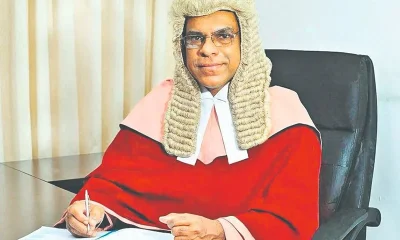
CJ urged to inquire into AKD’s remarks on May 25 court verdict
-

 News1 day ago
MIT expert warns of catastrophic consequences of USD 2.5 mn Treasury heist
-

 News4 days ago
USD 3.7 bn H’tota refinery: China won’t launch project without bigger local market share
-

 News5 days ago
Easter Sunday Case: Ex-SIS Chief concealed intel, former Defence Secy tells court
-

 News6 days ago
Ten corruption cases set for court in May, verdict ordered in one case – President
-

 Business5 days ago
Dialog Surpasses 1,000 5G Sites, Strengthening Nationwide 5G Coverage
-

 Editorial4 days ago
Deliver or perish
-

 Editorial1 day ago
Clean Sri Lanka and dirty politics