
Features
Sri Lanka: The beautiful, besieged island

“Israelis are coming to Sri Lanka, and they’ve done what they do best — taking over the place. They’ve occupied it and made it feel like Tel Aviv. They host parties advertised as ‘no locals allowed.’ The Israelis have come to Arugam Bay, throwing raves and refusing to let Sri Lankan people attend.”
In July 2025, the influential global travel website Big 7 named Sri Lanka the “most beautiful island in the world,” stating that the “teardrop-shaped island off the southern coast of India has it all—golden beaches, terraced tea plantations, timeworn temples, colonial towns, misty mountains, and wildlife safaris … elephants and leopards.”
The beauty of the island is not limited to its physical environment, unique Buddhist culture, and the diversity of its population; it is the simplicity, warmth, and generosity of ordinary people that make the island beautiful.
The popular perception is that international accolades boost tourism, bringing much-needed foreign exchange to the debt-trapped island and prosperity to its long-suffering people. The Sri Lankan government has set an ambitious target of attracting three million tourists and $5 billion in tourism revenue for 2025.
Tourism, however, is fickle and highly susceptible to environmental and political-economic downturns. Following the 2019 Easter bomb attacks in Sri Lanka, and during the COVID years and the 2022 economic crisis, tourist arrivals dropped sharply, bringing the entire sector to a standstill. Instead, it was the remittances from Sri Lankans working abroad that maintained external sector resilience during those crises. Even now, from January to July 2025, worker remittances have exceeded $4.4 billion, while tourism revenue reached only about $2 billion.I
If managed properly, the tourism sector could play a major role in the country’s recovery. Unfortunately, this does not seem to be the case. Although tourism is asserted to be the primary foreign-exchange earner, much of the money generated by foreign-owned tourist businesses is likely repatriated abroad. Sri Lanka permits full repatriation of earnings, fees, and capital from foreign exchange transactions, though the extent of this wealth transfer remains opaque.
In Sri Lanka, as in many other tourist destinations in the Global South, tourism exacerbates global inequality and rarely helps improve local poverty. While tourist hotels overflow with all kinds of local and foreign food, drink, and luxuries, average Sri Lankans struggle to secure essential food items such as rice, dhal, coconut, and even salt. According to World Bank figures, a quarter of the island’s population is living below the poverty line, and according to the World Food Program, roughly one-third of children under the age of five are malnourished.
Lacking viable means of survival, doctors, engineers, teachers, IT professionals, and others are leaving Sri Lanka in large numbers to seek economic opportunities in Qatar, Saudi Arabia, Israel, South Korea, Japan, Italy, and elsewhere. Out of Sri Lanka’s population of 22 million, about three million are working abroad. Government policy encourages migration for employment and worker remittances but this “brain drain” poses a serious challenge to the island’s economic recovery and future survival.
Ironically, as record numbers of Sri Lankans are leaving, record numbers of tourists are arriving. Over 2.05 million tourists arrived in 2024, representing a significant 38 percent year-on-year growth, with most visitors coming from India and Russia. The focus on quantity over quality has led to overtourism, with overwhelming numbers of visitors in popular tourist destinations such as the iconic Sigiriya Rock Fortress, Yala National Park, and the Pinnawala Elephant Orphanage. Exceeding carrying capacity has significant negative impacts on the environment, local quality of life, and the visitor experience.
This raises urgent questions: Are the short-term benefits of mass tourism worth the long-term costs? And is Sri Lanka now facing a new, more troubling phenomenon of neo-colonial globalisation—settler tourism?
The Rise of Settler Tourism
Lax visa and tourist regulations have allowed hundreds of mostly young white tourists from Europe and North America to settle in exclusive communities along Sri Lanka’s southern and eastern coasts. These enclaves—promoting perpetual paradise, surfing, yoga, and meditation—are often run entirely by foreigners living on the island for extended periods. Contrary to visa restrictions, some tourists engage in enterprises such as driving three-wheeler taxis and guiding tours, taking income opportunities from local people.
While digital nomads work remotely, others have opened hotels, restaurants, and spas, often bypassing taxes and money transfer regulations. Foreigners cannot directly buy freehold land in Sri Lanka but may acquire property through Sri Lankan companies with local majority ownership, which is often facilitated by local middlemen.
As of February 2024, more than 288,000 Russians and nearly 20,000 Ukrainians had traveled to Sri Lanka since the start of the war in Ukraine, seeking peace and quiet. In the Unawatuna beach area—nicknamed “Little Moscow”—many businesses are now owned by Russians. The stresses of war, carried by some tourists, have been expressed locally in food fights among Ukrainians in luxury hotels and aggressive exchanges between Ukrainians and Russians on Sri Lankan beaches.
Even more disconcerting is the re-emergence of white supremacy in a land that endured nearly five hundred years of European colonialism under the Portuguese, Dutch, and British (1505–1948). Many locals perceive the arrogance and aggression of some white tourists as fostering racial segregation and hierarchy, making brown-skinned people second-class citizens in their own land. A notable example is the Russian-organised “white party” in Unawatuna in February 2024, advertised as “Face control: White,” and canceled only after sparking backlash online.
Russians are not the only settler tourists accused of being disrespectful and arrogant. Critics point out that some Israeli tourists are known for breaking the surfing code of conduct and failing to share waves with others. A post on Instagram by Australian tourist Tom Monagle, dated July 31, 2025:
“Israelis are coming to Sri Lanka, and they’ve done what they do best — taking over the place. They’ve occupied it and made it feel like Tel Aviv. They host parties advertised as ‘no locals allowed.’ The Israelis have come to Arugam Bay, throwing raves and refusing to let Sri Lankan people attend.”
Just as the war in Ukraine brought an influx of Russian and Ukrainian visitors, the war in Gaza has led to a rapid influx of Israeli tourists. According to Al Jazeera, as Israel’s military campaign intensified, the number of Israeli visitors to Sri Lanka doubled, with an estimated twenty thousand arriving in early 2024.
Israelis have acquired extensive beachfront property, especially in Ahangama. Their development of trendy, expensive restaurants has transformed local economies and cultures—benefiting only a handful of local people. Al Jazeera reports that Israeli nationals have also been involved in acts of physical violence in the south against Sri Lankans known to be vocally pro-Palestinian.
The Israeli presence in Arugam Bay, a resort on the eastern coast, has invoked even greater alarm than their expansion in the south. Many young Israeli tourists—reservists in compulsory military service—stay for extended periods, bringing with them the dynamics of Israeli state militarism.
IDF (Israel Defense Forces) tourists and others have created a Jewish enclave in the predominantly Muslim surfing town of Arugam Bay, with Jewish restaurants, Hebrew posters, and Israeli flags. An unauthorised Chabad House—part of the Chabad-Lubavitch Hasidic Movement, which is committed to the creation of Greater Israel—also exists there (others are found in Colombo, Ella, and Weligama).
In October 2024, after a U.S. Embassy travel advisory regarding threats to tourists in Arugam Bay, the town emptied out but soon returned to “normal.” As a 2025 advertisement puts it, “The sun is shining, the waves are rolling, and the good vibes are flowing—Arugam Bay is OPEN and ready for a brand new season!”
Nevertheless, local fears of future Jewish-Muslim clashes and the emergence of Arugam Bay as a military hub for United States Indo-Pacific Command (USINDOPACOM) persist.. The Sri Lankan government has not cracked down on Israeli violations, allegedly due to fears of retaliation from Western countries.
A Besieged Island
Settler tourism is only one aspect of Sri Lanka’s multifaceted besiegement. Strategically located in the Indian Ocean, Sri Lanka is caught in the geopolitical rivalry and proxy war between China and the Quad Alliance (United States, India, Australia, Japan). The country has signed the ACSA (Acquisition and Cross-Services Agreement) and SOFA (Status of Forces Agreement) defence pacts with the United States, and is increasingly drawn into USINDOPACOM efforts.
Meanwhile, Sri Lanka is also a part of China’s Belt and Road Initiative. The southern port of Hambantota is under Chinese control for 99 years, as is the new Port City in Colombo. The natural harbour of Trincomalee, north of Arugam Bay, is now under Indian control and may become an energy and military hub. India recently signed seven memoranda of understanding, still concealed from the public and media, allowing Indian control over defence, energy, electricity, health, pharmaceuticals, and digital ID. Several terminals of the busy port of Colombo on the west coast are controlled by India, Japan, and China.
Sri Lanka is “sovereign” and “independent” only in name. Besieged by external powers, the island may well become a future site of geopolitical conflict. As elsewhere, Sri Lanka’s vast resources—land, water, and people—are increasingly controlled by external forces working in complex ways with local collaborators.
Environmental collapse is another form of besiegement. Sri Lanka, dubbed the “most beautiful island,” is also one of the countries most threatened by climate change. Sea level rise is eroding 55 percent of the shoreline, at a “staggering coastal erosion rate of 0.30–0.35 meter a year.” Deforestation and biodiversity loss continue, turning both the Sri Lankan elephant and leopard into threatened species.
Whether Sri Lanka remains a paradise or becomes permanently besieged—by neo-colonialism, geopolitical rivalry, and climate disruption—depends on deeper awareness and the choices made by its leaders and people. International friends, including those who have visited the island, can also help by advocating for transparency, regulation, and local empowerment.
by Dr. Asoka Bandarage ✍️

by Prof. M.W. Amarasiri de Silva
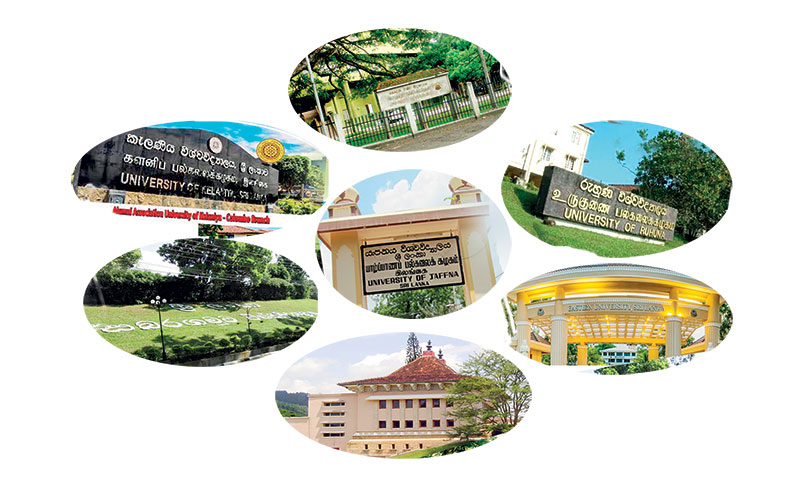
Sri Lanka’s state university system, long celebrated as the crown jewel of the nation’s free education policy, is currently navigating one of the most perilous periods in its modern history. What was once envisioned as a reliable engine for social mobility and intellectual leadership is now burdened by severe operational deficiencies that threaten its fundamental integrity. The recent decision by the Federation of University Teachers’ Association (FUTA) to stage a trade union action, following a week of growing unrest, serves as an urgent wake-up call to the state. As academic staff across campuses raise their voices, it becomes clear that the public higher education framework is arriving at a critical point where political ambitions are colliding head-on with stark institutional realities.
At the heart of the current crisis lies a staggering shortage of qualified academic staff across state universities. Senior Lecturer Charudatta Ilangasinghe, Secretary of FUTA, highlighted a key issue: Sri Lankan state universities are experiencing an unprecedented deficit of adequately qualified lecturers. Driven by economic hardship, rapid inflation, and institutional uncertainties, an escalating brain drain has seen seasoned academics, senior professors, and specialised researchers leave the country in alarming numbers. Higher education cannot exist merely through physical lecture halls and administrative offices; its core strength depends on human capital. When specialised departments lack qualified educators, degree programmes lose rigour, research capacity plummets, and the overall educational experience deteriorates.
Academic depletion
This academic depletion has severe consequences for school leavers who have worked hard to secure university admission. The gravity of this bottleneck becomes stark when examining official metrics from the University Grants Commission (UGC). Annually, around 160,000 to 170,000 students qualify for university education after sitting for their G.C.E. Advanced Level examinations, yet the state university network possesses the capacity to absorb only roughly 42,000 to 45,000 candidates—leaving nearly 73% to 75% of qualified students without a public university seat.
The current staff shortages further restrict this already narrow bottleneck. According to figures raised by the Federation of University Teachers’ Association (FUTA), the state university system operates under an approximate 50% deficit in academic personnel—possessing only around 6,500 to 6,900 lecturers against an approved requirement of 13,000 to 14,000 positions. Over 1,500 senior academics and PhD holders have migrated in recent years due to economic pressure, severely understaffing high-demand faculties like Medicine, Engineering, and Information Technology.
Consequently, student batches—including those who sat for the 2025 G.C.E. Advanced Level examinations—face academic backlogs and delays exceeding 12 to 18 months before registration and commencement. For generations, passing the Advanced Level examination was viewed as a clear path toward personal advancement and professional development. Today, that milestone is met with systemic bottlenecks, placing the academic futures of young citizens in jeopardy and creating downstream disruptions across vital professional sectors.
To successfully scale the higher education landscape, while ensuring that existing standards do not decline, education secretaries and administrative leaders must prioritise actionable short-term measures alongside their overarching long-term expansion goals. Rather than treating expansion and quality control as separate initiatives, immediate interventions can immediately reinforce current university infrastructure and create an environment capable of supporting larger student bodies in the future. By focusing on international collaboration, targeted capacity building, and structured retention frameworks, educational systems can quickly elevate teaching quality and administrative efficiency.
Crucial short-term initiatives
A crucial short-term initiative involves forging direct academic and research partnerships with established international universities. These linkages allow local institutions to immediately implement faculty exchange programmes and collaborative training workshops, bringing global pedagogical standards and technical expertise directly to local staff. To further accelerate this professional growth, the government can institute fully funded scholarships targeting top-tier international institutions, particularly across the United Kingdom and the United States of America. Sending promising academics abroad equips them with modern research methodologies, administrative capabilities, and domain knowledge that can be directly integrated into the local curriculum upon their return.
To ensure that these foreign training investments yield tangible domestic benefits, institutions must pair scholarship opportunities with enforceable bonding policies, a model effectively utilised by nations such as Thailand and China. Under these agreements, scholars commit to returning home immediately following their studies to serve at local universities for a mandatory multi-year period. This contractual obligation prevents brain drain, guarantees a continuous pipeline of highly trained educators back into the local system, and builds a sustainable, highly qualified workforce capable of driving long-term educational growth.
The academic staffing crisis in Sri Lanka’s state university system spans virtually all fields, but the acute deficit of qualified lecturers is most heavily felt in professional, STEM, and high-demand specialised disciplines. According to reports from the Federation of University Teachers’ Association (FUTA), the faculties experiencing the most severe disruption include Medicine, Engineering, Information Technology, Management, and the Natural Sciences.
Some faculties facing critical challenges
Medical, Dental, and Allied Health Sciences faculties face a critical challenge. These disciplines operate under strict mandatory teacher-to-student ratios, such as a one-to-five ratio in clinical specialties like Dental and Veterinary Medicine, to ensure patient safety and maintain global accreditation. With senior medical consultants, clinical specialists, and professors departing due to high international demand and overseas career opportunities, these faculties struggle to maintain basic clinical training schedules and research supervision.
Engineering and Technology faculties are similarly affected by the departure of senior academic staff holding doctorates. Fields such as Civil, Electrical, Mechanical, and Computer Engineering require specialised expertise that cannot be easily replaced by junior recruits. In Information Technology and Software Engineering, state universities face double pressure from foreign university recruitments and lucrative private sector job markets, making it difficult to maintain required ratios such as one lecturer for every 10 students.
Management and Commerce faculties, which accommodate some of the largest undergraduate student cohorts, also confront severe human resource deficits. At institutions like the Rajarata University, student unions have reported shortages of up to 45% to 50% in academic cadre across management departments. The absence of qualified professors in fields like Accounting, Finance, and Business Analytics has created bottlenecks in student research supervision and delayed final-year graduations.
Natural Science faculties—encompassing Mathematics, Physics, Chemistry, and Molecular Biology—face a parallel crisis. The loss of experienced research supervisors affects advanced laboratory teaching and postgraduate study programmes. Overall, the primary issue across these professional fields is not merely a quantitative shortage of entry-level staff, but the loss of senior, highly qualified academics whose departure directly threatens course accreditation, clinical training, and the long-term credibility of university degrees.
Challenges and political discourse
Despite these crippling internal challenges, political discourse continues to emphasise rapid physical expansion over institutional consolidation. Proposals to establish 50 new state universities may sound visionary on a political platform, but they risk ignoring the foundational crisis existing on the ground. FUTA’s opposition to this unbridled expansion highlights a crucial operational reality: establishing new institutions while existing ones collapse from resource starvation is fundamentally unsustainable. Spreading already scarce financial resources, infrastructure budgets, and qualified faculty across dozens of new campuses will only dilute academic standards across the board.
Before any ambitious expansion plans are drawn up, the government must prioritise stabilising, staffing, and modernising the existing 17 state universities. Quality assurance must take precedence over political expediency. A university is defined not by its name or physical structures, but by the caliber of its academic standard, the depth of its research, and the expertise of its teaching staff. Establishing new universities without first recruiting, training, and retaining qualified lecturers across the current 17 state universities risks creating institutions that exist in name only.
Resolving this crisis requires moving past temporary measures and engaging in meaningful, long-term dialogue with academic stakeholders. A permanent solution demands a dedicated policy effort aimed at making state universities attractive environments for academic professionals once again. This involves restoring competitive conditions, providing robust research support, ensuring institutional autonomy, and prioritising funding for existing faculties before diverting capital elsewhere. Crucially, restoring competitive conditions requires an immediate and comprehensive restructuring of the academic salary framework. The current compensation model has rendered state universities severely uncompetitive, failing to benchmark remuneration against international and regional academic standards. To stem the relentless brain drain of doctoral degree holders and senior researchers, the salary structure must be revised to reflect global academic pay scales. Without offering remuneration that aligns with international benchmarks, Sri Lankan public universities will continue to lose their finest scholars to overseas institutions and private sectors, leaving faculties understaffed and compromising the long-term credibility of higher education in the country.
Operational realities
Beyond compensation, the daily operational realities of academic staff at regional universities require urgent institutional intervention. A primary bottleneck in retaining senior scholars at regional campuses is the lack of dedicated, quality housing on premises. Currently, many lecturers endure grueling daily commutes from Colombo to regional universities—a practice that proves physically exhausting, economically burdensome, and disruptive to academic productivity. The underlying reason many academics refuse to relocate closer to these regional institutions is the lack of high-quality schooling options for their children in peripheral areas. Providing modern, comfortable residential quarters directly within university campuses would offer a practical solution to this structural dilemma. By establishing secure, well-equipped housing on site, universities can reduce the reliance on long commutes, foster a vibrant, resident academic community, and ensure that senior scholars remain engaged in campus life, research, and student mentorship.
The state university system remains one of Sri Lanka’s most vital national assets, but its survival depends on addressing its core structural issues today rather than chasing hollow expansion tomorrow.

By a Concerned Aficionado
In my article “Whatever on earth happened to meritocracy, pragmatism and honesty in Sri Lanka?” published in The Island on 08 September 2026, I examined the total and systematic decay of our public institutions, the collapse of administrative rigour, as well as the ubiquitous and universal spread of corruption. The response from a plethora of readers who knew the originator of that article was overwhelming.
However, one particular message from a long-time friend stopped me in my tracks. “Superb article“, he wrote, before delivering a sharp, uncomfortable counterpunch: “One thing you missed. It is not just the politicians. In a democracy, we elect the politicians we deserve.” I have known that friend of mine as one who responds only when he has something really worthwhile to say. True to that perspective, I must admit that he was absolutely right, and this article is an extension of the original one to justify that ever-so-true contention. It is best considered to be an addendum to the original literary piece.
It is perhaps easy and even reassuring to direct our collective rage at the occupants of the Parliament premises. It is a well-known axiom that blaming the ruling class is our ever-present national pastime. We point to their venality, their incompetence, their flagrant disregard for the rule of law, and their insatiable appetite for plunder. However, in doing so, we conveniently ignore a fundamental truth of democratic governance: politicians do not drop from the sky, nor do they seize power in a vacuum. They are elected by us, chosen by our ballots, sustained by our applause, and very often protected by our silence.
If Sri Lanka has spent three-quarters of a century careening from one avoidable disaster to another, it is not merely because we have been cursed with poor leadership. It is because we, as an electorate, have repeatedly rewarded short-sightedness, bigotry, and outright criminality. Until we are willing to hold up the mirror and confront the stupidity, greed, and moral complacency of our own populace, no political shift will be able to save us.
The Legacy of 1956: Buying Short-Term Dominance at the Cost of the Nation
To understand the decay of Sri Lankan meritocracy, one must trace the line back to 1956; the watershed moment when identity politics officially displaced institutional competence. That is the time when the concept of harnessing the best qualified and the eminently suitable persons for positions in our governing infrastructure was put on the back burner.
In the pursuit of electoral victory, the ultimately successful political establishment offered the majority community, the Sinhalese, an irresistible bargain: language-based domination over public sector jobs, university admissions, and state resources. It was a classic appeal to tribal prejudice over merit, and the electorate swallowed it whole; hook, line and sinker. Rather than building a modern, competitive economy capable of offering world-class education and opportunity for all, the public demanded, and received, a system that prioritised ethnic identity over capability.
The long-term consequences of such injudicious attempts were absolutely catastrophic. By replacing meritocracy with communal quotas and political favouritism, we systematically dismantled our administrative civil service, alienated talented minorities, and sowed the seeds of a bloody, three-decade-long civil war that came as an inevitable aftermath. Yet for all that, we never learnt, and generation after generation of voters continued to validate this broken, unsuccessful formula. We repeatedly chose political platforms that promised dominance over our neighbours rather than excellence for our children.
The Free Rice Fallacy: Entitlement, Socialism, and Economic Illiteracy
If 1956 institutionalised sectarian division, the elections of the 1970s established a state of economic delusion.
Promising “free rice from the moon” became the standard currency of Sri Lankan electioneering. The public enthusiastically embraced political movements that preached state-controlled redistribution, the confiscation of private enterprise, and the handing out of unearned doles and unjustified bonuses. Socialism, in its Sri Lankan format, was rarely about building productive capacity; it was about taking from one group to give to another, while starving the state of the capital required for modernisation and development.
In that scenario, we demanded that the state subsidise our fuel, our electricity, our food, and our employment, entirely indifferent to whether the national treasury had the funds to pay for it. When governments attempted sensible, long-term structural reforms, voters promptly threw them out of office in favour of firebrands promising cheaper bread and risk-free state jobs. The electorate nurtured a culture of entitlement while despising the enterprise and productivity required to sustain it. We wanted the standard of living of a developed nation without doing the really hard work needed for building one. The total economic collapse in recent years was not a sudden act of fate; it was the inevitable final invoice for decades of economic illiteracy that the voters insisted on being fed and perpetuated.
The Moral Bankruptcy: Elevating the Totally Unfit into Power
Perhaps the most damning evidence of electoral collusion and intense folly is our choice of our political representatives.
In a healthy democracy, a criminal record, a record of violence, or a history of predatory behaviour, would immediately disqualify an individual from public life. However, in our beautiful Sri Lanka, such credentials often appear to be electoral assets of one form or another.
Consider our voting patterns over the decades. We have elected individuals convicted of murder. We have returned to power figures implicated in extortion, assault, rape and child abuse. We have cheered for despicable thugs who entered parliament not to legislate, but to intimidate. When a political figure delivers a local road, secures a government clerk job for a relative, or distributes liquor and roofing sheets before an election, their moral failures and criminal convictions are instantly forgiven and forgotten.
In 2005, 2019, and multiple instances in between and extending on to a time even after that, the electorate rallied around hyper-nationalist rhetoric, willingly trading civil liberties, institutional integrity, and minority rights for the illusion of strongman protection. We repeatedly voted for political actors who weaponised fear, played on deeply ingrained prejudices, and subverted judicial independence.
When a society consistently sends convicts, rapists, and crooks to the legislature, it can no longer pretend to be the innocent victim of bad leadership. The parliament simply becomes a concentrated mirror of various misdemeanours that are rampant on the streets.
The Myth of the Saviour: Waiting for a Moses Who Will Never Come
A recurring theme in Sri Lankan political discourse is the longing for a benevolent strongman: a Lee Kuan Yew, or even a “Moses” who will part the Red Sea of our troubles and lead us single-handedly to the promised land. This is indeed an ever so dangerous fantasy. We are yet to find statesmen or stateswomen who come even close to such hallowed sets of legislators who could provide the ultimate political benefits to the populace.
Singapore’s transformation under Lee Kuan Yew was not achieved through political magic; it was built on an uncompromising commitment to meritocracy, rule of law, zero tolerance for corruption, and a disciplined citizen body willing to make short-term sacrifices for long-term survival. Lee Kuan Yew did not pander to racial majoritarianism, nor did he offer free doles to win votes. If a leader with Lee Kuan Yew’s platform were to run for office in Sri Lanka tomorrow, promising hard work, strict discipline, the removal of state subsidies, equal rights for all communities, and absolute meritocracy, he or she would most likely lose his or her money that was paid as the election deposit.
Our public does not actually want a Lee Kuan Yew. We want a patron who will give us special privileges while enforcing the rules on everyone else. We generally crave a government that hires our unqualified sycophants while expecting the state administration to run with world-class efficiency.
Corruption in Sri Lanka is not isolated to the top of the pyramid. It is a capillary system that reaches every level of society. It is the driver paying a bribe to avoid a traffic fine, the parent paying a gift to secure a school admission, the clerk expecting a kickback to process a permit, and the voter trading a ballot for a bag of fertiliser, a lunch or dinner packet or even a bottle of arrack. The politician is merely the professionalised version of the dastardly, arrogant members that are a part and parcel of the broader public.
Time to Call a Spade a Spade: The Path to Electoral Maturity
If Sri Lanka is ever to recover from its present torrid state, the shift cannot begin in the Cabinet of Ministers; it must begin in the mind of the voter. We must develop the maturity to call a spade just what it is: a spade, starting with our own complicity.
What should real electoral maturity look like?
· Abandoning the Culture of Doles: We must stop voting for politicians who promise free handouts, unearned subsidies, and artificial price controls. A nation cannot borrow its way to prosperity, and any candidate promising something for nothing is two-faced and telling blatant lies to you.
· Rejecting Ethnic and Religious Polarisation:
Manipulators use identity politics for one reason only: which is the proven concept that it works. As long as voters respond to tribal fear-mongering and majoritarian posturing, politicians will continue to use it as a smoke screen to cover up thuggery, theft and incompetence.
· Demanding Moral Disqualification:
We must enforce a zero-tolerance policy at the ballot box for candidates with records of violence, corruption, and lawlessness. If a party nominates a known crook, their entire political ticket must be drastically and completely punished at the polls.
· Insisting on Meritocracy in All Things:
Meritocracy cannot be something we demand only when it suits us. It requires a willingness to accept that irrefutable adage: the best person gets the job, the admission, or the contract; regardless of their ethnicity, religion, or political connections. The working principle should be that the best qualified and the most competent would be chosen
The Choice Ahead
The current crisis has exposed the bankruptcy of our age-old political model. Yet for all that, from a worthwhile perspective, changing the actors performing on the stage without totally changing the standards and expectations of the audience will yield the same calamity through a different performance by an identical cohort of performers. The recipients of the performance in the audience, which is the voting general public, are the ones who should matter and in whose telling response the future lies.
Very many of our politicians have been corrupt, opportunistic, and incompetent, simply because we, as the electorate, have permitted, encouraged, and rewarded those exact traits for seventy years. They are a reflection of our priorities: priorities that are totally ill-advised and even significantly misled.
If we want honest, realistic, and far-sighted leaders, we must first become an electorate that values morality, practicality, and vision; a constituency that is totally above quick favours and communal tribalism. The promised land is not a destination to which a single leader can carry us on his or her shoulders. It is a state of society that must be earned through collective discipline, moral clarity, and the courage to stop being deceitful to ourselves. Ultimately, it will be the court of public opinion that should deliver a suitable and appropriate verdict to our politicians.
Fate often provides no abiding support and backing to the favourites of others, and time keeps an honest score in its own right. As far as the electorate goes, what we bring to the arena in our expectations and perspectives is precisely what we take home. The game will challenge us, test us, and occasionally break us; but it never cheats us. We must stand firm, play the long game, unwaveringly insist on excellence, and let the results speak for themselves. The future does not belong to politicians of varying hues and self-serving goals; it rests, as it always should, in the hands of our own general public, as the discerning electorate of this thrice-blessed land.

‘A parliamentary majority cannot change elephant behaviour,’ says Supun Lahiru Prakash, warning that failed holding ground has become a death trap
By Ifham Nizam
Sri Lanka cannot solve its escalating human-elephant conflict (HEC) by repeatedly capturing elephants, removing them from their home ranges and locking them inside an enclosure, says biodiversity conservationist Supun Lahiru Prakash, who has called for an immediate rethink of the country’s continued reliance on the Horowpothana Elephant Holding Ground.
“A parliamentary majority cannot change elephant behaviour,” Supun said, warning that political decisions cannot override the biological and behavioural realities of one of Sri Lanka’s most iconic wild animals.
He described the Horowpothana facility as an “open-air elephant prison camp” founded on the failed premise of elephant “rehabilitation”, arguing that it had become a costly death trap rather than a solution to HEC.
His comments follow the reported capture of yet another elephant in the Thalawa area of Anuradhapura and its transfer to Horowpothana. The operation reportedly involved military veterinarians while Wildlife veterinary surgeons were engaged in trade union action.
According to reports, two other elephants were accidentally injected with anaesthetic during the operation but subsequently escaped, while a third elephant was captured and taken to the holding ground.
Supun questioned whether the elephant ultimately captured was actually the individual responsible for the reported conflict, while also raising serious questions about the fate of the two elephants that escaped after being anaesthetised.
He said such incidents should not be dismissed as isolated operational mistakes, but should instead prompt a much wider examination of the policy of capturing and translocating elephants.
“The human-elephant conflict in Sri Lanka is becoming increasingly severe and geographically widespread,” Supun said, warning that outdated mitigation measures were consuming public money without addressing the ecological causes of the conflict.
A failed experiment repeated
The Horowpothana Elephant Holding Ground was established pursuant to Cabinet Memorandum No. 12/0151/549/001 dated 17 March 2012 and was among four Elephant Holding Grounds proposed under the 2012 Budget.
The facility was intended to receive elephants accused of causing serious conflict, confine them, rehabilitate them and eventually release them back into the wild.
But the experience at Horowpothana has raised fundamental questions about whether that objective has ever been achieved.
According to the Auditor General’s findings, elephants were brought to the facility on 52 occasions, between 4 September 2015, and 25 June 2019. Yet by June 2019, only nine elephants remained.
Twelve elephants had reportedly died, while 31 were listed as missing.
For Supun, the figures expose the fundamental failure of the holding-ground concept.
Not a single elephant, he pointed out, has been successfully rehabilitated and released back into the wild from Horowpothana as envisaged when the facility was established.
Sri Lanka had already experimented with an elephant holding ground at Lunugamvehera in 2007. That initiative also failed after an area of the national park was fenced and trenched in an attempt to confine elephants.
Yet, instead of abandoning the concept, the government went on to establish Horowpothana at a cost exceeding Rs. 500 million.
Supun argues that Sri Lanka is now in danger of repeating the same mistake yet again.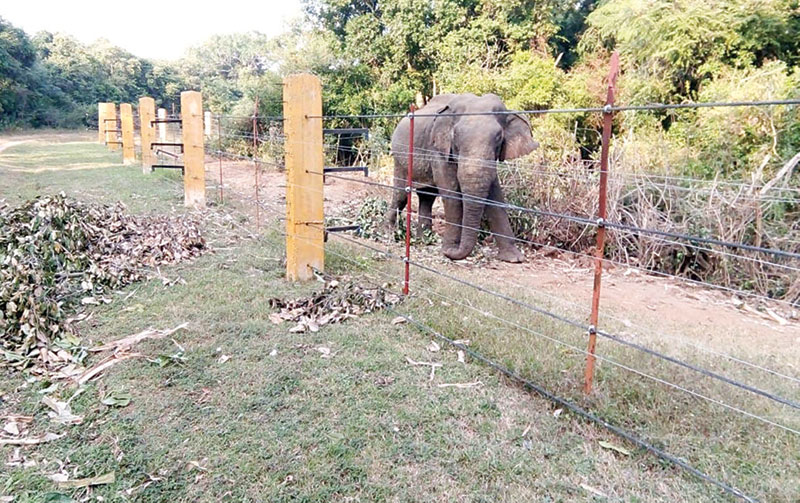
The elephant does not forget its home
One of the biggest weaknesses in the translocation approach is the assumption that removing an elephant from a conflict area will permanently remove the problem.
Wild elephants, however, have strong fidelity to their traditional home ranges.
Supun cited the well-known case of the Galgamuwa tusker “Chandi”, which was taken to Horowpothana on several occasions but repeatedly managed to find its way back to its original range.
For Supun, Chandi’s behaviour was not evidence of an animal that needed to be “rehabilitated”. It was evidence of an elephant attempting to return to the landscape it knew.
Such displaced elephants may travel long distances, through unfamiliar areas, in their attempts to return home. In doing so, they can enter villages where communities have little experience of living with elephants, potentially creating entirely new conflict zones.
An elephant that eventually returns to its original range may also become more difficult to manage, particularly if repeated capture and translocation have increased its stress and aggression.
Thus, rather than solving HEC, translocation can simply move the problem geographically and make it more complicated.
A prison without a solution
Supun said the holding-ground model fundamentally fails to recognise that elephants are wild, highly intelligent, social animals requiring space to move, forage, interact and express natural behaviour.
An elephant confined within an artificial enclosure cannot fulfil many of these biological requirements.
The result, he warned, can be severe physical and psychological stress.
An elephant attempting to escape may injure itself or break through barriers and return to the wild. One that cannot escape may remain confined, deteriorate physically and psychologically, and eventually die.
The elephant known as “Kaladi Dala Kota”, whose photograph appeared on the cover of the Auditor General’s report, became a symbol of the human and institutional failure surrounding the facility.
Supun also warned about the consequences of concentrating adult male elephants in a restricted area.
Because the elephants held at such facilities are predominantly males, increased density can generate competition and aggression, potentially resulting in injuries and deaths.
There is also a less visible conservation cost.
When adult male elephants are removed from wild populations and confined for years or for life, they are prevented from contributing to the reproductive population. Supun warned that continued removal of breeding males could eventually have implications for the genetic strength of Sri Lanka’s elephant population.
Millions spent—and elephants still starved
Perhaps the most damning evidence against the facility comes from the Auditor General’s findings concerning food supplies.
Between 1 November 2018 and 31 October 2019, a contract worth Rs. 26,133,700 was awarded for food for 30 elephants.
Yet only nine elephants were reportedly present at the holding ground by June 2019.
The audit found inadequate supervision of the quality of food supplied and noted that supply agreements had been prepared without proper studies of the foliage consumed by elephants.
Foliage that elephants did not eat was nevertheless included in the contract, supplied and paid for.
The weighing of food was also carried out at a private rice mill, without an official assigned to supervise the weighing process.
Payments were made without adequate verification of whether the quantities recorded were accurate.
According to the audit findings, food worth approximately Rs. 6.56 million was supplied in excess during part of the period despite the much smaller number of elephants actually present.
Yet, astonishingly, five of the 12 elephants reportedly died from lack of food and malnutrition.
For Supun, this contradiction alone should force the government to ask whether the facility has any legitimate future.
A place established ostensibly to rehabilitate elephants cannot credibly be defended as a conservation success when elephants confined there die from starvation and malnutrition.
Public money, political pressure
Supun said continuing to maintain such a facility and repeatedly sending elephants there was particularly difficult to justify at a time when Sri Lanka was demanding fiscal discipline and recovering from its economic crisis.
“The country cannot continue throwing public money down a bottomless pit,” he said.
However, he cautioned against placing the entire blame on the Department of Wildlife Conservation.
Wildlife officials can be caught between scientific evidence and political directives, particularly when political leaders believe that HEC can be solved through administrative orders or parliamentary decisions.
There was, he noted, a period when the Department itself had taken steps to prevent elephants from being confined at Horowpothana.
The fundamental problem, Supun stressed, is that elephant behaviour is governed by biology, ecology and evolutionary history—not by parliamentary majorities.
Time to abandon the failed model
Sri Lanka’s HEC crisis is far too serious to be reduced to a cycle of capture, translocation, escape, recapture and confinement.
Every elephant moved away from a village does not necessarily represent a problem solved. The animal may attempt to return, another elephant may occupy the vacated range, or the underlying environmental conditions that generated the conflict may remain unchanged.
Supun, therefore, called on the government to match its stated commitment to “proper studies” and “biological and modern technological approaches” with a genuine science-based HEC policy.
The country needs to understand elephant movement, habitat fragmentation, land-use change, food availability, seasonal behaviour and the circumstances that bring elephants and people into conflict.
It also needs measures that protect communities without treating the elephant as the problem that must simply be removed.
For Supun, the lesson from Horowpothana is already clear.
Sri Lanka has spent millions on an experiment that has failed to deliver its promised rehabilitation programme, while elephants have died, disappeared or spent years in confinement.
“Do not sacrifice more elephants to the Horowpothana open-air elephant prison camp,” he asked.

Fast Attack Craft P 4447 recovered in successful salvage operation

Showers above 100 mm are likely at some places in the Western, Central, Sabaragamuwa, Southern, North-central and North-western provinces

Shafali, Mandhana power India to eighth Asia Cup title

Tharanga wins Ultimate Javelin title

CIABOC member’s appointment: Controversy over Speaker under probe heading selection process

GMOA: Countrywide cadre revision not done since 2015

‘Dates have the highest sugar content to fight Coronavirus’

Sunday Island 27 December – Headlines

#SundayIsland 17th December – Headlines

Sunday Island – 28th March

Sunday Island Headlines – 21 March

Sunday Island – 21st February – Headlines
-

 Sports3 days ago
DDS set to lose Test captaincy
-

 News6 days ago
Thailand shuts door on undesirables from Sri Lanka
-

 News3 days ago
Sri Lanka faces new grid challenge as rooftop solar surges: former CEB GM
-

 Latest News3 days ago
Shafali, Deepti power India into sixth T20 Asia Cup final
-
 Business6 days ago
CEB successor company breaks into top three in competitive BESS tender
-

 Opinion5 days ago
Navigating Sri Lanka’s Israeli Dilemma
-

 Latest News3 days ago
Sri Lanka thwart Fatima Sana challenge to secure Asia Cup final spot
-
 Features4 days ago
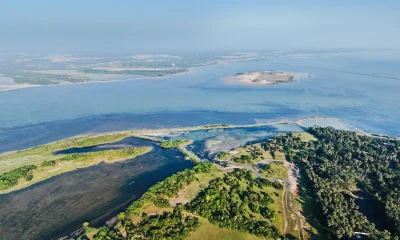
Lost for 90 years: Rare Goby resurfaces in Jaffna