
Latest News
Green, Head and Marsh flay centuries as Australia put on a show

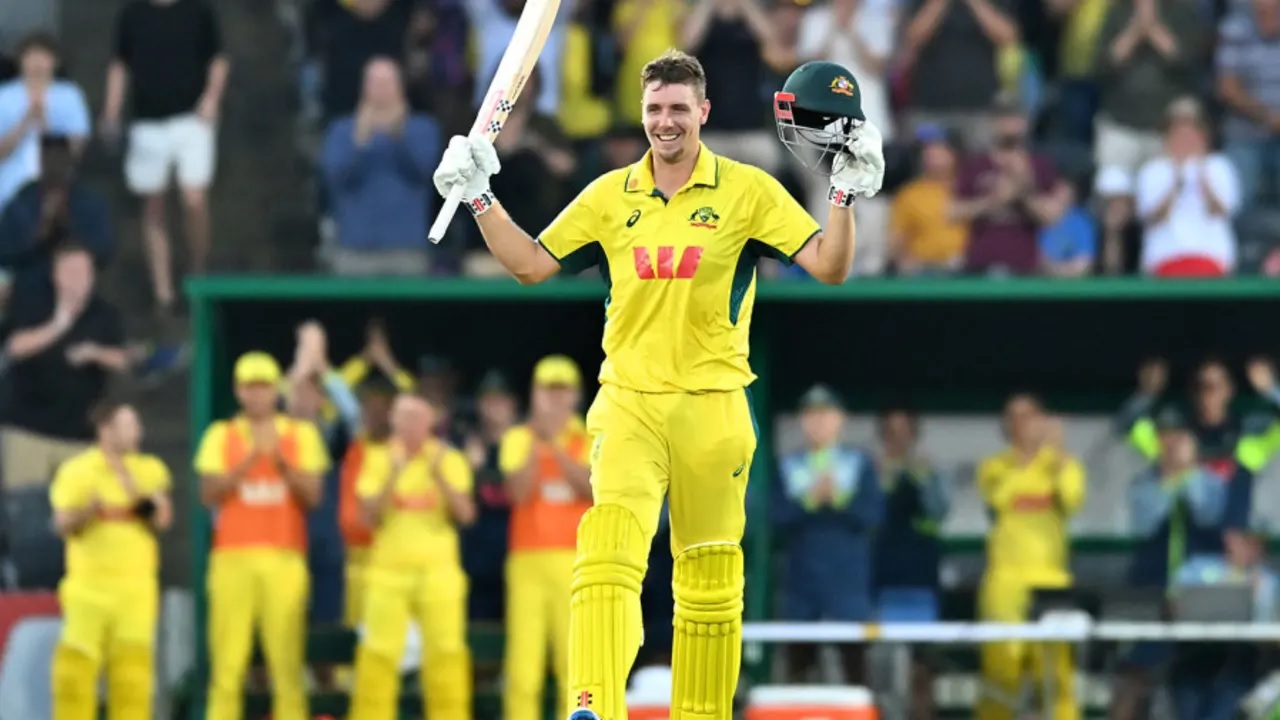
Centuries from Travis Head, Mitchell Marsh and a maiden ODI hundred from Cameron Green, off just 47 balls, took Australia to their second highest ODI total, behind their 434 for 4 against South Africa 19 years ago.
But there was no repeat of that match, as South Africa were bowled out for 155 and slumped to their heaviest defeat by runs by 276 runs to finish the series 2-1 winners. The consolation win meant that Australia’s record of never being whitewashed in an ODI series at home intact and completed their second biggest ODI victory.
While Australia’s seamers found movement under lights to blunt South Africa, the second innings belonged to Cooper Connolly. At 22 years and two days old, he became the youngest Australia to take a five-for in ODIs and the first Australian to do so since March 2023. He also finished with the best figures by an Australian spinner in the format.
All three matches in the series have been won by the team batting first, and all by big margins. In Mackay, it was noticeable how much more the ball did under lights and that difference in conditions prompted Marsh to bat first for the first time in 22 tosses. He would have been even happier with the way Australia responded to his call.
After being bowled out for under 200 in the first two matches of the series, Australia showed they meant business when Marsh and Head shared in Australia’s fourth-highest opening stand of 250. They batted together for 34.1 overs which still left plenty of time for Green to score the second-fastest ODI hundred for Australia after Glenn Maxwell. In the process, Australia also became only the second side in which the top three all scored centuries in an ODI innings.
The other team to have achieved that feat was South Africa against West Indies, a decade ago at altitude in Johannesburg. Australia’s trio of hundreds came on the Queensland coast, on a used but flat pitch, and against a weakened South African attack.
With Kagiso Rabada out of the series with an ankle injury and Lungi Ngidi rested, South Africa lacked discipline upfront and struggled to rein Australia in at any stage. Kwena Maphaka, playing in just his third ODI, gave away 73 runs in six overs, Wiaan Mulder was at his most expensive with 93 runs scored off his seven overs and only Keshav Maharaj conceded at under six runs an over.
Maphaka and Mulder took the new balls against an Australian pair who showed no mercy. When they raced to 41 without loss after four overs, returning captain Temba Bavuma had to introduce spin early. While Maharaj and Aiden Markram’s first overs were boundary-less, the pause in power hitting was only temporary.
Head brought up fifty off 32 balls and at that point had scored twice as many runs as Marsh, and only faced 10 more balls. It looked as though Head would race to a hundred before Marsh reached fifty but the Australian captain got there when he drove Corbin Bosch square off his 50th delivery.
Head’s hundred came off 80 balls, with a single from Muthusamy and his signature helmet-on-bat celebration, fitting of the significance of the moment. Head last scored an international century 25 innings ago in all formats.
The Head-Marsh partnership grew to 200 by the 28th over, and was Australia’s first double-century stand since the 2023 World Cup, when Maxwell went wild in their victory over Afghanistan. Six overs later, their stand reached 250 as Head took 19 runs off Markram. With 150 and beyond in his sights, it seemed Head could do no wrong but he couldn’t clear long-off against Maharaj.
In the over after his dismissal, Marsh reached his hundred, from 105 balls. He was also set for more but top-edged a slog-sweep off Muthusamy and Ryan Rickelton ran from behind the stumps to square leg to take the catch.
Australia promoted Green ahead of Marnus Labuschagne and gave him a licence to thrill. By the time Maphaka was brought back in the 43rd over, Green had his eye in. He brought up fifty off 28 deliveries when he hit Maphaka over midwicket for six, in an over that cost 20. Maphaka’s day got worse when he dropped Carey on 29.
Green then launched a magnificent assault on Muthusamy and sent him for a hat-trick of sixes to enter the 80s having declined a single to retain the strike. Twin sixes off Mulder put him on the brink and then Green reached his hundred with two off Bosch. He finished unbeaten on 118.
Carey iced the cake by reaching his 13th ODI half-century off 37 balls. The third-wicket stand between Green and Carey was worth 164 off 13.3 overs, at a scoring rate of 12.14 and Australia added 126 runs off the last 10 overs.
Faced with a daunting target, South Africa’s start was always going to determine how things went and it was badly. Markram’s struggles outside the off stump remain and he nicked Sean Abbott to second slip in the second over. Rickelton has also had a difficult tour and handed Connolly a catch at midwicket to depart for 11.
In the next over, Bavuma, whose approach was aggressive as he reached 19 off 10 balls, advanced on Abbott, swung and chopped on. By the nine over, Tristan Stubbs was also dismissed, caught at cover off Xavier Bartlett. From 50 for 4, 431 was a world away.
Tony de Zorzi and Dewald Brevis shared in South Africa’s best partnership but de Zorzi played a poor shot and was caught at midwicket when he tried to pull Connolly over the inner ring. Brevis looked the best of the South Africans, especially with his two sixes off Adam Zampa, but holed out to long-off on 49 to give Connolly a second wicket.
His next two came courtesy of spectacular catching by Labuschagne at long-on. He caught Wiaan Mulder low off the turf running in, and Bosch when he dived full length and avoided the boundary rope.
While Connolly had the fielders to thank for his earlier wickets, his fifth came through a clever piece of bowling. He drew Maharaj forward with a flighted ball, beat him as he slogged across the line and Josh Inglis did the rest. Zampa took the final wicket in the 25th over, as South Africa were bowled out with more than half their overs remaining.
Brief scores:
Australia 431 for 2 in 50 overs (Travis Head 142, Cameron Green 118*, Mitchell Marsh 100, Alex Carey 50*; Keshav Maharaj 1-57,Senuran Muthusamy 1-75) beat South Africa 155 in 24.5 overs (Tony de Zorzi 33, Dewald Brevis 49; Xavier Bartlett 2-45, Sean Abott 2-27, Cooper Connolly 5-22) by 276 runs
[Cricinfo]

“We called it ‘moon dust’,” Jeffery Camp, a 61-year-old retired military veteran who lives in Sarasota, Florida, says when describing the terrain in Maidan Shar, Afghanistan, where he served with the United States Army from 2008 to 2009.
The fine particles of dust there would find their way into “your vehicles, your equipment, your lungs”, he says ruefully while describing the searingly dry summers and freezing windy winters in the eastern provincial capital.
Camp is one of the 832,000 US service members deployed to Afghanistan from 2001 to 2021 during what became the longest war in US history.
He joined the Army in 1983, well before the September 11, 2001, attacks on the US, which led to the war in Afghanistan. “Service was a calling, not a reaction to a national crisis,” he tells Al Jazeera.
During 20 years of war, 2,461 US soldiers were killed and at least 20,000 wounded.
“I left both Iraq and Afghanistan with a profound respect for the human cost of war, not just for American service members but for the populations of those countries. War is not clean, and the people who bear the longest burden are rarely the ones who made the decisions,” Camp says.
Tuesday marks 60 days of the US-Israel war on Iran.
Since February 28, US-Israeli attacks on Iran have killed at least 3,375 people, according to Iran’s Ministry of Health.
The US military has confirmed 13 combat-related deaths among its service members across the region, with more than 200 injuries.

Since the 1950s, US-led wars have killed millions of civilians and tens of thousands of military personnel.
According to an analysis by the Cost of War Project at Brown University’s Watson Institute of International and Public Affairs, US-led wars since 2001 have directly caused the deaths of about 940,000 people across Afghanistan, Pakistan, Iraq, Syria, Yemen and other post-9/11 conflict zones.
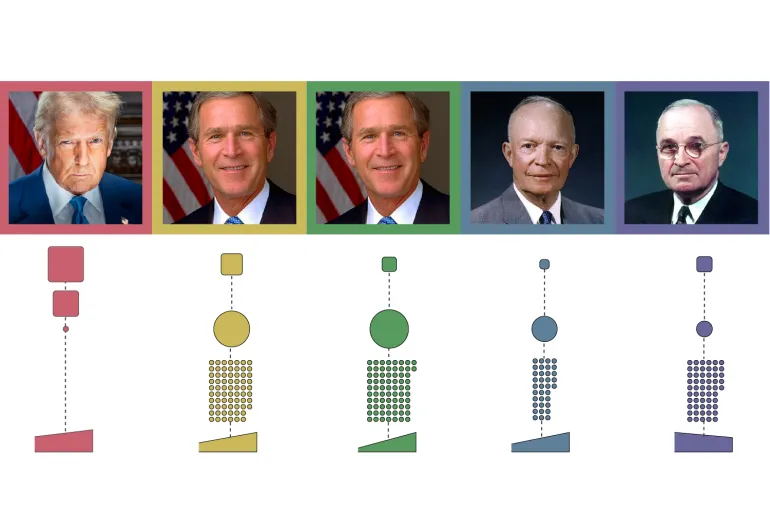
The graphic below breaks down the estimated number of civilians killed for every US soldier in the Korean, Vietnam, Afghanistan and Iraq wars.

Iran war: $11.3bn spent on munitions in first six days
According to the Pentagon, the Trump administration spent $11.3bn during the first six days of the war, with an estimated $1bn subsequently spent on the war every day until the April 8 ceasefire.
According to Mark Cancian, a senior adviser with the Defense and Security Department at the Center for Strategic and International Studies, the $1bn per day figure is “a little high”.
Speaking to Al Jazeera, he says the war “was very expensive in the first few days” because the US used costly long-range munitions, including Tomahawk missiles. They cost $2.5m each, and the US military used hundreds of them.
Cancian calculates that in addition to the $11.3bn spent on munitions, an additional $1.4bn should be added for combat losses and infrastructure damage and a further $26.5m for support costs, bringing the total for the first six days to $12.7bn.
Cancian estimates that after the first week of its air strikes, the US spent “about half a billion dollars a day”, and now, during the ceasefire, that figure is likely “under $100m per day” because the US is not using any munitions.
On a per-day cost basis, the Iran war may be one of the most expensive in recent history.
According to figures from the Costs of War Project, the 20-year Afghanistan war cost an estimated $2.3 trillion, averaging more than $300m per day, while the eight-year Iraq War, which began in 2003, cost an estimated $2 trillion, averaging about $684m per day.

‘Another prolonged war’
Naveed Shah is the political director of Common Defense, a grassroots veteran-led organisation based in Washington, DC, that aims to engage, organise and mobilise veterans.
Shah, who served in Iraq from 2006 to 2010, believes the US must defend its national interests and has a vital role to play in deterring threats, but too often overreaches with open-ended wars of choice that create more problems than they solve.
“The current conflict with Iran is repeating the mistakes that led us to spending 20 years in Iraq and Afghanistan: shaky evidence at best, moving goalposts and dangerous rhetoric that risks drawing us into another prolonged war,” Shah tells Al Jazeera.
“At the same time, while we’re deploying troops overseas, the government is trying to claw back the care we promised for our veterans,” Shah says.
“The true cost of war extends far beyond the battlefield. It echoes for decades in veterans’ bodies and minds and for their families. For the families of the troops who won’t come home, it will be an empty seat at the dinner table and a hole in their heart for eternity,” he says.
According to the Cost of War Project, the US is expected to spend at least $2.2 trillion on obligations for veterans’ healthcare over the next 30 years.
Iran war most unpopular in US history
According to a Reuters/Ipsos poll from April 12, 60 percent of Americans disapprove of US military strikes on Iran. This is up from a 43 percent disapproval rating at the start of the war.
Historically, US wars have mostly enjoyed a “rally around the flag” effect, which causes low disapproval at the outset.
The chart below compares the disapproval rating at the start and end of the five main wars the US has led since the 1950s.

US consumers are paying the price
Marwa Jadoon, 40, from Oklahoma, whose name has been changed to keep her identity concealed, says her out-of-pocket expenses have increased by more than 35 percent over the past couple of months.
“As someone with multiple considerably expensive health conditions, I’m paying more than I’ve ever paid before just to cover only my essential medications and recurring testing. It’s limited my ability to afford additional treatments since healthcare costs are astronomical in the US. I’ve cut costs in groceries and anything outside of essentials,” Jadoon says.
Jadoon feels she’s been shortchanged with the policy shifts that came at the same time she was made redundant, further complicating her life.
“I find it appalling that my tax dollars are funding a war when we have repeatedly been told that we cannot afford universal healthcare. At the end of last year, I lost my job and had to apply for unemployment and Soonercare,” she says, referring to state-covered healthcare.
She explains that unemployment benefits would not even cover her rent.
“How can my tax dollars afford to pay for wars and foreign governments while I can’t even receive Medicaid because they deemed $400 is too much a month? My phone bill alone is $116 a month. My student loan payments are almost $200 a month. I would love to see anyone in the current administration survive on $400 a week with no medical coverage,” Jadoon says.
Another woman in Oklahoma, who also wished to remain anonymous due to her job with the state government, says, “The war in Iran and its funding has made me feel cornered. I feel it at the gas pump, I feel it at the doctor, dentist. I feel it at the bank. I feel it when I’m at the grocery store, thinking how exactly everyone is acting so calm. And it moves me, literally. Emotions carry little power. I’m ready to do something about it. I’ve been stolen from and lied to, and I’ve had enough.
According to the Climate Solutions Lab at the Watson Institute for Public and International Affairs at Brown University, the total consumer burden from the increase in petrol and diesel prices across the US as a result of the war on Iran is estimated at $27.8bn, roughly $200 per household.
The national average price of petrol has increased nearly 40 percent from $2.90 per gallon ($0.76 per litre) before the war to $4.10 per gallon ($1.08 per litre) now.

[Aljazeera]
The detained former Myanmar leader Aung San Suu Kyi has been moved to house arrest, the country’s state media has reported.
The 80-year-old Nobel laureate has been held in detention – probably in a military prison in the capital Nay Pyi Taw – since she was removed from office in a military coup in 2021.
A statement by military leader Min Aung Hlaing, who led the coup, said he had “commuted her remaining sentence to be served at the designated residence”.
Aung San Suu Kyi came to power in 2015 after Myanmar’s then rulers introduced democratic reforms. Before that, she spent decades of military rule as a pro-democracy activist, and was previously held for more than 15 years under house arrest.
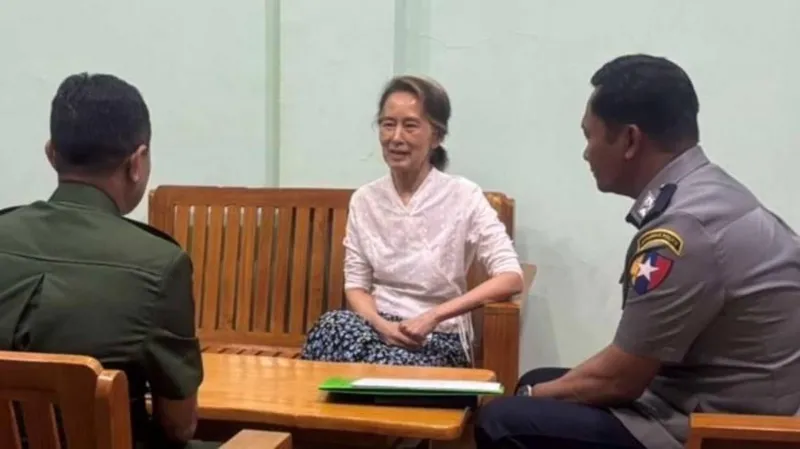
State media broadcast a picture of her sitting with two uniformed personnel.
Her son Kim Aris said he was sceptical about the announcement and that he did not even have proof that she was alive. He said the picture was “meaningless” as it was taken in 2022.
“I hope this is true. I still haven’t seen any real evidence to show that she has been moved,” he told the BBC.
“So, until I’m allowed communication with her, or somebody can independently verify her condition and her whereabouts, then I won’t believe anything.”
Prior to the announcement, nothing was known about her health or living conditions, and Kim Aris said in December he had not heard from her in years.
Her legal team told Reuters they had had no direct notification about her house arrest.
Little has been seen – and nothing heard – from Aung San Suu Kyi since she was arrested on the day the armed forces ousted her elected government more than five years ago.
Her lawyers have not seen her for more than three years; her family has had no contact with her for more than two.
The only image of her seen before Thursday was at a court appearance in May 2021, at the start of a series of trials by the military on charges which have been widely dismissed as fabricated.
Since then, her 33-year sentence has been reduced several times.
Her sudden appearance in state media suggests the military authorities may be preparing for further changes in her status – possibly her partial or complete release.
The coup leader Min Aung Hlaing is eager to end his regime’s international isolation, and appears more confident after a string of battlefield wins against armed opposition groups.
The military junta also held an election earlier this year restoring a notionally democratic government, but which leaves the same military leaders in charge.
“The military regime that rules Myanmar is very much on a [public relations] offensive at the moment,” Sean Turnell, the former economic adviser to Aung San Suu Kyi, told the BBC’s Newsday programme.
He added that Myanmar’s military was “trying to convince the world that it’s a legitimate government”, and the reports of Aung San Suu Kyi’s relocation to house arrest were “part and parcel of that”.
While Turnell said he was “really hopeful” the reports were true, he has “got a lot of doubts”.
Turnell, an Australian economist, was detained alongside Myanmar’s democratically elected leaders for more than a year after the 2021 military coup.
During that time, he was kept in the same prison as Aung San Suu Kyi, where conditions were “medieval” and “just really really awful”, Turnell recalled, adding that the food and medical care were “bad” and the cells were “open to the elements”.
With Aung San Suu Kyi now 80 years old, those are “terrible conditions for her”, Turnell said.
During her earlier confinement, Aung San Suu Kyi’s dignified, non-violent resistance won her admirers across Myanmar and around the world, and she famously made speeches to supporters from her family home. She won the Nobel Peace Prize in 1991.
But her decision to lead Myanmar’s defence against charges of genocide at the International Court of Justice over the military’s atrocities against Muslim Rohingyas in 2017 badly tarnished her saint-like international image.
Despite her years of incarceration away from the public eye, Aung San Suu Kyi’s standing among the Burmese people remains “extremely high”, according to Turnell.
“She has a charisma and connection with the Burmese people that is almost spiritual. And I don’t think that’s been diminished at all,” he said, adding that people in the country are “just hoping that she’ll be released”.
[BBC]
Latest News
“Let’s move forward together in unity to build a country where all labour is valued, rights are protected, and equality prevails” -PM
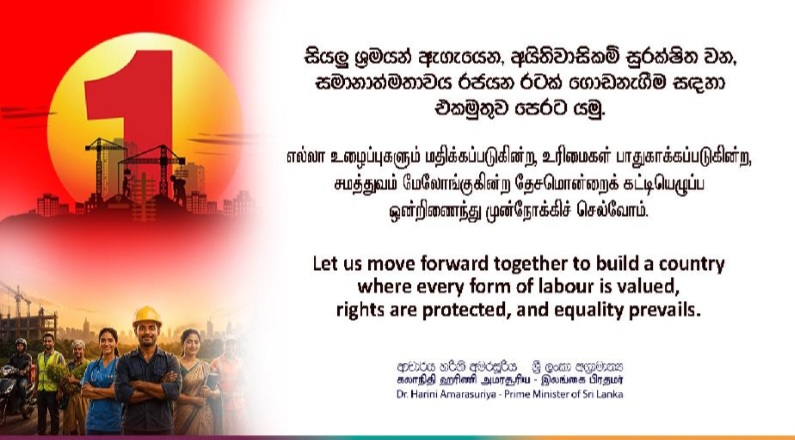
Prime Minister Dr Harini Amarasuriya in her May Day message called upon the working people in Sri Lanka to move forward together in unity to build a country where all labour is valued, rights are protected, and equality prevails.
The full text of the PM’s message:
The history of the Sri Lankan labour movement is a remarkable journey, shaped over decades by the blood, sweat, and sacrifices made in the pursuit of rights, justice, and dignity.
Beginning with the printers’ strike of 1893, the working people of this country emerged as an organised force. Through the trade union movement led by A. E. Goonesinha and the emergence of the Lanka Sama Samaja Party, the voice of labour gained political strength. The Railway Workers’ Strike of 1923 and the public service strike of 1947 reaffirmed that the true ’driving force’ behind the country’s economic and social transformation was its working people. I respectfully acknowledge the invaluable contributions of workers in the plantation sector, ports, railways, and across both the public and private sectors, whose dedication laid the foundation for many of the labour rights we benefit from today.
As we commemorate International Workers’ Day with dignity once again, we pay tribute to all working people across the world, including the heroic workers who sacrificed their lives in the struggle for an eight-hour workday in Chicago in 1886. This year’s May Day holds special significance as it is being celebrated under a government built through the power of the people, in honour of the entire working community of Sri Lanka.
Granting due respect to labour and safeguarding the rights of all working people are core policy commitments of our government. Accordingly, we remain dedicated to creating a fair and safe working environment by expanding existing services and implementing new programmes aimed at improving the living standards of working people.
Ensuring fair and equal access for all citizens is a fundamental objective of the government. Following that, it is our responsibility to create an environment in which everyone can lead a dignified professional life. Establishing a national social protection system that recognises unpaid labour and guarantees social security for unpaid labours is among the foremost priorities of our government.
On this May Day, we must reaffirm the importance of moving forward together in unity to build a country where all labour is valued, rights are protected, and equality prevails. With the strength and dedication of all working people, may we soon achieve the vision we all share: “A Thriving Nation – A Beautiful Life

The cost of 76 years of US wars, from Korea to Iran

Myanmar ex-leader Aung San Suu Kyi moved to house arrest, military says

“Let’s move forward together in unity to build a country where all labour is valued, rights are protected, and equality prevails” -PM

Violence in Australian town after arrest of man over girl’s murder

Holder, Rashid and Arshad give Gujarat Titans NRR-boosting win

Showers or thundershowers will occur in most parts of the island after 1.00 pm.

‘Dates have the highest sugar content to fight Coronavirus’

Sunday Island 27 December – Headlines

#SundayIsland 17th December – Headlines

Sunday Island – 28th March

Sunday Island Headlines – 21 March

Sunday Island – 21st February – Headlines
-
 News3 days ago
Treasury chief’s citizenship details sought from Australia
-

 News5 days ago
BIA drug bust: 25 monks including three masterminds arrested
-

 Business6 days ago
Nestlé Lanka Announces Change in Leadership
-
 News6 days ago
Hackers steal $3.2 Mn from Finance Ministry
-

 News5 days ago
Banks alert customers to phishing attacks
-

 News2 days ago
Rooftop Solar at Crossroads as Sri Lanka Shifts to Distributed Energy Future
-
 News4 days ago
Govt. assures UN of readiness to introduce ‘vetting process’ for troops on overseas missions
-

 Business4 days ago
ADB-backed grid upgrade tender signals next phase of Sri Lanka’s energy transition