
Editorial
Raising political literacy among the youth


Saturday 9th August, 2025
Newly elected governments in Sri Lanka embark on various ambitious projects but do not care to follow through on most of them. The incumbent NPP administration has undertaken to introduce educational reforms while struggling to put the economy back on an even keel. Its ‘Clean Sri Lanka’ programme is already underway, but not much is heard about it these days. Another government project is reportedly on the cards. Deputy Minister of Youth Affairs Eranga Gunasekera has said the government is planning to establish an academy to educate the youth politically and thereby increase their political literacy.
There has been no universally accepted definition of political literacy, which is basically understood as people’s knowledge of their country’s governance and politics, enabling them to participate in the democratic process responsibly and effectively and make informed decisions about their society.
We thought Sri Lankan politicians and political parties considered political literacy of the masses as welcome as a toothache, for a politically literate electorate does not take blind leaps in elections, believing in political rhetoric and promises. Most Sri Lankans act the way a drunkard plunges into an unlit swimming pool at night, not knowing whether it is brimful or empty. In Sri Lanka, such leaps usually end in disaster, as evident from what followed the 2019/20 elections. Last year, Sri Lankans took another blind leap, and the results remain to be seen.
Governments in power usually launch programmes targeting the youth with the aim of mobilising their support to win elections on the pretext of helping hone their skills and enhance their employability. This fact is borne out by the ongoing political battle between the government and the Opposition over the election of office-bearers of youth associations under the National Youth Services Council. The ruling NPP is drawing heavy flak for politicising these organisations. However, it has countered the allegations against it by claiming that the youth associations were never devoid of politics, and it is only trying to rid them of unsavoury elements affiliated to some Opposition parties.
When a government led by a cadre-based political party that staged two bloody insurrections, leaving tens of thousands of indoctrinated young men and women dead, unveils a plan to set up an academy to increase political literacy among the youth, one naturally becomes concerned. The JVP, which leads the ruling NPP coalition, used to hold five classes for new recruits. All political parties conduct various programmes purportedly to educate their young members politically, but the latter’s political literacy remains woefully low, as can be seen from their behaviour. They easily fall for the wiles of crafty politicians who promise them the moon and stars during election campaigns.
A defining feature of a politically unenlightened society is its never-ending search for heroes and messiahs. Brecht has rightly said in The Life of Galileo, “Unhappy is the land that needs a hero.” A nation should be strong and just enough not to have to rely on extraordinary individuals to save it. This may explain why Sri Lanka has become an unhappy land, which is perennially looking for heroes and voting bogus messiahs into office.
Raising political literacy among the youth, in our book, is a task that should not be left to any government or self-proclaimed political pundits with hidden agenda. It is a process that should occur naturally like the acquisition of a language early in an individual’s life. What others, such as political parties, schools, and universities, should do is to facilitate its development. The government in power and the Opposition do not have to do anything to enhance the political literacy among the youth other than creating a healthy political environment.
Perhaps, the biggest task before the government and the Opposition at present is not raising political literacy among the youth but stemming the steady rise of anti-politics, which poses a serious threat to democracy. The youth are becoming increasingly disillusioned with the mainstream political institutions and traditions and antipathetic towards politicians. Corruption, abuse of power, and the deterioration of political institutions have contributed to this situation.


Saturday 5th September, 2026
The Commission to Investigate Allegations of Bribery or Corruption (CIABOC) yesterday arrested National Organiser of the SLPP and MP Namal Rajapaksa in connection with a probe into an alleged Rs.100 million bribe linked to an airbus deal. It also took into custody former Minister Johnston Fernando over an investigation into an allegation that he arbitrarily cancelled a properly awarded contract and procured chairs from a company of his choice for the Polgolla Mahinda Rajapaksa Auditorium thereby causing a loss of Rs. 7.4 million to the state. Rajapaksa was remanded until 18 September.
The Opposition claims that its prominent members who are critical of the JVP-NPP government have become victims of a political witch-hunt, and legal action against them is aimed at silencing them. This claim is not entirely false, but those who are trying to portray themselves as victims failed to be above suspicion while in power.
There is no gainsaying that all those who have caused losses to the state coffers through corrupt deals, etc., must be brought to justice. Several former ministers have been imprisoned for misusing state funds. Opinion may be divided on the severity of the sentences awarded to them; the principle of proportionality in criminal law requires that punishment be commensurate with the seriousness of the offence and the offender’s degree of culpability, and penalties should not be excessively harsh or unduly lenient. However, the general consensus is that politicians and public officials who enrich themselves and/or further the interests of their parties by misusing state funds must be made to face the full force of the law. So, punishment meted out to corrupt politicians and their lackeys gladden the hearts of ordinary people.
Most politicians market their humble beginnings, as it were, during election campaigns to endear themselves to the public while living the life of Riley. Curiously, the SLPP politicians who asked for compensation for their properties torched by violent protesters during Aragalaya, were not required to explain how they had acquired those assets. The SLPP government generously paid colossal amounts of state funds as compensation.
Public sympathy is not with the politicians who are protesting against legal action against them over bribery, corruption and other such transgressions, and what they are facing now is generally considered their comeuppance. However, the government, which claims that everyone is equal before the law at present, will have to explain why the ruling party politicians who have committed the same offences as their Opposition counterparts are treated differently.
One may recall that Kumara Jayakody while serving as a Cabinet Minister in the current government, faced a very serious allegation that in 2016 as the Manager of the Procurement and Import Division of the Ceylon Fertiliser Company, he had caused a loss of over Rs. 8. 8 million to the state by influencing a procurement process related to the refurbishment of a warehouse complex for the benefit of a private company. The offences he and former Minister Fernando are alleged to have committed are similar in many respects. But Jayakody was not arrested. He was allowed to appear before the Colombo High Court, where he was indicted and given bail.
How can the government claim that everyone is equal before the law? Aren’t the ruling party politicians and their associates ‘more equal than others’ like the Pigs in Orwell’s Animal Farm?
Friday 4th September, 2026
Doomed are the nations that look on while rulers seek to perpetuate their grip on power through undemocratic means. John Stuart Mill famously observed in 1867: “Bad men need nothing more to compass their ends, than that good men should look on and do nothing.”
Adolf Hitler established an authoritarian rule in Germany by throttling democracy, which enabled him to capture power, and the entire world suffered as a result. His rise to power followed the Nazi Party’s victory at the July 1932 election, albeit without an absolute majority. After becoming the Chancellor, Hitler did not overthrow the Constitution. Instead, he systematically destroyed it from within by exploiting its emergency provisions, suspending its safeguards, manipulating the legislature and the judiciary and obtaining legal authority through legal amendments, etc., to introduce laws in defiance of it.
Today’s comment however is not about the Third Reich or what Hitler did to the Weimar Constitution. Instead, it is about Zimbabwe, a multi-party democracy that descended into dictatorship, and how that country’s Constitution was manipulated to undermine judicial independence.
In 2021, President Emmerson Mnangagwa’s government hurriedly secured the passage of a constitutional amendment Bill to raise the retirement age of judges, provoking a debate over whether it was proper to amend the Constitution to increase judicial tenure just in time to keep an incumbent Chief Justice in office. That amendment was obviously not part of a wider judicial reform initiative; it immediately opened the way for the then Chief Justice Luke Malaba to remain in office for another five years.
President Mnangagwa and his government craftily camouflaged their real intention, which was to retain Malaba, who was loyal to them; they undertook to raise the mandatory retirement age of the Chief Justice, Deputy Chief Justice and Judges of the Constitutional Court and the Supreme Court from 70 to 75. Malaba’s 70th birthday was only eight days away when the controversial constitutional amendment was passed. The government claimed that Parliament had lawfully changed the retirement age of judges, thereby authorising the continuation of the incumbent senior judges. But that regime could not dupe its critics and the international community, who pointed out that the Constitution did not allow any amendment to be introduced to the term-limit provision, benefiting the serving judges. They also argued that the amendment had been crafted and timed specifically to benefit Chief Justice Malaba.
Legal challenges and arguments were mainly focused on whether constitutional safeguards intended to prevent politicians from manipulating judicial tenure could be circumvented by a mere constitutional amendment without a referendum. Two applications challenging the position of the Mnangagwa government were filed before the High Court, and on the day Malaba turned 70, a three-judge High Court bench ruled that he had ceased to be the Chief Justice as well as a judge because increasing the retirement age effectively extended judicial tenure and therefore could not be applied to the serving judges without approval at a national referendum. The High Court ruled that it would amount to a violation of constitutional protections to allow an incumbent judge to benefit from the retirement age revision. The Mnangagwa regime tore into the High Court, condemning the bold judgement and appealed against it.
The appeal was lodged with Zimbabwe’s Constitutional Court, whose judges themselves had been cited in the original litigation as they were among the beneficiaries of the constitutional amendment at issue. They had no qualms about acting in contravention of the much-cherished legal maxim, nemo judex in causa sua, which holds that no person should adjudicate a matter in which he or she has a personal interest. The Constitutional Court overturned the High Court judgement, and Malaba remained in office.
Interestingly, when the revision of the judges’ retirement age was first mooted, Malaba was in the centre of a controversy over his handling of the Opposition’s legal challenge to the 2018 presidential election results. In the same year, the Constitutional Court, with Malaba presiding, dismissed the Opposition’s challenge to Mnangagwa’s election and confirmed Mnangagwa as President. Ironically, three years later, Malaba’s tenure was extended by a constitutional amendment moved under Mnangagwa’s presidency. A quid pro quo?
Malaba’s continuation in office was widely seen as an indication of the judiciary having become an appendage of the Executive. After his controversial extension of tenure, Malaba acted in a manner that was widely seen as partial to the Executive, and the constitutional amendment that enabled him to remain in office came to be dubbed the “Malaba Clause”. He retired a few months ago.
The Malaba affair may not have caused Zimbabwe to face a new round of sanctions, but it resulted in much international opprobrium, with the UN expressing serious concerns about the controversial constitutional amendment that undermined judicial independence.
One can only hope that no other country will suffer the same fate as Zimbabwe, where the separation of powers has been eroded and constitutional and judicial processes are manipulated for political ends.


Thursday 3rd September, 2026
The price of a kilo of wheat flour has recently been increased by Rs. 17, and the All Ceylon Bakery Owners’ Association has lost no time in jacking up the price of a 450g loaf of bread by Rs. 10. Loaves of bread weighing 450g are as rare as hen’s teeth in this country. But supposing the average weight of a loaf of bread is 450g, as claimed by bakers, and an equal amount of wheat flour is used to produce it, the actual cost increase resulting from the wheat flour price hike would be Rs. 7.65 per loaf, and not Rs. 10. However, it is public knowledge that producing a 450g loaf does not require an equivalent amount of wheat flour, since water and other ingredients also go into making bread. If this fact is taken into account, the cost increase attributable to the flour price hike should be even lower. Thus, the recent flour price hike has been a boon for bakers.
The Consumer Affairs Authority (CAA) is apparently unconcerned about how bakers do their cost calculations and determine bread prices. It also takes no action against those who sell bread below the stipulated weight. Consumers have to grin and bear it.
The government should direct the CAA to make a decisive intervention to prevent the exploitation of the public struggling to keep their heads above water, with the cost of living soaring. That is the least it can do to mitigate the impact of the double whammy of increasing cost of living and decreasing real incomes.
The government must not lose sight of the fact that Sri Lanka ranks 120th out of 130 countries in the latest Visual Capitalist global minimum wage comparison, based on data from the International Labour Organisation. The report puts Sri Lanka’s monthly minimum wage, measured in purchasing-power terms, at the equivalent of USD 200, placing it among the lowest in the world. Sri Lanka has also ranked last among the South Asian countries covered by the index. Pakistan has ranked 68th with USD 570, followed by Nepal at 78th with USD 490, Bangladesh at 89th with USD 379 and India at 111th with USD 233.
Bakers are not alone in exploiting the public. Eatery owners also fleece consumers mercilessly. They have also made the most of the recent wheat flour price hike, increasing the prices of a range of products, including hoppers, kottu roti and string hoppers, by disproportionate amounts. If the petrol price goes up by Rs. 30 per litre, trishaw operators jack up fare by Rs. 10 per km as if a tuk-tuk did only 3 km to a litre of petrol.
The government is no better. It continues to impose the so-called loss-recovery levy of Rs. 50 on a litre of fuel, claiming that the Ceylon Petroleum Corporation’s legacy debt has to be recovered. But the Petroleum Dealers’ Association is of the view that the CPC’s losses have been fully recovered. Its spokesman has told the media that there is no justification whatsoever for the continuation of the levy, and urged the government to remove it immediately and provide some relief to consumers. The government has not countered that claim.
Strangely, the Opposition remains silent on the exploitation of consumers. It has not demanded an explanation from the government regarding the petroleum dealers’ claim that the CPC’s losses have been fully recovered and the loss-recovery levy should be done away with. It has also refrained from challenging the padded cost calculations used by bakers, eatery owners, taxi operators and others to justify higher prices and fares. It lacks the courage to criticise private bus operators who have become a law unto themselves, even opposing the metro bus service, which has stood commuters in good stead.
Every nation is said to get the government it deserves. Apparently, the same goes for the Opposition in this country. Both the self-proclaimed Marxist government and its ‘social democratic’ rivals would do well to learn from India, where ‘Cockroaches’ have shaken the Modi administration and the Congress-led Opposition.

Malaysia declares emergency in Sarawak as haze from Indonesia worsens

UAE keep semi-final hopes alive after convincing win over Indonesia

Sun directly overhead Moratuwa, Kesbewa, Handapangoda, Idalgashinna, Yudhaganawa, Kotiyagala and Panama about 12.08 noon today (05)

Showers above 75 mm are likely at some places in the Uva, Central and Eastern provinces and in Polonnaruwa and Mullaittivu districts after 2.00 p.m

Namal remanded until Sept. 18 over Airbus deal investigation

Dengue cases surpass 96,000 this year

‘Dates have the highest sugar content to fight Coronavirus’

Sunday Island 27 December – Headlines

#SundayIsland 17th December – Headlines

Sunday Island – 28th March

Sunday Island Headlines – 21 March

Sunday Island – 21st February – Headlines
-

 Features6 days ago
“Wrap Me Up in My Blazer”— A Gentlemanly Bradby Reminiscence
-
 Features5 days ago
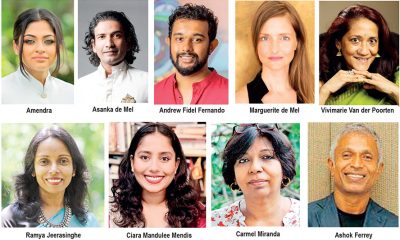
When Sri Lankan stories find their own voice
-
 Features6 days ago
JVP/NPP government as seen from outside by Lionel Bopage now domiciled in Australia
-
 News5 days ago
BASL takes exception to Justice Ganepola being denied a place in SC
-
 Features6 days ago
Prof. Savitri Goonesekere: What has she done?
-
 News2 days ago
Denied of promotion to SC despite vacancies, justice Gurusinghe retires
-
 Latest News3 days ago
Grade 5 scholarship exam results released
-

 Features6 days ago
World Trade Politics: Canada rebuffs Trump’s tariff blackmail