
News
ICJ calls for international probe into Chemmani mass grave with victim focus

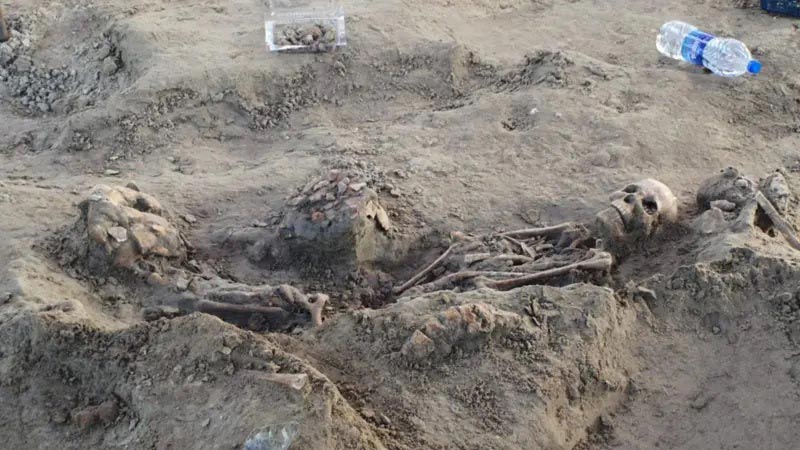
As of 27 July 2025, 101 skeletal remains, including those of children and infants, had been recovered at Chemmani-Siththupaththi. The ICJ considers that the excavation process is a necessary, initial step toward truth and accountability, and calls on the Government of Sri Lanka to ensure that all exhumation and investigative processes be conducted in full compliance with international human rights law and standards—such as the Revised United Nations Manual on the Effective Prevention and Investigation of Extra-legal, Arbitrary and Summary Executions (the Minnesota Protocol on the Investigation of Potentially Unlawful Death)—including with respect to investigative practice and forensic science and the rights and dignity of the dead and their families.
“We must remember that behind every set of remains lies a family that has endured unimaginable suffering. These forensic investigations must be conducted with the utmost respect for human dignity and with the full participation of families. International oversight is required to ensure that these processes meet the highest professional and legal standards that the gravity of these crimes warrants”, said Mandira Sharma, Senior International Legal Adviser of the ICJ.
“The Chemmani exhumations represent a critical juncture for Sri Lanka’s transitional justice process”, she added.
The Chemmani mass grave site came to national and international attention in 1998 following the confession of a Sri Lankan soldier implicated in the rape and murder of schoolgirl Krishanthy Kumaraswamy. It has since remained a potent and painful symbol of Sri Lanka’s long-standing legacy of impunity for grave human rights violations, including enforced disappearances. The renewed discovery of human remains almost three decades later at Chemmani-Siththupaththi in February 2025 highlights the continuing urgency of credible, transparent, rights-compliant and victim-centred investigations that are capable of leading to truth and accountability.
Sri Lanka has one of the highest numbers of cases of unresolved enforced disappearances world-wide, with estimates ranging between 60,000 and 100,000 individual cases, arising mostly from the armed conflict between the Sri Lankan Government and the Liberation Tigers of Tamil Eelam (LTTE) between 1983 and 2009. Following the end of the armed conflict, the Government established several commissions mandated to address post-conflict concerns, including the Lessons Learnt and Reconciliation Commission (LLRC), which largely prioritized reconciliation while providing a limited focus on accountability. Despite repeated appeals from families and international actors, the rights to truth, access to justice and effective remedies and reparation have largely been denied to victims and their families.
In 2015, Sri Lanka supported a resolution at the UN highest human rights body, the Human Rights Council (HRC), that called for the establishment of transitional justice measures, including a truth commission and a judicial mechanism with international participation. However, these commitments have remained largely unfulfilled.
The Office on Missing Persons (OMP), established in 2016 to investigate cases of enforced disappearance, was initially seen as a positive step. Yet, the institution has long suffered from politicization, limited independence, and a lack of public trust. Its failure to take meaningful action, let alone produce credible investigative outcomes over the years, has undermined its legitimacy and effectiveness. While the OMP is currently observing the excavation at Chemmani, now more than ever, the institution should assert its independence, actively engage with victims and their legal representatives, and operate in line with international standards on truth-seeking and accountability.
Given the longstanding failure of domestic institutions to deliver justice, since 2012 the UN Human Rights Council has through multiple resolutions mandated the Office of the UN High Commissioner for Human Rights (OHCHR) to monitor the situation, preserve evidence, and support accountability efforts, particularly through the Sri Lanka Accountability Project under Resolution 46/1. The ICJ considers that the ongoing exhumations at Chemmani renders the need for sustained international oversight even more urgent.
The Chemmani exhumations must not be a mere forensic exercise, but an example of full compliance on the part of the authorities with Sri Lanka’s legal obligations under international law to investigate enforced disappearances and other crimes, identify victims, prosecute perpetrators when the evidence so warrants, and to provide effective remedies to the victims.
While exhumation and forensic examination of remains are essential first steps toward identification and accountability, Sri Lanka lacks a specialized national legal and institutional framework for the investigation of mass graves and enforced disappearances. Past investigations, including previous ones at Chemmani (early 2000s), Mannar (2018) and other mass grave sites, have failed to ascertain the truth, let alone deliver justice, with judicial processes either stalled or suppressed.
The ICJ supports the urgent call by families of the disappeared and local human rights groups for international oversight and technical expertise. The deployment of independent international forensic experts and human rights observers, such as those from the OHCHR and the International Committee of the Red Cross (ICRC); transparent and timely updates to families and the public; and protection of the chain of custody of evidence to enable future criminal accountability, are all required.
Sri Lanka is a State Party to the International Covenant on Civil and Political Rights (ICCPR), which, among other things, requires the State to protect the right to life (Article 6) and ensure an effective remedy for human rights violations (Article 2). Sri Lanka has ratified the International Convention for the Protection of All Persons from Enforced Disappearance (ICPPED) and adopted the International Convention for the Protection of All Persons from Enforced Disappearance Act, No. 5 of 2018. However, this legislation has been wholly ineffective in practice, with no successful prosecutions, no effective investigations, and no detailed procedures to be followed in the conduct of exhumations.
International instruments and practices underscore that the investigation at Chemmani must not only aim to identify remains, but also to uncover the full chain of responsibility for the underlying crimes, uphold the rights of victims and their families, and preserve the grave site in accordance with both evidentiary and human rights standards.
The ICJ welcomes that the families of the disappeared are represented by legal counsel during the excavation process. However, effective legal representation must be part of a broader framework that guarantees victims’ rights throughout the investigation, including access to information, participation in decision-making, and psychosocial and protective support. International human rights law, as affirmed by the UN Human Rights Committee, requires that families be enabled to contribute evidence, propose lines of inquiry, and receive updates during all stages of the investigation.
At a time when the UN Human Rights Council is soon to decide on the prospect of continued international scrutiny over grave human rights violations of the past in the country, the credibility of Sri Lanka’s commitments to address the legacy of such violations through transitional justice mechanisms rests heavily on how it responds to Chemmani.
The victims and their families deserve nothing less than truth, justice and effective remedies, including guarantees of non-repetition. Proper investigation and accountability in this case could become a model for investigating other mass grave sites. However, this will only be possible if there is genuine political will, adequate resources, and a victim-centred approach guided by international standards. In light of this, the ICJ calls upon the Government of Sri Lanka to:
Fully comply with international standards, including the Minnesota Protocol, in investigating the Chemmani mass grave.
Engage independent international forensic experts and human rights observers to ensure the independence, quality and credibility of the investigations.
Provide psychosocial, legal, and protective support to families of the disappeared, enabling their meaningful participation throughout the process.
Preserve and rigorously document all evidence to support future efforts toward criminal accountability.
Fully implement Sri Lanka’s 2018 law on enforced disappearances and provide for clear prosecution guidelines and victim-centred procedures.
Establish an independent Special Office to investigate and prosecute serious crimes by State officials, including enforced disappearances, with adequate resources, expertise, and international support.
Publicly disclose findings from all past and present mass grave investigations, promoting transparency and truth.
Additionally, the ICJ urges the UN Human Rights Council to:
Renew its resolution on Sri Lanka at its forthcoming 60th session in September-October 2025, reflecting the latest developments, such as the exhumations at Chemmani.
Extend the mandates for OHCHR monitoring and the Sri Lanka Accountability Project, in recognition of ongoing impunity and the necessity of international oversight consistent with Sri Lanka’s international law obligations.



The Ministry of Industries and Entrepreneurship Development has recommended the establishment of Sri Lankan Standards, i.e. the import testing methodology for imported tires used for passenger cars and pneumatic tires for three-wheelers with the aim of ensuring a fair competitive environment for local
manufactures and ensuring consumer safety and security.
Taking into the said recommendations, “Import and Export (control regulations N0.08 of the 2026)” has been enacted to amend the existing regulations by means of the Extraordinary Gazette Notification No. 2508/27 dated 2026-10-01, prescribing Sri Lanka standard 1212 for the import of passenger types (HS Code 4011.10.90) and Sri Lanka standard 1347 for the import of
pneumatic tires for three – wheeled vehicles (HS Code 4011.90.10).
Accordingly, the Cabinet of Ministers has approved the resolution furnished by the President in his capacity as the Minister of Finance, Planning, and Economic Development to submit the aforementioned regulations to Parliament for approval.
Approval of the Cabinet of Ministers was granted at their meeting held on 02.06.2025 to introduce a new act to promote and providing legal provisions for facilitating the Public Private Joint Enterprises within Sri Lanka as well as the establishment of the National Agency for Public Private Partnership Joint Enterprises.
Accordingly, the Legal Draftsman has formulated the relevant draft bill and the Attorney General has given his clearance to the said draft bill.
The Cabinet of Ministers approved the resolution furnished by the President in his capacity as the Minister of Finance, Planning and Economic Development to publish the said
draft bill in the government gazette notification and thereby submit it to the Parliament for its concurrence.
Regulation, development and control of indigenous medical sector in Sri Lanka comprised of Ayurvedha, Sidhdha, Unani, Local Therapies are carried out under the provisions of Ayurvedha Act No. 31 of 1961.
Although amendments were made to the act from time to time as per the requirements, the necessity of further amending the Ayurvedha Act has been identified to enable efficiently maintaining all activities of local medical field productively, further formalizing the regulation of the sector, taking actions to providing licenses applicable to export of local medicines, and achieving the progress and sustainable development goals in the local medical sector.
Based on the said factors, the Cabinet of Ministers granted approval to the resolution furnished by the Minister of Health and Mass Media to direct the Legal Draftsman to formulate a draft bill to amend the Ayurvedha Act No. 31 of 1961.

Import and Export (Control) Regulations No. 08 of 2026
Draft Bill of the Public Private Partnership Enterprises Act to be gazzetted
Amendment of the Ayurvedha Act No. 31 of 1961

Cabinet nod to amend the Sri Lanka Development Administration Institute Act No. 9 of 1982
Establishment of the National Higher Performance Centre
State patronage for the cremation ceremony of the late deputy prelate (Anu Nayaka Thero) of the Sri Laka Ramangya Maha Nikaya, Gatambe Rajopawanramadhipatha, Siri Chandawimala Wanshalankara, Chandrakeerthi Sri Amarawansha, Sadhdharmawageeshwara, Shasanashobhanna Most Venerable Keppetiyagoda Siriwimalabhidhana Thero

‘Dates have the highest sugar content to fight Coronavirus’

Sunday Island 27 December – Headlines

#SundayIsland 17th December – Headlines

Sunday Island – 28th March

Sunday Island Headlines – 21 March

Sunday Island – 21st February – Headlines
-

 Features3 days ago
Kotahena:A Small Enclave, An Extraordinary Legacy
-

 News7 days ago
Sri Lanka, India caught in US-Iran ship crisis
-

 News4 days ago
Asgiri Mahanayake calls for immediate release of Gnanasara Thera
-

 News3 days ago
Record 1,600 students take Russian Classical Ballet examination in Sri Lanka
-
 News6 days ago
AC President recuses himself from hearing prison attire case pertaining to Gnanasara Thera
-

 Latest News7 days ago
Heavy showers above 100 mm are likely at some places in the Western, Sabaragamuwa, Southern, Central, and North-western provinces and in Anuradhapura district.
-
 News5 days ago
Naval officer testifies Yoshitha received Rs. 5.15 mn in salaries during SLN service
-

 News3 days ago
Karannagoda pushed for £24,536 for Yoshitha’s UK training, Court told