
Latest News
Trump’s global tariffs ‘victory’ may come at a high price

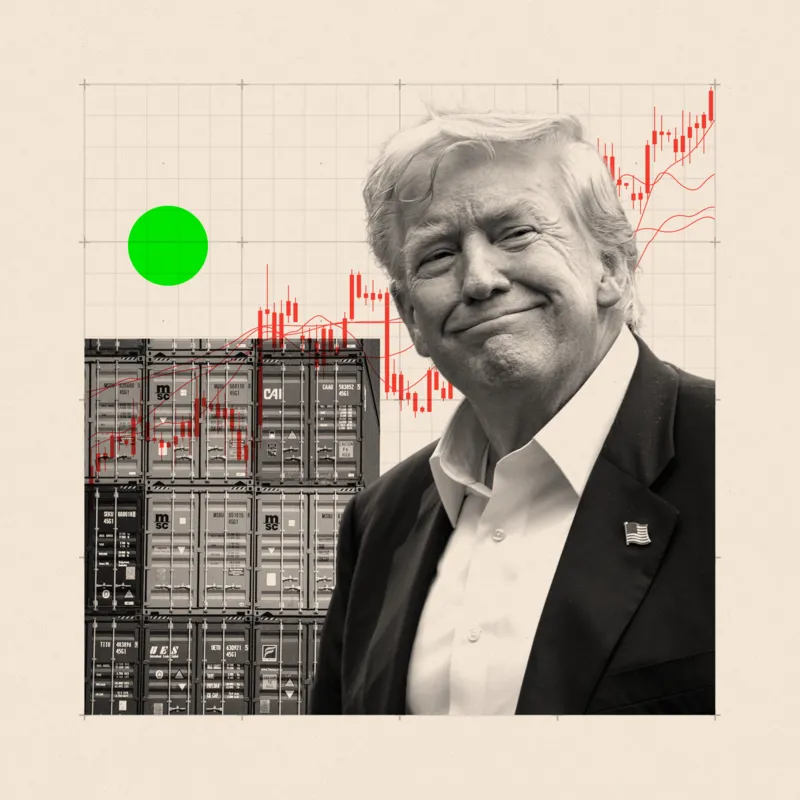
In April Donald Trump stunned the world by announcing sweeping new import tariffs – only to put most on hold amid the resulting global financial panic.
Four months later, the US president is touting what he claims are a series of victories, having unveiled a handful of deals with trading partners and unilaterally imposed tariffs on others, all without the kind of massive disruptions to the financial markets that his spring attempt triggered.
At least, so far.
Having worked to reorder America’s place in the global economy, Trump is now promising that the US will reap the benefits of new revenue, rekindle domestic manufacturing, and generate hundreds of billions of dollars in foreign investment and purchases.
Whether that turns out to be the case – and whether these actions will have negative consequences – is still very much in doubt.
What is clear so far, however, is that a tide that was gently turning on free trade, even ahead of Trump’s second term, has become a wave crashing across the globe. And while it is reshaping the economic landscape, it hasn’t left the kind of wreckage in its wake that some might have predicted – though of course there is often a lag before impact is fully seen.
What’s more, for many countries, this has all served as a wake up call – a need to remain alive to fresh alliances.
And so, whilst the short term result might be – as Trump sees it – a victory, the impact on his overarching goals is far less certain. As are the long-term repercussions, which could well pan out rather differently for Trump – or the America he leaves behind after his current term.
For all the wrong reasons, 1 August had been ringed on international policymakers’ calendars. Agree new trading terms with the US by then, they’d been warned – or face potentially ruinous tariffs.
While White House trade adviser Peter Navarro predicted “90 deals in 90 days” and Trump offered an optimistic outlook on reaching agreements, the deadline always appeared to be a tall order. And it was.
By the time the end of July rolled around, Trump had only announced about a dozen trade deals – some no more than a page or two long, without the kind of detailed provisions standard in past negotiations.
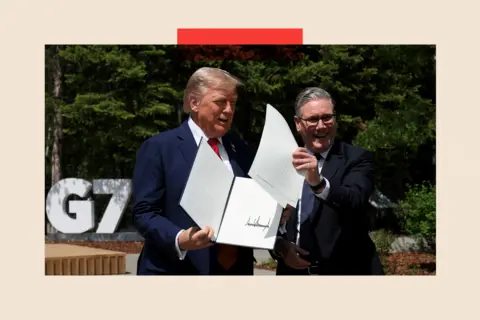
The UK was first off the blocks, perhaps inevitably. Trump’s biggest bugbear is, after all, America’s trade deficit, and trade is in broad balance when it comes to the UK.
While the baseline 10% applied to most British goods may initially have raised eyebrows, it provided a hint of what was to follow – and in the end came as a relief compared to the 15% rate applied to other trading partners such as the EU and Japan, with whom the US has larger deficits; $240bn and $70bn respectively last year alone.
And even those agreements came with strings attached. Those countries that weren’t able to commit to, say, buying more American goods, often faced higher tariffs.
South Korea, Cambodia, Pakistan – as the list grew, and tariff letters were fired off elsewhere, the bulk of American imports are now covered by either an agreement or a presidential decree concluded with a curt “thank you for your attention to this matter”.
Capacity to ‘damage’ the global economy
Much has been revealed as a result of this.
First, the good news. The wrangling of the last few months means the most painful of tariffs, and recession warnings, have been dodged.
The worst fears – in terms of tariff levels and potential economic fallout (for the US and elsewhere) – have not been realised.
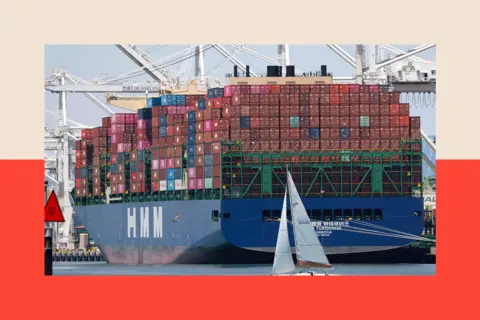
Second, the agreement of tariff terms, however unpalatable, reduced much of the uncertainty (itself wielded by Trump as a powerful economic weapon) for better – and for worse.
For better, in the sense that businesses are able to make plans, investment and hiring decisions that had been paused may now be resumed.
Most exporters know what size tariffs their goods face – and can figure out how to accommodate or pass on the cost to consumers.
That growing sense of certainty underpins a more relaxed mood in financial markets, with shares in the US notably gaining.
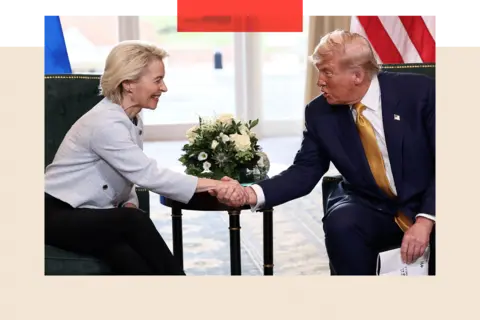
But it’s for the worse, in the sense that the typical tariff for selling into the US is higher than before – and more extreme than analysts predicted just six months ago.
Trump may have hailed the size of the agreement of the US with the EU – but these are not the tariff-busting deals we equated with tearing down trade barriers in previous decades.
The greatest fears, the warnings of potential disaster, have receded. But Ben May, Director of global macro forecasting at Oxford Economics, says that US tariffs had the capacity to “damage” the global economy in several ways.
“They are obviously raising prices in the US and squeezing household incomes,” he says, adding that the policies would also reduce demand around the world if the world’s largest economy ends up importing fewer goods.
Winners and losers: Germany, India and China
It’s not just about the size of tariff, but the scale of trading relationship with the US. So while India potentially faces tariffs of over 25% on its exports to the US, economists at Capital Economics reckon that, with US demand accounting for just 2% of that nation’s gross domestic product, the immediate impact on growth could be minor.
The news is not so good for Germany, though, where the 15% tariffs could knock more than half a percentage point off growth this year, compared to what was expected earlier in the year.
That’s due to the size of its automotive sector – unhelpful for an economy that may be teetering on the brink of recession.
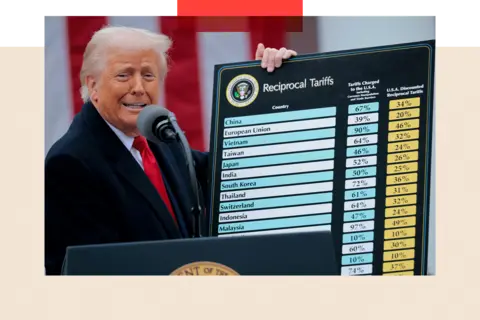
Meanwhile, India became the top source of smartphones sold in the US in the last few months, after fears of what may lie in store for China prompted Apple to shift production.
On the other hand, India will be mindful that the likes of Vietnam and the Philippines – which face lower tariffs when selling to the US – may become relatively more attractive suppliers in other industries.
Across the board, however, there’s relief that the blow, at least, is likely to be less extensive than might have been. But what has been decided already points to longer-term ramifications for global trading patterns and alliances elsewhere.
And the element of jeopardy introduced into a long-established major relationship with the US, lent added momentum to the UK’s pursuit of closer ties with the EU – and getting a trade deal with India over the line.
For many countries, this has served as a wake up call – a need to remain alive to fresh alliances.
A very real political threat for Trump?
As details are nailed down, the implications for the US economy become clearer too.
Growth in the late spring there actually benefitted from a flurry of export sales, as businesses rushed to beat any higher tariffs imposed on American goods.
Economists expect that growth to lose momentum over the rest of the year.
Tariffs that have increased from an average of 2% at the beginning of the year to around 17% now have had a notable impact on US government revenue – one of the stated goals of Trump’s trade policy. Import duties have brought in more than $100bn so far this year – about 5% of US federal revenue, compared to around 2% in past years.
Treasury Secretary Scott Bessent said he expected tariff revenue this year to total about $300bn. By comparison, federal income taxes bring in around $2.5tn a year.
American shoppers remain in the front line, and have yet to see higher prices passed on in full. But as consumer goods giants such as Unilever and Adidas start to put numbers on the cost increases involved, some sticker shock, price rises, loom – potentially enough to delay Trump’s desired rate cut – and possibly a dent to consumer spending.
Forecasts are always uncertain, of course, but this represents a very real political threat for a president who promised to lower consumer prices, not take actions that would raise them.
Trump and other White House officials have floated the idea of providing rebate checks to lower-income Americans – the kinds of blue-collar voters who have fuelled the president’s political success – that would offset some of the pocketbook pain.
Such an effort could be unwieldy, and it would require congressional approval.
It’s also a tacit acknowledgment that simply boasting of new federal revenue to offset current spending and tax cuts, and holding out the prospect of future domestic job and wealth creation is politically perilous for a Republican party that will have to face voters in next year’s midterm state and congressional midterm elections.
The deals yet to be hammered out
Complicating all this is the fact that there are many countries where a deal is yet to be hammered out – most notably Canada and Taiwan.
The US administration has yet to pronounce its decisions for the pharmaceuticals and steel industry. The colossal issue of China, subject to a different deadline, remains unresolved.
Trump agreed to a negotiating extension with Mexico, another major US trading partner, on Thursday morning.
Many of the deals that have been struck have been verbal, as yet unsigned. Moreover it is uncertain if and how the strings attached to Trump’s agreements – more money to be spent purchasing American energy or invested in America – will actually be delivered on.
In some cases, foreign leaders have denied the existence of provisions touted by the president.
When it comes to assessing tariff agreements between the White House and various countries, says Mr May, the “devil is in the detail” – and the details are light.
It’s clear, however, that the world has shifted back from the brink of a ruinous trade war. Now, as nations grapple with a new set of trade barriers, Trump aims to call the shots.
But history tells us that his overarching aim – to return production and jobs to America – may meet with very limited success. And America’s long-time trading partners, like Canada and the EU, could start looking to form economic and political connections that bypass what they no longer view as a reliable economic ally.
Trump may be benefitting from the leverage afforded by America’s unique position at the centre of a global trading order that it spent more than half a century establishing. If the current tariffs trigger a foundational realignment, however, the results may not ultimately break in favour of the US.
Those questions will be answered over years, not weeks or months. In the meantime, Trump’s own voters may still have to pick up the tab – through higher prices, less choice and slower growth.
[BBC]

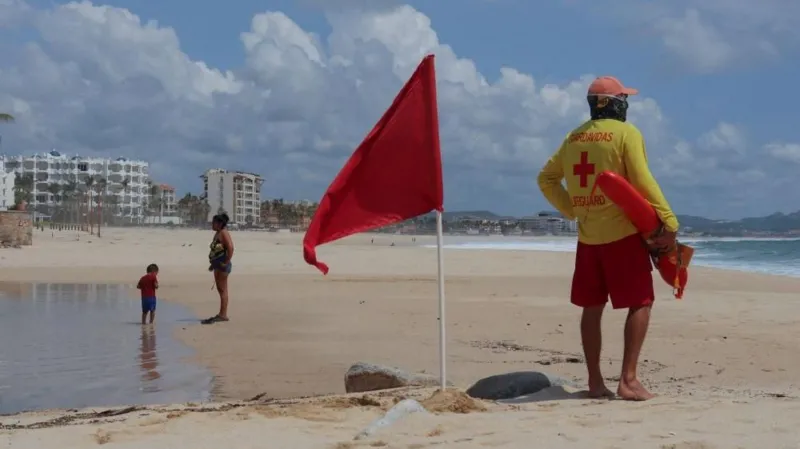
People living on the northern Pacific coast of Mexico are bracing for the arrival of Hurricane Polo, which is forecast to make landfall later on Monday or early on Tuesday.
The category three storm, with maximum sustained winds near 115 mph (185 km/h), is expected to move over the state of Baja California Sur, a region popular with tourists and home to the resort destination of Los Cabos.
Meteorologists at the US-based National Hurricane Center (NHC) have warned of heavy rainfall which could lead to life-threatening flooding and mudslides, especially in areas of steep terrain.
Residents on Sunday stocked up on essentials such as drinking water and food as the storm approached.
The NHC warned of the storm surge Hurricane Polo could unleash, which it said could be accompanied by large and destructive waves.
In Cabo San Lucas, famous for its natural rock arch, the authorities restricted access to the beaches. Some restaurants also closed in the town, which acts as a base for sport fishers and whale watchers.

The regional government of Baja California Sur has ordered schools to remain closed on Monday as a preventive measure.
Governor Víctor Manuel Castro Cosío said temporary shelters had been opened should residents need to be evacuated.
The federal authorities have also deployed thousands of members of the navy and the army along with specialised machinery.
Polo has been slowly moving towards Mexico’s coast line.
Meteorologists said it was being fuelled by extremely warm waters caused by the El Niño climate phenomenon.
(BBC)

Like every year, Pushpraj Rimal, a tour planner and taxi driver in Nepal’s capital, Kathmandu, was looking forward to September for his business to boom.
But what he got instead was a series of cancellations by tourists after catastrophic floods last month killed more than 1,450 people and destroyed key highways, deeply impacting the Himalayan nation heavily dependent on tourism.
“It is still a lockdown kind of situation,” the 42-year-old told Al Jazeera nearly a month after the disaster.
Pushpraj, who speaks Nepali and Hindi, works on commission for several hotels and trekking companies in Kathmandu and the scenic town of Pokhara, known for its lake nestled in the Annapurna mountain range. Pokhara also serves as a base for Himalayan trekkers.
Nepal’s tourist season peaks after the monsoon ends in August and the skies are clearer. Tourism attracts thousands of international travellers, accounting for nearly 8 percent of Nepal’s gross domestic product and employs more than 1 million people.
Last year, Nepal saw more than 1.15 million tourists visiting the country, nearly a third of them during the September-November season.
But the floods this year, triggered by a glacial mountain collapse along the Nepal-Tibet border in the north, have pushed tourists away from the unaffected areas as well.
“I had rented two cars for two months, but I have done one fourth of the business I usually do in a season. Tourists generally start pouring in from September, but most of them have cancelled this year,” he said.
“I will get no commissions from the hotels or trek organisers, nor has the taxi business worked well. … I am now waiting for the season to end.”
Rimal has two children, Hema, 14, and Rahul, 12, whom he had promised a tablet this Dussain, a prominent Hindu festival that usually falls in October. “But it seems impossible now. I will have to break their hearts and my promise to them for the very first time.”
(Aljazeera)

World javelin leader Rumesh Tharanga lived up to his reputation to win Sri Lanka a highly anticipated gold medal, beating wet weather and track conditions at the Asia Games in Nagoya Japan a little while ago.
He took the lead with a massive 88.33 metres effort in his penultimate throw before sealing the contest with 88.55 metres throw.
He beat a strong field inclusive of reigning Olympic champion Arshad Nadeem of Pakistan. (Reemus Fernando)

Mexico’s Pacific coast braces for Hurricane Polo

Washout against Afghanistan sends India into semi-finals

‘Still a lockdown’: Deadly floods hit Nepal tourism as peak season begins

Tharanga wins highly anticipated Asian Games gold

Tharanga on cusp of Asian Games Gold

Rain threat looms over lopsided India vs Afghanistan quarter-final

‘Dates have the highest sugar content to fight Coronavirus’

Sunday Island 27 December – Headlines

#SundayIsland 17th December – Headlines

Sunday Island – 28th March

Sunday Island Headlines – 21 March

Sunday Island – 21st February – Headlines
-

 News6 days ago
Mastermind Naufer Moulavi among 15 found guilty
-

 Midweek Review6 days ago
Thileepan’s fast unto death: An authentic narrative that many missed
-
 News7 days ago
Protest against setting up of cement factory in highly populated area near BIA
-

 Editorial7 days ago
Trouble beginning in earnest
-

 Latest News5 days ago
Showers above 100 mm are likely at some places in the Western, Sabaragamuwa, Central and North-western provinces and in Galle and Matara Districts
-
Editorial6 days ago
Big Bad Bills
-
 News7 days ago
Police may seek clarification from US
-

 News7 days ago
Govt. confident of 2/3 majority despite NPP split speculation