
Latest News
ICC set to approve continental qualification system for LA Olympics 2028

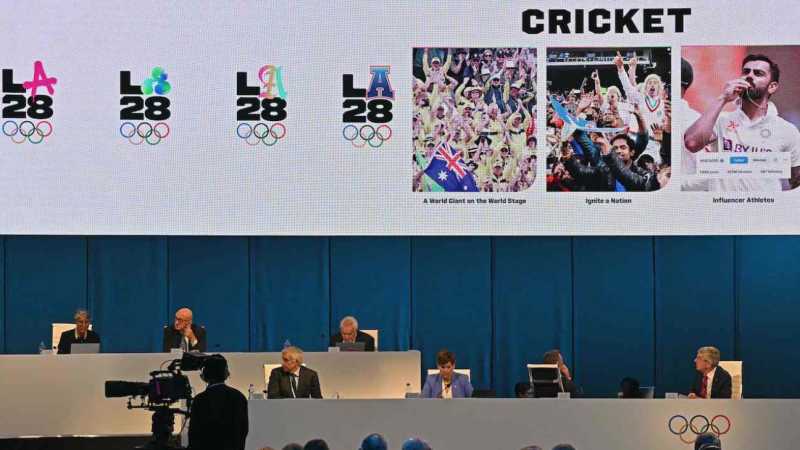
The ICC is set to approve a continental qualification system to decide the six participating teams in the 2028 Los Angeles Olympics. That means that Full Members such as Pakistan, New Zealand and Sri Lanka among others, could miss out on cricket’s much-anticipated return to the Olympics after over a century.
ESPNcricinfo understands that the board discussed a proposal at the recent AGM which allows for one team from each continent. Though some details still need to be finalised, in essence, the majority approval for a regional qualification system is in place, with a minority of members expressing dissent.
Six teams each in the men’s and women’s categories will contest for Olympic medals between July 14 and 29 in 2028 after the International Olympic Committee (IOC) allowed cricket to be added to the roster for the first time since the Paris 1900 Olympics. While the ICC’s initial thinking was that it would shortlist the top six-ranked teams at a pre-determined cut-off date, several Full Member countries believed such an approach wouldn’t allow for a wider representation of countries from across the globe.
That has now changed to a one-country-per-continent qualification system, which is thought to be more in line with the Olympic participation ethos.
Which countries are shortlisted will be based on the rankings on a set date. But if the ICC plan goes through, it could mean the Olympics may not have one of the most widely watched contests in global sport: India vs Pakistan. Based on the current ICC T20 rankings, in both men’s and women’s competitions, India will qualify from Asia, Australia from Oceania, England from Europe, with one between USA or one of the islands from the Caribbean from the Americas, while South Africa qualify from Africa. ESPNcricinfo understands that the ICC is still discussing the participation of USA, who potentially get direct entry as hosts.
But questions remain around the make-up of the USA men’s team, the majority of whom are US residents but not naturalised US citizens. The ICC is also concerned that the USA women’s team are not in the top 20-ranked teams at the moment. A final decision is likely to be taken at the ICC’s next quarterly meeting in October.
The ECB, along with Cricket Scotland and Cricket Ireland, have formed Great Britain Cricket as an entity, which will help facilitate players from England, Scotland and Northern Ireland to represent Great Britain at the Games.
As for West Indies, CWI wrote to ICC in May, pitching two ideas that could allow one of the regional countries to represent the Caribbean in the Olympics. One suggestion was an internal qualifying tournament conducted among the Caribbean countries with the winner heading to the Olympics. The other involved conducting a global qualifying pathway that would pit countries in the five ICC development regions alongside regions in the West Indies.
For the sixth team, the ICC is considering the option of a global qualifier, the structure for which is still being fine-tuned.
Speaking on Thursday to BBC’s Test Match Special, ECB chairman Richard Thompson said that the IOC was keen on having a team from each continent which satisfies the Olympics charter. “The preference from the IOC is to work to the ‘five ring’ principle, which is teams from each of the continents represent their continent,” Thompson said.
The ICC is also optimistic about increasing the number of participating teams in the next two Olympics – in 2032 in Brisbane and in 2036, the venue for which is yet to be finalised by IOC. Thompson said that with India expected to bid hard to host the 2036 Summer Games, cricket could receive a massive boost.
“The hope is, when we get to Brisbane, we might be up to eight or ten teams, and in 2036, there’s a three-way shoot-out between Qatar, Saudi and India, and clearly the real hope is that India get in it 2036, in which case, cricket will be front and centre. Who knows? It could be ten or 12 teams by that stage.
“At this stage, we are there by the invitation of the IOC and on that basis, you abide by their rules, and that is to play the geography of your game as opposed to necessarily the top six playing nations.”
(Cricinfo)

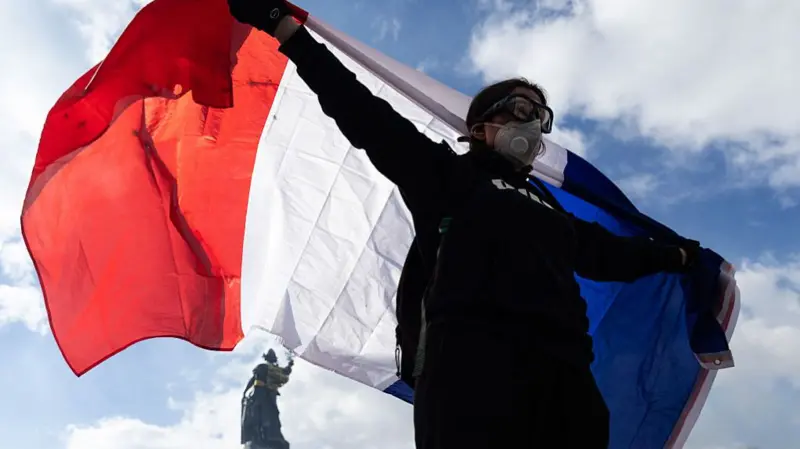
An estimated 550,000 people took part in demonstrations across France today to protest against teaching conditions in schools, rising fuel prices and the cost of living.
Marches were largely peaceful and took place in several major French cities, including Paris, where 110,000 people attended.
“We just want to study, we just want a future” one student taking part in the protest in the capital told BBC News, while another said they were ” just trying to make things change”.
But French Interior Minister Laurent Nunez said some groups “at the margins of these protests” caused the situation to “degenerate”.
According to the French Prime Minister Sébastien Lecornu, 1200 people were arrested. Officials also reported looting in cities such as Marseille, where masked 8ntruders also entered the city hall. In Lyon, the tourist office was set on fire and shops were damaged.
French President Emmanuel Macron said any vandals and looters would be “prosecuted and punished”, while Jean-Luc Mélenchon, the leader of left-wing party La France Insoumise, said demonstrations had been calmly mobilised.
Meanwhile, firefighters are continuing to battle a blaze at Limoges City Hall after a reported break-in and arson inside the 19th-century building during protests there.
(BBC)
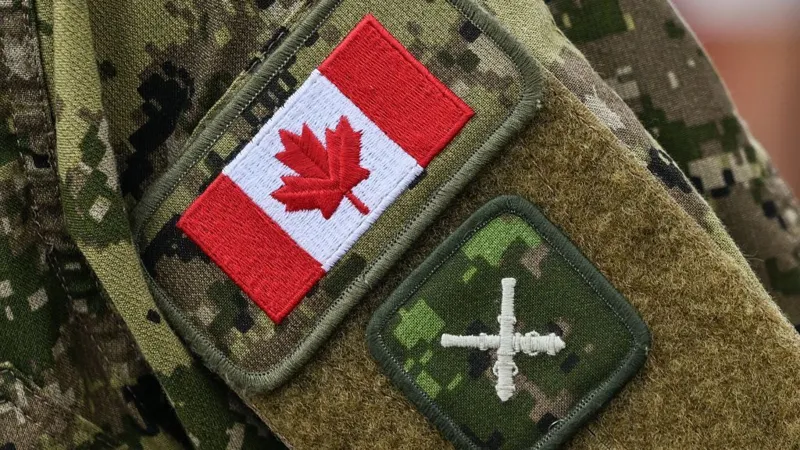
A large fire near a Canadian military base in Alberta has killed and injured some people, the defence minister said, without confirming the number of casualties.
The Canadian Armed Forces were working with local authorities to manage the fire and were looking into what caused it, David McGuinty said, describing the situation as “very, very active and delicate”.
Canada’s Prime Minister Mark Carney said on X that a “serious incident creating a major fire” had occurred, adding his “thoughts are with all the brave women and men affected”.
Canadian Forces Base Wainwright, where the fire broke out, is one of the country’s busiest military training bases.
The blaze “spread rapidly due to high winds” and had torn through the fences of the base, the Municipal District of Wainwright said.
McGuinty told reporters he “cannot recall an incident like this in recent memory”.
It is unclear when the fire broke out, but the district first posted about the incident at about 17:30 local time.
Local authorities have urged residents to avoid the area and give all emergency vehicles right of way.
(BBC)

The Asian Youth Games gold medallist who has run sub four minutes previously returned a time of 3:55.97 seconds to become the first athlete in his age category at these championships to run the distance under four minutes.
Achintha who has a personal best of 3:53.05 from last year was representing Prince College Ratnapura today.
In another impressive 1,500 m feat Tharushi Abhisheka of Lyceum International School, Wattala established a new meet record in the Under-20 Girls’ 1,500m as she returned a time of 4:34.59 seconds to win.
By the end of the second day of the meet seven new meet records had been established.
D. V. C. de Soysa (of Galewela Central College) Under-16 Boys’ Discus Throw – 55.83m.
D. G. Lahiru Achintha (of Ratnapura Kumara Vidyalaya) Under-18 Boys’ 1,500m – 3:55.97 secs.
W. P. Nethula Induwara (Rahula College, Matara) Under-14 Boys’ 100m – 11.70 seconds
K. V. R. Gayesha (Ira Handa Kotuwa Wewa Maha Vidyalaya, Polonnaruwa) Under-16 Girls’ High Jump – 1.70m
H. M. D. S. Herath (Maris Stella College, Thimbirigaskatuwa) Under-20 Boys’ Long Jump – 7.65m
P. M. Amaya Semindi (Vijitha Central College, Dikwella) Under-14 Girls’ High Jump – 1.58m

Record 1,600 students take Russian Classical Ballet examination in Sri Lanka

Half a million people join protests in France, but some turn violent

Deadly fire breaks out at Canada military base

Showers or thundershowers will occur in most parts of the island after 1.00 p.m.

Buddhist hierarchy demands prison perks for monk convicts

Debate on NCM against Speaker postponed indefinitely

‘Dates have the highest sugar content to fight Coronavirus’

Sunday Island 27 December – Headlines

#SundayIsland 17th December – Headlines

Sunday Island – 28th March

Sunday Island Headlines – 21 March

Sunday Island – 21st February – Headlines
-

 Latest News5 days ago
Nissanka’s return headlines Sri Lanka’s Test squad against Pakistan
-

 Latest News6 days ago
Farhan and Sadaqat help Pakistan seal series in style
-

 Features6 days ago
Intake 16: 45 years of duty and honour
-
 News6 days ago
Malwathu Chapter issues statement on talks with President over Gnanasara Thera’s robes
-
 News6 days ago
CP alleges NPP has taken the blame for illegal US sanctions on Iranian vessels
-

 Opinion6 days ago
How long can Sri Lanka remain silent on its demographic crisis?
-

 News4 days ago
Sri Lanka, India caught in US-Iran ship crisis
-

 Latest News4 days ago
Kusal Mendis’ unbeaten 87 hands Sri Lanka consolation win