
Business
Breaking free from conventional investment paths; How to make your money work harder – Part II

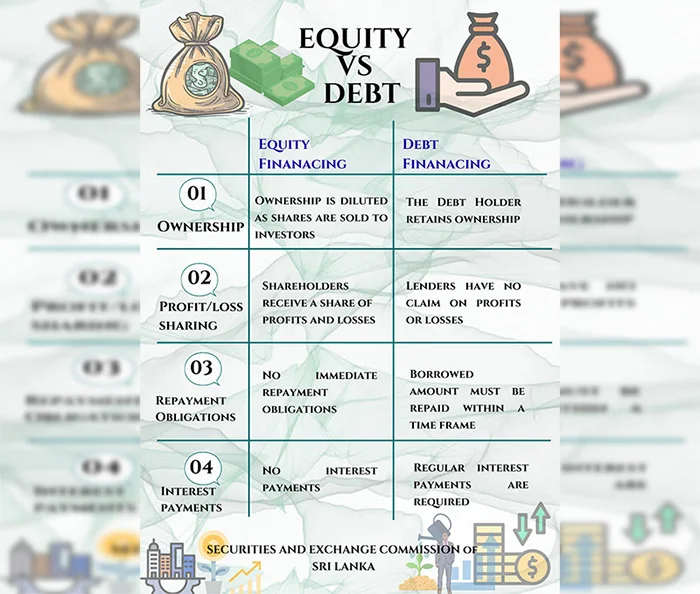
Contineud from Yesterday
Repayment obligations – No immediate repayment obligations in equity financing. In debt financing however, the borrowed amount must be repaid within a time frame.
Interest payments – In terms of equity financing, there are no interest payments but in debt financing regular interest payments are required.
Debentures Decoded: The Company IOU System
Debentures are essentially formal IOUs that companies give you when you lend them money. What makes them particularly attractive to investors is their predictable nature and security features. They offer fixed returns, meaning you know exactly how much you’ll earn or can predict your return with certainty. Most debentures provide regular income through interest payments made every six months, creating a steady cash flow for investors. Each debenture comes with a specific maturity date when the company must repay the full principal amount you originally lent them. Perhaps most importantly, debenture holders enjoy priority treatment in the company’s capital structure, which means if the company faces financial difficulties, debenture holders get paid before shareholders, providing an additional layer of security for your investment.
The Flip Side: What Could Go Wrong?
Like any investment, debentures come with risks:
Interest Rate Risk – When interest rates rise, existing bond prices fall since newer bonds offer higher yields. Long-term bonds are more sensitive to rate changes than short-term ones. This creates potential capital losses if you need to sell before maturity.
Credit Risk – The borrower may default on interest payments or fail to repay the principal. This is particularly relevant to corporate bonds, high-yield bonds, and emerging market debt. Even government bonds aren’t immune, as sovereign defaults can occur.
Inflation Risk – Fixed-rate debt investments lose purchasing power when inflation exceeds the bond’s yield. Your real return (after inflation) may be negative even if you receive all promised payments.
Liquidity Risk – Potential difficulty in buying or selling a bond at a fair price, especially during periods of market stress. This risk arises because some corporate bonds may have fewer buyers and sellers compared to government bonds, making it harder to execute trades quickly without impacting the price significantly.
Event Risk Corporate restructuring, mergers, natural disasters, or regulatory changes can suddenly impact a borrower’s ability to service debt, even for previously stable issuers.
Prepayment Risk Borrowers may pay off debt early when interest rates fall, forcing you to reinvest at lower rates. This is common with mortgage-backed securities and callable bonds.
Tips on How To Balance The Devil On Your Shoulder; Guide to Risk Management
Build bond ladders with staggered maturities to reduce timing risk and provide regular reinvestment opportunities. Shorter-duration bonds (under 5 years) are less sensitive to rate changes. Consider floating-rate bonds that adjust with interest rate movements.
Diversify across multiple issuers, sectors, and credit ratings rather than concentrating in single borrowers. Research credit fundamentals and consider professional credit analysis for corporate bonds.
The Array of Debt Securities Facilitated; Invest In What You Believe In
The Securities and Exchange Commission of Sri Lanka serves as both the gatekeeper and facilitator of bond investments. Acting like a financial referee, the SEC creates rules and approval processes that allow companies to borrow money from the public through bonds while protecting investors from fraud and misinformation. Their dual role as regulator and facilitator has enabled the development of innovative bond markets, ensuring that when companies want to issue bonds, they must provide complete and honest information about their finances and intentions. Through this careful oversight and facilitation, the SEC has made possible the following bond categories that serve both investor returns and broader societal goals:
Corporate Promises of Economic Affluence: Corporate Bonds
The corporate bond market presents a fascinating risk-reward spectrum. At one end, bonds offered from established corporations with good credit ratings offer reliable returns slightly higher than government securities. At the other end, high-yield or “junk” bonds from less financially stable companies entice investors with premium interest rates to compensate for elevated risk.
The corporate bond market offers remarkable diversity, allowing investors to precisely calibrate their desired balance between safety and yield.
Save the Planet and Make Profit: Unlocking Value Through GSS+ Bonds
GSS+ refers to a category of financial products designed to fund projects with positive environmental and social impacts. The Regulatory Framework for listing and trading the following Bond categories have been enabled at the CSE:
Green Bonds – Green Bonds debt securities specifically designed to fund projects with positive environmental or climate benefits.
Blue Bonds – Blue Bonds are debt securities designed specifically to finance projects related to ocean conservation and sustainable marine activities.
Social Bonds – Social Bonds are debt securities that raise funds specifically for projects delivering positive social outcomes and addressing social challenges. They offer investors a way to generate financial returns while supporting social welfare initiatives.
Sustainability Linked Bonds – Sustainability Linked Bonds differ from the other types of GSS+ Bonds in that their proceeds are not used to finance specific projects but are instead made available for general corporate purposes, with the issuer contractually undertaking to achieve predefined, measurable sustainability targets or Key Performance Indicators (KPIs).
“Faith-Based Finance Finds Home”: Shariah-Compliant Debt Securities
Shariah compliant Debt Securities, commonly known as Sukuk, represent Shariah-compliant financial certificates that embody partial ownership in an underlying asset, usufruct, service, project, business, or investment. Unlike conventional bonds that create debt obligations with interest payments, sukuk are structured as investment certificates that provide returns derived from asset performance rather than interest.
Enabling this product at the CSE is expected to attract previously untapped capital by opening doors to foreign portfolio investments from Shariah seeking investors.
Sri Lanka’s Blooming GSS+ and Faith-Based Bond Market
DFCC Bank Pioneers Green Bond
Sri Lanka’s first Green Bond was issued by the DFCC Bank in September 2024 for a total value of LKR 2.5 billion at a coupon of 12%.
This issue was oversubscribed. In December 2024, the DFCC went on to obtain a dual listing for its Green Bond at the Luxembourg Stock Exchange (LuxSE).
Alliance Finance Issues LKR One Billion Worth of Green Bonds
Alliance Finance Company PLC, a Non-Banking Financial Institution (NBFI) issued LKR 1 billion of Green Bonds in February 2025 at a coupon of 10.75%, which was also oversubscribed.
Sri Lanka’s First Ever Faith Based Bond
Vidullanka, a renewable energy company pioneering Rs. 500 m Sukuk issue (Compliant with Shariah Law) was oversubscribed on the opening day itself.
More GSS+ investment opportunities on the horizon
Several other corporate entities such as Resus Energy PLC and Sarvodhaya Development Finance are in the pipeline for issuing GSS+ Bonds.
“Building Tomorrow Today”: Infrastructure Bonds
The introduction of Infrastructure Bonds marks a significant step toward addressing the nation’s infrastructure financing gap. These specialized debt instruments will channel private capital into critical projects spanning transportation, energy, water, and digital infrastructure.
With extended maturities designed to match the long-term nature of infrastructure assets, these bonds offer investors stable, predictable returns while contributing to national development priorities.
Infrastructure Bonds will create a win-win scenario where investors gain exposure to essential assets with inflation-protected returns, while the country benefits from accelerated infrastructure development.
Capital Fortified: Unlocking value through Basel III Tier 2 Instruments
Basel III-compliant debentures represent a specialized category of debt instruments that adhere to the regulatory standards established by the Basel Committee on Banking Supervision in response to the 2007-2008 global financial crisis. These debentures are designed to strengthen bank capital requirements, stress testing, and market liquidity risk management.
“Endless Opportunities”: Perpetual Bonds
True to its name, Perpetual Bonds are debt securities with no maturity date and pays interest indefinitely. These instruments offer unique advantages for both issuers seeking stable long-term funding and investors looking for consistent income streams.
Unlike conventional bonds, perpetuals remain outstanding until the issuer chooses to redeem them, typically after a specified initial period.
Perpetual Bonds represent financial innovation at its finest. They provide corporates with quasi-equity financing without diluting ownership, while investors benefit from higher yields compared to traditional fixed-income products.
“Higher Risk, Higher Reward”: High-Yield Bonds
Rounding out the new offerings are High-Yield Bonds, sometimes known as “junk bonds,” which carry higher interest rates to compensate for their greater risk profile. These instruments typically come from issuers with lower credit ratings or newer enterprises without established credit histories.
Market participants have welcomed the addition, noting it completes the CSE’s fixed-income ecosystem by catering to investors with more aggressive risk appetites.
High-yield bonds fill a crucial gap in our market. They offer potentially attractive returns in a low-interest environment and provide companies that might not qualify for investment-grade ratings with vital access to capital. Currently this is facilitated for entities regulated by the CBSL or the Insurance Regulatory Commission of Sri Lanka (IRCSL)
Why Capital Markets Matter: The Win-Win Story
For Companies Raising Money:
Cheaper Funding: Instead of paying high bank interest rates, companies can often raise money more cheaply through capital markets.
No Collateral Hassles: Unlike bank loans that require mortgaging property, companies can raise funds based on their business prospects.
Flexibility: They can choose between giving away ownership (equity) or borrowing (debt) based on their needs.
Growth Capital: Access to large amounts of money helps companies expand, hire more people, and in turn contribute to economic growth.
For Everyday Investors:
Better Returns: Instead of earning a lesser return from bank deposits, you might be able to earn significantly higher returns in the capital market
Choice and Control: You decide which companies to support with your money.
Wealth Building: Over time, successful investments can significantly grow your wealth.
Economic Participation: You become part of Sri Lanka’s economic growth story.
The Bigger Picture: Building Tomorrow’s Sri Lanka
Capital markets aren’t just about making money – they’re about building the future. When you invest in a renewable energy company’s debenture, you’re funding clean power for Sri Lanka. When you buy shares in a tech startup, you’re supporting innovation and job creation.
Getting Started: Your First Steps
Ready to explore capital markets? Start small:
Learn the basics through free regulatory sources like Securities and Exchange Commission of Sri Lanka
Open a trading account with a licensed stockbroker
Start with blue-chip companies – established firms with good track records
Diversify your investments – don’t put all eggs in one basket
Think long-term – capital markets reward patience
Still feeling apprehensive? Try Unit Trusts.
Unit Trust Funds are a collective investment scheme that is a pooling vehicle of your funds, offering professionally managed investment pools with various risk profiles suitable for unsophisticated investors.
Minimum investment begins from as low as LKR 1,000.00. Risk level varies based on type of the Scheme who creates a diversified portfolio based on the fund’s parameters to earn a return.
Then your money is used by professional fund managers who know what they’re doing. They take everyone’s money and buy a mix of different investments – like shares in companies, government bonds, and other financial assets.
Steps to follow;
Choose a licensed managing company and open a unit trust account
Open your account with as little as Rs.1000
Choose the Scheme – Once your account is open, you need to choose a fund to invest in. You can choose from a range of funds such as Growth funds, Income funds, Balanced funds, Money Market funds, Sector Funds and Index Funds. Each fund has different risks and returns, so you need to decide which is the best fit for your goals and risk appetite.
Monitor your investment
The beauty of unit trusts is their simplicity – investors receive the benefit of professional management without needing to be a financial expert.
Finally, it’s important to remember, all investments carry risks. Never invest money you can’t afford to lose and always do your homework before making investment decisions.
Capital markets have democratized finance in Sri Lanka, giving everyone a chance to participate in the country’s economic growth, offering opportunities to grow your wealth while supporting businesses that create jobs and drive progress.
To be Continued
by Securities and Exchange Commission
of Sri Lanka

Business
Mahindra Ideal Motors celebrates gala ‘Excellence Awards’ honouring outstanding performance and innovation


The Mahindra Ideal Motors Excellence Awards ceremony, a grand celebration to recognize dealers and other stakeholders of Ideal Motors, was held at the Wave n’ Lake Banquet Hall & Restaurant in Welisara recently.
The event was graced by the presence of special guests including Nalin Welgama, Founder and Chairman Ideal Motors, Dilani Yatawaka, Group Managing Director/CEO Ideal Motors, Nimisha Welgama, Director Legal and Corporate Affairs Ideal Motor, Sachin Arolka, Head International Operations, Auto Division Mahindra & Mahindra India. Senthil Selvaraju, Head International Operations and Customer Service Automotive Division Mahindra & Mahindra India, Sujeeth Jayant, Country Head Mahindra & Mahindra India and Shitam Kundu, Head Domestic Services Mahindra & Mahindra India.
Also, in attendance from Ideal Motors were Kasun Fernando, General Manager Commercial Vehicle Sales Division, Sameera Bamunuarachchi, Deputy General Manager Spare Parts, Logistics & Inventory and Prasanna Manamperi, Deputy General Manager After Seles Service.
Speaking at the event, Nalin Welgama Ideal Motors Founder and Chairman said, “When we began our journey with Mahindra in 2009, the previous company had sold 300 vehicles in the country, of which nearly 150 had various defects. At that time our journey began by engaging with the parent company in India and repairing those vehicles free of charge. That commitment has brought us to where we are today. As we believe, our journey truly begins after the sale. We are dedicated to strengthening our customers, and in doing so, strengthening ourselves. That is how we transformed the after-sales service experience.”
He added, “Our main strength is the Mahindra Bolero, which has sold more than 10,000 units in just two years. In a very short period, we grew from zero to over 100,000 vehicles sold. This is not my victory, but the victory of all of you who contributed to it. Despite the challenges of the COVID-19 pandemic and the economic crisis we faced, this awards ceremony was organized to express our gratitude to all of you who trusted our institution and stood by us. Let us continue our victorious journey together.”
Dilani Yatawaka, Group Managing Director Ideal Motors, said: “Today is a very happy day for us. This is the first time in history of the organisation, that representatives of our vehicles, spare parts, services, and financial institutions are meeting together under one roof.”
Speaking on the occasion, Sachin Arolka, Head International Operations, Auto Division Mahindra & Mahindra India, stated that Ideal Motors in Sri Lanka is one of the largest seller of Mahindra vehicles in Asia.
More than 300 dealers and finance partners participated in the event which concluded with dinner, fellowship and entertainment.
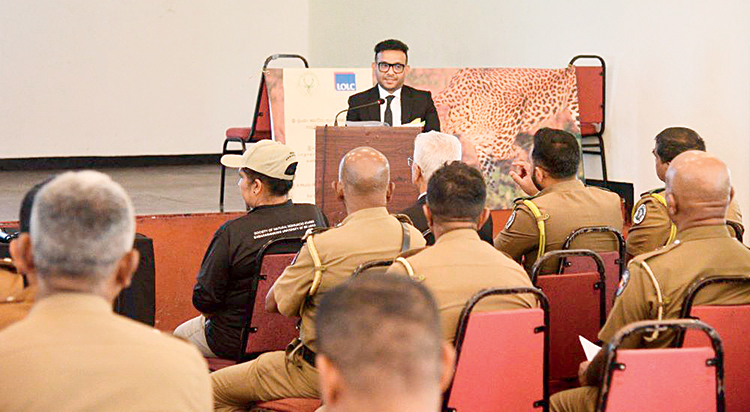
Strengthening conservation through active law enforcement
An awareness and capacity-building program on wildlife crime prevention, with a special focus on the Sri Lankan leopard (Panthera pardus kotiya), was successfully conducted on March 20 at the Dimbula Athletics & Cricket Club, Radella.
The session was organized under the ongoing Multi-Regional Leopard Research and Conservation Project implemented by the Wildlife & Nature Protection Society (WNPS), in collaboration with LOLC. It brought together senior officers representing 28 Police stations across the Nuwara Eliya and Kandy districts, underscoring the growing importance of law enforcement in conservation efforts within multi-use landscapes, a WNPS news release said.
The Central Highlands present a unique conservation challenge, where increasing habitat loss and fragmentation, depletion of natural prey, and use of snares continue to threaten leopards inhabiting these landscapes majority outside formally protected areas. The session therefore focused on strengthening the capacity of Police officers to identify, prevent, and respond to wildlife crimes, while fostering closer coordination with conservation stakeholders, it explained.
Co-Chair of the Wildcats Subcommittee, Prof. Enoka Kudavidanage, highlighted the ecological and economic significance of leopards as apex predators, emphasizing their role in maintaining ecosystem balance and supporting nature-based tourism. She also outlined the current conservation challenges in the Hill Country and presented ongoing interventions under the WNPS–LOLC project.
Dr. Sanjaya Weerakody, Postdoctoral Fellow at the Xishuangbanna Tropical Botanical Garden (XTBG), Chinese Academy of Sciences, shared key research findings on leopard mortality trends over the past 17 years revealing concerning patterns, including the disproportionate loss of mature male individuals and the increasing prevalence of snaring as a primary cause of death highlighting an urgent need for targeted enforcement.
Attorney – at – Law Charaka Jayaratne provided an in-depth overview of the legal provisions under the Fauna and Flora Protection Ordinance, with particular attention to offences related to snaring. He discussed how Police can take more proactive and effective action, identifying gaps in current approaches and suggesting practical measures to strengthen enforcement outcomes.
Adding further perspective, Samantha Gunasekara, former Deputy Director of Customs and Chairman of the Marine Environment Protection Authority (MEPA), spoke on the broader context of illegal wildlife trade in Sri Lanka. Drawing from past cases and recent observations, he highlighted emerging trends and risks associated with wildlife trafficking.
Representing the Department of Wildlife Conservation, Ranger Srinath Dissanayake of the Hakgala Wildlife Range shared recent cases on leopard deaths and rescue operations recorded in 2025. He emphasized on personal observations, importance of timely intervention, and strong collaboration between field officers and the Police to mitigate human–wildlife conflict and prevent avoidable losses.
An interactive discussion followed, allowing officers to raise questions, clarify procedures, and exchange experiences while sharing their feedback as well. This dialogue contributed to reinforcing the value of strategic engagement between the Police, the Department of Wildlife Conservation, and conservation partners while strengthening inter-agency understanding and highlighting the need for coordinated responses during leopard-related incidents.
The session commenced with opening remarks by WNPS President Graham Marshall, who expressed appreciation for the participation of the Sri Lanka Police and reiterated the critical role of law enforcement in safeguarding biodiversity beyond protected areas.
WNPS Past President and WNPS LOLC Project Head Spencer Manuelpillai, Project Coordinator Gihani Hettiarachchi, Regional Center Coordinators, Thilanka Dissanayake and Attorney-at-Law Malaka Palliyaguruge were also present as part of the WNPS team.
WNPS extends its sincere appreciation to all officers who participated for their commitment and active engagement. Supported by LOLC, these initiatives form part of a broader effort to strengthen practical conservation through collaboration, knowledge sharing, and effective enforcement in Sri Lanka’s Hill Country.

Fashion retail leader Mangala Tex celebrated the grand opening of its newest branch in Kurunegala on Saturday, March 14, 2026, adding a vibrant new dimension to the city’s commercial landscape.
Since its inception, Mangala Tex has been synonymous with style, durability, and quality, earning a lasting reputation as a premier clothing retailer. Guided by the visionary leadership of Chairman Ronald Nimal Hope, the brand has successfully established a strong presence with thriving outlets in Yatinuwara Veediya, Kandy, Cross Street, Kandy, and Peradeniya, Kandy.
The Kurunegala expansion marks a significant milestone in the company’s growth, bringing its signature fashion offerings closer to a wider customer base. True to its slogan, “Let Your Clothing Do The Talking,” the new store features an extensive range of apparel catering to all age groups, blending contemporary style with durable, high-quality fabrics.
Shoppers at the Kurunegala branch are greeted by a welcoming atmosphere and attentive staff, which long-time customers cite as key reasons for their loyalty. The store’s combination of trendy designs, reliable quality, and customer-centric service continues to set it apart in Sri Lanka’s competitive fashion retail sector.
Mangala Tex now employs more than 120 staff members across its branches, remaining a proudly family-driven enterprise alongside Managing Director Pahan Dissanayaka and Directress M M G P Dissanayaka.
With the official opening in Kurunegala, Mangala Tex demonstrates that consistent quality, style, and service can drive sustained growth, expanding the brand’s reach to new communities while reinforcing its status as a trusted name in Sri Lankan fashion.
Text and Pix by SK Samaranayake

One ant for $220: the new frontier of wildlife trafficking

Three Lebanese journalists killed in Israeli strike, say broadcasters

Showers will occur at a few places in the Sabaragamuwa province and in Colombo, Kaluthara, Galle, and Matara districts after 2.00 pm

War-linked power crunch pushes Lanka to four-day week

Lanka to swelter through April and May, Met Dept warns

Pathfinder Foundation launches Proposal for a National Security Strategy for Sri Lanka

‘Dates have the highest sugar content to fight Coronavirus’

Sunday Island 27 December – Headlines

#SundayIsland 17th December – Headlines

Sunday Island – 28th March

Sunday Island Headlines – 21 March

Sunday Island – 21st February – Headlines
-

 News4 days ago
Senior citizens above 70 years to receive March allowances on Thursday (26)
-

 Features1 day ago
A World Order in Crisis: War, Power, and Resistance
-

 Features6 days ago
Trincomalee oil tank farm: An engineering marvel
-

 News2 days ago
Energy Minister indicted on corruption charges ahead of no-faith motion against him
-

 News3 days ago
US dodges question on AKD’s claim SL denied permission for military aircraft to land
-

 Features6 days ago
The scientist who was finally heard
-

 Business3 days ago
Dialog Unveils Dialog Play Mini with Netflix and Apple TV
-

 Sports2 days ago
SLC to hold EGM in April