
News
Man who tried to smuggle in gold worth Rs. 1.1 bn gets bail

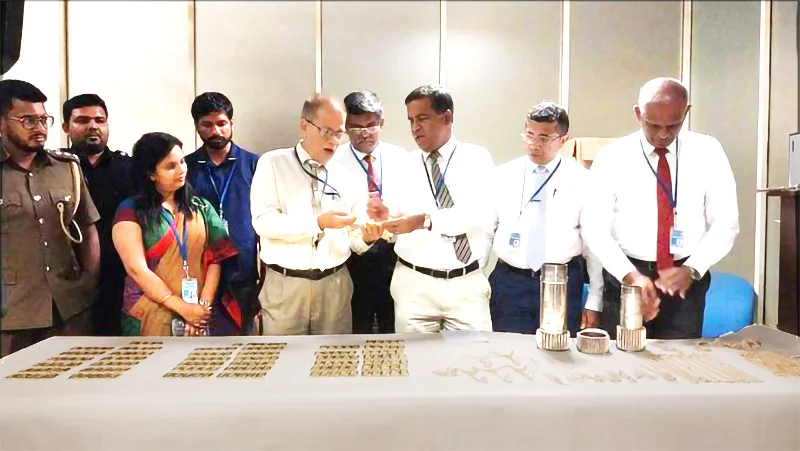
A person arrested by the Customs for attempting to smuggle in 35 kilos of gold, estimated to be worth Rs. 1.1 bn (USD 3.65 mn), has been granted bail by the Negombo Magistrate, who impounded his passport.
The Customs produced the 32-year-old suspect, a resident of Grandpass, before the Magistrate, on 15 July, after he failed to pay a fine of Rs 1.1 bn imposed by the Customs. Customs officers described him as a frequent traveller.
A senior Customs official told The Island that having confiscated the gold, the smuggler had been fined an equivalent to the estimated value of gold he tried to smuggle in. The detection had been made following a tip-off received by the Customs, the official said, adding that there was a legal provision for them to impose a fine three times the estimated value of contraband detected.
Customs Spokesman Additional Director General Seevali Arukgoda, said that the smuggler had arrived from Dubai and a quick search had led to the recovery of gold concealed in nine specially modified devices, resembling car spare parts, and in the suspect’s travelling bag, as well. The stock included 195 gold biscuits and 13 kilos of gold jewellery, Arukgoda said.
Director General of Customs Sarath Nonis, had been present during the search carried out at the BIA. According to Arukgoda, this was the largest single detection of gold made at the BIA.
Customs officials said that the smuggler could appeal against the Customs actions within 30 days. They said that it would be the responsibility of the Criminal Investigation Department (CID) to go after the group behind the smuggling operation.
If the smuggler failed to pay the fine, he would be sentenced to 15 years RI, sources said.
By Shamindra Ferdinando









Parliament yesterday passed the Twenty-Second Amendment to the Constitution Bill and the Judicature (Amendment) Bill with two-thirds majorities, with 158 MPs voting in favour and 63 against each Bill.
The Illankai Tamil Arasu Kadchi (ITAK) and Sri Lanka Muslim Congress (SLMC) voted with the SJB against the Bills.
NDF MPs Ravi Karunanayake and Faizer Musthapha and SJB Badulla District MP Nayana Wasalathilaka were not present when the votes were taken.
The final vote on the Judicature (Amendment) Bill was announced at around 8.08 p.m. after Opposition MPs called for divisions on its clauses during the Committee Stage.
The votes followed a two-day debate which commenced on Thursday (24), after Justice and National Integration Minister Harshana Nanayakkara presented the Bills for their Second Reading.
The Supreme Court’s determination on the Bills was presented to Parliament on Tuesday (22) by Speaker Dr Jagath Wickramaratne. The Court determined that the 22nd Amendment Bill did not require approval at a referendum and could be passed by a special two-thirds majority in Parliament.
The amendment provides for raising the mandatory retirement age of Supreme Court judges from 65 to 67 and that of Court of Appeal judges from 63 to 65. It also provides for the Chief Justice to retire at 67 or after completing six years in office, whichever comes earlier.
The Speaker informed Parliament that the Judicature (Amendment) Bill could be passed by a simple majority.
The SJB opposed the legislation and its MPs attended Parliament dressed in black yesterday. The party also staged a protest at Polduwa Junction, Battaramulla, under the theme “No to 22, which destroys democracy”, with Opposition Leader Sajith Premadasa and several SJB politicians participating.
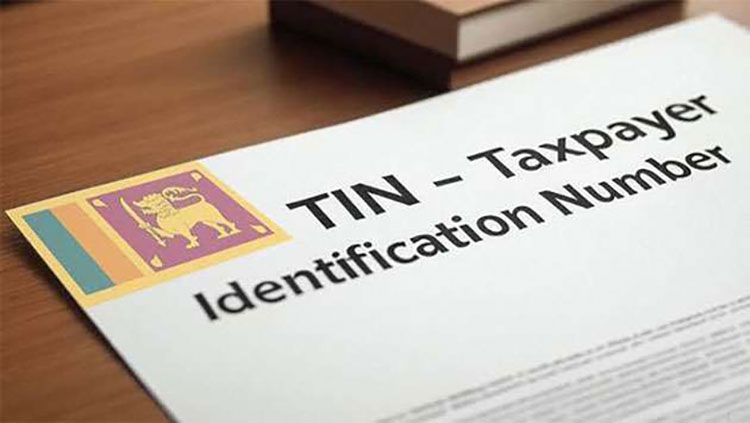
A valid Taxpayer Identification Number (TIN) Certificate will be required for a range of key transactions in Sri Lanka from November 1, 2026, the Inland Revenue Department (IRD) has announced.
The requirement, introduced under the Inland Revenue (Amendment) Act, No. 11 of 2026, applies to transactions specified under Section 102(3) of the Inland Revenue Act.
Accordingly, individuals will be required to produce a valid TIN Certificate when opening an account at a bank or financial institution, obtaining approval for a building plan, registering or renewing the licence of a motor vehicle, registering land or title to land, registering a business, transferring shares in a company incorporated in Sri Lanka or obtaining a credit card.
In the case of share transfers, both the transferor and transferee will be required to provide TIN certificates.
The IRD said officials handling such transactions had been instructed to ensure that a valid TIN Certificate was submitted before processing or completing the relevant transaction.
The Department advised those who do not already have a TIN to obtain one in advance through its e-Services platform.
It said a printout of the TIN verification result showing the applicant’s National Identity Card number and TIN could also be accepted instead of the certificate.The IRD also reiterated that obtaining a TIN is mandatory for resident individuals aged 18 and above under the applicable provisions.

By Norman Palihawadane
The Sri Lanka Navy brought 25 Indonesian fishermen safely ashore at the Colombo Port on Thursday (24), following a multi-agency rescue operation after their fishing trawler capsized south of Sri Lanka.
The fishermen were aboard the Indonesian-flagged fishing trawler KM Garuda Jaya VI, which capsized on September 22 while in the Australian Search and Rescue Region, leaving the crew in distress at sea.
The merchant vessel MV Moonstone responded to the distress situation and rescued all 25 fishermen from the sea. The vessel subsequently alerted the Maritime Rescue Coordination Centre (MRCC) Colombo about the incident and the rescued crew.
Following the distress alert, the Navy coordinated with MRCC Colombo and deployed two naval craft to bring the survivors safely to shore, with the assistance of relevant authorities.
The 25 fishermen were transferred to the Colombo Port, where they were provided with humanitarian assistance by the Navy.They were subsequently handed over to the Indonesian Embassy in Sri Lanka for further arrangements and onward action.

22A, Judicature Amendment Bills passed with 2/3 majority

TIN mandatory for key transactions from Nov. 1

Navy brings 25 Indonesian fishermen ashore after trawler capsizes

Former Mineral Sands Chairman arrested over recruitment irregularities

Sarana Gunawardena’s wife remanded over alleged bribe

High Posts Committee approves envoy, High Commissioner and SLIC Chairman

‘Dates have the highest sugar content to fight Coronavirus’

Sunday Island 27 December – Headlines

#SundayIsland 17th December – Headlines

Sunday Island – 28th March

Sunday Island Headlines – 21 March

Sunday Island – 21st February – Headlines
-

 News6 days ago
Namal Rajapaksa Buddhist gambit fails, bail denied
-

 Features6 days ago
Why the spelling Sri Lankan names in English vary
-

 Features6 days ago
Three bands, a new identity: Sri Lankan wolf snake recognised as distinct species
-

 Business6 days ago
SLIIT holds largest-ever convocation
-

 News6 days ago
Vehicle prices drop by up to Rs. 1 mn, says importers’ body
-

 News6 days ago
Govt monitors reported Saudi death sentence – Foreign Ministry
-

 Business6 days ago
All-new Bolero MaXX Pik-Up unveiled in Lanka
-

 Business6 days ago
Lanka’s famed beach shack battles demolition