
Latest News
China begins building world’s largest dam, fuelling fears in India

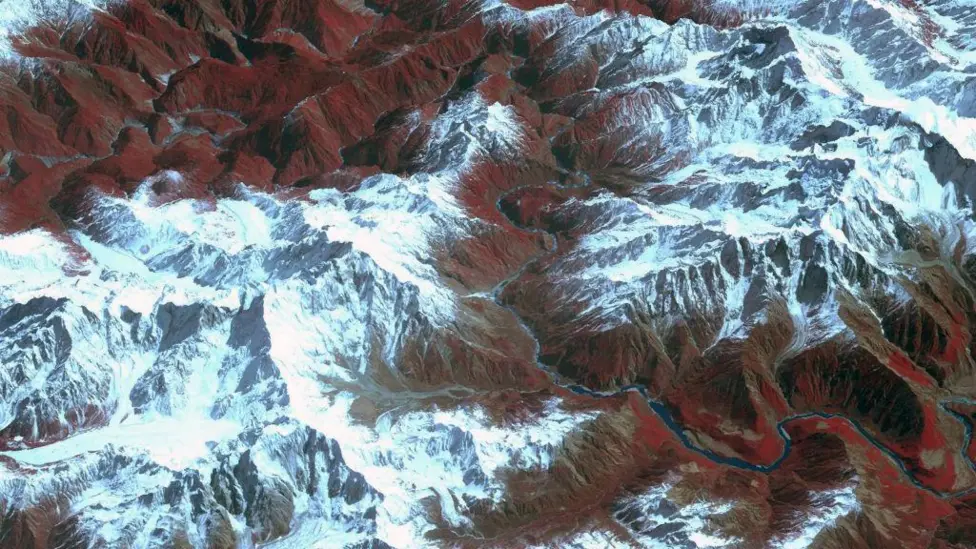
Chinese authorities have begun constructing what will be the world’s largest hydropower dam in Tibetan territory, in a project that has sparked concerns from India and Bangladesh.
Chinese Premier Li Qiang presided over a ceremony marking the start of construction on the Yarlung Tsangpo river on Saturday, according to local media.
The river flows through the Tibetan plateau as well as multiple South Asian nations. The project has attracted criticism for its potential impact on millions of Indians and Bangladeshis living downriver, as well as the surrounding environment and local Tibetans.
Beijing has said the development will prioritise ecological protection and boost local prosperity.
When completed, the $12bn yuan ($1.67bn; £1.25bn) project – also known as the Motuo Hydropower Station – will overtake the Three Gorges dam as the world’s largest, and could generate three times more energy.
Experts and officials have flagged concerns that the new dam would empower China to control or divert the trans-border Yarlung Tsangpo, which flows south into India’s Arunachal Pradesh and Assam states as well as Bangladesh, where it feeds into the Siang, Brahmaputra and Jamuna rivers.
A 2020 report published by the Lowy Institute, an Australian-based think tank, noted that “control over these rivers [in the Tibetan Plateau] effectively gives China a chokehold on India’s economy”.
In an interview with news agency PTI . external earlier this month, Arunachal Pradesh chief minister Pema Khandu expressed concern that the Siang and Brahmaputra could “dry up considerably” once the dam was completed.
He added that the dam was “going to cause an existential threat to our tribes and our livelihoods. It is quite serious because China could even use this as a sort of ‘water bomb'”.
“Suppose the dam is built and they suddenly release water, our entire Siang belt would be destroyed,” he said. “In particular, the Adi tribe and similar groups… would see all their property, land, and especially human life, suffer devastating effects.”
India’s federal government has in the past expressed concerns to China about the impact of the dam on communities downriver. It also plans to build a hydropower dam on the Siang river, which would act as a buffer against sudden water releases from China’s dam and prevent flooding in their areas.
China’s foreign ministry has previously responded to India, saying in 2020 that China has a “legitimate right” to dam the river and has considered downstream impacts.
Bangladesh also expressed concerns to China about the project, with officials in February sending a letter to Beijing requesting more information on the dam.

The Yarlung Tsangpo river courses through the Tibetan plateau [BBC]
Chinese authorities have long eyed the hydropower potential of the dam’s location in the Tibet Autonomous Region.
It’s in a massive canyon that is said to be the world’s deepest and longest on land, along a section where the Yarlung Tsangpo – Tibet’s longest river – makes a sharp U-turn around the Namcha Barwa mountain.
In the process of making this turn – which has been termed “the Great Bend” – the river drops hundreds of metres in its elevation.
Earlier reports indicated that authorities planned to drill multiple 20km-long tunnels through the Namcha Barwa mountain, via which they would divert part of the river.
Over the weekend a Xinhua report on Li Qiang’s visit said that engineers would conduct “straightening” work and “divert water through tunnels” to build five cascading power stations.
Xinhua also reported that the hydropower dam’s electricity would be mainly transmitted out of the region to be used elsewhere, while accommodating for Tibet’s needs.
China has been eyeing the steep valleys and mighty rivers in the rural west – where Tibetan territories are located – to build mega-dams and hydropower stations that can sustain the country’s electricity-hungry eastern metropolises. President Xi Jinping has personally pushed for this in a policy called “xidiandongsong”, or “sending western electricity eastwards”.
The Chinese government and state media have presented these dams as a win-win solution that cuts pollution and generates clean energy while uplifting rural Tibetans.
But activists say the dams are the latest example of Beijing’s exploitation of Tibetans and their land – and past protests have been crushed.
Last year, the Chinese government rounded up hundreds of Tibetans who had been protesting against another hydropower dam. It ended in arrests and beatings, with some people seriously injured, the BBC learned through sources and verified footage.
There are also environmental concerns over the flooding of Tibetan valleys renowned for their biodiversity, and the possible dangers of building dams in a region rife with earthquake fault lines.
[BBC]

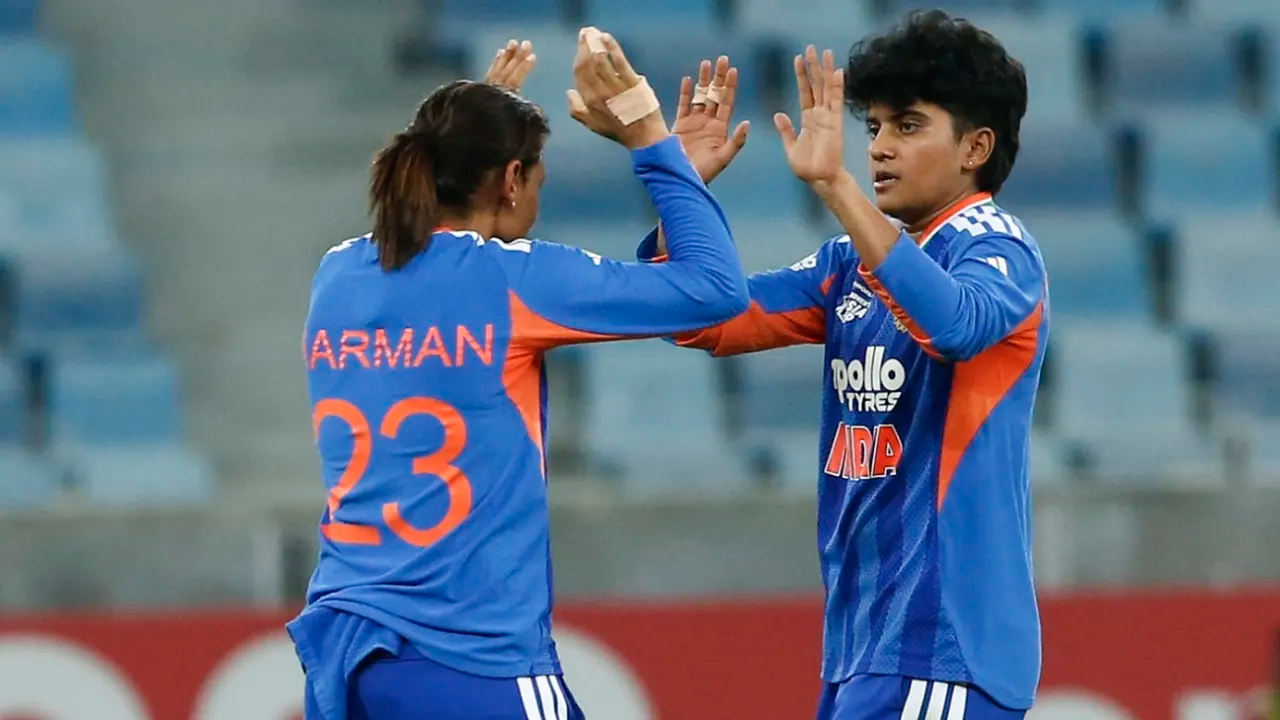
Defending gold-medal winners India overcame hosts Japan by eight wickets in the fourth quarter-final of the women’s cricket competition at the Asian Games in Nisshin on Friday. India chased down 58 in five overs to comfortably secure their place in the semi-finals. They will now face Bangladesh on September 20.
Japan did not exit the competition empty-handed. Their effort to bat as close to the full 20 overs as possible, their running between the wickets and their fielding effort were big positives. But they were bowled out for 57 in 19.5 overs after a solid start, leaving India with little to chase.
India, who opted to field, made the most of a pitch offering turn and bounce, which made stroke-making difficult for Japan. Shree Charani led the attack with another four-wicket haul, continuing an impressive run after taking 4 for 20 in the Women’s T20 Asia Cup final. She struck twice off consecutive balls in the seventh over, removing opener Haruna Iwasaki for 10 before having captain Mai Yanagida caught behind for a duck, but couldn’t convert it into a hat-trick.
Iwasaki and Ayaka Kato Stafford had put on 24 for the opening wicket, but Japan struggled to build partnerships once the stand was broken. Kato-Stafford top-scored with 25 off 47 balls, while Iwasaki made 10 off 22. Japan lost their last eight wickets for just 33 runs.
Charani finished with 4 for 10 from her four overs, while Shafali Verma took 2 for 13 and Deepti Sharma claimed 1 for 14.
Shrevanka Patil, returning to international cricket for the first time in three months after recovering from an ankle ligament injury suffered during the T20 World Cup in June, took 1 for 8 from 3.5 overs. Japan’s innings ended when Patil bowled Nonoha Yasumoto for a duck.
Chasing 58, Shafali opened the innings aggressively, smashing four boundaries in the first over to immediately put Japan under pressure. G Kamalini, who opened in place of Smriti Mandhana, and No. 3 Bharti Fulmali then threw their wickets away to fielders at long-on and point respectively. Left-arm seamer Yasumoto, who dismissed Kamalini, also delivered a wicket-maiden with the new ball.
Shafali finished the game with a six over long-on, staying unbeaten on 40 off just 15 balls. She struck six fours and two sixes at a strike rate of 266.66, as India won with 15 overs to spare.
Scores:
India Women 59 for 2 in 5 overs (Shafali Verma 40*, Richa Ghosh 12*; Nonoha Yasumoto 1-08, Ayaka Kato-Stafford 1-14) beat Japan Women 57 in 19.5 overs (Haruna Iwasaki 10, Ayaka Kato-Stafford 25; Shree Charani 4-10, Shreyanka Patil 1-08, Deepti Sharma 1-14, Shafali Verma 2-13) by eight wickets
[Cricinfo]

Opener Abhishek Sharma hit a record T20 century off 30 balls to set up a crushing 127 run win for India in the third match against Afghanistan and sweep the series 3-0.
Left-handed Abhishek’s ton on Thursday was the fastest in a T20 international between full Test-playing nations as he guided India to 221-7 at New Delhi’s Arun Jaitley Stadium.
Afghanistan, who were the official hosts for the series, checked the opposition surge after Abhishek departed for 108 off 34 balls and India lost their way from 142-1 in 10 overs.
But the Afghan batters once again disappointed and were bowled out for 94 in 14.1 overs.
Afghanistan had posted 156-8 and 159-8 while batting first in the first two matches.
Left-arm spinner Axar Patel struck twice in his first over to send back Rahmanullah Gurbaz, for 15 and Sediqullah Atal, for one. Afghanistan could never recover from the losses.
Seam bowler Nitish Kumar Reddy also took two wickets in one over to return figures of 3-25.
Leg-spinner Ravi Bishnoi wrapped up the Afghanistan innings with his third strike of the match.
Abhishek stood out with his third T20 century as he surpassed Zimbabwean Sikandar Raza’s ton off 33 balls against Gambia in 2024 and Finn Allen’s effort from the same number of deliveries in New Zealand’s T20 World Cup semi-final win over South Africa earlier this year in India.
The only two faster T20I hundreds came in matches between the lower-tiered associate members of the ICC.
Sahil Chauhan of Estonia holds the overall record of 27 balls after his century against Cyprus two years ago, while Muhammad Fahad needed just 29 balls for his ton for Turkey against Bulgaria in 2025.
Abhishek tore into the Afghanistan bowling attack after India were invited to bat first.
The swashbuckling opener hit a six to reach 99. He completed the hundred with a single and sat in meditation pose to celebrate.
He finally fell for 108 off 34 balls to leg-spinner Rashid Khan. The 26-year-old’s knock was laced with nine fours and 11 sixes.
His opening stand of 142 with Sanju Samson, who hit 50, put India on course for a big total but the Afghan bowlers hit back with regular wickets.
Tilak Varma was run out for two by Rashid and Samson departed after his second successive half-century as he fell to pace bowler Azmatullah Omarzai.
Omarzai struck another blow helped by a stunning catch by Rashid in the deep to send back Shivam Dube for 14.
India raised their 100 in six overs but managed just 79 from the last 60 balls.
India now head to Japan for the Asian Games starting September 19 at Nagoya-Aichi.
Afghanistan will send a largely different team to the Asian Games under Darwish Rasooli.
[Aljazeera]

United States President Donald Trump’s administration has asked lawmakers to clear the sale of 48 F-35 fighter jets to Saudi Arabia for an estimated $24.3bn.
“This proposed sale will support the foreign policy and national security objectives of the United States by improving the security of a major non-NATO ally that is a force for political stability and economic progress in the Gulf region,” the State Department said in a statement on Thursday.
The administration said the sale of the jets, the most advanced fighter aircraft the US has, would “not alter the military balance in the region” in keeping with longstanding US policy that Israel must have a military edge over potential regional adversaries.
The announcement comes after the Houthis in Yemen claimed on Wednesday they shot down a Saudi F-15 fighter jet over Marib, a key city in their battle against Saudi-backed Yemeni government forces. The group released video of fighters in the city standing before burning wreckage of what appeared to be a US-made F-15 fighter jet with Saudi Arabian markings.
The Houthis claim the aircraft was shot down with a “locally made” surface-to-air missile, which would mark a dramatic change in the group’s ability to wage war in the area. Until now, Saudi Arabia’s military has enjoyed relative air superiority in Yemen, and has relied heavily on its ability to carry out air strikes in the neighbouring country.
Intensifying fighting between Saudi Arabia and the Houthis reportedly killed at least five people, including three children, on Thursday.
[Aljazeera]

Showers in the Western, Sabaragamuwa and North-western provinces and in Galle, Matara, Kandy and Nuwara-Eliya Districts

Some NPP manifesto promises may be difficult to fulfil – CIABOC DG

Yoshitha and ex-Navy chief Karannagoda’s case fixed for PTC

Court orders probe into Wimal’s rally speech

Court to rule on Dilith’s writ petition on September 30

Shanakiyan urges urgent action over reported death sentence for Lankan in Saudi Arabia

‘Dates have the highest sugar content to fight Coronavirus’

Sunday Island 27 December – Headlines

#SundayIsland 17th December – Headlines

Sunday Island – 28th March

Sunday Island Headlines – 21 March

Sunday Island – 21st February – Headlines
-

 News6 days ago
Gnanasara Thero absconding after SC ruling
-

 News7 days ago
Green Climate Fund (GCF) Regional Dialogue for East and South Asia will be held from 14 to 17 September 2026 at Cinnamon Life at City of Dreams Hotel, Colombo
-

 Opinion5 days ago
From Galkissa (Mount Lavinia) to Tambuttegama
-

 Latest News7 days ago
ITS Giuseppe Garibaldi’ departs Colombo
-

 Business6 days ago
HNB Finance strengthens Board with four independent directors
-

 News2 days ago
US embassy won’t comment on IGP’s probe into joint drug raid
-

 Sports6 days ago
Culture within cricket team worrying authorities
-

 Features5 days ago
Sri Lanka’s university crisis: Brain drain and union action demand urgent reform