
Latest News
US says ‘specific steps’ agreed to end Syria violence after Israeli strikes hit Damascus

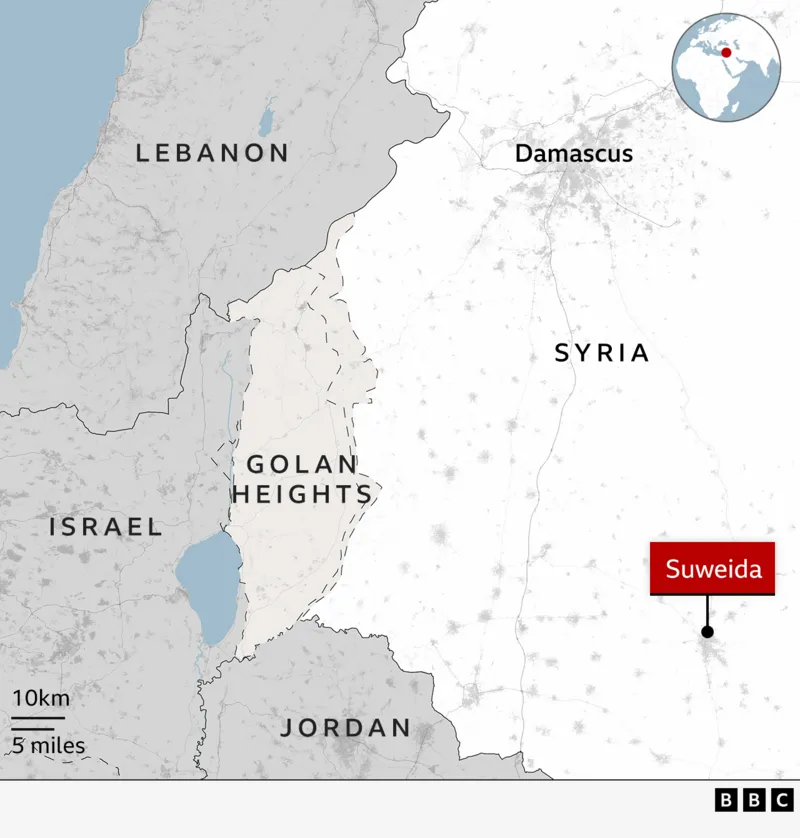
Israel’s military struck the Syrian defence ministry in Damascus and government forces in southern Syria on Wednesday, as deadly sectarian fighting in the mostly Druze province of Suweida continued for a fourth day.
Israel’s Prime Minister Benjamin Netanyahu said its forces were “working to save our Druze brothers and to eliminate the regime’s gangs”. The Syrian foreign ministry accused Israel of “treacherous aggression”.
More than 300 people are reported to have been killed in Suweida since Sunday, when clashes between Druze militias and Bedouin tribes erupted.
US Secretary of State Marco Rubio said he was “very worried” about the violence in the south but believed it would end within hours. “We have agreed on specific steps that will bring this troubling and horrifying situation to an end tonight,” he wrote on X on Wednesday evening.
Syria’s foreign ministry said the country “welcomes the efforts made by the US and Arabian sides” to “resolve the current crisis” peacefully.
Israel has not yet commented on the ceasefire bid.
Syrian troops have started to withdraw from Suweida, according to Syria’s state news agency Sana. It says the military is leaving the city as part of an agreement between the Syrian government and the Suweida’s religious leaders, following the “completion of the army’s pursuit of outlaw groups”.
The Israeli military began striking Syrian security forces and their weapons on Monday, after they were deployed to the city of Suweida for the first time since Sunni Islamist-led rebels overthrew President Bashar al-Assad in December.
Minority groups including the Druze – whose religion is an offshoot of Shia Islam with its own unique identity and beliefs – are suspicious of interim President Ahmed al-Sharaa and his government, despite his pledges to protect them.
Their fears have been heightened by several outbreaks of sectarian violence over the past eight months, including one in May in which dozens of people were reportedly killed in clashes between Druze, security forces, and allied Islamist fighters in Damascus and Suweida.
In the wake of that fighting, the government reached an agreement with Druze militias to hire local security forces in Suweida province from their ranks.
Netanyahu has said he is committed to preventing harm to the Druze in Syria because of their deep ties to those living in Israel and the Israeli-occupied Golan Heights.
Israeli Defence Minister Israel Katz wrote on X on Wednesday afternoon that “the warnings in Damascus” had ended and that the Israeli military would “continue to operate vigorously in Suweida to destroy the forces that attacked the Druze until they withdraw completely”.
He later posted that “the painful blows have begun”, above a video clip showing a TV presenter diving under a desk live on camera as an Israeli air strike hits the nearby entrance to the Syrian defence ministry in Umayyad Square, in central Damascus.
Fadi Al Halabi, a London-based Syrian filmmaker who is visiting Damascus, said he was nearby when he heard the Israeli fighter jets approach.
“People’s faces were so afraid. Everyone started running in the street. No-one knew where to go. Suddenly the air strikes began, targeting some of the most crowded areas, including the ministry of defence,” he told the BBC.
The Israeli military said it also struck a “military target in the area” of the presidential palace in the capital, as well as armoured vehicles loaded with heavy machine guns and weapons on their way to Suweida, and firing posts and weapons storage facilities in southern Syria.
Syria’s foreign ministry said the strikes targeted government institutions and civilian facilities in Damascus and Suweida and killed “several innocent civilians”. “This flagrant assault, which forms part of a deliberate policy pursued by the Israeli entity to inflame tensions, spread chaos, and undermine security and stability in Syria, constitutes a blatant violation of the United Nations Charter and international humanitarian law,” it added.
The Syrian Observatory for Human Rights (SOHR), a UK-based monitoring group, meanwhile reported that the humanitarian situation in Suweida city had rapidly deteriorated.
It cited sources as saying there were clashes in several area of the city and that tanks had attacked the national hospital, causing panic among the scores of casualties from the fighting being treated there. They also said there were acute shortages of water and medical supplies.
Later, the Syrian health ministry said government forces had entered the hospital and found “dozens of bodies” after “outlaw groups withdrew”, according to the official Sana news agency.
A man named Hosam told the BBC he was in the centre of Suweida city and had witnessed civilians coming under fire from artillery and snipers.
“I lost my neighbour today on the street. One of the snipers shot him. We tried to get an ambulance to take him to hospital, but we couldn’t,” he said.
The SOHR says more than 300 people have been killed since Sunday in Suweida province.
They include 69 Druze fighters and 40 civilians, 27 of whom were summarily killed by interior ministry and defence ministry forces, according to the group.
At least 165 members of the government forces and 18 Bedouin tribal fighters have also been killed in the clashes, while 10 members of government forces have been killed in Israeli strikes, it says.
The BBC is not able to verify the SOHR’s casualty figures.
The fighting between Bedouin tribes and Druze militias in Suweida is said to have been sparked by the abduction of a Druze merchant on the highway to Damascus last Friday.
On Sunday, armed Druze fighters reportedly encircled and later seized a neighbourhood of Suweida city that is inhabited by Bedouin. The clashes soon spread into other parts of Suweida province, with tribesmen reportedly launching attacks on nearby Druze towns and villages.
Syria’s interior ministry later announced that its forces and those of the defence ministry would intervene and impose order, saying the “dangerous escalation comes in light of the absence of relevant official institutions”.
Earlier this year, Israel’s prime minister demanded the complete demilitarisation of Suweida and two other southern provinces. He said Israel saw President Sharaa’s Sunni Islamist group, Hayat Tahrir al-Sham (HTS), as a threat. HTS is a former al-Qaeda affiliate that is still designated as a terrorist organisation by the UN and UK, but no longer by the US.
The Israeli military has already carried out hundreds of strikes across Syria to destroy the country’s military assets since the fall of the Assad regime.
And it has sent troops into the UN-monitored demilitarised buffer zone between the occupied Golan Heights and Syria, as well as several adjoining areas and the summit of Mount Hermon.
[BBC]

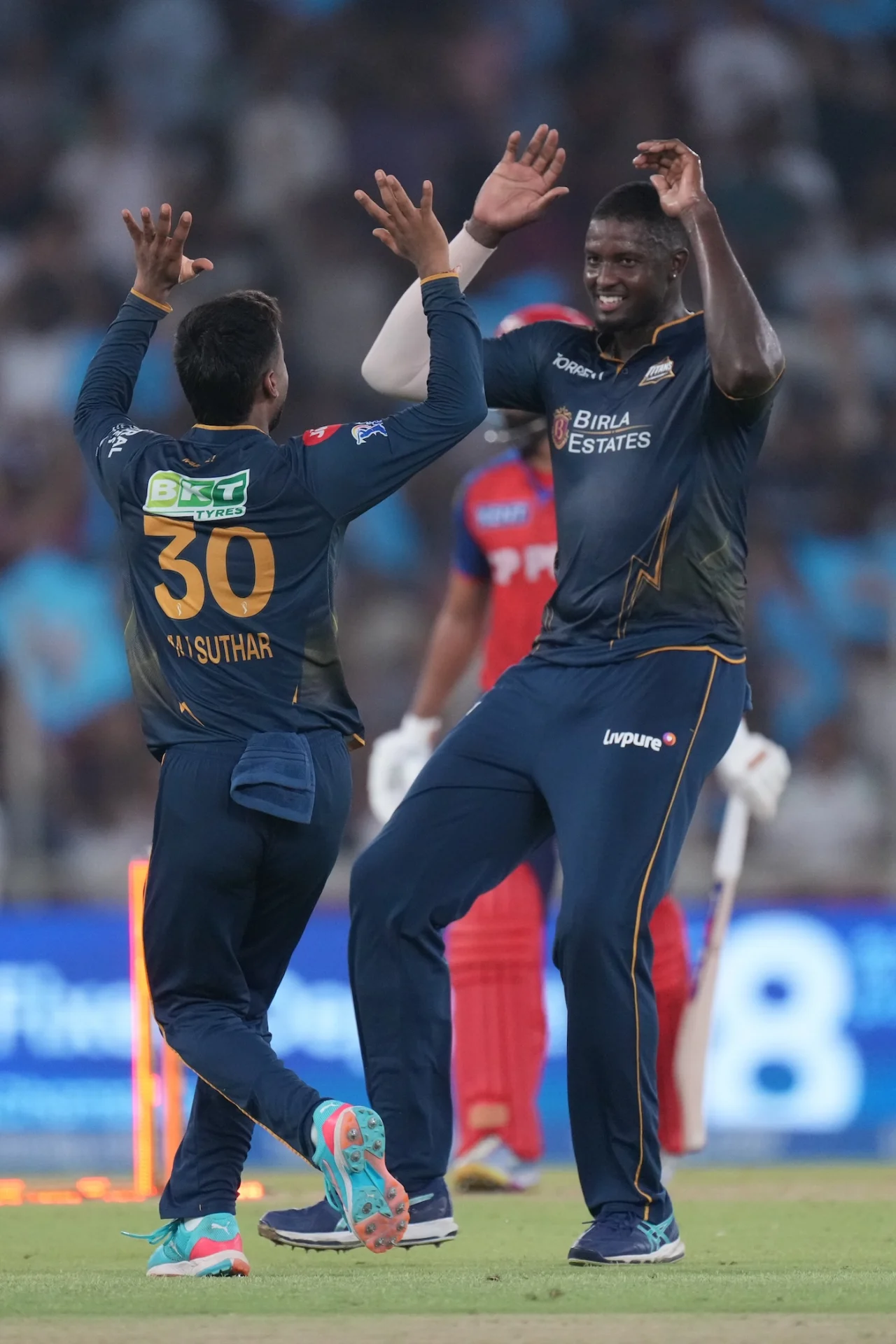
The top half of the IPL 2026 points table is an utter logjam.Punjab Kings (PBKS), unbeaten through their first seven games, have now lost two in a row. And the team that beat them on Sunday night, Gujarat Titans (GT) have won three in a row. All around the IPL, teams that had led secure lives in the top four have endured setbacks over the last few days.
And so the big squeeze. PBKS remain at No. 1, but they’re only one point above GT at No. 5.
GT, however, are the only team in the top five with a negative net run rate (NRR). This may have something to do with their style of play: they rely on their bowlers to ensure their batters don’t have to score at the frenetic rates of some other teams, but that means their margins of victory tend to be less emphatic.
On Sunday, their margin was wafer-thin – one ball remaining – despite the fact that they dominated virtually from start to finish. Their Test-match pace trio of Mohammed Siraj, Kagiso Rabada amd Jason Holder bowled hard lengths on a pitch that offered steep bounce and plentiful seam movement from those lengths, and reduced PBKS to 47 for 5. Suryansh Shedge and Marcus Stoinis ensured that PBKS recovered to post 163 for 9, but this was still very much a GT kind of target, perfect for their style of top-order play.
A measured half-century from B Sai Sudarsan laid the perfect platform, but GT’s scoring rate remained somewhere in the region of their original required rate right through their chase. And suddenly, they ended up needing 11 off the final over. Washington Sundar sealed victory with a penultimate-ball six, but on another day, this could have so easily been the story of GT sleepwalking to defeat.
But the major story was this: for the third match in a row, GT pulled off the trademark GT victory. Straightjacketing their oppositions with the ball, and chasing down sub-170 targets with significant contributions from one or two of their top three.
This was a black-soil pitch with a healthy covering of grass, and it was evident from ball one that it would reward bowlers who hammered away on hard lengths. Ball one from Siraj almost produced a chance, with extra bounce leading to a miscued pull from Priyansh Arya that fell just out of reach of Jos Buttler, who had chased from his spot behind the stumps to the edge of the 30-yard circle at backward square leg. Ball two produced the first wicket: a bit of width for Arya to free his arms, but extra bounce once more to take away his control and bring about a slice to deep third.
Siraj struck again with his next ball, going slightly fuller, getting a bit of swing into the left-handed Cooper Connolly to produce an inside-edge to the wicketkeeper.
Rabada matched Siraj’s excellence from the other end, as the two bowled three overs each in the powerplay, beating the bat multiple times as Prabhsimran Singh and Shreyas Iyer struggled to match their usual rates of scoring. Then, Rabada bowled an outstanding sixth over, which included the wicket of Prabhsimran with a 152kph length ball that cramped him for room on the on-the-up punch, and four straight dots to Nehal Wadhera, including one that zipped past the edge and a bouncer that zipped past the helmet. A wicket maiden completed PBKS’ least productive powerplay since the start of IPL 2025: 35 for 3.
There’s no better resource on a trampoline pitch than a towering fast bowler. Holder is four inches taller than the 6’3″ Rabada, and he immediately got in the act in the seventh over, finding Wadhera’s edge with a hard-length ball slanted across him. And when he nipped a back-of-a-length ball back into Shreyas and bowled him off the inside edge in the ninth over, PBKS were five down and in all kinds of strife.
In GT’s previous game against Royal Challengers Bengaluru (RCB), the left-arm spinner Manav Suthar didn’t bowl a ball. Given the help the quicks were getting on Sunday, GT may have felt inclined to repeat this, but a wayward 13th over from the left-arm seamer Arshad Khan, which went for 16, may have prompted them to bring on Suthar for the 14th.
And Suthar bowled one of the more forgettable overs of the season. Bowlers often get taken to the cleaners in the IPL even when they bowl reasonably good balls, but this was just an old-fashioned bad over: after starting with a single, he sent down two slot balls, a wide full-toss, a wide long-hop, and another full-toss. Shedge took ruthless toll, going 6, 6, 4, 4, 6. Twenty-seven off that over, and PBKS were suddenly looking at a decent total.
That over was the centrepiece of a 79-run partnership between Shedge and Stoinis. Shedge, who was at one stage batting on 13 off 14 balls, rushed to a 24-ball half-century. He then flicked Rabada for a nonchalant six in the 16th over before falling to Rabada’s extra bounce, caught behind for 57 off 29.
Stoinis held the key to a big finish for PBKS, but Holder forced a miscue out of him with an into-the-pitch cutter from around the wicket in the 18th over. When he followed up with an inducker to bowl Xavier Bartlett comprehensively, PBKS were eight down with 13 balls remaining.
Marco Jansen hit Rashid Khan for a six and four in the final over to haul PBKS past 160, but it wasn’t quite the magnitude of finish they may have hoped for. Only 45 came off their last five overs.
This was an innings of many delectable shots: the high-elbow drive through the covers off Bartlett in the first over, the hooked six over fine leg off Jansen in the sixth, and expert riding of the bounce to cut and carve the ball behind point. But there wasn’t a whole lot of intent to force the pace off balls that weren’t in his hitting zones.
And all of GT’s batters played pretty much this way, with the caveat that this was still an awkward pitch to bat on. Jos Buttler picked off a trademark scooped six over short fine leg, but his 26 consumed 22 balls. Nishant Sindhu, making his IPL debut, fell for 15 off 11. Washington scored 16 off his first 14 balls.
And so, it came to a situation where, after Sai Sudharsan and Impact Player Rahul Tewatia fell in the 15th and 17th overs, GT suddenly came under a bit of pressure.
But with 11 to get off the final over, they found a way to push through. Arshad flicked an almost-perfect Stoinis yorker for four, and then, with three to get off two balls, Washington coolly stepped across his stumps and scooped a full-toss over the fine leg boundary to take GT over the line.
Brief scores:
Gujarat Titans 167 for 6 in 19.5 overs (Sai Sudharsan 57, Jos Buttler 26, Nishant Sindhu 15, Washington Sundar 40*; Arshdeep Singh 2-24, Marco Jansen 1-33, Vyjayakumar Vyshak 2-31, Marcus Stoinis 1-26) beat Punjab Kings 163 for 9 in 20 overs (Prabhsimran Singh 15, Shreyas Iyer 19, Suryansh Shedge 57, Marcus Stoinis 40, Marco Jansen 20; Mohammed Siraj 2-28, Kagiso Rabada 2-22, Jason Holder 4-24, Rashid Khan 1-32) by four wickets
[Cricinfo]
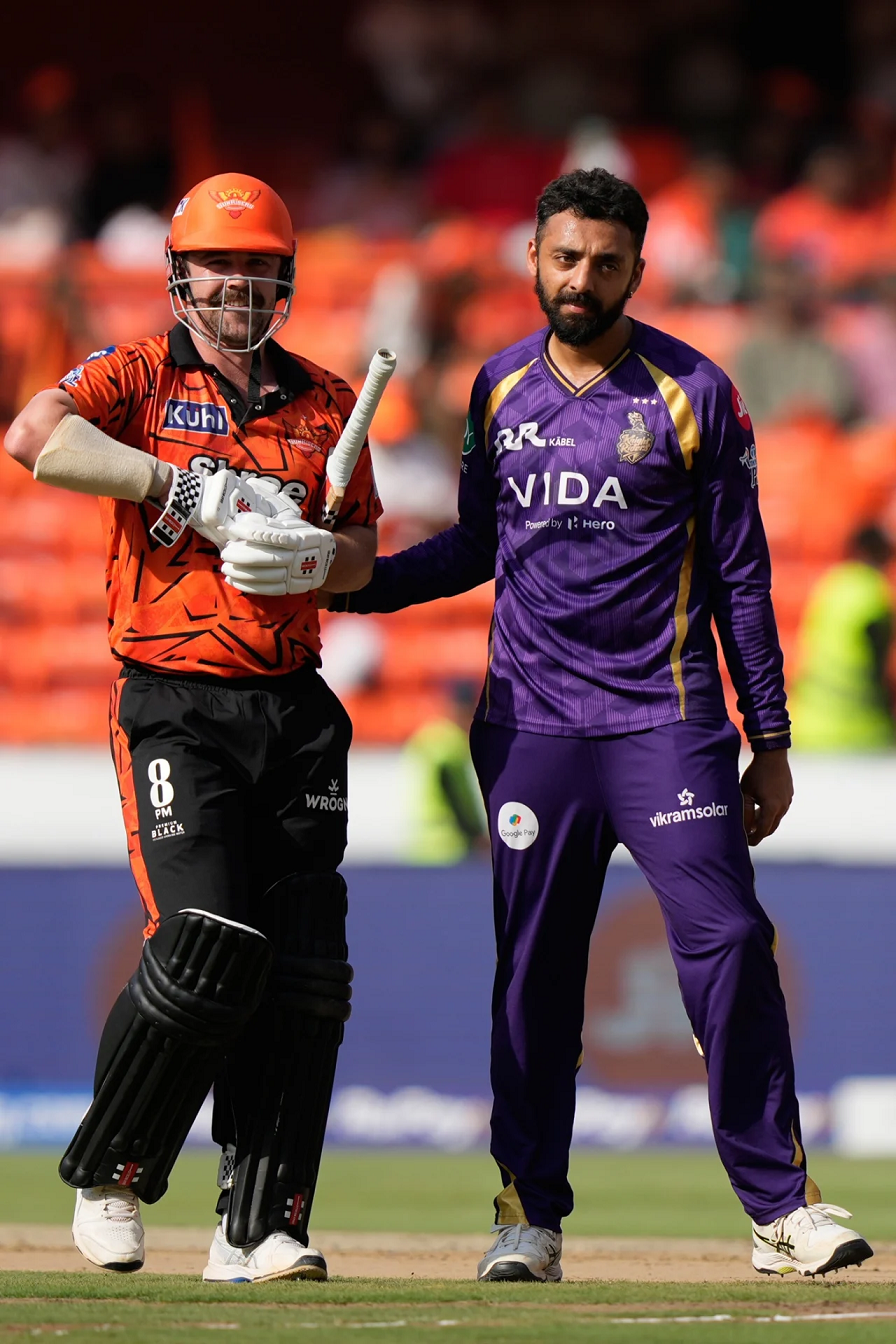
Varun Chakravarthy and Sunil Narine thrived on a slower-than-usual Hyderabad pitch to halt Sunrisers Hyderabad’s five-match winning streak in IPL 2026. Varun and Narine took five wickets between them to have SRH tumbling from 105 for 1 in the ninth over to 165 all out in 19 overs. Along the way, Narine joined the IPL’s 200 wicket club.
Kolkata Knight Riders shaved 71 runs off the target in the powerplay and eventually sealed their third successive win, with seven wickets and ten balls to spare. Angkrish Raguvanshi anchored the chase with a career-best 59 off 47 balls.
Travis Head flew out of the blocks as usual, clattering Vaibhav Arora for four fours in the second over, after SRH had opted to bat. Head didn’t let the momentum let up against Narine, slog-sweeping him for six over square leg and then pumping him over mid-on for four in the third over.
Narine’s opening over was much tighter. Bowling the first over for only the fourth time in his IPL career, he kept Abhishek Sharma to nine runs.
Head also lined up Cameron Green and went onto bring up his half-century off 22 balls. Kartik Tyagi bested Abhishek with a hard-length delivery that was clocked at almost 145kph, but Head maintained a high tempo, which was central to SRH passing 70 in the powerplay for the sixth time in ten innings in this IPL.
Head thumped Varun for 17 off five balls before the mystery spinner hit back to have him holing out in the ninth over. Head’s dismissal triggered an irreparable SRH collapse. Varun proceeded to dismiss debutant R Smaran, who had come in for the unwell Nitish Kumar Reddy, and Aniket Verma.
Once the ball grew older, it wasn’t easy to hit through the line. But that didn’t stop SRH’s batters from staying true to their uber-aggressive philosophy. Both Smaran and Aniket fell while trying to find the boundary or clear it.
After enduring a tough end to the T20 World Cup and an equally tough start to the IPL, Varun has found some form, picking up at least two wickets in each of his last four games.
Heinrich Klaasen started brightly for SRH, but a one-handed screamer from Rovman Powell, a bona fide contender for the catch of the season, stopped him on 11.
Narine then became the first overseas bowler – and third overall after Yuzvendra Chahal and Bhuvneshwar Kumar – to 200 IPL wickets when he knocked over Salil Arora with a beauty that drifted in and swerved away to hit the top of off stump. In the same over, Narine removed Ishan Kishan for 42 off 29 balls with a regulation offbreak, leaving them on 148 for 7 in 16 overs. SRH added 17 to their tally before they were bowled out for the first time this season.
Finn Allen, who had replaced his New Zealand compatriot Tim Seifert, came out attacking in the chase, smacking Pat Cummins for three fours and two sixes. Cummins, however, had the last laugh, having Allen caught at deep midwicket with a delivery that stopped in the pitch.
Allen’s early assault carried KKR to 71 in the powerplay – only twice have they scored more runs during this phase in IPL 2026.
Rahane and Raghuvanshi could afford to sit back and just bunt the ball into the gaps. They forged an 84-run stand for the fourth wicket before SRH’s Impact Player Sakib Hussain bounced Rahane out for 43 off 36 balls. Left-arm wristspinner Shivang Kumar created another opening by snagging Raghuvanshi with a wrong’un. Rinku Singh, however, got the job done for KKR along with Green.
Brief scores:
Kolkata Knight Riders 169 for 3 in 18.2 overs (Angkrish Raghuvanshi 59, Ajinkya Rahane 43, Finn Allen 29, Rinku Singh 22*; Pat Cummins 1-47, Shivang Kumar 1-31, Sakib Hussain 1-17) beat Sunrisers Hyderabad 165 in 19 overs (Abhishek Sharma 15, Travis Head 61, Ishan Kishan 42, Heinrich Klaasen 11, Pat Cummins 10; Sunil Narine 2-31, Vaibhav Arora 1-25, Kartik Tyagi 2-30, Cameron Green 1-34, Varun Chakravarthy 3-36, Anukul Roy 1-08 ) by seven wickets
[Cricinfo]
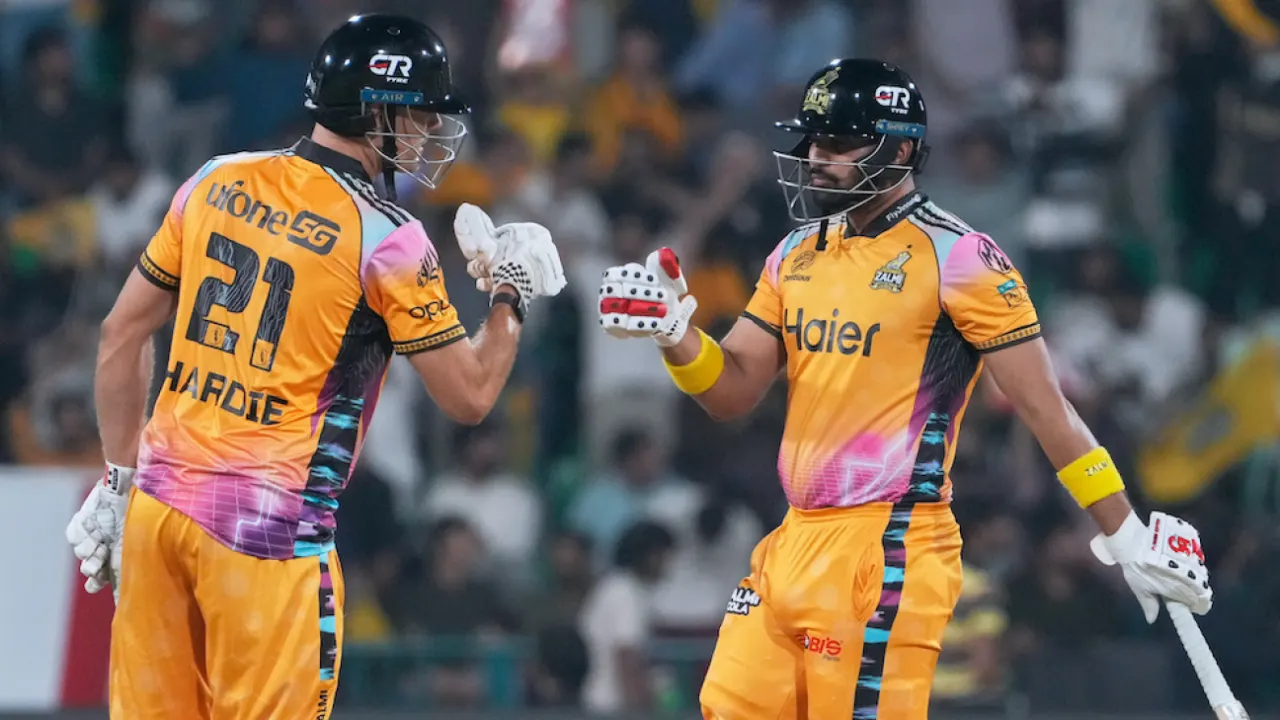
Peshawar Zalmi were crowned PSL 2026 champions as they routed Hyderabad Kingsmen by five wickets on the back of Aaron Hardie’s all-round performance. Hardie’s career-best figures of 4 for 27 skittled Kingsmen for 129, and his unbeaten 56 off 39 took Zalmi over the line after an early stutter threatened to derail the run chase. Zalmi have now become only the third team to win multiple PSL titles – their last triumph being in 2017 – after three-time winners Islamabad United and Lahore Qalandars.
It was a miraculous turnaround by Kingsmen that set their final with Zalmi as no team before them had ever reached the playoffs after losing their first four matches of the season. They had won seven of their last eight matches to reach this far, but having come in touching distance of the coveted trophy, their batters unravelled and registered the lowest first-innings total in a PSL final.
Babar Azam’s decision to insert Kingsmen was influenced by the green tinge on the pitch, but his bowlers did not need to rely much on the surface as Kingsmen threw their wickets one after another. Their entire middle order was wiped amid an awful collapse, during which they lost four wickets for only two runs in eight balls. Two of those wickets were run outs.
Kingsmen had a decent start and sat comfortably on 69 for 2 at the close of powerplay. Their innings, however, spiralled out of control three balls later when Sufiyan Muqeem had Usman Khan plumb in front. A mix-up between Saim Ayub and Irfan Khan resulted in the latter’s run out three balls later, and Glenn Maxwell was caught at mid-on the very next ball as he tried to slap a back-of-a-length delivery from Nahid Rana. The situation further aggravated for Kingsmen when Michael Bracwell’s direct hit accounted for Kusal Perera in the eighth over. The run out resulted in a brief delay and drama as Perera complained to the on-field umpires to have been obstructed by Rana, but the third umpire deemed it to be a legitimate wicket.
That Kingsmen had something to bowl with was because of Ayub, who scored his maiden half-century of the season. The left-hander made 54 off 50 after walking out to the middle in the second over. He got off to a flier, scoring 30 off 14. His 35-run stand for the second wicket with Marnus Labuschagne, who made 20 off 12, seemed promising before the Kingsmen captain became first of the four Hardie’s scalps.
Ayub unfurled his signature flick off Rana in the sixth over and drove him through the covers next ball as he stamped his authority over the opposition, but he had to rein in after the collapse. The longest that a partnership lasted in the innings was 24 balls, it was between Ayub and Hunain Shah for the eighth wicket. Hardie struck twice in the 18th over, accounting for Ayub at the start and Akif Javed towards the end to bag his first T20 four-for.
Mohammad Ali and Kingsmen celebrated passionately when he had Babar caught behind to go along with Mohammad Haris’ wicket in a dream first over. Hunain, the star of the second eliminator, got Kusal Mendis in the fourth over and Akif sent Bracewell packing soon after as Zalmi reeled at 40 for 4.
Hardie launched a counterattack, smashing Hunain for three boundaries, to close the 53-run powerplay. It was the start of a match-winning 115-run partnership with Abdul Samad, who made 48 off 34. The pair milked the bowlers and picked up boundaries occasionally in a magnificent rearguard effort, which took the game away from Kingsmen.
Towards the end, Samad seemed to be clobbering boundaries for fun. He clubbed Ali for a six and a four before he was caught at deep midwicket trying to seal the chase with a maximum with five runs to go. Victory was secured in the next over as Farhan Yousuf steered a bouncer from Hunain to the fine leg boundary.
Brief scores:
Peshawar Zalmi 130 for 5 in 15.2 overs (Aaron Hardie 56*, Abdul Samad 48; Mohammad Ali 3-38, Akif Javed 1-29, Hunain Shah 1-26 ) beat Hyderabad Kingsmen 129 in 18 overs (Marnus Labuschagne 20, Maaz Sadaqat 11, Saim Ayub 54, Hasan Khan 12; Mohamed Basit 1-22, Aaron Hardie 4-27, Nahid Rana 2-22, Sufiyan Moqim 1-23)by five wickets
[Cricinfo]

PM participated in ’Swarnabhivandana 2026,’ Sacred Relic Veneration Ceremony

Holder and Washington star in Gujarat Titans’ nervy last-over win

Varun and Narine push Sunrisers Hyderabad’s off switch

Aaron Hardie owns big stage to help Peshawar Zalmi lift second PSL title

Showers expected in the the Western, Sabaragamuwa, Central, North-western and Eastern provinces and in Polonnaruwa, Galle and Matara districts after 2.00 pm.

Heat Index at Caution Level in the Northern, North-central, Eastern, Sabaragamuwa and North-western provinces and in Colombo, Gampaha, Hambantota and Monaragala districts during the day time

‘Dates have the highest sugar content to fight Coronavirus’

Sunday Island 27 December – Headlines

#SundayIsland 17th December – Headlines

Sunday Island – 28th March

Sunday Island Headlines – 21 March

Sunday Island – 21st February – Headlines
-

 News6 days ago
Treasury chief’s citizenship details sought from Australia
-

 News5 days ago
Rooftop Solar at Crossroads as Sri Lanka Shifts to Distributed Energy Future
-
 News7 days ago
Govt. assures UN of readiness to introduce ‘vetting process’ for troops on overseas missions
-
 News4 days ago
“Three-in-one blood pressure pill can significantly reduce risk of recurrent strokes”
-

 Business7 days ago
ADB-backed grid upgrade tender signals next phase of Sri Lanka’s energy transition
-

 News6 days ago
Central Province one before last in AL results
-

 Sports6 days ago
Well done AKD!
-

 Business7 days ago
Update on independent forensic review