
Life style
Cultural bazaar of rhythm and colour

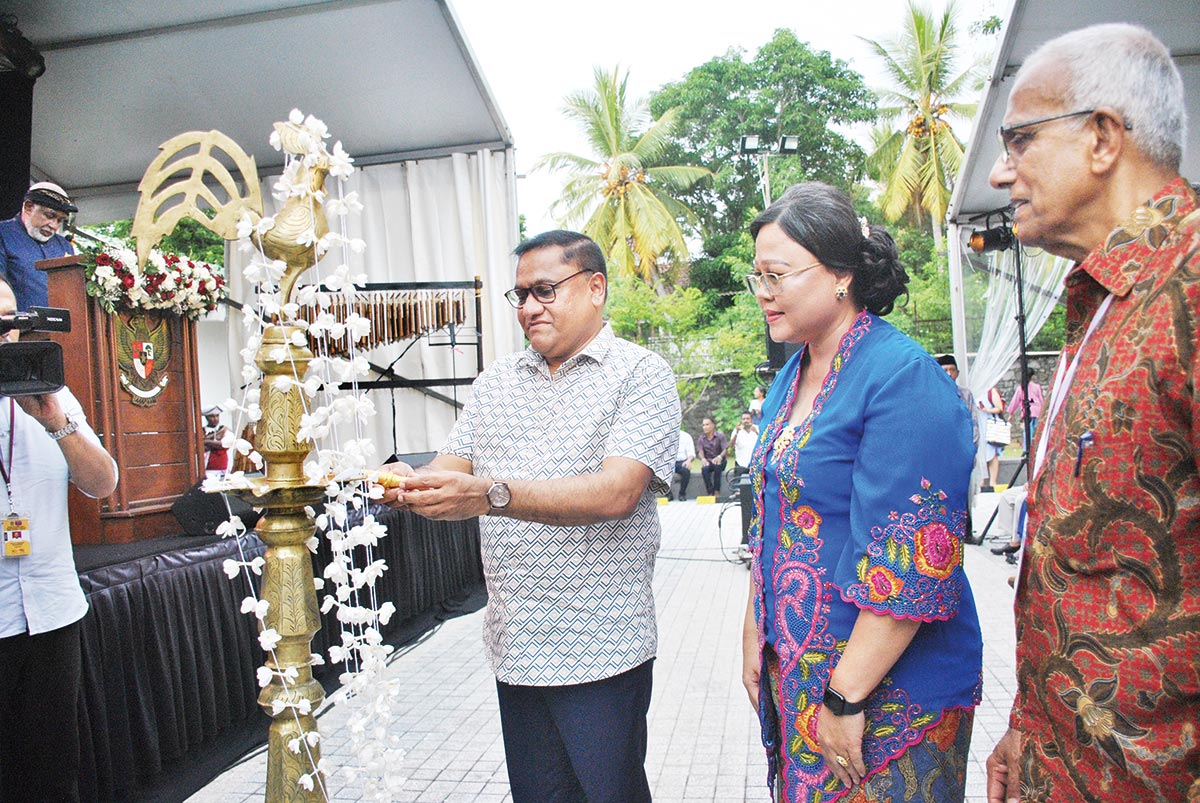
Colombo celebrates Indonesia
The Indonesian Embassy in Colombo hosted the Indonesian Bazaar and Cultural Show at their Embassy grounds
On a balmy Colombo afternoon, the serene lawns of the Indonesian Embassy transformed into a living celebration of culture, colour and camaraderie. It was a vibrant celebration of heritage, craftsmanship and culinary delight too and this was held under the patronage of Indonesian Ambassador Devi Gustina Tobing. This event welcomed diplomats, cultural enthusiasts and many others for an immersive journey into Indonesia’s rich and diverse traditions and was organised in collaboration with Sri Lanka- Indonesian Friendship Association
For this event, the lush gardens of the Indonesian Embassy were transformed into a kaleidoscope of colour, culture and culinary delights.
The evening began with a heartfelt speech by the Ambassador Devi Adorned in a stunning batik Kebaya, she welcomed the guests with a customary grace. In her speech she said “Indonesia festival and bazaar are an annual event in collaboration with the Sri Lanka Indonesian Friendship Association and proceeds of the bazaar would be donated to people of Sri Lanka who are in need.
The event also commemorated the 70th anniversary of the Asian-African conference which both Indonesia and Sri Lanka co-initiated in 1955 In her speech she also said “This colourful event was a showcase of the richness and diversity that Indonesia possesses. Today’s event is more than just a celebration – it is a relationship between Indonesia and Sri Lanka, two nations that share deep historical, cultural and maritime ties going back centuries. I would like to thank the Sri Lankan Ministry of Foreign Affairs, our partners who continue to support and celebrate this partnership.”
-

- Graceful movements
-

- Beautiful rendition of song ‘You Raise Me Up” in collaboration with Bright Light Band
-

- Special performances Indonesian traditional bamboo instruments
She also said this event is more than just a bazaar; it’s a celebration of Indonesia’s vibrant cultural tapestry expressed through traditional dance, music, food and handicrafts. It is also a testament to the enduring partnership between our two countries.
The Chief Guest, Minister of Foreign Affairs and Tourism Vijitha Herath said, “We are proud of this shared legacy and committed to strengthening it in every possible way. I thank the Indonesian Embassy for bringing an amazing experience to Colombo full of art, flavours and warm hospitality. He also said events like this reaffirm the enduring spirit of Bandung and the importance of regional unity. From sizzling satay skewers wafting over coconut shell embers to the fragrant Indonesian cuisine, the bazaar was a feast for the senses. This event is more than just a bazaar, it was a celebration of Indonesia’s vibrant cultural tapestry expressed through traditional dance, music, food and handicrafts. It is also a testament to the enduring partnership between our two countries. Tucked beneath shaded canopies fluttering in the breeze there were many vendors selling batik sarongs, food and other traditional jewellery,
-

- Vietnamese Ambassador Trinh Tam and husband
-
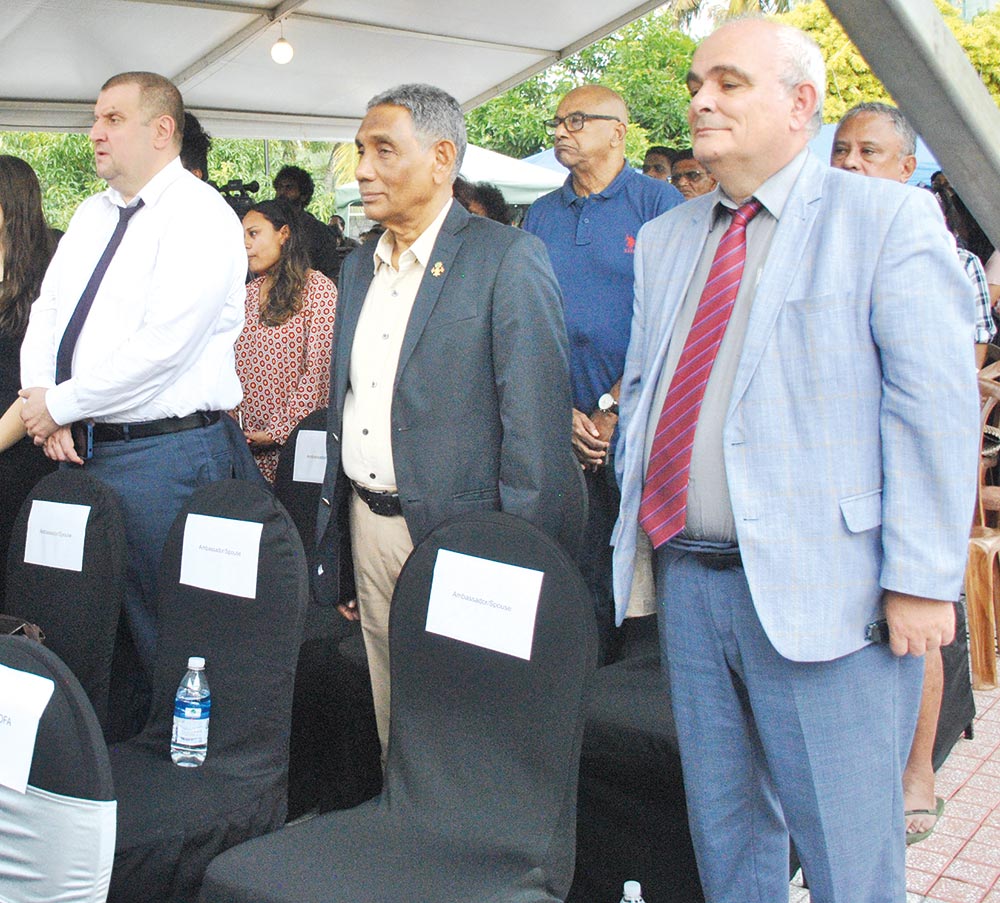
- Maldivian envoy Masood Imad and Ambassador of Russia Levan Dzhagaryan
-
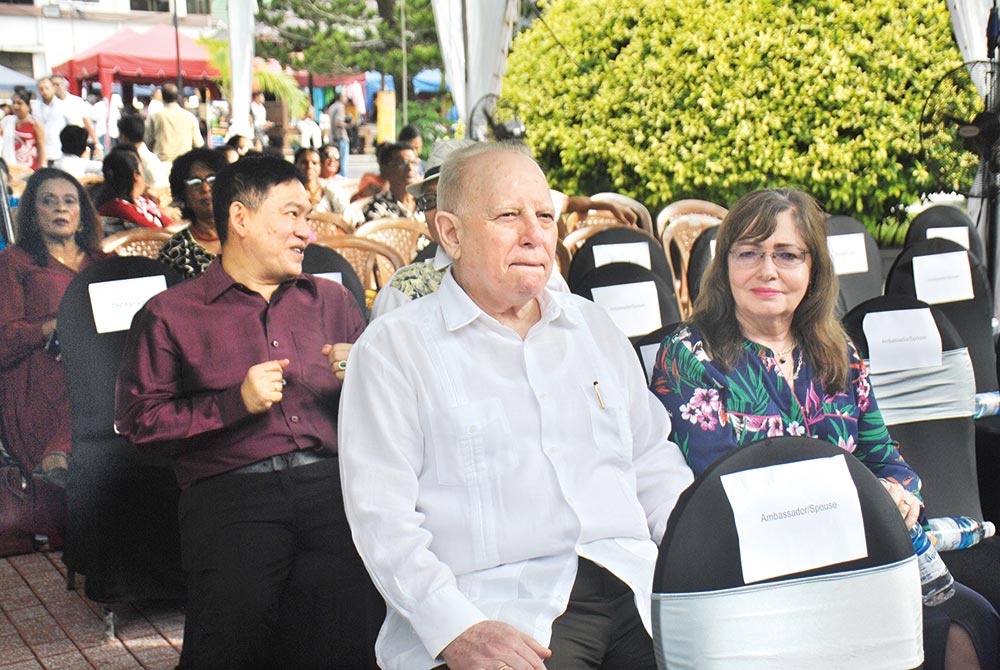
- Ambassador for Cuba in Sri Lanka Andres Marcelo Gonzales with his wife
At the heart of the event was a spell binding showcase of Indonesian traditional dance performances, each dance reflected the ancient stories from the diverse islands of the archipelago.
The audiences were mesmerized by the different dance forms. With every beat and gesture, Indonesia’s cultural soul pulsed through the evening air.
The true highlight came when the audience took turns trying their hands at the bamboo percussion instruments, Angklung, creating a shared rhythm that echoed across the garden. There were many stalls offering Indonesian cuisine, crafts, textiles and wellness products. As twilight deepened the evening transitioned into an unforgettable cultural showcase. Traditional Indonesian dancers in resplendent costumes took centre stage.
The Indonesian Bazaar and cultural evening were more than an event – it was a journey across islands, a night of friendship, flavours and shared rhythm. For Colombo it was a magical step into the heart of Indonesia.
As the night came to a close, the message was clear, in diplomacy as in music, harmony matters most. But beyond this festive atmosphere, the event carried a powerful message; culture is a language of diplomacy, one that speaks to hearts across borders.
(Zanita) ✍️
Pics by Darmasena Welipitiya

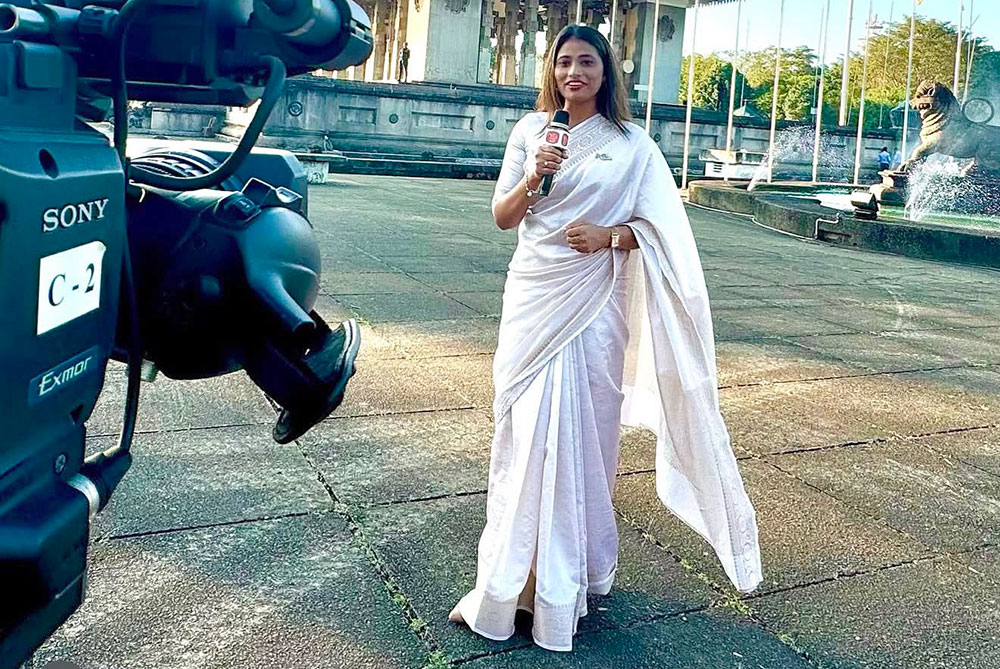
Shareefa: Voice that connects
From radio waves to the stage and the spotlight, Shareefa Thahir has carved a distinctive space for herself in Sri Lanka’s media and entertainment scene.
A versatile programme presenter, radio announcer, emcee, moderator and news anchor, she is known for her confident presence, engaging personality and effortless ability to connect with an audience.. In this interview, Shareefa talks about her journey, the evolving world of media, the art of communication and the passion that continues to drive her.
 (Q) You have worked across radio, TV, events and news. How did your journey in media begin?
(A) My journey in media began when I was just three years old. I stood in front of a microphone and recited a poem, and what started as an annual appearance eventually led to youth programmes on radio when I was 16. From there, I joined the channel and became part of the panel, and over the years that little beginning grew into a career spanning radio, television, news, events and training.
I have to thank my mother, who introduced me to this world and has always been my pillar of support. My father would drop me to work and bring me home because I was so young, and my brothers, despite all the teasing, were always silently proud and supportive. I have also been fortunate to have wonderful colleagues and mentors who have shaped me along the way.
(Q) What first attracted you to broadcasting and presenting?
(A) I think I was introduced to it before I was old enough to know what it meant. But as I grew older, I realised that I genuinely loved communicating and connecting with people.
There is something very special about being able to reach people simply through your voice or your presence, and that connection is what kept me in the profession.
(Q) Was there a particular person or experience that inspired you to pursue a career in media?
(A) My mother would be the obvious answer because she introduced me to it in the first place. But beyond that, it has been the people I have met throughout my career — colleagues, senior broadcasters and mentors — who have constantly inspired me.
I have learnt something from almost everyone I have worked with, and I think that is one of the privileges of being in this profession for so many years.
(Q) What has been the most defining moment of your career so far?
(A) There have been many moments that I am grateful for, but winning Best Presenter in both radio and television is certainly among the most defining. Being recognised in two different mediums that have been such an important part of my career was very special to me.
But beyond awards, I think the fact that I have been able to build a career over so many years, starting as a child, and continue to grow and evolve with the industry is what I value most.
(Q) What makes you a good radio presenter in an age dominated by social media and digital platforms?
(A) I think authenticity still matters. Platforms may change, but people still want to feel a genuine connection.
Radio is particularly intimate because the listener cannot see you. You have to create that connection through your voice, your personality and your ability to make someone feel that you are speaking directly to them.
(Q) How do you build a connection with listeners when they cannot see you?
(A) By being real. I don’t try to sound like a “radio personality.” I speak to people.
You have to remember that there is an individual listening on the other side — perhaps in a car, at work or having breakfast. When you speak to that person rather than to an anonymous audience, the connection becomes much more natural.
(Q) What is the biggest challenge of keeping an audience engaged during a live programme?
(A) The biggest challenge is that live broadcasting gives you no second take. You have to constantly read the audience, respond to what is happening and keep the energy going.
Preparation is important, but so is the ability to think on your feet. Sometimes the best moments are the ones you never planned.
(Q) How do you prepare yourself before going on air?
(A) I prepare by knowing my subject well, understanding what the audience needs from me and having a clear idea of where I want the conversation to go.
But I don’t prepare every word. After so many years in broadcasting, I believe preparation should give you confidence, not make you sound rehearsed.
(Q) Has there been a particularly memorable or challenging moment during a live broadcast?
(A) There have been many, particularly in news. Live broadcasting teaches you to remain calm when things don’t go according to plan.
Technical failures, breaking developments or unexpected situations can happen at any time. You learn to think quickly, stay composed and, most importantly, never let the audience feel your panic.
(Q) How do you adapt your personality and presentation style to different audiences?
(A) I don’t change who I am; I change how I communicate.
A news bulletin requires discipline, a corporate conference requires a certain level of formality, while an awards ceremony may require much more energy. The key is understanding the audience, the occasion and what the room needs from you.
(Q) What has been the most memorable event you have hosted?
(A) Having hosted more than a thousand events, it is difficult to choose just one. I have been privileged to host everything, from National Day celebrations and the swearing-in ceremony of the President, to international conferences, major corporate events and award ceremonies.
Each comes with a different kind of responsibility. Some are significant because of the people in the room, some because of the occasion itself, and others simply because of the memories created.
For me, the most rewarding part is being trusted to hold the room together and make the audience feel that they are part of the occasion.
(Q) How do you maintain objectivity when reporting sensitive or emotional stories?
(A) You have to remember that the story is not about you. As a news presenter, my responsibility is to communicate information accurately, fairly and responsibly.
You can recognise the human emotion in a story without allowing your personal feelings to compromise your professional responsibility.
(Q) People often see the presenter on screen. What is Shareefa like away from the microphone and camera?
(A) I’m actually quite a simple person. I enjoy people and good conversations, but I also value my quiet time.
The person people see on stage or on screen is a part of me, but it isn’t all of me. Away from the microphone and camera, I’m simply Shareefa.
(Q) How do you deal with criticism, especially in the age of social media?
(A) You learn to distinguish between criticism that can help you grow and criticism that is simply noise.
Being in the public eye means you cannot expect everyone to like everything you do. I listen, reflect when there is something worth learning from, and then move on. You cannot allow every opinion to define you.
(Q) Which of your roles — presenter, announcer, emcee, moderator or news anchor — is closest to your heart?
(A) Radio will always have a very special place in my heart because that is where everything began.
But each role has given me something different. News taught me responsibility, television taught me visual communication, emceeing taught me to read a room, and moderating taught me to listen.
So I don’t think I can choose just one. At heart, I think I am simply a communicator — and after all these years, I am grateful that I still genuinely love what I do. (Zanita)
By Zanita Careem
Dr Ifthikar Shine Nissar is an accomplished early education specialist whose professional journey has taken her from Sri Lanka to the United States, where she has dedicated decades to shaping better educational experiences for young children. She has more than two decades of experience in early childhood education and holds advanced qualifications in Early Education and Educational Administration and leadership. Her doctoral research focused on creating more inclusive preschool classrooms, particulary for children with special needs whose journey reflects a blend of professional achievement, international exposure and a deep connection to her Sri Lankan roots. With her inspiring outlook and multifaceted experience, she brings a refreshing perspective to every conversation, while remaining closely connected to the people, culture and values that have shaped her journey. But behind her international career is a very peronal connection to Sri lanka. Having migrated from Sri Lanka, Dr Shine has carried her Sri Lankan roots with her throughout her journey. Her connection to the country remains strong always. Her visit to Sri Lanka recently have given her an opportunity to reconnect with its people while sharing her experience and knowledge in early childhood education.
A Sri Lankan American Muslim, who has built a successful career in educational leadership in the last 36 years in the United States, is known as Dr. Shine. According to Dr. Shine, her nickname was given to her at birth by her maternal aunty because she she saw in her a bright and radiant child. What began as a family endearment, stayed with her, eventually becoming the name by which she is known – a fitting reflection of the warmth, energy and positivity she brigs to those around her
The conversation with Dr. Shine was inspiring and empowering. She said, “My personal, educational, and professional journey has been rewarding, challenging and everything in between.” The love and support of family and friends, along with great mentors, has been the foundation for my overall success. None of this would be possible without God’s help. I thank God for my challenges as it continues to make me resilient.
During her recent stay in Sri Lanka, Dr. Shine experienced the island’s warm hospitality, vibrant culture and breathtaking natural beauty. She said, “I explored some of the country’s nature and scenic attractions while enjoying the rich cuisine.” The warmth of my family and friends and the diverse charm is what I take back with me as fond memories.
Dr. Shine earned her doctorate from California State University, San Bernardino (CSUSB) in Educational Leadership. Her research focuses on inclusive practices in Early Childhood Education Settings. She holds two M. A. Degrees – one in Educational Administration and the other in Early Childhood Special Education. Her undergraduate degree is in Child development. She holds teaching and administrative services credentials.
(Q) What inspired your interest in contributing to Early Childhood Education (ECE) in Sri Lanka?
(A) I have always carried a lifelong dream of giving back to Sri Lanka. The time is now, as there is a need for my educational background and expertise in ECE in Sri Lanka.
My connection to Sri Lanka has never left me. It is where my educational journey began. It remains very close to my heart. My primary education was at Southlands, Galle and secondary at St. Pauls’ Milagiriya, Colombo.
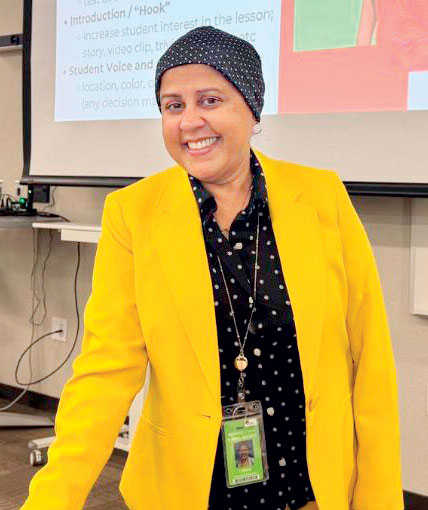
Dr Shine Nissar: An accomplished professional whose journey reflects dedication, knowledge and commitment
I built my career in educational leadership in the United States along with my education, one degree at a time.
(Q) If you get an opportunity to serve Sri Lanka in Early Childhood Education (ECE), how will you contribute?
(A) I would be honoured to serve as a professional partner for any organisation, government/private, in strengthening the profession of ECE.
My contribution could include professional development, conference presentations, leadership training, advisory or board/committee service, mentoring, workforce development, and volunteer initiatives. I would especially like to support not only teachers, but also ECE and Child Development administrators, principals, directors, government and private agencies, university students, and parents.
(Q) You have also served as an Adjunct Professor in the United States. How could that experience contribute?
(A) This is an area I am particularly passionate about. Through my work as an adjunct professor. I have had the privilege of preparing university students who are entering the education profession. I see tremendous potential in creating stronger connections between universities and the ECE workforce with recruiting, inspiring, mentoring, and preparing young people to enter the field while simultaneously strengthening the skills and capacity of educators already serving children.
My personal, educational, and professional journey has taught me that workforce development is one of the most powerful ways to create sustainable educational change.
(Q) Why is this mission so personal to you?
(A) My journey has taken me from Sri Lanka to the United States, where I have had the privilege of becoming an educator, administrator, educational leader, and university professor. Earning my doctorate and serving in UNICEF Sri Lanka in some capacity has been a lifelong goal.
I see this opportunity not simply as another professional accomplishment, but as a way of bringing my experience home and contributing to the country that shaped my earliest years. My education and expertise in Early Childhood Education (ECE), Early Childhood Special Education (ECSE), School Administration, Special Education, Diversity Equity Inclusion (DEI) and Instruction Leadership can be an asset to the youngest scholars, families and educators in Sri Lanka.
(Q) Would you be willing to work anywhere while continuing your career in the United States?
(A) Absolutely. I would welcome the opportunity to begin contributing now through collaboration, professional development, conferences, advisory work, committees, boards, or volunteer service while continuing my professional responsibilities in the United States.
I believe meaningful service does not always require us to be in one place. Technology and international collaboration allow us to share knowledge, mentor others, and build partnerships across borders.
(Q) What is your long-term vision?
(A) My vision is rooted in service. I hope to continue the community leadership services that I began in Sri Lanka over 30 years ago. Now I am ready to take this to the next level and allow the journey to unfold naturally.
When I eventually retire from my career in the United States, I would love to devote even more of my time, experience, and knowledge to Sri Lanka. Whether that takes the form of advisory work, volunteer service, leadership, or another opportunity to contribute, I would consider it an extraordinary privilege.
My vision and mission in life are simple: to serve and to open doors that create opportunities for others. The way I hope to fulfill that mission is by using what I have learned through my personal, educational, and professional journey to strengthen the people who shape the lives of our youngest children.
Education has a ripple effect that reaches far beyond one child and can influence generations. When we empower educators, administrators, university students, and families, we strengthen the children they serve. When we strengthen children, we strengthen families and communities. And when we strengthen communities, we strengthen the future of Sri Lanka.
For me, this is not simply about education. It is about creating opportunities, building capacity, opening doors, and leaving a legacy of service.
If there is an opportunity to connect, collaborate volunteer, advise, present, mentor, or contribute to Sri Lanka’s ECE vision. I would be honoured to have that conversation.
My experience is rooted in Sri Lanka, strengthened through education and professional service in the United States, and guided by a deep belief in the transformative power of early childhood education.
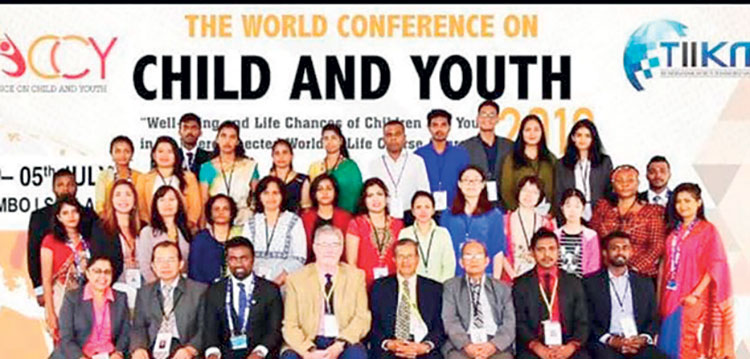
I have served in Community Leadership Roles in Sri Lanka since I migrated to the US in 1990. From providing radio/TV interviews to share my knowledge and expertise, providing Professional Development training for the staff at Sumaga Special Needs School, participating and collaborating in Child Development Conferences with The International Institute of Knowledge and Management (TIIKM), mentoring and supporting university students, collaborating with professors from the Education Department and Special Education Professors of Open University and finally to partnership with the ECE Inclusion Conference in CA to provide scholarships to ECE staff in Sri Lanka.
Perhaps the seeds we plant through service today will grow into something much greater tomorrow.
“Every child deserves not only access to education, but an exceptional beginning.”
In the heart of Colombo, on the city’s most recognisable dining lane, AQUA Pazza brings together Italian soul and Spanish spirit under one roof. Part modern Italian restaurant, part Spanish tapas and wine bar, the newest chapter of the AQUA Family story is located strategically at Park Street Mews, a destination where design, flavour, and togetherness meet in a setting that is at once sophisticated and delightfully unexpected.
Dressed in signature hues of red and ivory white and anchored by abstract art, AQUA Pazza is the Colombo expression of a culinary journey that began on Sri Lanka’s southern coast and the capital’s newest destination for wine-led Mediterranean dining.
The AQUA journey began in 2019 with AQUA Forte, an authentic Italian fine-dining restaurant housed in a beautifully restored Dutch colonial building in the heart of UNESCO-listed Galle Fort. Founded by four friends, united by a shared dream, Roberto Vicario, Paolo Gavioli, Ian Fernandez, and Anna Lelia — AQUA Forte set out to deliver true Italian cuisine: not adapted, not diluted, and not commercialised, but grounded in tradition, craftsmanship, and premium ingredients.
Today, AQUA Forte is widely regarded as one of Sri Lanka’s finest Italian restaurants, recognised internationally as a World’s 50 Best Discovery, nominated by Lonely Planet as the best Italian restaurant in the country, and featured by Condé Nast Traveller, The Telegraph, and other leading international publications. It is also home to one of the most extensive Italian wine collections in Sri Lanka.
From this foundation the AQUA Family grew: AQUA Pizza, serving authentic Neapolitan pizza in Galle Fort and at Park Street Mews, Colombo; AQUA Forno, an Italian bakery and café in Galle Fort and Weligama; and AQUA Pazza, the group’s boldest concept yet, in the heart of Colombo.
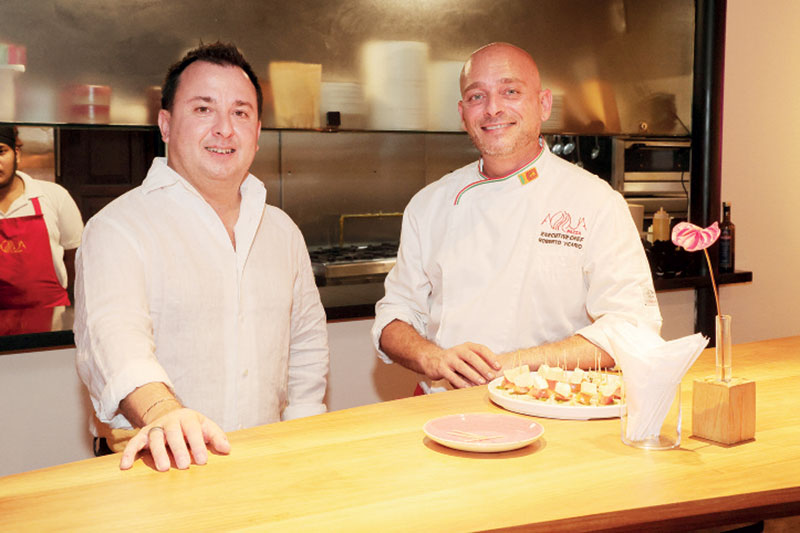
AQUA Pazza is shaped by its founding trio namely, Roberto Vicario (Executive Chef & Managing Director), Paolo Gavioli, and Ian Fernandez who have created a menu that honours their Italian and Spanish heritage to deliver a dining experience that is unique and bold.
Chef Roberto’s journey is central to the brand’s identity. Originally trained as an oil and gas engineer, he left the corporate world to return to Italy and formally study cuisine, bread, pastry, and gastronomy. His technical precision, classical training, and deep respect for Mediterranean culinary heritage are reflected in every dish, from refined Italian classics to expressive Spanish tapas.
Why “Pazza”?
“Pazza” means crazy in Italian, a name that captures the restaurant’s willingness to blend traditions, challenge norms, and cultivate an atmosphere where food becomes a shared adventure.

Voice, presence, passion

How India changed Sri Lanka’s IMF story: Former FM reveals Sitharaman’s behind the scenes role

Administrative error nearly cost me a year at University

Dinusha delivers an escape for the ages

The Biological Clock is ticking: Can Experience Save Sri Lanka’s future?

Giving children the right start: Dr Shine Nissar’s educational vision

‘Dates have the highest sugar content to fight Coronavirus’

Sunday Island 27 December – Headlines

#SundayIsland 17th December – Headlines

Sunday Island – 28th March

Sunday Island Headlines – 21 March

Sunday Island – 21st February – Headlines
-
 Features7 days ago
From the First to the 22nd: A short history of Amendment Politics and Reform Frustrations
-

 News5 days ago
Missing doctor’s body found in Mahiyanganaya
-
 News5 days ago
Australia declines to release Finance Secy Suriyapperuma’s citizenship details
-
 News7 days ago
Ex- Atamasthanadhipathi uses Magistrate’s gate to enter court
-

 News5 days ago
22A: BASL suggests CJ recuse himself from hearing petitions
-

 News2 days ago
Eight politicians in drug kingpin probe
-

 Editorial6 days ago
Govts. drag feet as undergrads age
-
 Features4 days ago
Insights from Chieftains of Uva: Genealogy of two Kandyan Families – Part II