
News
It is the responsibility of the government to ensure that the advantages of economic growth benefits the rural communities – President

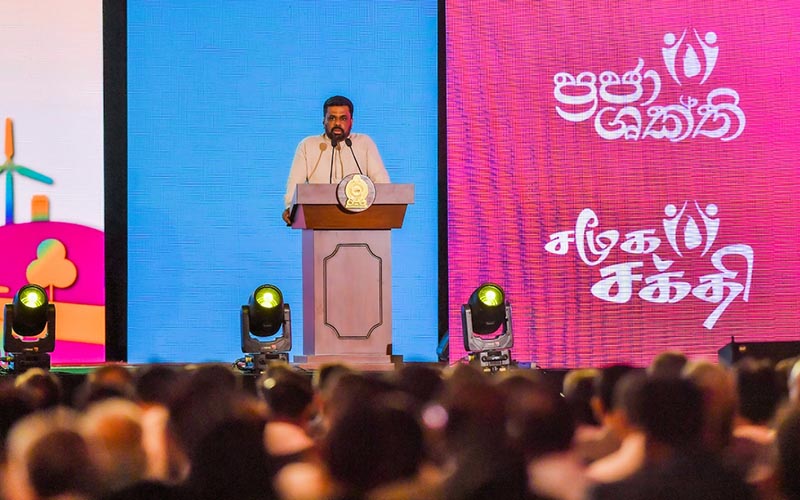
President Anura Kumara Disanayake emphasized that it is the responsibility of the government to ensure that the advantages of economic growth benefits the rural communities.
The President made these remarks on Friday (04) at the launch of the “Prajashakthi” National Programme held at Temple Trees.
The “Prajashakthi” National Programme is a key initiative of the current government, aiming to empower communities and ensure the fair distribution of economic benefits across society.
The Secretary to the Ministry of Rural Development, Social Security and Community Empowerment, Sampath Manthrinayake, welcomed participants to the programme while the Secretary to the President, Dr. Nandika Sanath Kumanayake outlined the objectives of the initiative.
Following this, the Chairman of the “Prajashakthi” National Operations Committee and Minister of Rural Development, Social Security and Community Empowerment, Dr. Upali Pannilage, introduced the national movement.
The official “Prajashakthi” website was also launched by the President during the event.
The Full Text of the Speech delivered by President Anura Kumara Disanayake:
“A few years ago, our country experienced a severe economic collapse. While there were various contributing factors to this collapse, we must not forget that ordinary people in rural areas, who played no part in its cause, endured the greatest hardships.
They were affected in areas such as food affordability, access to quality healthcare, educational opportunities and the development of rural infrastructure. Therefore, the present government has both a responsibility and a challenge to uplift rural lives. This is a duty that cannot be abandoned.
One of the top priorities of our government is to eradicate rural poverty as a key step towards national progress.
Today, we have managed to bring the economy to a relatively stable state. We have maintained the dollar’s value close to Rs. 300, steadily raised foreign reserves, directed treasury revenue to meet our goals and reduced interest rates to single digits. These are notable indicators of economic stability. We have also been able to gradually restore investor confidence in the country.
Numerous stalled projects have been successfully renegotiated and restarted. In addition, we have received a substantial number of proposals for new investment projects, many of which were approved at the recent Cabinet meeting. Therefore, our focus is now on new investments and development projects. Through these effective and results-driven investments, we can simultaneously achieve economic stability and economic growth.
However, if these economic benefits do not benefit the rural population, then even achieving growth in statistical terms is not important.. This is why we must pursue economic growth on one hand and economic expansion on the other. If rural people are not given economic opportunities and included as stakeholders in the economy, they will become marginalised. Our core approach must therefore be to expand the economy and integrate rural communities into it.
This is possible only if the current rural economic activities are transformed into more productive, efficient and profitable ventures. These sectors should be developed to become thriving businesses. Widening their access to economic opportunities is also vital. Hence, we are prioritising the creation of new economic avenues for the rural population, making them active players in the economy.
Poverty has gone beyond being an economic issue and become a deep-rooted social problem. Poor communities have become isolated from society. Therefore, eliminating rural poverty is one of the government’s primary responsibilities. Education plays a key role in this. There is a direct correlation between poverty and lack of education. Thus, we must expand educational opportunities further. Despite all efforts, every society has a segment of people who will face difficulties. Even in so-called developed nations, such communities exist. A welfare system is required to support these groups.
Welfare is not inherently a bad tool. If a population is vulnerable at a given time, it is the government’s responsibility to protect them. However, welfare has often been misused, turning into a political tool. This has led to growing criticism of such programmes due to their politicisation.
The policy of the National People’s Power government is to provide targeted welfare. Assistance must be given to the right people for the right reasons. I believe the government holds this responsibility and society must also understand its importance. In our society, there is a belief that anything given by the state must be received by all. That is a mistaken belief. Our state is not built on such a culture of entitlement. Our culture is to protect those who need protection. Because of distortions in past practices, those who don’t need aid often compete to obtain it, making it harder to support those who truly do.
We must therefore foster a new culture. People must be self-aware enough to recognise whether they truly deserve government support. Even if you have the ability, the person next door may not have that ability. It is essential to cultivate a sense of responsibility to assist others. But today’s mentality is to claim whatever is available, regardless of whether one needs it or not. This is the reason we strive to create a strong data system, ensuring that support is provided solely to those who truly require it.
However, we all know that a society cannot rely on welfare programmes forever . There will always be a need for welfare systems, but they must not serve the same individuals or communities indefinitely.
A significant amount of government funds have been expended for this purpose. Approximately, Rs. 230 billion has been allocated solely for the ‘Aswesuma’ programme. Large sums of money have also been spent on other aid programmes. However, have these funds reached the targeted communities? Have the intended benefits been realised from these funds? The answer is no.
Various international organisations implement aid programmes in this country. Looking at these, more than 50% of the expenditure goes towards establishing the mechanism for delivering the aid. An official waits to see how they can personally benefit from a project once it is received. They have their job, but the project is not within their purview. They then claim that an allowance is required to implement the project. Consequently, a substantial portion of these aid funds is spent on the aid delivery mechanism rather than reaching the intended beneficiaries. Furthermore, a significant amount has been spent on training within this mechanism. These practices must cease. As a government and as state officials, you have a responsibility to ensure that aid reaches the targeted communities.
We assure you that we will absolutely not allow any misuse of these funds. An operation must be launched to ensure that aid reaches those who deserve it. Similarly, there is a tendency for every Ministry to believe that they must provide something. However, based on a very accurate data system, it should be determined what should be provided and for what purpose. But what is happening now is not in that manner. Every institution and department is inclined to provide aid. Yet, all aid flowing to rural communities and programmes aimed at empowering their economies must be integrated. A large portion of our aid has been provided merely for subsistence. It has not succeeded in improving the living standards of these people. That is why an integrated operation is necessary. We are launching the ‘Prajashakthi’ programme as that operation. It is a targeted operation. The programme must be structured down to the Divisional Secretariat level.
Currently, a significant administrative structure has been built. I do not believe a child will be born without a birth certificate anymore. When they reach the appropriate age, they obtain an identity card. In the next two years, we will move towards a digitisation mechanism. So, what is the responsibility of the lowest administrative unit in this mechanism? The responsibility of the lower administrative unit is to understand the nature of its unit and to create a plan to advance that unit based on its characteristics. We must advance the Divisional Secretariat from this point onwards. A programme should be prepared for that. There is a need to spend money there and we are prepared for it.
I also acknowledge that our state mechanism is dilapidated. If you consider all the vehicles owned by state officials, they are all more than 15 years old. More than 50% of the buses on the road are vehicles unfit for road use. The computers in offices are significantly outdated. The systems in our institutions have not been updated. Buildings are deteriorating. From every angle, we have a dilapidated state mechanism. We come to the office like ordinary villagers. That is the honest truth. In the last budget, salaries were increased and necessary support was provided to human resources.
Therefore, in the upcoming budget, we will work to build the physical resources of the state mechanism. Relative to building physical resources, we will introduce new software systems and modernise the state mechanism. However, this is for the benefit of the citizens.
This is the only way we can overcome this challenge. Otherwise, if we scatter, thinking this is a political task, a job for the political authority, or for the Grama Niladhari , the Development Officer, or the Divisional Secretary, it cannot be achieved. To do this, an unyielding, integrated operation involving both the political authority and the state mechanism is required. The objective of the ‘Prajashakthi’ programme is to bring together the state mechanism, state officials and citizens into an integrated framework. Without this, nothing can be accomplished. Our aim is not merely to maintain the existing state; if that were the case, the current situation would suffice.
To rebuild a fallen state, the political authority, the state mechanism and the citizens must be brought together into an integrated operation. Therefore, there is a community that has lost economic opportunities in this fallen state. An integrated operation is needed to create economic opportunities for that community. I urge all of us to work together to make this ‘Prajashakthi’ project a success.
Dr. Upali Pannilage, Convenor of the ‘Prajashakthi’ National Policy Council and Chairman of the National Operations Committee, Minister of Rural Development, Social Security and Community empowerment :
“When discussing poverty in our country, the village holds a special place. Not only in Sri Lanka, but internationally, especially when looking at Asia, Africa and Latin American regions, we cannot discuss poverty by forgetting the village. That is why the United Nations declared July 6th as World Rural Development Day.
Although rural poverty in our country has been a subject of discussion for decades, various attempts have been made to change it. However, for example, looking at the statistics for the year 2000, 1.1 million people in our country were dependent on aid. By 2010, this number had increased to 1.5 million. By the end of 2024, the number of people dependent on aid had reached close to 1.8 million.
These statistics confirm that despite numerous programmes implemented to eradicate poverty, the impoverished community in our country is growing steadily. Although the world’s population is rapidly urbanising, nearly 79% of our country’s total population lives in rural or estate areas. Therefore, as the National People’s Power government, when planning our policies, we made the eradication of rural poverty a central theme.
Before launching this programme, we thoroughly studied the weaknesses of the poverty eradication programmes implemented in our country. We designed this programme by addressing those weaknesses and providing answers to the question: How can we truly eradicate poverty in our country? Primarily, we expect to achieve several objectives through this programme.
Prime Minister Dr. Harini Amarasuriya; Sunil Handunnetti, Minister of Industry and Entrepreneurship Development; Wasantha Samarasinghe, Minister of Trade, Commerce, Food Security and Cooperative Development; Professor Chandana Abeyratne, Minister of Public Administration, Provincial Councils and Local Government; Samantha Viddyarathna, Minister of Plantation and Community Infrastructure; Saroja Paulraj, Minister of Women and Child Affairs; Mahinda Jayasinghe, Deputy Minister of Labour; along with other Ministers and MPs; Dr. Nandalal Weerasinghe, Governor of the Central Bank; Provincial Governors; Ministry Secretaries; state officials; and representatives from international organisations were among those who attended the launch.

News
Development projects can deliver results to the people more quickly when the political authority and the public service work together towards a common goal – PM
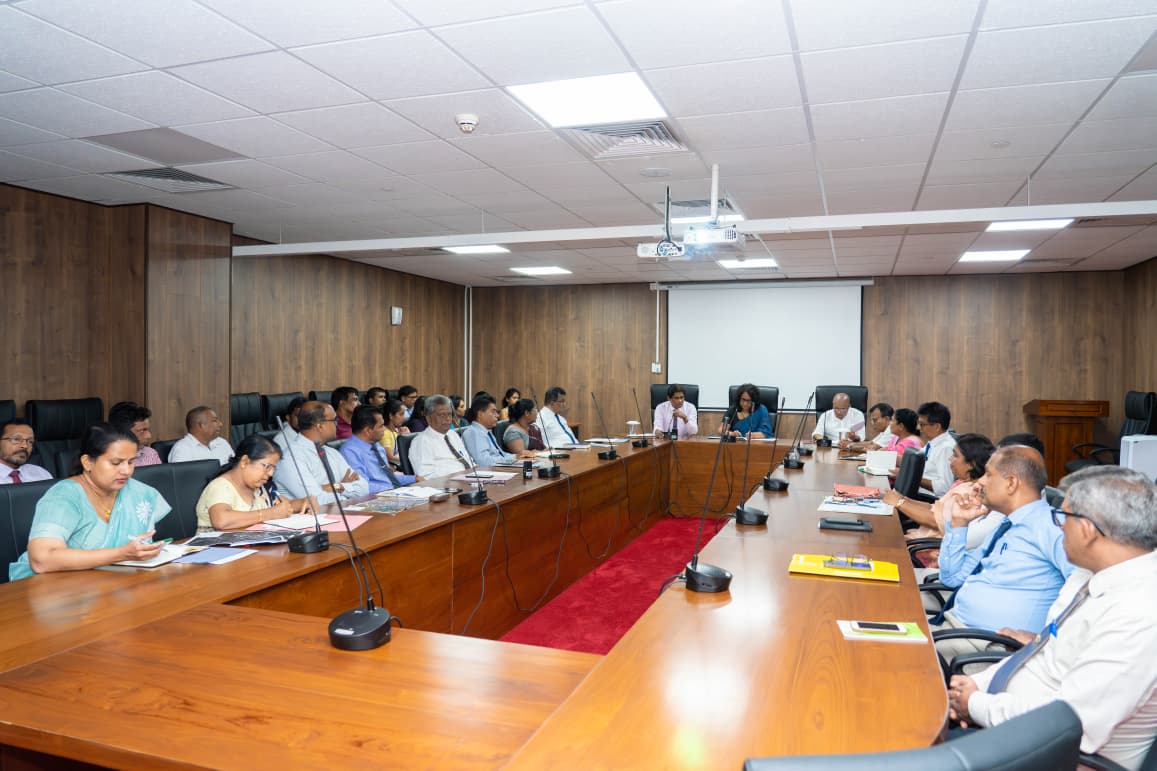
Prime Minister Dr. Harini Amarasuriya stated that development projects can deliver results to the people more quickly when the political authority and the public service work together towards a common, people-oriented objective.
The Prime Minister made these remarks while participating in a discussion held on Friday [September 18] at the Western Province Council Auditorium to review the progress of the development project to rehabilitate Rathmalana Kandawala Road and the drainage system on either side of the road, within the Dehiwala–Mount Lavinia Municipal Council limits in the Colombo District.
The project, which commenced on September 10, 2026, is scheduled to be completed before June 30, 2027. Implemented by the Provincial Road Development Authority (PRDA), the project includes the construction of a bridge at a cost of Rs. 64 million, the rehabilitation of the drainage system at a cost of Rs. 930 million, and the rehabilitation of the road at a cost of Rs. 115 million.
The Prime Minister also paid special attention to the progress of the responsibilities assigned to the Western Province Council, the Irrigation Department and the Ratmalana Divisional Secretariat in accordance with decisions taken at the previous committee meeting. Attention was also given to the current status of the plans being carried out by the Sri Lanka Land Development Corporation (SLLRDC), as well as the construction and maintenance activities being undertaken by the Provincial Road Development Authority (PRDA).
Commending the expedite and commendable progress of the project, the Prime Minister particularly appreciated the commitment demonstrated by officials of the relevant government institutions to work in close coordination with one another and in collaboration with the political authority.
The Prime Minister also emphasised the importance of taking measures well in advance to control flooding and minimise its impact on Colombo and several other districts in view of the rainy weather that may affect the Western Province during the latter part of this year.
The meeting was attended by the Chairman of the Colombo District Coordinating Committee and Member of Parliament Lakshman Nipuna Arachchi, Chairperson of the Ratmalana Divisional Coordinating Committee and Member of Parliament Samanmalee Gunasinghe, Chairman of the Roads Sub-Committee of the Colombo District Coordinating Committee Dewananda Suraweera, Mayor of the Dehiwala–Mount Lavinia Municipal Council Parakum Shantha, Chief Secretary of the Western Province K.G. Pradeep Pushpakumara, along with a number of government officials.
[Prime Minister’s Media Division]
News
Landslide Early Warnings issued to the Districts of Colombo, Galle, Kalutara, Kandy, Kegalle, Matara, Nuwara Eliya and Ratnapura

The National Buliding Research Organization has issued Landslide Early Warnings to the Districts of Colombo, Galle, Kalutara, Kandy, Kegalle, Matara, Nuwara Eliya and Ratnapura from 10:00 hrs on 20.09.2026 To 10:00 hrs on 21.09.2026
Accordingly,
LEVEL II (AMBER) landslide early warnings have been issued to the Divisional Secretaries Divisions and surrounding areas of Nagoda and Neluwa in the Galle district, Pasbage Korale in the Kandy district, Dehiowita and Yatiyanthota in the Kegalle district, Pitabeddara in the Matara district, Kotmale, Ambagamuwa and Norwood in the Nuwara Eliya district and Ayagama, Pelmadulla, Ratnapura and Eheliyagoda in the Ratnapura district.
LEVEL I (YELLOW) landslide early warnings have been issued to the Divisional Secretaries Divisions and surrounding areas of Seethawaka in the Colombo district, Palinda Nuwara and Bulathsinhala in the Kalutara district, Ganga Ihala Korale in the Kandy district, Deraniyagala in the Kegalle district, Kotapola in the Matara district and Ratnapura, Kalawana, Kuruwita and
Elapatha in the Ratnapura district.

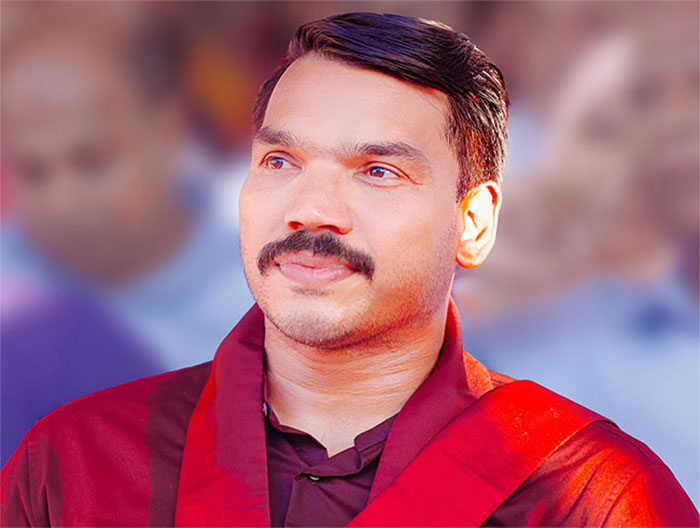
MONETABRIEF – Namal Rajapaksa, son of Sri Lanka’s former leader Mahinda Rajapaksa, was denied bail by the Colombo chief magistrate despite pleading that he needed to attend important Buddhist rituals and travel to India.
The 40-year-old opposition MP’s lawyer, Shavindra Fernando, told the court that Namal had been invited to take part in a pinnacle-capping ceremony at the Pothgul Vihara temple on September 26.
“If my client fails to attend this event, it should be regarded as a disrespect shown to the chief incumbent of the temple,” Fernando said.
He added that Namal had also received an invitation to visit India from 27 September to 1 October and therefore sought bail.
However, he was remanded until September 29 in connection with allegations that he received kickbacks of $800,000 from the $2.3 billion Airbus aircraft purchase deal his father – Mahinda Rajapaksa – approved as president in 2013.
Deputy Solicitor General Janaka Bandara invoked the Buddha’s teachings in response to Namal’s lawyer, Fernando, saying that a judicial matter was far more important than attending a religious ceremony.
“According to what is being said here, the accused himself should have considered this while conducting dealings with Nimal Perera,” Bandara said, referring to the businessman who allegedly routed the bribe money to Namal.
Bandara quoted at length from a recent Supreme Court decision that expanded on the Buddha’s teachings, noting that when a ruler is righteous, the people follow; but when the ruler is dishonest, the citizenry follows that example too.
The 40-year-old MP was arrested on 4 September under the new anti-graft legislation parliament adopted unanimously in 2023.
Namal is primarily accused of accepting $800,000 out of a 1.4 euro million bribe that the then SriLankan Airlines chief executive, Kapila Chandrasena, is alleged to have received from Airbus after finalising a $2.3 billion purchase of aircraft in 2013.
Magistrate Asanga S. Bodaragama told the previous court hearing that he did not have the power to grant Namal bail because the Director-General of the Commission to Investigate Allegations of Bribery or Corruption (CIABOC) had issued a certificate under section 149 of the Act.
The provision stipulates that a magistrate may not grant bail when the CIABOC DG presents a certificate confirming that an offence under the Act has been committed.
The magistrate noted that he could grant bail only in “exceptional circumstances”, but there was no acceptable argument from the defence for him to do so.
A Buddhist temple festival and an invitation from India could not be considered good enough reasons to grant bail.
The businessman who acted as a conduit for the bribe – Nimal Perera – had turned state witness, providing details of how the money was given to Namal through two bank transfers in 2014 and 2015, the court was told.
Under the provisions of the August 2023 Act, Namal Rajapaksa could be held in custody until the conclusion of the trial, even though the magistrate remanded him until September 18, the maximum he could be incarcerated at a time.

Shafali dazzles with 49-ball unbeaten 100 and India march into Asian Games final

Development projects can deliver results to the people more quickly when the political authority and the public service work together towards a common goal – PM

Landslide Early Warnings issued to the Districts of Colombo, Galle, Kalutara, Kandy, Kegalle, Matara, Nuwara Eliya and Ratnapura

Chamari Athapaththu’s unbeaten 83 leads Sri Lanka into final

Showers expected in the Western, Uva, Sabaragamuwa and North-western provinces and in Galle, Matara, Kandy and Nuwara-Eliya Districts.

Namal Rajapaksa Buddhist gambit fails, bail denied

‘Dates have the highest sugar content to fight Coronavirus’

Sunday Island 27 December – Headlines

#SundayIsland 17th December – Headlines

Sunday Island – 28th March

Sunday Island Headlines – 21 March

Sunday Island – 21st February – Headlines
-

 Opinion6 days ago
From Galkissa (Mount Lavinia) to Tambuttegama
-

 News3 days ago
US embassy won’t comment on IGP’s probe into joint drug raid
-

 Features5 days ago
The emptying university: why are academics leaving?
-

 Features6 days ago
Sri Lanka’s university crisis: Brain drain and union action demand urgent reform
-

 Business3 days ago
All-new Bolero MaXX unveiled in Sri Lanka
-

 Opinion6 days ago
Ashraff: From the SLMC towards the National Unity Alliance
-

 Editorial6 days ago
Muscle flexing, astroturfing and dog-and-pony shows
-

 News2 days ago
Bid for Basil’s extradition nears final stage: Police