
Latest News
IMF Executive Board completes the Fourth Review under the Extended Fund Facility with Sri Lanka


The Executive Board of the International Monetary Fund (IMF) completed the Fourth review under the 48-month Extended Fund Facility (EFF) Arrangement, allowing the authorities to draw SDR254 million (about US$350 million). This brings the total IMF financial support disbursed so far to SDR1.27 billion (about US$1.74 billion).
The EFF arrangement for Sri Lanka was approved by the Executive Board on March 20, 2023 in an amount of SDR 2.286 billion (395 percent of quota or about US$3 billion). The program supports Sri Lanka’s efforts to durably restore macroeconomic stability by
(i) restoring fiscal and debt sustainability while protecting the vulnerable,
(ii) safeguarding price and financial sector stability,
(iii) rebuilding external buffers,
(iv) strengthening governance and reducing corruption vulnerabilities, and
(v) enhancing growth-oriented structural reforms.
The Executive Board reviewed a report from the Managing Director on the inadvertent provision of inaccurate data by Sri Lanka on the ceiling of the central government’s stock of expenditure arrears. The under-reporting of the arrears stock identified through a detailed analysis of budget line appropriations gave rise to noncomplying purchases and a breach of Sri Lanka’s obligations under Article VIII, Section 5. The authorities have worked openly and closely with IMF staff to provide corrected data and have undertaken several corrective measures related to the clearing and reporting of arrears. They are also committed to improving reporting and data verification practices going forward in line with IMF technical assistance. Based on these actions, the Executive Board approved the authorities’ request for waivers of non-observance.
The authorities have consented to the publication of the Staff Report prepared for this consultation.
Following the Executive Board’s discussion, Mr. Kenji Okamura, Deputy Managing Director and Acting Chair, issued the following statement:
“Sri Lanka’s performance under the Fund-supported arrangement is generally strong with some implementation risks being addressed. Reforms are bearing fruit, with economic growth strengthening, inflation remaining low, reserves accumulating, and fiscal revenues improving. The debt restructuring process is nearing completion. The economic outlook is positive, but downside risks have increased. In case shocks materialize, the authorities should work closely with the Fund to assess the impact and formulate policy responses within the contours of the program. Steadfast program implementation will be crucial.
“Sustained revenue mobilization is critical to restoring fiscal sustainability and creating fiscal space. Strengthening tax exemption frameworks, boosting tax compliance, and enhancing public financial management to ensure effective arrears management are important. Further improving the coverage and targeting of social support to the vulnerable is also necessary. A smoother execution of capital spending within the fiscal envelope would help foster medium-term growth. The restoration of cost-recovery electricity pricing and the operationalization of automatic electricity tariffs adjustment are commendable and should be maintained to contain fiscal risks.
“The progress to advance the restructuring of Sri Lanka’s debt is noteworthy. Timely finalization of bilateral agreements with remaining official and commercial creditors is a priority.
“Monetary policy should continue to prioritize price stability, supported by sustained commitment to eliminate monetary financing and safeguard central bank independence. Greater exchange rate flexibility and gradually phasing out administrative balance of payments measures remain critical to rebuild external buffers and economic resilience.
“Resolving non-performing loans, strengthening governance and oversight of state-owned banks, and improving the insolvency and resolution frameworks are important to revive credit growth and support private sector development.
“Structural reforms are crucial to unlock Sri Lanka’s potential. The government should continue to implement governance reforms and advance trade-facilitation reforms to boost export growth and diversification.”
Following the Executive Board’s discussion, Mr. Kenji Okamura, Deputy Managing Director and Acting Chair, issued the following statement:
“The Executive Board of the International Monetary Fund (IMF) reviewed noncomplying purchases made by Sri Lanka under the 2023 Extended Arrangement under the Extended Fund Facility (“EFF”), as well as a breach of obligations under Article VIII, Section 5. The noncomplying purchases arose as a result of the provision of inaccurate information by the authorities on the stock of expenditure arrears at the first, second, and third reviews under the EFF.
“The inaccuracies in information provided to the IMF were inadvertent and arose because of weaknesses in the timely reporting of arrears by line ministries to the Ministry of Finance, as well as a misunderstanding by the authorities of the definition of “arrears” under the Technical Memorandum of Understanding.
“The Executive Board positively considered the authorities’ corrective actions, the fact that arrears repayments will be accommodated within the existing fiscal envelope, and the authorities’ commitment to improving public financial management procedures in line with the new PFM law, to reduce the risk of accruing arrears or inaccurate reporting of information going forward. In view of the above, the Executive Board agreed to grant waivers for the nonobservances of the quantitative performance criterion that gave rise to the noncomplying purchases and decided not to require further action in connection with the breach of obligations under Article VIII, Section 5.”
[IMF]

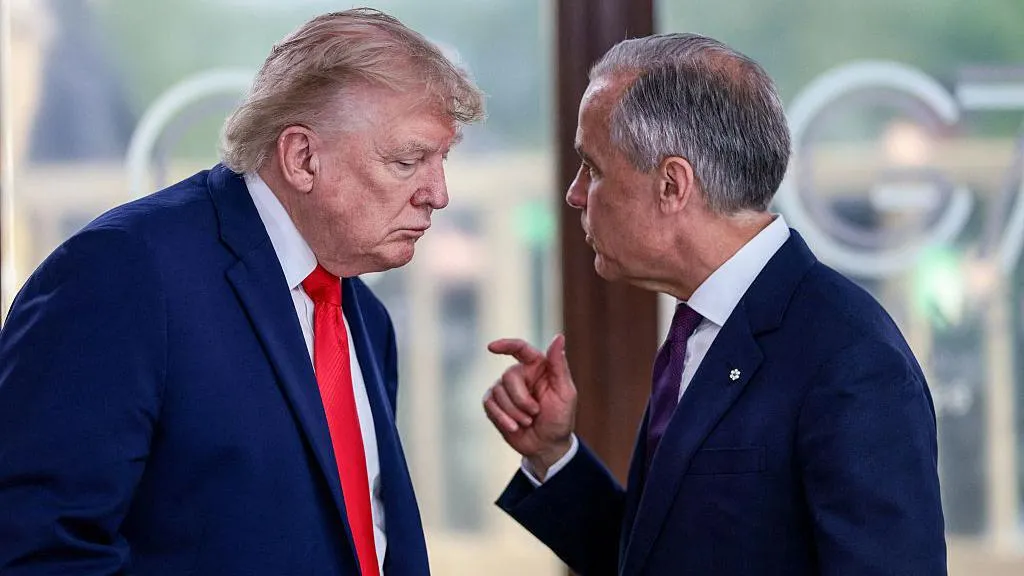
US President Donald Trump has imposed a 50% tariff on a wide range of goods imported from Canada, in retaliation for what he called “unequal treatment” of US cars, dairy and alcohol.
Everyday consumer items like wine and hockey sticks and industrial goods such as cement are among the goods targeted. However, several key exports will be spared, such as energy, potash, critical minerals and fish.
Prime Minister Mark Carney responded by saying Canada stood ready to “intensify” trade talks with US in the coming weeks.
The White House said the duties would take effect in 30 days and mark a major escalation in trade tensions between the North American neighbours.
The new duties apply to all covered goods regardless of whether the product was included under the existing free trade agreement between Canada, the US and Mexico, known as the USMCA.
“This is the latest in a series of unilateral US trade actions that began with the US imposing a series of tariffs in direct violation of the Canada-United States-Mexico Agreement,” Carney said in a statement on X.
He also cited “threats to Canadian sovereignty”, a possible reference to Trump’s calls to make America’s northern neighbour the 51st US state.
Monday’s import taxes build on trade barriers already in place between the two nations.
The US has been maintaining active tariffs ranging from 15% to 50% on Canadian steel, aluminum and copper. Washington also charges a 35% tariff on Canadian softwood lumber, alongside a 25% tax on non-US parts in cars.
Canada has its own 25% counter-tariff on selected imports of American steel, aluminium and vehicles.
Monday’s duties come in the wake of President Trump’s threat to impose tariffs over Canadian wildfire smoke drifting into US cities.
But there is no mention of wildfires in the executive orders that Trump signed on Monday.
Instead, the three proclamations list US trade irritants that were previously known to Canada related to cars, dairy and alcohol – signalling a breakdown of trade negotiations between the two countries.
On cars, Trump is accusing Canada of charging a tax on US motor vehicles and parts that are not covered under USMCA.
He argues it is “unreasonable” and that Canada has discriminated against the US by not charging other countries a similar tax.
Automotive manufacturing in North America is highly integrated between Canada, the US and Mexico.
But Trump’s Commerce Secretary Howard Lutnick has said in the past that he believes Canada should “come second” to the US.
Trump has also named cars in the past as one issue where the two countries have competing interests.
Dairy, meanwhile, has long been a problem for the US, specifically Canada’s supply management system, which sets limits on foreign imports. Those that exceed the limit are charged a tariff upwards of 300%.
And lastly, the enduring boycott of US booze by most Canadian provinces has become a major sore point for the Americans since it was imposed last year.
Canadian premiers have said repeatedly that the boycott will be lifted if the US removes its tariffs on key Canadian sectors, including metals and automobiles.
Canadian trade negotiators have been working on trying to secure a deal that would at least reduce some of the current US tariffs.
The BBC has contacted the White House and the Canadian government for comment.
Earlier this year, the US chose not to renew the USMCA in its current form.
Canada and Mexico sought a renewal of the trade agreement, but the US wants to make changes to the deal, which was negotiated during Trump’s first term in office.
As it stands, the treaty will continue to govern North American trade over the next decade on a rolling basis, requiring annual reviews.
In February, the US Supreme Court struck down sweeping international tariffs imposed by Trump through the International Emergency Economic Powers Act of 1977.
The justices ruled that the president had exceeded his authority when he announced the duties under a law reserved for national emergencies.
The White House vowed at the time that it would invoke other mechanisms to impose import taxes.
(BBC)
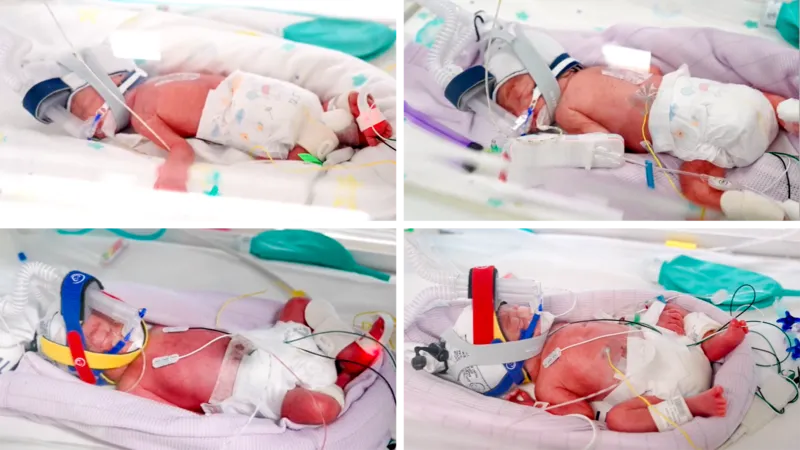
An Australian woman has given birth to rare, naturally-conceived identical quadruplets after a pregnancy described as “extremely high risk” by the Royal Brisbane and Women’s Hospital.
The four girls, who were delivered via caesarean section at 28 weeks and four days on 14 July, were monozygotic quadruplets – where a single fertilised egg splits into four embryos.
The hospital said the girls’ mother, 34-year-old Jenitar Na’amoana, and her husband Jortham, already had four children and were taken by “immense surprise” when told to expect quadruplets.
Dr Alexa Bendall, who cared for the mother from the start of her pregnancy, estimated identical quadruplets occur “at one in every 15 million pregnancies” and said “but to share the same placenta – this is unheard of”.
Bendall, who is a maternal foetal medicine specialist and obstetrician, said such a pregnancy was very high-risk, with the hospital admitting Na’amoana as an inpatient at 25 weeks so she could be monitored.
“We always said that if we could get her to 28 weeks, we would be doing well,” Bendall said.
“So the fact that we’ve got four beautiful, healthy babies born at 28 weeks and four days is incredible and we’re very happy to be a part of it,” she added.
“Jenitar has taken everything in her stride from day one… she has somehow dodged every complication and risk for both herself and her babies,” Bendall said.
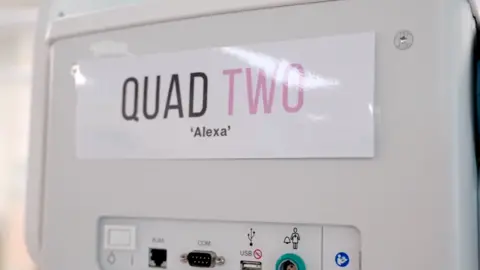
The newborn girls have been named Emily, Harriet, Catherine, and also Alexa, after Alexa Bendall, who described it as “a beautiful tribute”.
The babies will stay in the hospital’s neonatal intensive care unit until they grow to full term and are “currently doing extremely well”, Bendall added.
The parents’ other children are between one and 10 years old and the mother has recently launched an online fundraising campaign to help buy a van with at least 10 seats.
In a message alongside the fundraiser, which has already received over A$37,000 (£19,261) in donations, Na’amoana wrote: “Our four precious miracles have arrived safely, and while our hearts are overflowing with gratitude, the reality of caring for four newborns at once has brought challenges we never could have imagined.”
Naturally conceived quadruplets are extremely rare, with doctors estimating the odds at about one in 700,000 births.
(BBC)

Ferran Torres scored in the 106th minute to lift Spain to their second World Cup title with a 1-0 win im extra time over 10-man Argentina in the final.
Torres’s deserved winner on Sunday came 16 years and eight days after Andres Iniesta also scored in extra time to lift the Spaniards to their first World Championship with a 1-0 victory over the Netherlands.
It came on La Roja’s 20th shot in the contest against defending champions Argentina that failed to manage any to that point and struggled to wrest possession away from their superior Iberian opponents.
That was true at even strength and became more difficult when La Albiceleste’s numbers were reduced when Enzo Fernandez’s late challenge on Pau Cubarsi left referee Slavko Vincic no choice but to produce a second caution just before the end of normal time.
Spain remain the only nation ever to win a European Championship and World Cup in successive tournaments, having now done so a second time. They are also the first World Cup champions ever to concede only once across an entire tournament.
Lionel Messi’s Argentina failed to earn a title for the first time in three major tournaments, having also captured the 2021 and 2024 Copa Americas either side of their 2022 World Cup triumph.
The 39-year-old eight-time Ballon d’Or winner Messi finished the competition with eight goals and four assists, but had little time on the ball in the final until Spain finally took the lead. And he never seriously looked like he would lift his side to another great moment as he has so many times in the last two World Cup cycles.

Emi Martinez made 11 saves for La Albiceleste, who fell short in their bid to be the first consecutive World Cup champions since Brazil won the 1958 and 1962 titles.
What had felt so difficult for the first 105 minutes suddenly looked easy after 37 seconds of play in the second period of extra time.
Pedro Porro curled in an out-swinging cross from the left to the back post, Nico Williams won the header and nodded it back into space, and Torres hammered a half-volley at last past the flailing Martinez.
It was his only goal of the tournament, making him the seventh player to score during a tournament in which his side never trailed.
Asked about his goal, Torres said after the game: “Honestly, I didn’t think too much. I just saw the ball coming to me, and I just shot with the power of all the Spanish people.”

The win made Spain coach Luis de la Fuente, at 65, the oldest coach ever to lead a team to the World Cup title
“We are world champions,” de la Fuente said. “It was together we reached this stage.”
There was some pushing and shoving after the final whistle, which was quickly cleaned up, and Spain commenced their celebration as most Argentina players sat on the turf in disbelief.
Cooler heads prevailed, and Spain’s players lined up minutes later to form an honour guard of sorts for Argentina’s squad to walk through on their way to the stage for the runner-up medals.
Argentina coach Lionel Scaloni admitted that Spain were the better team.
“They were the better side – that’s the truth – but I’ll cherish the memory of them [his side], of what they achieved, and of the value of making it this far,” Scaloni said.
“We have to place immense value on this, because it takes so much effort.”
(Aljazeera)

Trump slaps 50% tariffs on Canada and Carney vows to ‘intensify’ trade talks

Showers will occur in the Western, Sabaragamuwa and North-western provinces and in Kandy, Nuwara-Eliya, Galle and Matara districts

Move to extend judges’ retirement ages could damage Sri Lanka’s global image, warns Prof. Peiris

Dengue surge infects 76,000, claims about 53 lives

SC dismisses challenge to gender change procedures

BASL urges Justice Minister not to amend Constitution to increase retirement ages of superior court judges

‘Dates have the highest sugar content to fight Coronavirus’

Sunday Island 27 December – Headlines

#SundayIsland 17th December – Headlines

Sunday Island – 28th March

Sunday Island Headlines – 21 March

Sunday Island – 21st February – Headlines
-
 Business2 days ago
‘Giving up was never an option’: The fisherman who fought back after losing millions in SL
-
 Features2 days ago
Two memorable excerpts from a former SLAF commander’s memoir
-

 Latest News3 days ago
Davis cup Asia/Oceania Group IV 2026 to be held in Colombo from 20th to 25th July
-
 Features2 days ago
Erdoğan’s New Republic
-
 Life style2 days ago
Taste of the Swiss Alps comes to Colombo
-
 Features6 days ago
Dirty Money
-
 News3 days ago
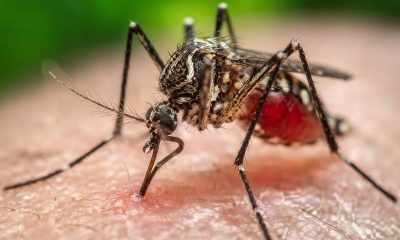
Dengue outbreak gallops ahead: Infections surpasses 73,455, leaving 50 dead
-
 News3 days ago
Evidence recorded in money laundering case against Yoshitha Rajapaksa