
Latest News
Gill holds India together with second hundred as captain

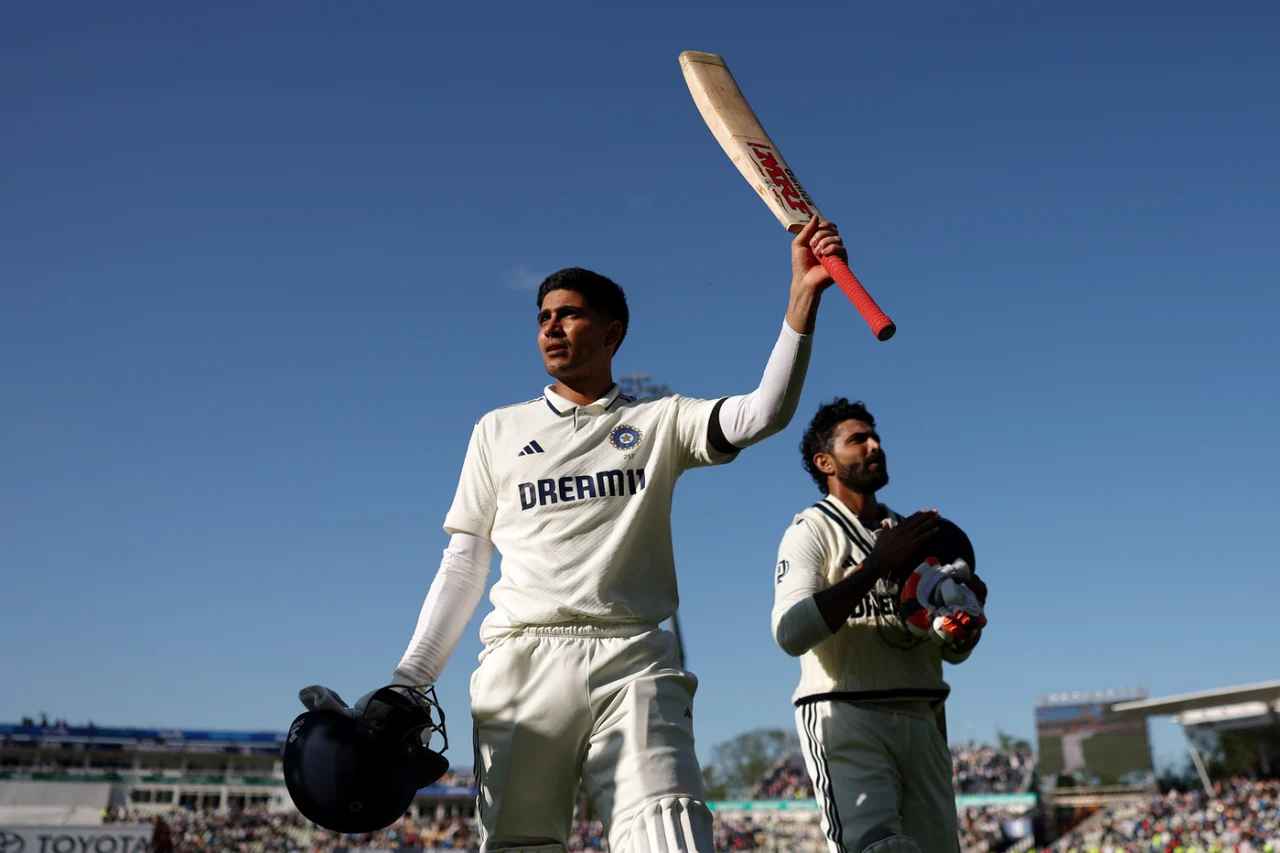
Shubman Gill’s roar said it all. At 10:30am, he fronted up at the toss to reveal Jasprit Bumrah would be rested for this second Test at Edgbaston. Then, shortly after 6pm, after everyone had broadly agreed India were wrong to leave out their world-class quick when trailing 1-0 to England. Gill ripped off his helmet, pierced the air with a second shriek in two weeks and then, as is custom, bowed to mark his seventh Test century.
Explaining the decision to rest Bumrah, Gill revealed the India management felt Lord’s will offer their prized asset more than this Edgbaston track. And as he saw out the day unbeaten on 114, he has at least done his bit to ensure India are not further behind when they head to London next week. At 310 for 5, they are in a promising position, albeit with a line-up harbouring fewer specialist batters.
If Gill’s first hundred in this series at Headingley immediately announced his arrival as India’s Test captain, this one already felt like a retaliation to its rigours and stresses. The news of Bumrah’s resting came as one of three changes that also drew unflattering attention to a touring party already shuffling the deckchairs. Akash Deep, Nitish Kumar Reddy and Washington Sundar drafted into the XI, Sai Sudharsan and Shardul Thakur dropped.
Ben Stokes’ decision to win the toss and bowl for a second consecutive match, and under bright sunshine once more, was broadly vindicated by a valiant showing from his quicks. Chris Woakes, with 2 for 59, was the pick of them and unlucky not to have more. All told, England did little wrong.
Much was resting on Gill’s shoulders, even before the burden of being out in the middle for all of 216 deliveries started to jar his back. At 5:55pm, with 270 for 5 by India’s name and 86 by his, he called out the physiotherapist for some healing contortions. Resuming his innings, he was more intent on seeing out the remaining 35 minutes than reaching three-figures. That he got there quickly, with two boundaries in consecutive deliveries, owed as much to a couple of filthy Joe Root offies as Gill’s penchant for the sweep.
Though the 11 fours to the milestone were crisp and spread relatively evenly – as many through cover (three) as there were between backward square leg and midwicket – the 199 deliveries to reach it spoke volumes of Gill’s fight. He did not get ahead of himself, nor get fooled into ego games when Stokes posted three people at cover and one at short mid on, daring him to beat any and all of them. And yet still after all that, there is more fighting to be done.
Gill arrived at the crease on 95 for 2, six minutes before lunch, upon Brydon Carse’s dismissal of Karun Nair, promoted to No.3 in Sudharsan’s absence. That delivery – rising to take the splice off a length, through to Harry Brook at second slip – came in Carse’s second spell, after both he and Woakes opened proceedings with as close to the perfect first hour.
Woakes was immaculate, prising out KL Rahul early for a torturous 2 from 26 deliveries in an impressive new ball spell which read 1 for 15 from seven overs. That included four maidens on the bounce.
Playing in just his fourth Edgbaston Test, the hometown hero was unlucky not to make more inroads after standing umpire Sharfuddoula turned down two close LBW appeals – the first against Yashasvi Jaiswal on 12, the second against Nair on 5.
Both were reviewed only to come back with fractional Umpire’s Call on the predicted path into the stumps. And it felt fitting that his second wicket trimmed the top of off stump, when Reddy pressed forward and left, only to be undone by wicked seam movement into the right-hander.
Reddy was the second to fall in 10 deliveries after Rishabh Pant inexplicably launched Shoaib Bashir into the hands of Zak Crawley at long-on. Perhaps Pant was fooled by the presence of a mid-on up in the circle, too. Either way, it was a gross error of judgement at a time when he and Gill were rebuilding steadily. Bashir, though, deserves credit for enticing the shot with a 74kph/46mph delivery that dipped late, in part due to a bolt upright seam. From twin centuries to a subdued 25, England were understandably giddy to have snared the left-hander in such fashion.
The trigger for the initial diligence of the fourth-wicket stand was the loss of Jaiswal, at fault himself when slashing loosely at a wide delivery from Stokes, caught behind by Jamie Smith. As ever against England, the left-hander looked in control of his own destiny, maintaining his streak of scoring at least 50 in all seven Tests against them.
He moved to his half-century off 59 deliveries, accelerating into it with the help of some wayward bowling from Josh Tongue. Three boundaries from the Nottinghamshire quick’s third over were followed by three-in-a-row from what turned out to be Tongue’s sixth and final one of his spell, as Stokes ordered his quicks to instigate their usual bumper ploy.
A hook took Jaiswal to 49, before he leapt into a vicious cut high over point to pass fifty, followed by a celebratory four – his 11th – carved past third. And he showed patience through the middle session, driving Carse through cover five balls after lunch, and later guiding Tongue past the cordon for the last of 13 boundaries to take him to 81.
Perhaps he ran out of patience when going after Stokes. What was certain was Gill would not make the same mistake. The route from fifty to the century took 74 deliveries, and contained six fours to the five in the previous 125, but felt far more cautious alongside Ravindra Jadeja; the allrounder a sensible crutch for his skipper, even if he rests on a sprightlier 41 from 67 deliveries.
Gill and Jadeja will pick up their stand in the morning on 99, well aware of the need to do much more as the last seasoned batters. The lessons learned from spurning positions of 430 for 3 and 333 for 4 in the first Test need to be put into practice.
Brief scores:
India 310 for 5 in 85 overs (Shubman Gill 114*, Yashaswi Jaiswal 87, Karun Nair 31, Ravindra Jadeja 41*, Rishabh Pant 25; Chris Woakes 2-59) vs England
[Cricinfo]

Latest News
Landslide Early Warnings issued to the Districts of Kandy, Kegalle, Matale and Ratnapura

The Hational Building Research Institute (NBRI) has issued landslide early warnings to the Districts of Kandy, Kegalle, Matale and Ratnapura valid from 2200 hrs on 03rd October upto 2200 hrs on 04th October 2026.
Accordingly,
LEVEL II (AMBER) landslide early warnings have been issued to the Divisional Secretaries Divisions and surrounding areas of Udu Dumbara and Minipe 8n the Kandy district, Dehiowita in the Kegalle district, and Ambanganga Korale and Matale in the Matale district.
LEVEL I (YELLOW) landslide early warnings have been issued to the Divisional Secretaries Divisions and surrounding areas of Rambukkana in the Kegalle district, Rattota in the Matale district, and Eheliyagoda in the Ratnapura district.

The head of Turkiye’s football refereeing body and four other officials have been placed in pretrial detention by a court as part of a corruption investigation, the state news agency Anadolu reports.
Ferhat Gundogdu, head of the Central Referees Committee, and six others appeared before a judge over allegations of manipulation of the referee administration process, Anadolu said on Saturday.
They appeared on Friday before a judge at Istanbul’s Caglayan courthouse on several charges, including forgery of official documents, breach of trust and illegal acquisition of personal data, the report said.
The judge remanded five people in custody and granted the other two conditional release, Anadolu said.
It was the latest scandal to shake football in Turkiye, coming exactly a year after the Turkish Football Federation (TFF) suspended 149 referees on charges of illegal betting.
On Thursday night, police from the illegal betting and sports crime unit also detained Yasin Kol, a referee from Turkiye’s top-flight Super Lig, as well as an assistant referee, media reports said.
Justice Minister Akin Gurlek said prosecutors are examining claims about “interference in the processes of referee classification, assignments, scoring and appointments as well as the exams on rules”.
During raids on Tuesday, police searched the VAR room at TFF’s headquarters in Istanbul. Observers said the investigation was likely linked to last year’s betting scandal and would have implications for the federation.
“It does seem to be a continuation of 2025, and it looks like it will continue further,” sports journalist Ayhan Sensoy told the AFP news agency.
Sensoy, who wrote a 2024 book on the issue called The Gambling Pit, said it was unlikely that federation bosses “have any chance of staying in office”.
So far, the TFF has not directly addressed the arrests as its top officials are due to fly home on Saturday after attending Friday night’s Belgium-Turkiye UEFA Nations League clash in Liege, which Turkiye lost 3-0.
[Aljazeera]
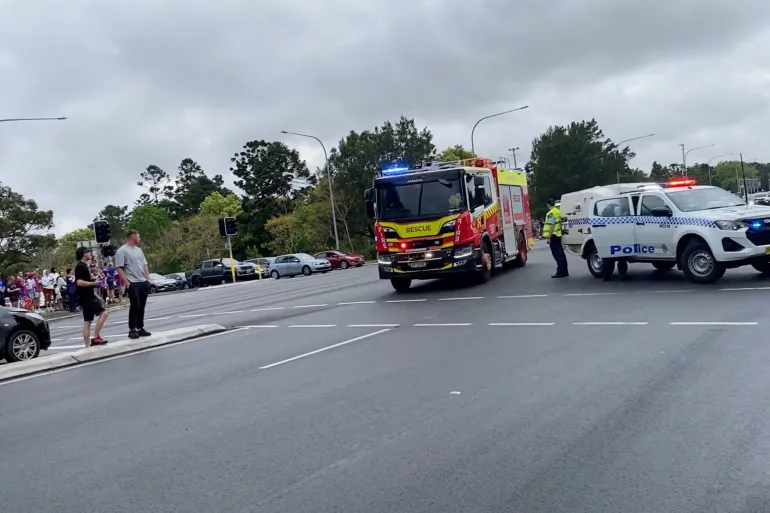
A car has crashed into a crowd of rugby league supporters in the eastern Australian city of Newcastle, injuring 10 people, including three children.
New South Wales police said on Saturday that two of the injured – a five-year-old girl and a 67-year-old man – were in a critical condition and the other eight were in stable condition in hospital.
Police said they had arrested the 18-year-old man driving the vehicle and were investigating what happened. They said the crash was not believed to be related to “terrorism”.
The crowd had gathered to farewell the local rugby league side, the Newcastle Knights, ahead of their grand final against the Sydney Roosters on Sunday.
Newcastle Lord Mayor Gavin Morris said the driver, a rugby league fan, had lost control of his vehicle and had been taken into custody.
“He was revving the car, he was excited, he was a supporter, he was there for the joy of the moment,” Morris told the national broadcaster ABC.
“Somehow he lost control of the car … and he’s gone into the crowd,” he added.
Prime Minister Anthony Albanese said: “My thoughts are with everyone injured or involved in the horrible incident this morning in Newcastle.”
“Rugby league brings people together, and this should have been a weekend of excitement and pride for Newcastle fans,” he wrote in a social media post.
[Aljazeera]

Debris found from plane that went missing off US coast

Construction of Jet A-1 Aviation fuel pipeline and new oil tank complex at Muthurajawela begins under President’s patronage

Landslide Early Warnings issued to the Districts of Kandy, Kegalle, Matale and Ratnapura

No handshakes and a delayed ceremony as India beat Pakistan at Asian Games

Showers or thundershowers will occur in most parts of the island after 1.00 p.m

Lanka enters new phase of prosecutions as hurdles clear

‘Dates have the highest sugar content to fight Coronavirus’

Sunday Island 27 December – Headlines

#SundayIsland 17th December – Headlines

Sunday Island – 28th March

Sunday Island Headlines – 21 March

Sunday Island – 21st February – Headlines
-

 News7 days ago
Police remove Thileepan statue in Jaffna
-

 Features7 days ago
The 22nd Amendment, constitutional recovery and illiberal slippage
-

 Features7 days ago
Of foreigners as CEOs of Lankan ventures
-

 Latest News4 days ago
Gold winner Tharanga gets brand-new Honda Vezel from SLAAJ
-

 News7 days ago
Sajith rejects Jt. Opp. protest sabotage claim; SJB TU chief demands remedial action
-

 Features5 days ago
Why Sri Lanka needs an Inclusive Civic Nationalism – urgently
-

 News4 days ago
US-assisted ‘Ice’ detection: NPC to examine IGP’s move to transfer drug-busting team
-

 Features6 days ago
Thailand’s biggest new global star …