
Features
CBK at 80: A Trailblazer’s Legacy in Perspective

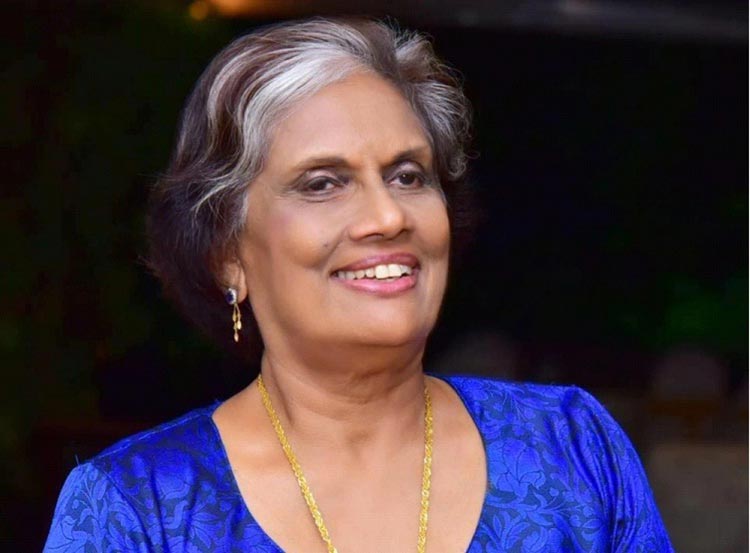
As Chandrika Bandaranaike Kumaratunga, Sri Lanka’s first female Executive President, turns 80 on June 29, a timely question arises: how will history remember her legacy? Born into a political family as the daughter of two Prime Ministers, her path to leadership was steeped in legacy. But it was not lineage alone that defined her public life. Chandrika Bandaranaike Kumaratunga, commonly known as CBK, carved out a political identity marked by her bold decisions, reformist ambition, and resilience in the face of violence and controversy. Historians may debate the long-term impact of her policies, but they are unlikely to overlook her key milestones— first, most notably, her key role in ushering in two of the most consequential regime changes in modern Sri Lankan history: in 1994 and again in 2015.
In analyzing critical political transformations, historians often emphasize the dynamic interplay between subjective factors and objective conditions. While objective conditions may signal the potential for political change, such change cannot occur without the presence of key subjective factors—such as leadership and the formation of alternative political alliances. In the absence of subjective factors, even a repugnant system that appears ripe for transformation may continue to persist. Conversely, powerful subjective forces can themselves generate or intensify the objective conditions necessary for political change. The pivotal role of CBK as a decisive subjective factor in shaping and mobilizing the objective conditions for these two regime changes has been widely recognized in historical accounts of modern Sri Lankan political history.
Her role in ending the 17-year rule of the United National Party (UNP) in both the parliamentary elections and presidential elections in 1994 is particularly remarkable, especially given the deep internal divisions within the Sri Lanka Freedom Party (SLFP) and the broader disunity among anti-UNP forces. Following the assassination of her husband, Vijaya Kumaratunga, the United Left Front quickly disintegrated, and under threat from the Janatha Vimukthi Peramuna (JVP), she temporarily left the country and lived in London. During this period, the main opposition party, the SLFP, was fractured at its core, while the nation was engulfed in political violence, widespread corruption, and a wave of political assassinations. This period of crisis culminated in the assassination of President Ranasinghe Premadasa in a suicide bombing during the May Day rally in 1993.
Amid this bleak political landscape, CBK re-entered politics and took on the leadership of the opposition. She initiated the formation of a new political alliance rooted in the Sri Lanka Freedom Party (SLFP) and successfully united various fragmented anti-UNP parties and groups under the banner of the People’s Alliance (PA), with the support and endorsement of her mother, former Prime Minister Sirimavo Bandaranaike. Uniting the different factions within the SLFP alone was a formidable challenge. At the same time, Kumaratunga introduced a reformist political agenda that marked a clear departure from the traditional policy framework of SLFP. Her platform prioritized a political solution to the ethnic conflict through extensive devolution of power and included a strong commitment to democratic reform, most notably the proposed abolition of the Executive Presidency. She led the People’s Alliance to a decisive victory, winning 62.28% of the vote in the 1994 presidential election.
A new phase of political reform began in the wake of the People’s Alliance (PA) victory in 1994. This discussion does not seek to evaluate the overall successes or failures of the CBK administration, but rather to highlight the significance of two key—though ultimately unfulfilled—initiatives that merit scholarly attention. The first was a peace initiative aimed at resolving the ethnic conflict and ending the Eelam war; the second, a proposed constitutional reform intended to broaden democratic governance, including the abolition of the Executive Presidency. While neither initiative came to fruition, both reflect the reformist ambition that characterized the early years of her tenure, as well as the contradiction between political aspirations and political realities.
The euphoria generated by CBK’s 1994 electoral victory for a swift peace through a negotiated political settlement with the LTTE was shattered after the collapse of direct talks with them in April 1995. In July 1995 the concept paper on constitutional reforms embodying devolution of power to regions was published. Concurrently, CBK launched the Sudu Nelum Movement, an extensive public awareness campaign aimed at preparing the public for a peaceful settlement of the ethnic conflict. However, these initiatives unfolded alongside an escalating armed conflict, as the LTTE resumed its violent campaign. Despite the escalating military threat, CBK remained steadfast in her commitment to a political solution rooted in meaningful national integration. She was the first to establish a separate cabinet portfolio directly under the President. This steadfast pursuit of peace remains a significant chapter in Sri Lanka’s ongoing search for a lasting resolution to the ethnic conflict. The end of the war created a historic opportunity to find a durable solution to the ethnic issue by building a unified nation through genuine national integration. Revitalizing her vision—with necessary refinements—could offer a viable path forward.
One of the most politically significant initiatives undertaken by President Chandrika Bandaranaike Kumaratunga (CBK) was the push for a new constitution, which notably proposed the abolition of the Executive Presidency. This initiative consumed considerable political energy and involved extensive consultation. The draft was presented to the Parliamentary Select Committee, where it was discussed on 77 separate occasions—reflecting the seriousness and depth of the deliberations. Additionally, representatives of the People’s Alliance (PA) and the United National Party (UNP) held 17 rounds of bilateral discussions on the proposed reforms. However, despite this intensive engagement, the UNP employed delaying tactics and ultimately withdrew its support during the final stage in the Parliament. This last-minute reversal effectively derailed what could have been a historic move toward a more democratic constitutional framework. Since then, the abolition of the Executive Presidency has remained a central—but still unrealized—topic in Sri Lanka’s political discourse.
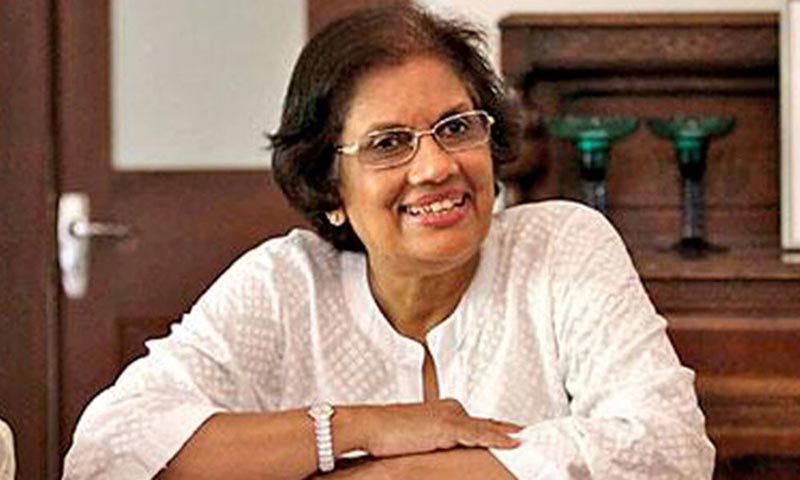
CBK
Although CBK had retired from the presidency in 2005, her influential political and social engagement did not cease. In retrospect, her pivotal role in the ousting of the Mahinda Rajapaksa regime in 2015 stands out as a significant contribution to Sri Lanka’s contemporary political history. Despite the urgent demand for regime change, it is unlikely that such a transformation would have been possible without CBK’s strategic intervention. Her efforts were instrumental in uniting diverse civil society actors—most notably those led by Rev. Maduluwawe Sobitha Thero—and aligning them with various opposition parties and groups. Through her respected political standing and behind-the-scenes diplomacy, CBK successfully facilitated consensus-building among civil society groups and major opposition parties, including Tamil political entities in the North. This coalition-building was crucial to presenting a unified front and ultimately defeating what had appeared to be the invincible Rajapaksa regime at the 2015 presidential elections.
In the 2015 presidential election, President Mahinda Rajapaksa went to early polls with a self-adorned halo as the leader who brought an end to Sri Lanka’s 30-year civil war. The end of war was indeed a real solace to the people and Rajapaksa was able to leverage it for considerable political gain. In addition, he also took credit for launching several large-scale infrastructure projects. These included the Mattala International Airport, the Hambantota Port, the Colombo Port City, the Southern Expressway, the Norochcholai Coal Power Plant, and the Upper Kotmale Hydropower Project.
By the time of the 2015 presidential election, widespread public disillusionment with the prevailing political system had reached a critical point. The system was widely perceived as deeply corrupt and dysfunctional. The centralization of power within the Rajapaksa family and their close associates, combined with increasingly authoritarian tendencies masked by a democratic façade, led to the alienation of many within the country’s educated and politically aware segments. Moreover, the regime’s excessive political interference in administrative affairs and excessive politicization of the public service disenchanted a significant portion of government employees. As a result, the demand for a fundamental transformation of the political order grew considerably. While opposition political parties remained fragmented and lacked cohesion, civil society organizations, spearheaded by Rev. Maduluwawe Sobitha Thero, emerged as the primary force resisting the democratic backsliding of the regime. It was in this context that CBK stepped forward to play a pivotal role in uniting the intensely divided opposition and civil society forces. She was instrumental in identifying an unexpected political figure and facilitating his emergence as the common presidential candidate.
The country’s political atmosphere changed markedly after the unseating of the Mahinda Rajapaksa regime. Soon after assuming office, the Yahapalana government introduced the 19th Amendment to the Constitution on April 28, 2015. It curtailed the President’s executive powers and incorporated provisions aimed at enhancing good governance, marking an initial step toward broader democratic reforms. . Despite these early initiatives, the government struggled to maintain its reformist momentum. The cohabitation arrangement between the President and the Prime Minister proved ineffective, and from the outset, competing centers of power emerged within the Government. Meanwhile, the Central Bank bond scandal severely undermined the government’s credibility in its commitment to anti-corruption. The political rift culminated in a constitutional crisis on October 26, 2018, when the President dismissed the Prime Minister and appointed Mahinda Rajapaksa in his place. The Supreme Court later deemed the President’s actions unconstitutional and reinstated the dismissed Prime Minister. Nevertheless, the Yahapalana government had lost much of its legitimacy, and the political environment had become increasingly unstable and pessimistic.
The Yahapalana government’s failure to fulfill its mandate does not render the unseating of the Rajapaksa regime in 2015 politically futile. Before 2015, the Rajapaksa regime had evolved into a deeply entrenched system based on a political class that permeated nearly every aspect of the state and society. That same political class could not fully reemerge in its old form by 2019. The Yahapalana government’s shortcomings did not make Rajapaksa-style authoritarianism any more acceptable to the public. In the subsequent presidential and parliamentary elections, many voters turned to Gotabaya Rajapaksa and the Sri Lanka Podujana Peramuna, partly as a rebuke to Yahapalana’s failures and partly due to the absence of a credible alternative. Although the Rajapaksas returned to power under Gotabaya Rajapaksa, the reestablishment of their earlier political hegemony proved elusive. Gotabya Rajapaksa was no Mahinda Rajapaksa. The structural changes in the political landscape set in motion in 2015 could not be easily reversed. Perhaps most significantly, the public had acquired the confidence that even a powerful and seemingly invincible leader like Mahinda Rajapaksa could be sent home through democratic means. The contributions of Chandrika Bandaranaike Kumaratunga and Ven. Maduluwawe Sobitha Thero were instrumental, albeit in different ways, in fostering this public confidence for a political change.
Though certain actions by President Gotabaya Rajapaksa accelerated the collapse, the economic breakdown of 2022 was ultimately the result of years of systemic mismanagement. A key factor was the launching of economically unviable mega-projects, often funded through high-interest foreign loans, which significantly burdened the national economy. At its core, the economic crisis reflects a deeper and long-standing political crisis that has gripped the post-war Sri Lankan state. The social and political forces that emerged in 2015—despite setbacks during the disillusionment with the Yahapalana government—resurfaced in a new form through the Aragalaya. The political significance of the Aragalaya cannot be reduced to its immediate outcomes, such as the elevation of Ranil Wickremesinghe to the presidency.
More fundamentally, it delivered a severe blow to Rajapaksa hegemony and disrupted the entrenched dominance of the ‘political class’. It also opened the door for the unprecedented electoral success of the Jathika Jana Balavegaya (NPP). History unfolds in unexpected ways—marked by both continuity and rupture—and it is often only in retrospect that the true direction of these forces becomes clear, leaving observers both reflective and astonished. Within this longer trajectory, the role of Chandrika Bandaranaike Kumaratunga in 1994 and 2015 remains equally significant—highlighting the enduring impact of a political figure, who helped shape key transitional moments.
Assessing Chandrika Bandaranaike Kumaratunga’s political legacy requires a long historical perspective, one that accounts for the complexities of her time and the broader trajectory of Sri Lankan politics. As she marks her 80th year, CBK remains a symbol of resilience in a deeply contested political landscape. Her presidency—characterized by both bold initiatives and contentious decisions—continues to prompt reflection and debate. Whether in her pursuit of peace, her efforts at navigating entrenched political rivalries, or her advocacy for reconciliation, Kumaratunga’s legacy endures as a significant chapter in the island’s post-independence history. As Johan Huizinga reminds us, “All profound changes awaken profound anxieties, and that is why history is never finished.”
by Gamini Keerawella ✍️
Professor Emeritus of History,
University of Peradeniya


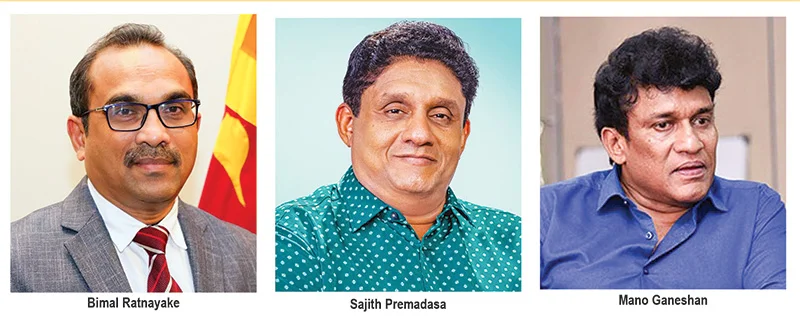
At a symposium on reconciliation organised by the National Peace Council last week, more than 250 religious clergy, civic activists and political representatives from different communities gathered to discuss the country’s future. Speaking at the event, Minister Bimal Rathnayake explained the government’s approach to national reconciliation. He said the government viewed the country’s recovery in terms of a three stage process. The first stage was stabilisation, the second was development and the third was transformation. Reconciliation, he implied, would come in that final stage. The participation of Opposition Leader Sajith Premadasa at the same symposium, and the constructive nature of his comments, strengthens that hope.
When the present NPP government took office in 2024, the country was emerging from one of the gravest crises in its post Independence history. The economic collapse of 2022 had led to shortages of fuel, food, medicines and electricity. Inflation soared, foreign reserves disappeared and long queues became part of daily life. The political upheaval that followed culminated in the resignation of former President Gotabaya Rajapaksa after mass public protests under the banner of the Aragalaya movement. The country was then governed by a leadership that spoke the language of reform and reconciliation but was widely perceived as lacking a direct popular mandate.
Sri Lanka’s past experience suggests that stabilisation and transformation cannot be treated as entirely separate stages. Postponing reconciliation until some future moment risks repeating the failures of the past. If transformation is endlessly delayed until a supposedly perfect moment arrives, there will always be new crises and new reasons for postponement. Minister Rathnayake’s contention that the government’s immediate priority has necessarily been stabilisation flows from the government’s awareness of the precarious situation the country is. Over the past two years, the government has succeeded to a significant extent in restoring economic and political stability. Inflation has reduced, shortages have ended and public institutions have regained a degree of functionality.
Guaranteed Changes
On the other hand, the country’s development continues to face challenges due to adverse global conditions, including disruptions caused by conflict in the Middle East and extreme weather events that have affected tourism, trade and the cost of living. The danger is that reconciliation may be indefinitely postponed in the name of stabilisation. This danger can be reduced if the government works proactively with the opposition and civil society to commence practical measures of transformation now rather than later. The participation of Opposition Leader Sajith Premadasa at the symposium, and the constructive nature of his comments, has strengthened the sense that bipartisan engagement on reconciliation may now be possible.
The urgency of transformation came through strongly in the presentations made by representatives of the Sri Lanka Tamil and Malaiyaha Tamil communities. ITAK parliamentarian S.Shritharan spoke of the frustration caused by unresolved post war issues in the north and east. He referred to disputes regarding land occupied during the war years, including controversies linked to Buddhist temples and state sponsored settlement activity in areas claimed by local communities. He also pointed to the continuing large scale presence of the security forces in the north and east nearly two decades after the end of the war. These grievances have remained central to Tamil political discourse since the end of the armed conflict in 2009. Families displaced by war continue to seek the return of ancestral lands. Civil society organisations in the north have repeatedly called for greater civilian control over local administration and a reduction in military involvement in civilian life.
Academic research and practical work on the ground have shown that reconciliation cannot be separated from questions of dignity, equality and justice. Former minister Mano Ganesan, leader of the Democratic People’s Front, focused on the longstanding problems faced by the Malaiyaha Tamil community. He spoke passionately about continuing housing shortages, landlessness and economic marginalisation, issues that have persisted since Independence. He also highlighted the devastating impact of recent extreme weather events on estate communities that remain socially and economically vulnerable. The condition of the Malaiyaha Tamil community remains one of the enduring social justice issues in Sri Lanka.
After Independence in 1948, a large proportion of them were denied citizenship and voting rights through legislation that rendered them stateless. Though citizenship rights were eventually restored, the social and economic consequences of exclusion continue to be felt generations later.
Many families still lack secure housing and land ownership despite their immense contribution to the country’s plantation economy. Minister Rathnayake’s responses to both these concerns were politically significant. He argued that recent political developments, including the declining influence of narrow ethnic politics across communities, indicated a major shift in public attitudes. According to him, the political ground has changed in ways that make it increasingly difficult for politicians who rely primarily on ethnic division and communal insecurity to retain public support.
Inter-Connected
There is evidence to support the assessment about the changing political grounding which sees future prospects in the resolution of long standing problems. . The economic collapse of 2022 affected all communities alike and generated a new politics centred on governance, anti corruption, accountability and economic justice. The Aragalaya protests brought together Sinhalese, Tamils and Muslims in a common demand for political change. Although ethnic grievances have not disappeared, the crisis created space for a broader understanding that the country’s future depends on cooperation rather than division. Opposition Leader Premadasa’s comments at the symposium reflected this changing political climate. He emphasised that national reconciliation could not be separated from economic justice and the need to address disparities between regions and social classes.v He also mentioned the need for civil society organisations to take this message to the community. This wider understanding of reconciliation is important because ethnic inequality and economic inequality have often reinforced each other in Sri Lanka’s history.
Academic studies have identified the denial of citizenship rights after Independence as a historic injustice that set back the Malaiyaha community for decades. The challenge now is to ensure that transformation becomes part of the stabilisation and development process itself. Practical first steps are both possible and necessary. The release of civilian lands still under state control, greater devolution of administrative authority, reduction of military involvement in civilian affairs, language equality in public administration and accelerated housing and land ownership programmes in the plantation sector are all measures that can begin immediately without waiting for a final stage of transformation.
The government’s recent commitment that provincial council elections will finally be held this year is therefore significant. These elections have been repeatedly postponed by successive governments. Holding them would not solve the ethnic conflict by itself. But it would signal a willingness to restore democratic institutions and share power in a meaningful way.
Sri Lanka has repeatedly postponed difficult reforms in the hope that a more convenient political moment would eventually arrive. But opportunities are invariably created and fought for instead of being provided as a gift by a benevolent government.
The present moment, shaped by the economic crisis and public demand for accountable government, offers a rare opportunity to move simultaneously towards stability, development and reconciliation. Provincial council elections can be the first meaningful step. But they must not be the last.
by Jehan Perera
In a significant move aimed at steering Sri Lanka’s environmental governance towards a more science-based and evidence-driven path, the Ministry of Environment has initiated a new collaborative mechanism to integrate leading researchers into national policy formulation and conservation planning.
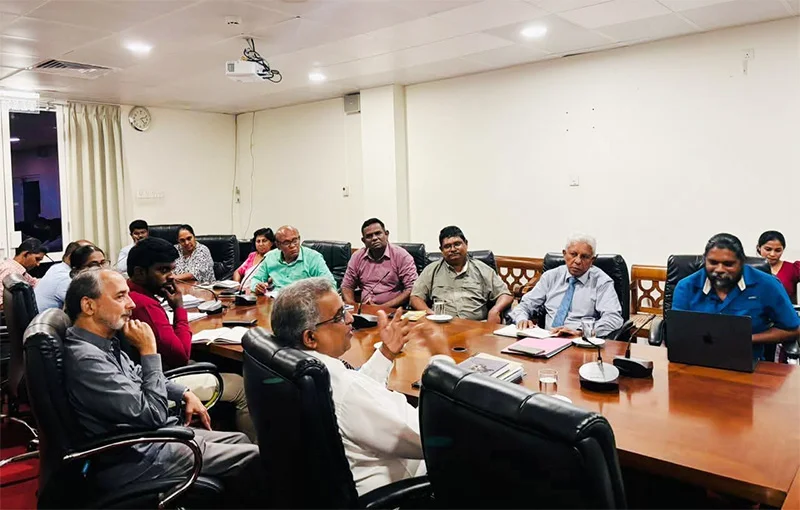
The initiative was discussed at a high-level meeting chaired by Dr. Dammika Patabendi at the Ministry of Environment on Tuesday, where top environmental scientists, wildlife experts and researchers were invited to contribute towards what officials described as a “strategic transition” in the country’s environmental management framework.
The discussions focused on strengthening the scientific basis of environmental conservation programmes and national policy decisions while creating a more research-friendly environment for academics and field scientists engaged in biodiversity and ecological studies.
Particular attention was paid to long-standing concerns raised by researchers regarding procedural and operational difficulties encountered when conducting studies in collaboration with the Department of Wildlife Conservation and the Forest Department.
Minister Patabendi stressed the need for environmental policies to be guided by credible scientific data rather than ad hoc administrative decisions, ministry sources said.
Among the key proposals discussed was the establishment of a streamlined mechanism that would reduce bureaucratic obstacles faced by researchers in obtaining approvals, accessing field sites and sharing scientific findings with state institutions.
The Minister highlighted the importance of building stronger partnerships between policymakers and the scientific community at a time when Sri Lanka is grappling with escalating environmental challenges including deforestation, biodiversity loss, human-elephant conflict, climate-related disasters and ecosystem degradation.
Environmentalists attending the meeting had also highlighted the urgent necessity of incorporating empirical research into national decision-making processes to ensure long-term ecological sustainability and better resource management.
The meeting brought together several of Sri Lanka’s leading environmental researchers and academics including Rohan Pethiyagoda, Saminda Fernando, Sewwandi Jayakody, Samantha Gunasekara, Dinidu Devapura, Himesh Jayasinghe, Manoj Prasanna, Mendis Wickramasinghe and Suranjan Karunarathna.
Director General of Wildlife Conservation Ranjan Marasinghe also participated in the deliberations.
Officials said the proposed framework is expected to pave the way for a more transparent, data-oriented and scientifically credible environmental governance structure capable of addressing emerging conservation challenges more effectively.
The government expects the new mechanism to support the implementation of practical and scientifically robust programmes aimed at safeguarding Sri Lanka’s ecological future while enhancing cooperation between state agencies and the country’s growing community of environmental researchers.
By Ifham Nizam

 Niluk Uswaththa, of Seven Notes fame, based in Dubai, surprised many when he and his wife Apeksha, turned up in Colombo, last week … unannounced.
Yes, they had a purpose in their surprise visit … to wish Apeksha’s mum for her birthday, which was on Monday, 18th May, and what a surprise it turned out to be!
In an exclusive chit-chat with The Island, Niluk said that the scene in Dubai is improving and Seven Notes do have work coming their way.
Since the members of Seven Notes are all employed (doing day jobs), they operate only on Saturdays and Sundays.
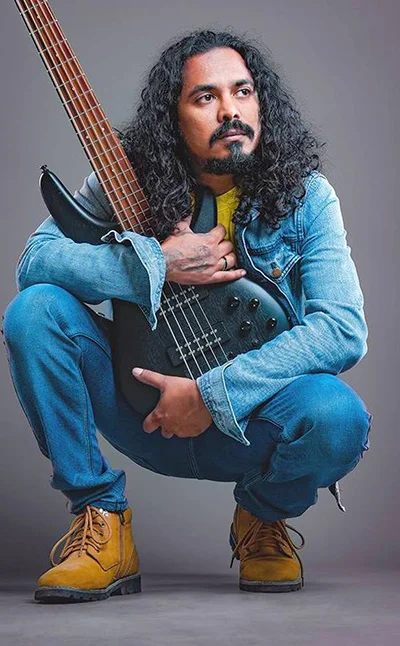
Niluk: Didn’t come prepared to perform, but obliged
friends in Galle
In fact, to get to Colombo for the birthday surprise (on Monday, 18th May), the band had to skip their 17th May, Sunday gig.
“Although it’s a short vacation, my wife and I are enjoying the setup here,” said Niluk, adding that they spent two days in Galle and that their next destination is Anuradhapura.”
Niluk didn’t come prepared to perform, but he obliged the crowd present, at a friend’s birthday celebrations, in Galle, singing and playing guitar.
They are scheduled to leave for their home, in Dubai, in the first week of June.
Seven Notes is an outfit made up of Sri Lankans and the band has been around for almost nine years.
Niluk came into their scene nearly seven years ago.
“When I went to Dubai, I had offers coming my way but it was Seven Notes that impressed me because of their acoustic style.”
The Dubai’s entertainment scene is showing clear signs of bouncing back and even levelling up in the next few months.
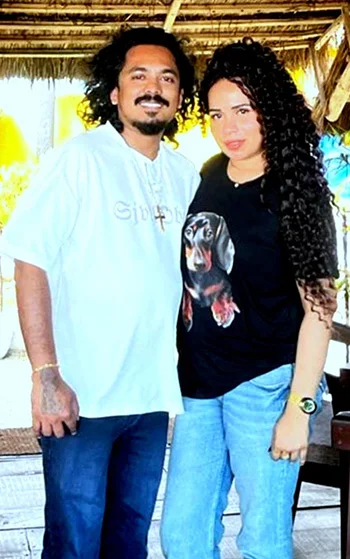
Niluk and Apeksha: Enjoying their short vacation
After a slowdown earlier this year due to regional tensions, shows and festivals are back on the calendar, and organisers say late 2026 could be the busiest concert season in years.
Time Out Dubai says “the 2026 concert calendar is filling up nicely” and “the city is ready to party once again” after some reschedules.
Dubai Summer Surprises in July brings retail activations, comedy nights, and indoor art exhibitions.
Organisers point to a backlog of postponed events that are being rescheduled for late 2026 and early 2027.
Yes, Dubai is calm on the surface but on alert. Life is mostly normal in the city, but there’s a “balancing act” as people watch for escalation.

Cabinet approves sale of Paddy stocks held by the Paddy Marketing Board
Amendment to the Promotion of Export Agriculture Act, No. 46 of 1992 to be gazatted
Ms. M.K.D.N. Madampe, appointed as Director General of the Department of Management Services

Cabinet approves collaboration agreement between Sri Lanka and Brazil for the implementation of the “Sugarcane Project in Sri Lanka”
Cabinet approval for Implementation of a Project for the Joint Exchange of Genetic Resources between Sri Lanka and Vietnam and the Development of High-Yielding and Salinity-resilient Rice Varieties.

Landslide Early Warnings issued to the Districts of Kalutara, Kegalle, Nuwara Eliya and Ratnapura extended till1600 hrs on Wednesday [27]

‘Dates have the highest sugar content to fight Coronavirus’

Sunday Island 27 December – Headlines

#SundayIsland 17th December – Headlines

Sunday Island – 28th March

Sunday Island Headlines – 21 March

Sunday Island – 21st February – Headlines
-
 Features7 days ago
Octopus, Leech, and Snake: How Sri Lanka’s banks feast while the nation starves
-
 Sports7 days ago
Sri Lanka women’s volleyball team ready for Central Asian challenge
-
 Opinion6 days ago
Murder of Ehelepola family, Bogambara Wewa and Sightings of Wangediya
-

 Business5 days ago
Historic launch of CCWE Fashion Week & International Summit 2026
-
 News6 days ago
Steps underway to safeguard Sri Lanka’s maritime heritage
-
 News2 days ago
Police probe underway to ascertain links between criminals deported from UAE and local politicians
-
 Features3 days ago
The NPP’s pivot to the past
-

 Editorial6 days ago
A play without its protagonist