
Business
Empowering Every Learner: Highlights from the National Dialogue on Inclusive Education Reform

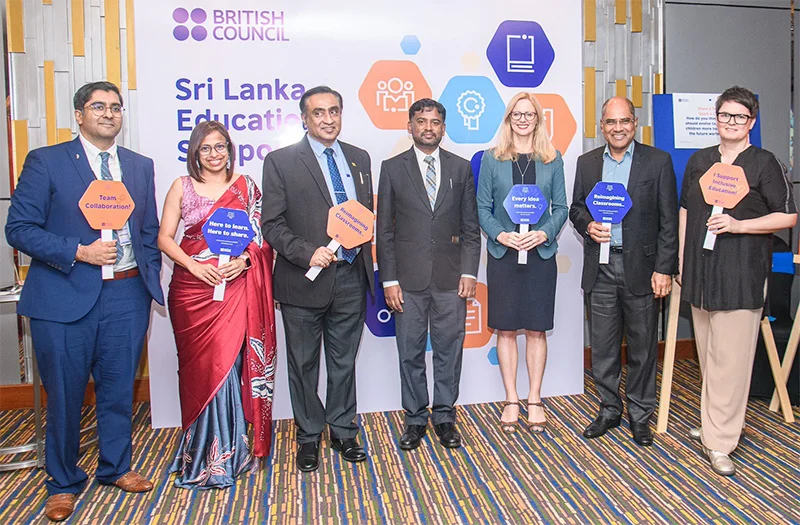
The British Council convened a powerful gathering of education leaders, innovators, and policymakers for its inaugural Sri Lanka Education Symposium 2025 — a first of its kind in its inclusivity and multi-level engagement, and a milestone moment in Sri Lanka’s journey towards a more inclusive, equitable, and future-ready education system. Attendees heard from a distinguished line-up of speakers that included Hon. Prime Minister Dr. Harini Amarasuriya, who serves as Sri Lanka’s Minister of Education, Higher Education and Vocational Education.
Centred on the theme “Collaboration, Inclusivity, Innovation and Equity in Education,” the symposium created a platform for strategic dialogue and idea sharing. Policymakers, educators, development partners, and thought leaders from across Sri Lanka and beyond explored how the system can evolve to deliver on the promise of inclusive and quality education for all. Key themes included inclusive and equitable English education, strengthening bilingual instruction, and scaling digital tools that meet the diverse needs of learners.
Opening remarks from Kate Joyce, Director Education, Arts and English, British Council, South Asia set the tone for a day grounded in shared purpose. In a special address, British High Commissioner Andrew Patrick reaffirmed the UK’s long-standing commitment to education partnerships. Orlando Edwards, British Council Sri Lanka’s Country Director, addressed participants via video message and emphasised the importance of co-creating solutions that put learners at the heart of reform.
A high-level dialogue on inclusive education featuring Nalaka Kaluwewe, Secretary to the Ministry of Education, Higher Education and Vocational Education and Anju Moses, Head of English and School Education at the British Council Sri Lanka, set a reflective and impactful tone for the symposium.
A key highlight of the symposium was the powerful keynote address by Prime Minister Dr. Harini Amarasuriya, who emphasised that English education should be an enabler of opportunity and not a marker of social divide. She outlined bold, practical reforms set for 2026 that aim to foster inclusive and communicative English instruction, modernise teacher training, expand digital access, and ensure equal learning opportunities across social and geographic lines. Her address called for collective commitment from government, development partners, civil society, and the private sector to build an equitable, future-ready education system.
The two panel discussions featured in the symposium explored how national policy can translate into meaningful impact in classrooms, and how public-private partnerships can unlock innovation at scale.
In the first panel, ‘Governance for Inclusive Education’, participants explored how policy and governance structures can support inclusive teaching, bridge equity gaps, and strengthen digital infrastructure. The second panel, ‘Rethinking Education Pathways’, spotlighted language inclusion, digital innovation, and flexible learning models to better prepare learners for a dynamic and uncertain future.
A powerful student address brought youth voices to the forefront, reminding participants that learners are agents of change. Thenuli Alpitiya (aged 13) from Rathnavali Balika M.V., Gampaha, shared how free and bilingual education—along with teachers who believed in her—opened doors and shaped her journey, highlighting the real impact of an inclusive and supportive education system.



Amid softening diplomatic rhetoric between the United States and Iran, a senior economist told The Island Financial Review yesterday that the stability of Sri Lanka’s tea exports to the Middle East, particularly Iran, would be maintained.
The economist, who closely follows regional developments, pointed to recent statements by Iranian Foreign Minister Abbas Araghchi and U.S. President Donald Trump as signs of de-escalation. Araghchi denied plans to execute anti-government protesters, while Trump indicated he had received assurances that killings had stopped and that the U.S. was “watching the process.”
“When geopolitical tensions ease, trade channels stabilise,” the economist said. “Iran and the Middle East are important markets for Sri Lankan tea. Any reduction in political risk is likely to support demand and reduce vulnerability in our export earnings,” he added.
The comments come against the backdrop of this week’s Colombo tea auction, where offerings totalled 6.0 million kilograms. The auction report noted “less activity from Iran and the Middle Eastern markets following recent restrictions in trading conditions,” reflecting the sensitivity of tea exports to regional instability.
Western Slopes and Nuwara Eliya teas showed mixed trends, with some grades firm and others declining. High and Medium Grown CTC teas sold around previous levels, while Low Grown varieties were easier by up to Rs. 20 per kg. Ex-Estate offerings remained steady at 0.74 million kilograms, with no significant change in quality, according to Forbes and Walker Research.
Low Growns, which accounted for approximately 2.4 million kilograms, saw varied demand: the Leafy category was quieter, while Semi-Leafy met with fair interest. Tippy teas faced pressure, especially in the Premium catalogue, where a lack of suitable bids left many unsold.
Selective demand was noted from shippers to the UK, Europe, and South Africa, while markets in Japan, China, the Middle East, and the CIS were reasonably active mostly at lower levels, Forbes and Walker said.
The economist added that while global tea markets remain volatile, any sustained calm in the Middle East could help restore buyer confidence from Iran – a key destination for Sri Lankan Orthodox teas.
“We are not out of the woods yet, but the signs are encouraging,” he said. “If the diplomatic tone continues to improve, we could see firmer demand from the region in the coming weeks,” he said.
By Sanath Nanayakkare
Sri Lanka is looking to significantly expand its commercial engagement with the Maldives, with business leaders calling for a more focused strategy to capitalise on growing opportunities in trade, services and tourism-linked investments.
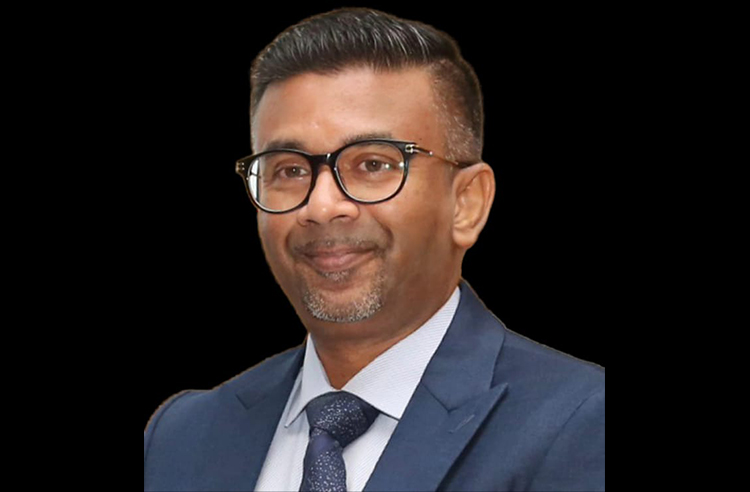
Immediate Past President of the Sri Lanka-Maldives Business Council Sudesh Mendis said that the Maldives remains a high-potential market for Sri Lankan exporters and service providers, particularly in construction materials, food and beverage supplies, logistics and professional services aligned with the island nation’s expanding tourism and infrastructure sectors.
“The Maldives offers a demand-driven market where Sri Lankan products and services already enjoy strong acceptance, Mendis said, noting that geographical proximity and long-standing business ties give Sri Lanka a natural competitive advantage.
He said continued resort development, urban housing projects and public infrastructure investments in the Maldives have sustained demand for Sri Lankan goods, while services such as engineering, consultancy and skilled manpower also present room for growth.
However, Mendis stressed that logistical inefficiencies and administrative bottlenecks continue to limit expansion. “Improving shipping connectivity, reducing customs delays and ensuring smoother payment mechanisms are essential if Sri Lankan businesses are to scale up operations, he said.
Tourism collaboration was identified as another underdeveloped area, with Sri Lanka and the Maldives increasingly viewed as complementary destinations rather than rivals. Joint marketing initiatives and multi-destination travel packages could help increase visitor arrivals to both countries, Mendis added.
He also called for stronger private-sector leadership through regular trade missions, sector-focused business forums and targeted policy support to sustain momentum.
“With a coordinated and commercially driven approach, Sri Lanka can substantially deepen its economic presence in the Maldivian market, Mendis said.
Sri Lanka and the Maldives have maintained close economic relations, with bilateral trade expected to gain further traction as regional connectivity improves.
By Ifham Nizam

The CSE commenced trading yesterday on a negative note due to profit-takings but later turned positive, when sections of the media reported that an IMF delegation is to visit Sri Lanka next week to facilitate the fifth review of the extended fund facility to Sri Lanka.
Amid those developments both indices moved upwards. The All Share Price Index went up by 41.42 points, while the S and P SL20 rose by 25.28 points.
Turnover stood at Rs 4.73 billion with ten crossings. Top seven crossings were reported in DFCC, which crossed 4.4 million shares to the tune of Rs 701 million and its shares traded at Rs 159, HNB 250,000 shares crossed for Rs 105 million; its shares traded at Rs 420, Sierra Cables 2 million shares crossed for Rs 75 million; its shares traded at Rs 37.57, Seylan Bank 666,000 shares crossed for Rs 73.4 million; its shares traded at Rs 110.50.
Commercial Bank 300,000 shares crossed for Rs 57.2 million; its shares traded at Rs 225, Sampath Bank 300,000 shares crossed to the tune of Rs 46.6 million; its shares traded at Rs 155 and Ambeon Capital 1 million shares crossed for Rs 42 million; its shares traded at Rs 43.
In the retail market top seven companies that have mainly contributed to the turnover were; ACL Cables Rs 171 million (1.7 million shares traded), Commercial Bank Rs 153 million (686,000 shares traded), Sierra Cables Rs 130 million (3.5 million shares traded), Sampath Bank Rs 109 million (703,000 shares traded) , HNB Rs 109 million (250,000 shares traded), Lanka Credit and Business Finance Rs 76 million (8.2 million shares traded) and HNB (Non-Voting) Rs 76 million (213,000 shares traded). During the day 132 million share volumes changed hands in 37857 transactions.
It is said that the banking and finance sector led the market, especially HNB and Commercial Bank, while construction related companies, especially Sierra Cables, also performed well at the floor.
The manufacturing and travel and tourism sectors also performed well.
Yesterday the rupee was quoted at Rs 309.50/60 to the US dollar in the spot market weaker from Rs 309.35/50 Wednesday, having depreciated in recent weeks, dealers said, while bond yields were broadly steady.
The telegraphic transfer rates for the American dollar were 305.9000 buying, 312.9000 selling; the British pound was 408.2980 buying, and 419.6162 selling, and the euro was 352.7488 buying, 364.1370 selling.
By Hiran H Senewiratne

Lanning, Litchfield and Pandey help UP Warriorz do the double over Mumbai Indians

Ugandan leader to extend 40-year rule after being declared winner of contested poll

Iran supreme leader blames US for deadly protests

Trump names Tony Blair, Jared Kushner to Gaza ‘Board of Peace’

The Government is taking steps to regulate early childhood education to ensure quality education while enhancing the professionalism of preschool teachers. — PM

ICC officials to meet BCB in Bangladesh to solve T20 World Cup impasse

‘Dates have the highest sugar content to fight Coronavirus’

Sunday Island 27 December – Headlines

#SundayIsland 17th December – Headlines

Sunday Island – 28th March

Sunday Island Headlines – 21 March

Sunday Island – 21st February – Headlines
-

 Business3 days ago
Koaloo.Fi and Stredge forge strategic partnership to offer businesses sustainable supply chain solutions
-

 Business7 days ago
Dialog and UnionPay International Join Forces to Elevate Sri Lanka’s Digital Payment Landscape
-

 Editorial2 days ago
The Chakka Clash
-

 News7 days ago
Sajith: Ashoka Chakra replaces Dharmachakra in Buddhism textbook
-

 Editorial16 hours ago
Crime and cops
-

 News16 hours ago
UNDP’s assessment confirms widespread economic fallout from Cyclone Ditwah
-

 Features7 days ago
The Paradox of Trump Power: Contested Authoritarian at Home, Uncontested Bully Abroad
-

 Features7 days ago
Subject:Whatever happened to (my) three million dollars?