
Opinion
Proposed new coal power plant at Norochcholai

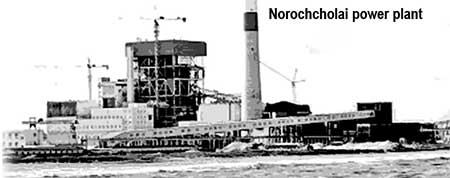
Dr. Janaka Ratnasiri’s recent informative article on pricing of coal power generation makes one wonder whether the Chairman CEB has overlooked other factors in computing the price. I must admit that I am not competent to comment on what Dr. Janaka Ratnasiri has said of pricing but I discuss other issues highlighted in the letter.
Dr. Ratnasiri says that power plants like the proposed one are no longer installed in developed countries as they have efficiency below 35%, meaning the plant consumes a higher amount of coal than a high efficient plant to generate the same amount of electricity. It is presumed this statement is in respect of the existing plants at Norochcholai supplied and constructed by China at a time when the country was facing a severe energy shortage in 2004. However, does it mean that we should go in for a similar plant in the 4th additional one. Perhaps Japan or Germany may come forward with modern state-of-the-art plant and better terms and conditions, inclusive of training our local personel to undertake minor repairs and maintenance. it is not out of place to mention here, when Mahinda Rajapaksa made a state visit to Japan as President and Ranil Wickremesinghe as Prime Minister, Japan offered a coal plant. Why not pursue that offer and avoid the cumbersome procedure of calling for tenders, taking years.
Next, he says low efficient plant also emit high amount of pollution. In this regard M/s Ramboll, Consutants have made a very clear statement in their report, appearing under ‘Smoke Emission’ presume Dr. Ratnasiri has read this report. However, it is questionable whether CEB maintains what is required to be done. This is confirmed when he says ‘ The Chairman’s statement also says that an environment impact assessment [EIA] study is underway. Actually, in Sri Lanka, an EIA study has no meaning and is carried out merely to get over a legal requirement. In the face of these reasons, should CEB consider China’s offer.
According to press reports, the 4th plant is to be undertaken on a loan from China. This does not necessarily mean that China should get the contract, instead call for worldwide tenders and select the best, as said earlier, a modern, state of the art plant. If that is done, China may come forward with very attractive terms, China wants to get a foothold in this vital sector – Electricity. There was also a proposal for a Joint Venture with China to operate the 4th plant which CEB engineers have vehemently opposed. There appears to be confusion on this issue, as at first Minister for Power and Energy sought Cabinet approval to undertake the construction, later he said no decision has been taken. It appears that the Minister, the Secretary and the Chairman CEB act independently and issue press statements.
The most interesting statement Dr. Ratnasiri makes is ‘it is likely that the CEB will have to depend on Chinese technicians to manage the new plant. One could guess, China does not train our locals to undertake running repairs. keeping certain technical aspects secret to have a hold on this important sector. It is absolutely essential, the government plays heed to the CEB engineers’ objection and allow CEB to operate the plant. It should be stated, if a joint venture is signed with China, the Chinese partner will enter the administration, making CEB to face unnecessary problems, as Chinese will consider only the profit and not the interest of the country, the institution and the consumer. At the end, when dividends are paid, repatriate that sum in foreign exchange to China, when President Gotabaya Rajapaksa, making all efforts to curb outflow of foreign exchange by restricting imports of even essential day-to-day requirements and calling upon people to produce locally what could be grown or manufactured. Ministers, State organisations should rally round President Rajapaksa to keep his promises made at the Presidential Election. One specific promise was that he will not approve any project without a feasibility study and its financial viability.
It is believed that a new government will be formed, under the same President Rajapaksa, and we the citizens hope for a radical change on his watch.
G. A. D. Sirimal
Boralesgamuwa

by Jehan Perera
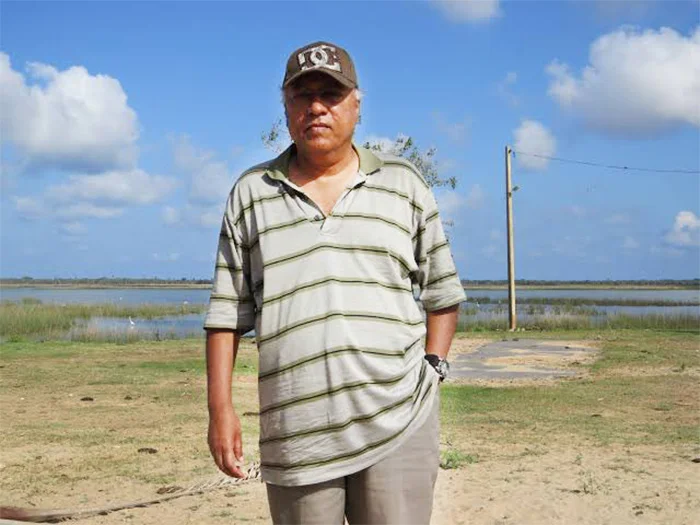
There are some journalists whose work we read and then move on. And there are others whose writing makes us stop, think and look at the country differently. D. B. S. Jeyaraj who passed away on 17 May 2026 was one of them. Whenever I saw an article by DBS, as he was widely known, appear in a newspaper, it was the first I read. He was primarily a columnist and political analyst, with a deep knowledge of the history of Sri Lanka’s ethnic conflict. But his columns were not simply analysis or opinion. They were rooted in what was happening in Sri Lanka and in what people involved in those developments were saying. We could see this in his frequent references to first-hand comments from people he had spoken to. He did this both when he lived in Sri Lanka and later, when he was living in Canada. That was no easy task.
In a 2013 interview, after returning to Sri Lanka for the first time in 25 years, DBS described how he had continued to report on Sri Lanka from Canada by maintaining contacts at home. He said that he broke his rest daily to communicate with contacts in Sri Lanka and that this dual existence of living physically in Canada and mentally in Sri Lanka took a heavy toll on his health and finances. But that commitment mattered and allowed him to write about Sri Lanka from afar without losing touch with what was happening on the ground. His writings gave readers a sense of what was happening in the north and east, as well as of politics more generally in Sri Lanka.
Speaking at the commemoration and book launch organised by the Tamil Media Alliance last week, Vijitha Yapa, the founding editor of The Island and Sunday Times, under whom DBS worked, captured an important quality of his journalism when he said, “DBS had no venom. That was his greatness.” He also recalled how DBS stood up to pressure and threats and continued writing about the Tamil community while insisting on fair play irrespective of race or religion. M. A. Sumanthiran, General Secretary of the ITAK, put another aspect of DBS’s contribution even more directly: “Truth is the first casualty of war. DBS fought to keep the truth alive.” He recalled that DBS always cross-checked his news and noted that even those who hated him read his columns to find the truth.
These observations capture two qualities that made DBS special. The first was his commitment to truth and, second, was his ability to write about a deeply divisive subject without venom. DBS was a Tamil writing about the north and east and the Tamil national question in a deeply polarised environment. Yet he wrote for the mainstream English-language press and was widely read not only by Tamils but also by people from other communities. His writing helped make the concerns, political aspirations and historical experiences of the Tamil community accessible to readers beyond it. His importance was not limited to his being a Tamil journalist. His writing mattered because it addressed the country as a whole. Issues and perspectives that might otherwise have remained within particular communities could become part of a wider national debate.
Another noteworthy feature of DBS was his ability to be realistic in his assessments. With his wide knowledge of history, he understood that each side in the national conflict had its own history, fears and perceptions of threat. He recognised that the conflict could not be properly understood through the narrative of one side alone. He understood that there could be no unilateral solution imposed by one side or the other. That realism is particularly important in a country where political positions have often been presented as if the concerns of one community could be resolved without addressing those of another. A journalist who understands this complexity needs to do more than simply take sides. He or she can help readers understand why the conflict has endured, why trust has been so difficult to establish, and why lasting peace requires more than one dominant story.
There was also something revealing about DBS’s return to Sri Lanka in 2013. In the interview he gave during that visit, he said he deliberately avoided politics. He wanted to experience the country from the perspective of an ordinary person rather than through the views of politicians or political associates. He observed a disconnect between the needs of the people and those of the political class. In retrospect, that observation was remarkably prescient. The disconnect he identified in 2013 would become dramatically visible in the Aragalaya of 2022.
In the same interview, he offered an observation that deserves to be remembered. A journalist may not be able to write all that he or she wants because of external constraints, he said. But no journalist should write what he or she does not want to write because of external pressure. His commitment to independent journalism came at a considerable personal cost. He was arrested and detained by the Sri Lankan Police in 1987 after his reporting on the war in Jaffna, and in 1993, while living in Canada, he was brutally assaulted by LTTE supporters who fractured both his legs.
For all these reasons, I consider DBS to have been a mentor of mine. I never said so to him. Mentors are not always people who formally teach us or with whom we have a close personal relationship. Sometimes they are people whose work we follow, whose judgement we respect and whose example helps shape our own understanding of what we should strive to do. DBS was such a person for me. His passing has left a gap. His journalism was informed by history but connected to the present, rooted in facts but open to interpretation, and concerned with the realities of all communities.
The collection of his writings launched in his memory by the Tamil Media Alliance is therefore more than a record of an important period in Sri Lanka’s history. It is also a reminder of what journalism can be at its best. DBS showed that a journalist could understand one community without becoming confined to it, analyse conflict without being partisan, and take a position without losing sight of complexity. Above all, he showed the value of journalism that seeks to keep the truth alive. For those who read him regularly, the greatest reminder of his absence is the absence of his next column.
by N. A. de S. Amaratunga
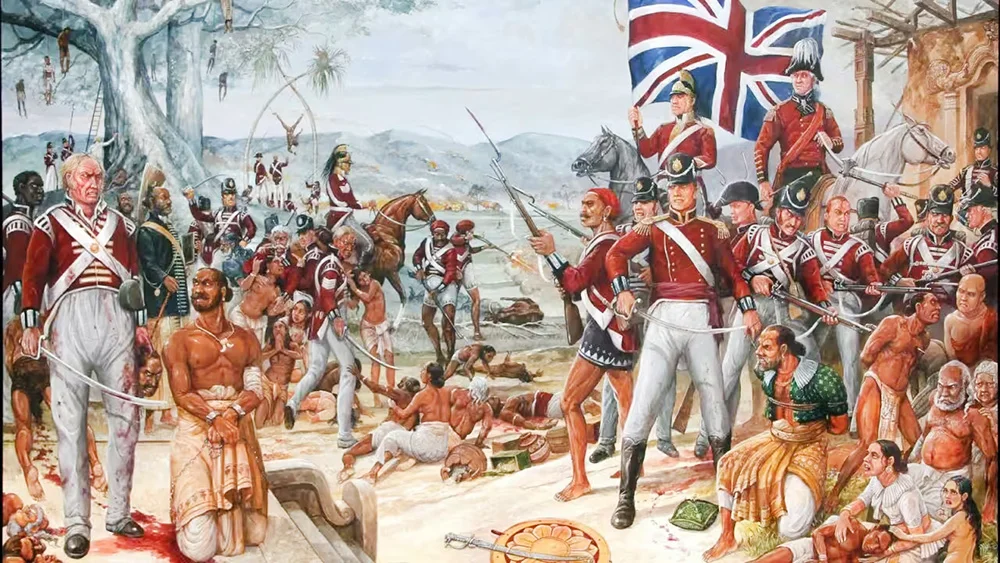
At a time when the word genocide is used with political motive and defensive war misconstrued as genocide, and a brutal genocide is taking place on a global scale with impunity, one should reflect on genocide committed by those who falsely accuse the Sri Lankan armed forces and the government for such crimes. The British who systematically annihilated people including “babies suckling”, in Uva-Wellassa in 1818 and the LTTE, which carried out numerous massacres to drive away the Sinhalese and Muslims in the so-called border villages are now shamelessly levelling unsubstantiated allegations of genocide against the Sri Lankan military. The British, jointly with the US, massacred about a million people, including children, in Iraq on a fabricated charge of possessing weapons of mass destruction. The British helped the LTTE continue their genocide of the Sinhalese and Muslims in the North and the East in an attempt to drive them away and grab their lands, and such crimes constitute genocide according to 1948 Genocide Convention.
“Slaughter every man, woman and child”
“Slaughter every man, woman, and child (including babies suckling at the breast)” was the order given by Governor Robert Brownrigg (3rd British Governor of Ceylon from 1813 – 1820) to Maj. Gen. Hay MacDowell in 1818. The British left the entire Uva-Wellassa region in a state of famine and starvation. The British used the scorched earth policy including mass murder and genocide of Sinhala civilians to crush the rebellion. British human rights campaigners now pointing accusing fingers at Sri Lanka have forgotten the Madulla Massacre, which led to razing and annihilating entire villages. In the entire Uva region members of the male population above the age of 18 were killed in revenge for resisting British imperial occupation under Governor Brownrigg.
Britain at present is leading a core group at the UNHRC Geneva, which bashes Sri Lanka for alleged human rights violations. Britain seems to have no remorse about its genocidal violence in Sri Lanka and happily leads the way in castigating Sri Lanka on unsubstantiated allegations of human right violations during the war against the LTTE. The US, which is the biggest war criminal in the world, is supporting these neo-colonial strategies to control and exploit the poor countries.
The Chemmani mass grave
The Chemmani mass grave has become a political tool liberally used by the pro-LTTE groups and their supporters in the West and also their local agents to pressure the government to take action against the war winning armed forces. Let the government be urged to get to the bottom of the mass graves found in the North and elsewhere. People of this country owe it to the armed forces who saved their country to ensure that the name of the national military is cleared. And if there are any war criminals among them, punish them after conviction. Sri Lanka is not Israel, the US or the UK.
The Genocide Convention was conceived largely in response to World War II, which saw atrocities such as the Holocaust that lacked an adequate description or legal definition. Polish-Jewish lawyer Raphael Lemkin, who coined the term genocide in 1944 to describe Nazi policies in occupied Europe and the Armenian genocide, campaigned for its recognition as a crime under international law. Lemkin also linked colonialism with genocide, mentioning colonial genocides outside of Europe in his writings. The Convention defines genocide as any of five “acts committed with intent to destroy, in whole or in part, a national, ethnic, racial or religious group.” These five acts include killing members of the group, causing them serious bodily or mental harm, imposing living conditions intended to destroy the group, preventing births, and forcibly transferring children out of the group. Victims are targeted because of their real or perceived membership of a group, not randomly.
Genocide in Gaza
However, Israel in collaboration with the United States, which has the worst record in genocidal warfare, has violated this Convention with impunity in Gaza, knowing that the rest of the world cannot act against it except condemn its actions. The UN has miserably failed to take any action against Israel, though it has the necessary tools like the Convention mentioned above. Its Commissioner for Human Rights Volker Turk visited the Chemmani mass grave and issued a strongly-worded statement calling for investigation under international supervision. He has not visited the place where genocide is currently taking place in broad daylight. Neither has the UNHRC made any worthwhile response in respect of Iraq, Syria, Libya and other parts of the world, where the US and Europe have been engaged in genocidal warfare. This type of double standards will further erode the credibility of the UNHRC, and if countries tend to ignore its writ, it has itself to blame.
We still don’t know the identities of the people whose skeletal remains have been found in the Chemmani mass grave. It was a prolonged war situation that created these graves. There were allegations of killings, including civilians, by both parties to the war.
The Office of Missing Persons has received about 10,000 complaints about missing persons from the north and east and investigations into these complaints are ongoing (source – reports of the OMP). Apart from verbal complaints there is very little incriminating evidence, if at all, against the armed forces. A few isolated incidents where excesses were committed have been investigated and action is being taken against the suspects.
Campaign by Pro-LTTE groups
Pro-LTTE groups are trying their utmost to connect the missing persons with the mass graves. They claim that the people who went missing were buried in the Chemmani mass grave. The Island journalist Shamindra Ferdinando dealt with this matter comprehensively in the Midweek Review on 9 September. He shows that the narrative built up by the pro-LTTE groups and the Western imperialists regarding the alleged disappearances could be more myth than fact.
The LTTE massacred hundreds of civilians in cold blood in many places, such as Sri Maha Bodhi, Aluth Oya, Aranthalawa (where the victims were Buddhist monks), Kattankudy mosque, Palliyagodella, Eravur, Gonagala and Kebethigollewa. Most of those killings, committed outside the war zone, were aimed at terrorising the ordinary people, and that amounts to genocide according to 1948 Genocide Convention. The LTTE carried out many bomb attacks on civilian targets, such as the Central Bus Station in Pettah, the Central Bank, crowded trains and buses. In the eastern villages people were bludgeoned and slashed to death so that ammunition could be saved.
Apart from killing and injuring, the LTTE chased away Muslims and Sinhalese from the Northern province, which amounted to ethnic cleansing, an act of genocide according to the above mentioned Convention. The people who were chased away have not yet returned to their homes and property, perhaps because of the memory of terror they had experienced in the North. Aren’t these acts of genocide ? The 1948 Convention defines genocide as any of five “acts committed with intent to destroy, in whole or in part, a national, ethnic, racial or religious group.”
Attacks on centres of worship like temples and mosques and killing of priests are unpardonable acts of terror aimed at destroying religious groups. Similarly murdering surrendered police officers is butchery of the worst kind. It was such acts of naked terrorism and insane mass murder that made the FBI label the LTTE “the most brutal terrorist organization in the world”.
Silence of UNHRC
Isn’t the UNHRC keen to ensure that justice is done for the victims of genocide committed by the LTTE? Perhaps, we should not make such a request to an organisation that keeps mum while genocide is rampant in the contemporary world ? Palestinians are being systematically murdered and driven away from their country with the UNHCR doing nothing to protect them. The US President is threatening the countries which support the Palestinians.
Sri Lanka must call for an international investigation into genocide committed by the LTTE.


‘Before I took this position, I knew so little about them that I didn’t even know their names. I had not met them in any context outside the present.’ (My translation.) President Dissanayake, recently speaking about judges of the Supreme Court and of the Appeals Court.
by Usvatte
Nothing announces more loudly the gaping distance between the social strata from which our rulers, prior to 2024 came, and those of the present government come. That response came from President Dissanayake when he was accused of raising the age of retirement of judges to help his favourites. He could not possibly have had favourites among persons wholly strangers to him. That charge, therefore, prima facie, must fail.
Those who ruled this country as politicians and senior public servants, judges, lawyers and other professionals, generally prior to 2024, commonly went to schools in Colombo or its neighbourhood. Leaders even from Jaffna, Anuradhapura, Kandy, Ratnapura and Galle had been educated in schools in Colombo or their equivalents in other urban centres. They had met each other either as relatives, friends, school mates, debaters or competitors on playgrounds. Three of four who were our first prime ministers attended S. Thomas’ College, Galkissa; the other Royal College, Colombo. Of the first four prime ministers, two went to Cambridge and one to Oxford. There, then followed a family, two of whom attended the highly reputed St. Bridget’s Convent, in Colombo, two others having attended S. Thomas,’ and Oxford, and one, the redoubtable Sciences Po in Paris. Two more came from Royal College, Colombo, and a third claimed that he attended St. Joseph’s, Maradana. So, did we spend the first near-half-century of an independent country. These ladies and gentlemen, together with many others, with roughly similar backgrounds, established a form of government new to our society. A part of the achievements of that leadership was an excellent (within the resources they had) public health scheme and a school system that, in time, reached almost every child.
Unlike the earlier rulers, Dissanayake attended government schools in Tambuttegama and Kelaniya University. He studied science and mathematics. He can differentiate an equation for you and speak intelligently about Paul Dirac and Higgs boson with the same felicity as accusations against former politicians. There is a Prime Minister who can talk to you impromptu on August Compte and Claude Le`vi-Strauss. She did go to prestigious schools in Colombo but decided to throw her lot with those that had not. (That was not uncommon in periods of radical change in several societies in the past.) There are ministers in this government who have travelled regularly by train, without snatching gold necklaces on women passengers. Others have pushed themselves into crowded buses, to get home before dark on roads unlit for miles. Many have taught in rural schools in Pooneryn or Nikaweratiya. Few have travelled by motor car to schools in major towns including Colombo and its environs. Few have lived in or have homes in major towns including the national capital. One MP says that she was born in a ‘line room’ in a tea plantation. One must know the poverty, squalor and violence of these habitats to measure the social distance she has travelled. The new political leaders are culturally very different from the old. (I avoid the term class because the term has connotations which are not seen here.) Those people are the salt of this earth, representative of common people in this country. We now have in Parliament a House of Representatives full of Commons. We look forward to them for leadership to move this society from the morass it is in.
A coterie of people from the deep south of the country, who were elected to office with much optimism, turned out to be a deep disappointment and turned this country into a kleptocracy and a haven for druggists and gangsters. The offspring of leading politicians in the group that went to those same good schools that I mentioned above, have been accused in our courts of heinous crimes. Some crowd our prisons. They evidently plundered the public purse, pushed the country into debt both local and foreign, corrupted processes of governance including the judiciary and let the country into a venomously poisonous murky backwater from which young people flee as soon as they can collect the airfare for a one way ticket to Dubai or obtain a visa to South Korea.
The present government was formed by young people who have yet to be tried. The electorate, by an overwhelming majority, elected them to Parliament. The President was elected by a thin margin. In my understanding, this government has yet to suffer sinking damage. They have faced several squalls and one or two have been thrown overboard but the ship has survived and plunged ahead in heavy seas. A major storm has been brewed and the government has been battered. But the rudder is in place, the engine room is dry, there is ample fuel and the crew is fresh and willing. On the radar, I read heavier storms developing ahead and these will severely test the skills of the captain and his mates. Despite loud and wide claims to the contrary, I do not see a sharper captain or more skilled and less tainted sailors who can guide this ship safely over choppy seas over the next few years. A capacity to speak English fluently, hold a firm handshake and wear a necktie neatly do make a good brown sahib (Tarzie Vittachi) but not necessarily a Manmohan Singh or a Zhu Rongji or, indeed, a Lee Kwan Yu. Those that batter the government, except for a few outstanding scholars and fine lawyers, are laden with so much foul lead that any vessel carrying them must instantly seek the bottom. The new politicians have not been tested with temptation. Who can, I certainly cannot, give them a carte blanche of good behaviour? Time will test them? The government has demonstrated competence ample to win that chance.
There is much talk that the government did not consult stakeholders when they introduced legislation to raise the age at which judges in courts will retire. Who expects a government to foresee every emergency and write it into its election manifesto? What indeed is at stake and who holds the stakes? The government holds forth that what is at stake is the administration of fair justice to both those who come to courts accused of crimes and those who seek redress for harm inflicted on them by those who broke the law. They are the janathava who hold the highest stakes. ‘Will my case be heard to a close and the accused be duly punished? And where is justice? Will the accused die before the case will be heard to a close in 2038, when I myself might be dead? Will those who plundered the government Treasury and their progeny live in splendid luxury while those who lost loved ones, limbs and all they possessed suffer both misery and penury? Is that not foul justice? Is that just at all?’ The government, both in public and implicitly, has consulted these stakeholders amply. The fast disposal of cases of where politicians and others had committed serious crimes was a major plank in the platform on which the JJB sought election. I don’t recall that any party either at a general election or the one to elect a president challenged that course. True enough, they did not seek a mandate to paint the east window of the magistrate’s court in Meegahakotuva.
How many of you have read in an election manifesto in the United Kingdom, Angola, Paraguay or Mongolia an undertaking to raise the wages of judges of the supreme court? Lawyers are not stakeholders in this principal contest. They, of course, are more than amicus curiae.
Highly regarded scholars in law, eminent lawyers in practice, trade unions and politicians who want to test the last chance they have to come to power now protest that the rule of law is at risk of loss, that the executive and legislative branches of government may subject the judicial branch under their subjugation and with that bury democratic governance. Like most eventualities that are possible. But what is the probability that that eventuality will come about? (An unkind professor once said, ‘It is possible that all of you will win first class honours. But what is probable is that one will.) Were the government to raise the age of retirement of judges, in what manner is the rule of law denied; in what manner will democracy cease to be? The probability that any political party that may come to power will kill the independence of the judiciary, deny the rule of law and establish a dictatorship is exactly the same as the NPP government may do so. The president of BASL made a declaration, a few weeks back, that the 22nd Amendment to the Constitution, which is the offending piece of legislation, would no longer be inimical to democracy, if it were to be effective from 01 January 2027. Is there a long rahu kala in kethu dasa inimical to democracy from September 01 to December 31, 2026? What is the poison in the proposed 22nd Amendment that will be wafted away between now and 01 January 2027? In the absence of a satisfactory answer to that question, what is the objection to the proposed Amendment?
Among the three branches of government, the judiciary is the weakest. It has no tanks; it has no money. The executive branch appoints them and the legislative, may lawfully, remove them. Yet the judiciary branch is so important for democratic governance that the fundamental laws of governance (the Constitution), courts themselves under the law and long custom, bind the other two branches and the general public to good behaviour. Democratic governance is possible only when those three branches check each the others’ excesses and support their good functioning. The judicial branch is no less important than the other two.
A well-functioning judiciary is at stake. The government has put out the beginning of a solution. BASL and the learned professors with it, possibly could not have a stake in delaying judicial procedures and denying justice to close perhaps to 5 million citizens. The stakes they play for must be different. The public will be grateful if they would disclose them.
In time, I expect new casus belli and more violent skirmishes, because the lines now have been drawn.

Zimbabwean Tavengwa Mukuhlani appointed Deputy Chair of the ICC until November 2027.

DIMO KNIGHTS 2026 Reinforces a Culture of Recognition and Growth

Isle of Man teenage all-rounder Lucy Barnett ICC Women’s Player of the Month for August 2026

Sonal Dinusha named the ICC Men’s Player of the Month for August 2026.

USA midfielder sues doctors after on-pitch cardiac arrest

River home to 500 crocodiles chosen as Olympic rowing venue

‘Dates have the highest sugar content to fight Coronavirus’

Sunday Island 27 December – Headlines

#SundayIsland 17th December – Headlines

Sunday Island – 28th March

Sunday Island Headlines – 21 March

Sunday Island – 21st February – Headlines
-

 Sports7 days ago
DDS set to lose Test captaincy
-

 News7 days ago
Sri Lanka faces new grid challenge as rooftop solar surges: former CEB GM
-

 Latest News7 days ago
Shafali, Deepti power India into sixth T20 Asia Cup final
-

 News5 days ago
Gnanasara Thero absconding after SC ruling
-

 Latest News6 days ago
Sri Lanka thwart Fatima Sana challenge to secure Asia Cup final spot
-

 News6 days ago
Ammunition cache found in old Kandy bungalow
-

 Editorial7 days ago
A flight of fancy
-

 News6 days ago
Green Climate Fund (GCF) Regional Dialogue for East and South Asia will be held from 14 to 17 September 2026 at Cinnamon Life at City of Dreams Hotel, Colombo