
Features
93rd Oscars shortlist


By Tharishi Hewavithanagamage
The Academy of Motion Picture Arts and Sciences recently announced the shortlists in nine categories for the 93rd Academy Awards. The categories include, Documentary Feature, Documentary Short Subject, International Feature Film, Makeup and Hairstyling, Music (Original Score), Music (Original Song), Animated Short Film, Live Action Short Film and Visual Effects. Although 2020 was a bad year for the industry; audiences, fans, filmmakers, stars and critics are hopeful of this year’s Academy Awards.
Nominations voting begins on March 5, 2021 and will conclude on March 10. The final nominations for the 93rd Academy Awards will be announced on March 15th, while the event is scheduled to be held on April 25, 2021.
Documentary Feature
Two hundred thirty-eight films were eligible in the category, but only the following 15 will advance in the category.
‘All In: The Fight for Democracy’
‘Boys State’
‘Collective’
‘Crip Camp’
‘Dick Johnson Is Dead’
‘Gunda’
‘MLK/FBI’
‘The Mole Agent’
‘My Octopus Teacher’
‘Notturno’
‘The Painter and the Thief’
’76 Days’
‘Time’
‘The Truffle Hunters’
‘Welcome to Chechnya’
Documentary Short Subject
One hundred and fourteen films qualified in the category, but only the following 10 films will advance in the Documentary Short Subject category for the 93rd Academy Awards.
‘Abortion Helpline, This Is Lisa’
‘Call Center Blues’
‘Colette’
‘A Concerto Is a Conversation’
‘Do Not Split’
‘Hunger Ward’
‘Hysterical Girl’
‘A Love Song for Latasha’
‘The Speed Cubers’
‘What Would Sophia Loren Do?’
International Feature Film
A year after director Bong Joon-Ho’s ‘Parasite’ stole the show, foreign films were buzzing. 2020 was an exciting year for films made outside the United States and is reflected in this year’s shortlist. This year, films from 93 countries were eligible in the category but the following 15 films have been shortlisted to compete in the ‘International Feature Film’ category.
Bosnia and Herzegovina, ‘Quo Vadis, Aida?’
Chile, ‘The Mole Agent’
Czech Republic, ‘Charlatan’
Denmark, ‘Another Round’
France, ‘Two of Us’
Guatemala, ‘La Llorona’
Hong Kong, ‘Better Days’
Iran, ‘Sun Children’
Ivory Coast, ‘Night of the Kings’
Mexico, ‘I’m No Longer Here’
Norway, ‘Hope’
Romania, ‘Collective’
Russia, ‘Dear Comrades!’
Taiwan, ‘A Sun’
Tunisia, ‘The Man Who Sold His Skin’
Makeup and Hairstyling
The following 10 films will be advancing in the Makeup and Hairstyling category for the Awards.
‘Birds of Prey and the Fantabulous Emancipation of One Harley Quinn’
‘Emma’
‘The Glorias’
‘Hillbilly Elegy’
‘Jingle Jangle: A Christmas Journey’
‘The Little Things’
‘Ma Rainey’s Black Bottom’
‘Mank’
‘One Night in Miami…’
‘Pinocchio’
Music (Original Score)
One hundred thirty-six scores were eligible in the category, but the following 15 scores will advance in the Original Score category for the Awards.
‘Ammonite’
‘Blizzard of Souls’
‘Da 5 Bloods’
‘The Invisible Man’
‘Jingle Jangle: A Christmas Journey’
‘The Life Ahead (La Vita Davanti a Se)’
‘The Little Things’
‘Mank’
‘The Midnight Sky’
‘Minari’
‘Mulan’
‘News of the World’
‘Soul’
‘Tenet’
‘The Trial of the Chicago 7’
Music (Original Song)
One hundred five songs were eligible in the category, but only the following 15 songs will advance in the category. The original songs, along with the motion picture in which each song is featured, are listed below.
‘Turntables’ from ‘All In: The Fight for Democracy’
‘See What You’ve Done’ from ‘Belly of the Beast’
‘Wuhan Flu’ from ‘Borat Subsequent Moviefilm: Delivery of Prodigious Bribe to American Regime for Make Benefit Once Glorious Nation of Kazakhstan’
‘Husavik’ from ‘Eurovision Song Contest: The Story of Fire Saga’
‘Never Break’ from ‘Giving Voice’
‘Make It Work’ from ‘Jingle Jangle: A Christmas Journey’
‘Fight For You’ from ‘Judas and the Black Messiah’
‘Io Sì (Seen)’ from ‘The Life Ahead (La Vita Davanti a Se)’
‘Rain Song’ from ‘Minari’
‘Show Me Your Soul’ from ‘Mr. Soul!’
‘Loyal Brave True’ from ‘Mulan’
‘Free’ from ‘The One and Only Ivan’
‘Speak Now’ from ‘One Night in Miami…’
‘Green’ from ‘Sound of Metal’
‘Hear My Voice’ from ‘The Trial of the Chicago 7’
Animated Short Film
Ninety-six films qualified in the category but only the following 10 films will advance in the category for the Academy Awards.
‘Burrow’
‘Genius Loci’
‘If Anything Happens I Love You’
‘Kapaemahu’
‘Opera’
‘Out’
‘The Snail and the Whale’
‘To Gerard’
‘Traces’
‘Yes-People’
Live Action Short Film
One hundred seventy-four films qualified in the category, but only the following 10 films will advance in the category.
‘Bittu’
‘Da Yie’
‘Feeling Through’
‘The Human Voice’
‘The Kicksled Choir’
‘The Letter Room’
‘The Present’
‘Two Distant Strangers’
‘The Van’
‘White Eye’
Visual Effects
The following 10 films remain to run in the Visual Effects category for the 93rd Academy Awards. Members will vote to nominate five films for final Oscar consideration.
‘Birds of Prey and the Fantabulous Emancipation of One Harley Quinn’
‘Bloodshot’
‘Love and Monsters’
‘Mank’
‘The Midnight Sky’
‘Mulan’
‘The One and Only Ivan’
‘Soul’
‘Tenet’
‘Welcome to Chechnya’


by Prof. Rajiva Wijesinha
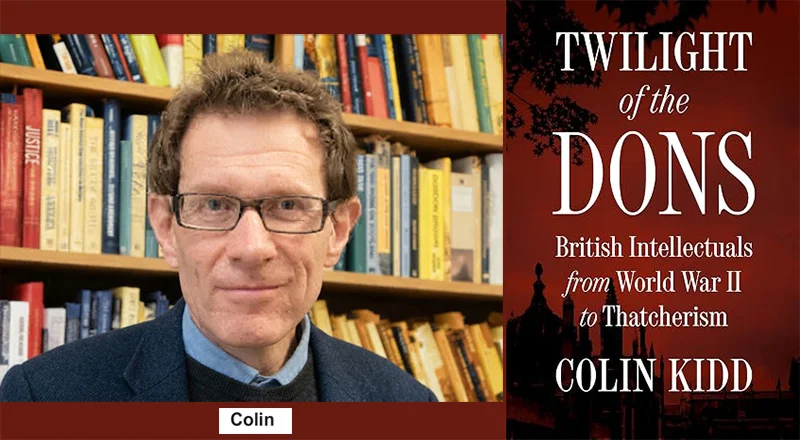
While on holiday last month I was lent a book by a friend, who had borrowed it in turn from my former Dean, Leslie Mitchell, into whose retirement home he too has now moved. It must have appealed to my Dean, as it did to both of us, because it was about Oxbridge dons in the latter half of the last century. Called Twilight of the Dons, by a man called Colin Kidd, it charts the decline of the prestige of dons over that period, from the high point they commanded just after the Second World War.
This was in part because of the yeoman service they rendered during the war, not only in the field where many of them won decorations but also in administration and, in particular, in intelligence work, notably at Bletchley Park, which worked out German ciphers, contributing to effective countermeasures against German aggression, notably at sea.
With prestige thus gained, dons were a notable feature on the media and developed apace in the post war years, not only delivering lectures but also participating in quiz shows which they dominated. And they were in the forefront of developing other universities as well, the red bricks which started earlier and then the many others set up in this period, sometimes characterised as plate glass.
There were some challenges to this hegemony in the first couple of decades after the war, notably a Kidd notes, by Catholics who wanted greater seriousness – a focus of criticism being the then prevalent language philosophy, which was more concerned with arguments about meaning than the world at large. But for a couple of decades there was nothing really disturbing. But then came the student movements of the late sixties which, if nothing like as dramatic as those in the United States of France, started a decline in confidence.
Before he goes on to these, Kidd has two set pieces about the United States and France though he concentrates on peripheral issues. He looks closely at responses in Britain to the Kenndy assassination, or rather what some dons, particularly the conservative Hugh Trevor Roper, saw as the cover up by the Warren Commission of a deeper conspiracy. He was opposed by his fellow conservative, John Sparrow, Warden of All Souls, and their exchanges could be acerbic.
The next chapter deals with sociology, a suspect subject at Oxbridge, and the responses of dons who found the theorising of Levi-Strauss suspect. Having helped publicise his approach, they soon despaired of his loose methods, and became increasingly critical.
This last fitted in with one of the criticisms of the students, that Oxbridge academia was too clinical, and they wanted subjects, and subject combinations, that related more clearly to the actual world. This went hand in hand with support of Marxist arguments, more precisely Trotskyists radicalism, which fundamentally challenged the elitist consensus of Oxbridge.
Until the shocks of the sixties, Oxbridge had had a laid-back approach to administration, and its finances. It had never thought about the anomaly apparent to students of a college without undergraduates, All Souls, which provided fellowships for many grandees resident in London, who lived a sybaritic existence when they came to Oxford for weekends.
All Souls was one focus of student criticism, and Warden Sparrow deeply upset, not least when there was graffiti on the walls of Balliol, the most radical of the colleges then, with a Marxist master, Christopher Hill. He demanded that the graffiti be cleaned up, and Hill obliged, to the extent only of removing Sparrow’s name, but allowing everything else to remain, which made him more furious.
Ironically, this Marxist approach fitted in with the next great shock that hit the universities, namely the rigid money for value policies of Margaret Thatcher. She had the support of many conservative dons, some of whom Kidd characterises as Tory Marxists, in opposition to the Whig grandees, who had held unchallenged sway earlier. But not a few of the Tories were overwhelmed by her rigidity, which intensified when Oxford denied her an honorary degree. She changed the funding system to create an agency that was supposed to be evenhanded between all the universities, so Oxbridge soon found itself having to compete with institutions it had previously patronised.
There was, however, another reason for the decline in prestige of the dons, which had to do with shifting priorities as new generations came to the fore. The confidence of the generation which thought it had won the war and laid the foundations for modern Britain – William Beveridge, who institutionalised the welfare state, was the Master of University College, my own – gave way to a new generation which, even if many were of the upper class, had to strive to get to the top.
Furthermore, the domination of generations of undergraduates by dons who lived in college, and entertained them, and developed wider interests through conversations over the hospitality they freely extended, passed when more and more dons lived out and had to help in looking after families. Working wives became the norm, unlike in the earlier period when wives simply supported their husbands, contributing to hospitality at home, as was the case with the epitome of supportive tutors, George Cawkwell of Univ.
He does not figure in the book, the only example given of a don who, while a considerable academic, spent much time with and on students being that of Jeremy Catto, of Oriel, whose death a few years back led to outpourings of grief. Before that he had been part of a group of historians, including Leslie Mitchell, who saw themselves as a last post of civilisation, which they celebrated at regular dinners.
But there are many vignettes of dons who were larger-than-life figures in my time, including Trevor Roper, who had a streak of mischief which led to sometimes radical comments, as when ultra-conservative fellows of Peterhouse Cambridge, where had had been elected head, found him wanting, to be described as ‘the power-house of Troglodyte thought’.
Kidd shows how all that had changed, dons in general now being largely parochial figures, concerned with their families more than with their students, and with research that advances their careers than with students to advance not just their careers but the wider thinking that would make their careers productive.
But I suppose, with now two Prime Ministers in a row who did not come from Oxford, the first such lapse since the Second World War, the shades coming down is not surprising.

Nations Trust WNPS Monthly Lecture
17 September, 6 pm Jasmine Hall, BMICH
Lecture to be
delivered by
Ranjan Marasinghe,
Director General,
Department of Wildlife Conservation
The Wildlife and Nature Protection Society (WNPS) will bring the country’s wildlife conservation debate directly to the institution responsible for much of it, when the Director General of the Department of Wildlife Conservation (DWC), Ranjan Marasinghe, delivers the Society’s September Monthly Lecture.
Titled “Sri Lanka’s Wildlife Heritage: Conserving Nature for Future Generations”, the Nations Trust WNPS lecture comes at a time when the country’s wildlife is facing increasingly complex pressures — from habitat loss and fragmentation to illegal activities, development pressures, tourism impacts and the continuing human-wildlife conflict, particularly the human-elephant conflict.
The DWC carries a difficult and often highly scrutinised responsibility. Under the Fauna and Flora Protection Ordinance, it is mandated to protect and conserve Sri Lanka’s fauna, flora and their habitats, while administering a substantial network of protected areas. The Department also has responsibilities relating to protected species, law enforcement, wildlife management, research, international wildlife trade under CITES and public engagement.
The scale of that responsibility is considerable. Sri Lanka’s DWC-administered protected area network covers more than 1.25 million hectares, providing protection to ecosystems and species while also supporting important ecological, cultural and tourism values.
But the responsibility also comes with difficult questions.
How effectively can wildlife be protected when animals and people increasingly share the same landscapes? How should the country respond to the human-elephant conflict when elephants move beyond protected areas and into agricultural and human-dominated landscapes? What are the limits of enforcement? Where should conservation priorities sit when they collide with development, livelihoods and political pressures? And what can the DWC realistically achieve with the resources and authority available to it?

Frontline veterinary care treating wild elephants under demanding field conditions
These are not questions that can be answered simply nor should they be.
The September lecture provides an opportunity to hear directly from the person currently responsible for leading the Department, rather than through reports, headlines or public criticism.
Ranjan Marasinghe was appointed the 35th Director General of the DWC in January 2026. A career wildlife officer, he joined the Department in 1998 and has progressed through a number of positions, including Assistant Director, Director of Operations and senior technology-related responsibilities. He has also gained field experience in wildlife management and brings a multidisciplinary academic background spanning agriculture, information technology, law, and forestry and environmental management.
His professional experience also includes work involving geoinformatics and elephant management, including the application of GPS, satellite remote sensing and GIS to understanding elephant movements and potential corridors.
The conservation community has legitimate expectations of the Department, just as the Department faces legitimate constraints and challenges. Understanding both sides is essential if Sri Lanka is to move beyond criticism alone and towards better conservation outcomes.
This September, WNPS invites the public to engage with the DWC’s perspective on the future of Sri Lanka’s wildlife heritage.
WNPS Monthly Lecture is supported by Nations Trust Bank and is free and open to all.

 by Prof. C. A. Saliya
(The third instalment in a five-part series on the business of gambling, legal and illegal.)
Somewhere in the fine print of every trading app you’ve ever seen advertised on social media, there’s a sentence that almost nobody reads all the way through. It usually says something like this: “77% of retail investor accounts lose money when trading CFDs with this provider.”
Read that again. Not “some people lose money.” Not “trading carries risk.” Seventy-seven out of every hundred ordinary customers who sign up and put their own money in, lose it. And that number isn’t a scandal uncovered by an investigative journalist. It’s a legally required disclosure, printed by the company itself, sitting quietly at the bottom of the same advertisement promising you financial freedom.
Now imagine a casino was legally required to put a sign on its front door reading: “77 out of every 100 people who walk through this door will lose money.” Would anyone still walk in? Probably far fewer than they do today. And yet millions of people, a good number of them here in Sri Lanka, drawn in through Telegram groups, YouTube “gurus,” and slickly produced Instagram ads, open trading accounts every year, often with no idea that the product they’ve just signed up for behaves, mathematically, almost exactly like a casino game.
What a CFD actually is in plain language
CFD stands for “contract for difference.” Strip away the jargon and it means this: you’re not actually buying gold, or oil, or US dollars, or shares in a company. You’re placing a bet with a broker on whether the price of that thing will go up or down over some period of time, usually 24 hours. If you’re right, the broker pays you the difference. If you’re wrong, you pay them.
That alone isn’t necessarily gambling, plenty of legitimate financial hedging works this way. What tips it firmly into gambling territory is leverage. Most CFD and forex platforms let ordinary customers control a position many, many times larger than the money they’ve actually put in, sometimes 50 or 100 times larger. That sounds thrilling, because it means a small price move in your favour turns into a big profit. It also means a small price move against you wipes out your entire deposit in minutes, sometimes seconds. Currency and commodity prices wobble up and down constantly, for reasons that have nothing to do with any individual trader’s skill or analysis. Leverage simply turns that normal, everyday wobble into a coin flip with your rent money.
And underneath all of it sits something called the spread, the small gap between the price you can buy at and the price you can sell at. Every single trade you make, win or lose, hands the broker a slice through that spread. It costs the broker nothing to run more of them through the system. It is, in every meaningful sense, the exact same mechanism as a casino’s house edge on a roulette wheel, a guaranteed cut for the house, built into the game before a single card is dealt or a single trade is placed.
The numbers behind the disclosure
 That 77 percent figure isn’t an outlier. Britain’s financial regulator found, in a review of the industry, that 82 percent of CFD customers lost money. Regulators across Europe studied 10 different countries and found the average retail customer lost somewhere between roughly €1,600 and €29,000 trading these products. Academic researchers, who have studied trading apps directly, including their “practice mode” demo accounts, found something else troubling: many of these apps are deliberately designed using the same psychological tricks as gambling apps. Near-miss messaging that makes a losing trade feel like it was almost a win. Streak counters. Push notifications nudging you back in right when you’ve stepped away. The researchers’ own conclusion was blunt: this “supports comparisons with gambling, where an overwhelming majority loses money.”
To be fair to the trading industry, it has a real counter-argument, and it deserves to be heard rather than dismissed. Genuine investing and trading, done properly, does involve skill, understanding a market, managing risk, not betting more than you can afford to lose, using regulated brokers who are supervised by real financial authorities. Nobody sensible would say buying shares in a well-run company is “gambling” in the same sense as a slot machine. The industry’s argument is that CFDs, used responsibly by informed traders, sit closer to that end of the spectrum than to a casino floor.
The trouble is that “used responsibly by informed traders” describes almost none of the customers these apps are actually advertising to. Nobody runs a slick Instagram campaign targeting sophisticated hedge fund managers. They target 19-year-olds with a bit of spare cash and a phone.
The Sri Lankan blind spot
Here is where this story becomes genuinely local, and genuinely urgent. Sri Lanka’s new gambling law, the one creating a single Gambling Regulatory Authority to oversee casinos, card games, and betting, has nothing to do with any of this. Forex and CFD trading falls under an entirely different part of the government’s rulebook, treated as a financial services matter for the Central Bank and securities regulators, not as gambling at all. On paper, that makes sense: trading involves real financial markets, real currencies, real commodities.
But in practice, it creates a gap you could drive a truck through. A card game at a funeral house, played for a few hundred rupees, falls under strict 19th-century anti-gambling law. A trading app that can empty a young person’s entire savings account in an afternoon, using exactly the same psychological hooks as a slot machine, falls under none of it, no age verification standard built for gambling harm, no loss limits, no cooling-off periods, no self-exclusion registers.
Meanwhile, unlicensed offshore forex “signal groups” and trading channels, plenty of them explicitly targeting Sri Lankan youth through Telegram and WhatsApp, operate almost entirely outside any meaningful oversight at all, local or foreign.
There’s a newer wrinkle worth a mention too: cryptocurrency trading and crypto-based gambling products increasingly blur into the exact same category as CFDs, some analysts value the global crypto gambling market in the tens of billions of dollars, though even the experts disagree wildly on the real number, which tells you how little anyone is actually tracking this corner of the industry closely.
The question this instalment leaves open
So here’s the question worth putting to Sri Lanka’s policymakers, and to readers thinking about their own accounts: if a product produces the same loss rates as a casino, uses the same psychological design as a betting app, and overwhelmingly targets the same young, inexperienced customers as illegal gambling operators, does it matter, for the purposes of protecting people, whether we call it “trading” or “gambling”? Right now, in Sri Lanka and in most of the world, the label is doing an enormous amount of legal work that the underlying product doesn’t actually earn.
We’ll return to this exact tension in our final instalment, when we ask what genuinely joined-up gambling regulation would look like, one that judges a product by what it does to the people using it, rather than by what its marketing department decided to call it.
Next week,
Part 4 heads to the racecourse, the one form of gambling that has stayed legal almost everywhere on Earth for centuries, to explain, in plain English, exactly how a bookmaker guarantees itself a profit no matter which horse crosses the line first.
Prof. C. A. Saliya, is a charted accountant, academic, researcher and former banker. He is the author of SAMAJA GAVESHAKAYA and Springer Publication DOING SOCIAL RESEARCH. He can be contacted at saliya.ca@gmail.com. The views expressed in this article are his own and do not necessarily represent those of the organisations with which he is affiliated.

All-new Bolero MaXX unveiled in Sri Lanka

Twilight of the Dons

Emirates and Sri Lanka Tourism Promotion Bureau build on strategic partnership

Sri Lanka’s Wildlife Heritage: Conserving Nature for Future Generations

Pay&Go partners with Sejaya Micro Credit to simplify loan repayments

Hayleys Mobility celebrates 1,000 new journeys across Sri Lanka

‘Dates have the highest sugar content to fight Coronavirus’

Sunday Island 27 December – Headlines

#SundayIsland 17th December – Headlines

Sunday Island – 28th March

Sunday Island Headlines – 21 March

Sunday Island – 21st February – Headlines
-

 Sports6 days ago
DDS set to lose Test captaincy
-

 News6 days ago
Sri Lanka faces new grid challenge as rooftop solar surges: former CEB GM
-

 Latest News6 days ago
Shafali, Deepti power India into sixth T20 Asia Cup final
-

 News4 days ago
Gnanasara Thero absconding after SC ruling
-

 Latest News5 days ago
Sri Lanka thwart Fatima Sana challenge to secure Asia Cup final spot
-

 Features7 days ago
Lost for 90 years: Rare Goby resurfaces in Jaffna
-

 News5 days ago
Ammunition cache found in old Kandy bungalow
-

 Editorial6 days ago
A flight of fancy