
Features
LTTE and Canadian complicity


“Go back to Colombo… Genocide deniers, you are not welcome in Brampton, you are not welcome in Canada”- Patrick Brown, Mayor of Brampton, Ontario – Canada (May 2025)
Post 9/11 in 2001, a few nations including the UK, Australia and Malaysia, proscribed the LTTE as a terrorist organisation which led to the freezing of accounts, seizing of assets and banning of front-organisations. None of this occurred in Canada; where, like the EU, it was not until 2006 that the LTTE were proscribed, allowing it valuable time and space to organise and fundraise in the service of Prabahakaran’s continued wonton attacks on innocent civilians in Colombo and beyond.
Long before the attacks on the Twin Towers of 9/11/2001, a loosely connected group that would later become known as Al Qaeda, detonated a truck-bomb beneath the North Tower of the very same building in New York City, USA; that was in 1993. The event would catalyse a period of legal reform in the US to counteract transnational and international terrorism, leading to the 1997 designation of the LTTE in the US as a Foreign Terrorist Organization, along with the PKK and FARC; designated as such for global fundraising networks, deliberate targeting of civilians and international arms procurement activities.
Global Terrorism is now a subject of study on its own, popularised by the Al Qaeda brand, launched at the world in 2001; both a peak and a nadir for this particular type of international terrorism. In the post-9/11 period, it soon became apparent to western nations that such organisations were dependent on well-organised and coordinated efforts requiring global patronage, assets and financial accounts, patrons and middlemen, front-organisations.
Brampton is a Canadian city in the Province of Ontario, part of what’s called the Greater Toronto Area; the city has a total population of around 745,000. Its large Sri Lankan Tamil Diaspora community made headlines with the unveiling of a Tamil Genocide Memorial on the 10th of May, 2025.
No major multilateral international organisation makes the claim of genocide against Sri Lanka. While the United Nations has documented evidence of human rights violations and war crimes committed by the Sri Lankan Armed Forces, there was no implication of genocide or ethnic cleansing.
There is no record of Amnesty International or Human Rights Watch accusing the Sri Lankan Government of either ethnic cleansing or genocide, despite a decades long discourse that is critical of operations by the Armed Forces.
Reckless Endangerment
Accusations of serious war crimes persist, such as the indiscriminate shelling of civilian areas and no-fire zones, targeting of hospitals and humanitarian facilities, denial of humanitarian assistance, extrajudicial killings and sexual violence, enforced disappearances and torture. Successive governments have rejected external or international investigative and judicial mechanisms, with the exception of the Yahapalanaya Government, which co-sponsored UNHRC Resolution 30/1 of 2015. It proposed the so-called ‘hybrid court’, with the participation of Commonwealth and other foreign judges, lawyers, prosecutors and investigators. This resolution had little support among the majority of the Sri Lankan population and that Government did not have the necessary political capital, leading to the abandoning of yet another ill-conceived and ill-considered instrument of reconciliation.
Successive Sri Lankan administrations have failed to:
= keep to its own commitments to multilateral organisations, whether related to reconciliation, justice or accountability and;
= seriously engage with the accusations in a manner that maintains the credibility of Sri Lanka’s institutions.
Ultimately, the inadequacy of engagement and failure to counter allegations in a substantive manner continue to compromise the image and integrity of Sri Lanka’s armed forces and cast aspersions on Sri Lankan society more broadly.
The LTTE’s use of human shields, of shooting and shelling from civilian areas including no-fire zones, has been documented by Human Rights Watch, the International Red Cross, and even by the UN Panel of Experts Report of 2011 (PoE). The character of guerrilla warfare; the difficulties in distinguishing combatants from civilians, are well understood dynamics of modern warfare involving non-State actors.
According to the PoE Report of 2011, between January and May of 2009, approximately 290,000 civilians fled the conflict zone and crossed over to government-controlled areas; many did so at great personal risk; there is documented evidence of the LTTE firing upon civilians fleeing the war zone. The PoE Report acknowledged the chaos and intensity of fighting: civilians intermingled with LTTE fighters in densely populated areas, noting the LTTE military strategy deliberately endangered the civilian population.
The OISL Report of 2015 and the PoE of 2011 acknowledge the battlefield complexities and dynamics of ‘fog of war’ and uncertainties within targeting decisions, most of which are de-emphasised by the mainstream discourse. There exists a substantive, intellectually honest and good-faith response to allegations and accusations of war crimes and crimes against humanity but no Sri Lankan Government has engaged sufficiently with the discourse nor taken seriously the need for such engagement.
One Island, Two Nations?
It is important to note that the 2011 PoE Report, which generated many of the allegations against Sri Lanka’s Armed Forces, was not an official UN investigation and did not meet evidentiary standards of international law. Then UN Secretary-General Ban Ki-moon even emphasised, “This report is not a fact-finding or criminal investigation. It represents a human rights inquiry and presents credible allegations which, if proven, would warrant further investigation”. Thus, the PoE was not a fact-finding body and had no mandate to apply evidentiary standards; essentially a compilation of allegations. There were no basic standards applied for corroboration of statements and allegations, no cross-examination of witnesses and much of the evidence was sealed for 20 years.
Post-war rehabilitation efforts and democratic participation in the immediate post-war period, the resettlement of some 300,000 Internally Displaced Persons (IDPs) within 3 years, the development of infrastructure in previously war-torn areas of the country, are all dynamics that are ignored by the mainstream narrative. The restoration of voting rights in the North and East was significant; the Tamil National Alliance (TNA) contesting and winning political power at the Provincial Level was further evidence of the protection and promotion of political rights in a post-war scenario. It is still not too late for a Sri Lankan administration to launch a definitive defense of the integrity of Sri Lanka’s Armed Forces; it ought to consider Godfrey Gunatilleke’s ‘Third Narrative’ which draws from the Eastern Theatre of Eelam War IV to present a more nuanced understanding of operations undertaken by Sri Lanka’s Armed Forces.
The post-war North and East hold many social complexities, exacerbated by poverty and a lack of opportunity for economic advancement, compounded by militarisation of large areas, denial of civic rights such as the right to protest, a climate of intimidation by Police and security forces; a failure by the Government to find a middle ground that allows for a State sanctioned commemoration of fallen LTTE combatants that falls short of glorifying a Terrorist Organization. These complexities are compounded by the failure of successive governments to establish a meaningful framework for a permanent political solution that addresses devolution and self-determination; aided and abetted by the discourse of Tamil Nationalism that insists on an extra-constitutional ‘Federal’ solution.

Patrick
The Blind Eye and the Other Cheek
Canadian Governments, far from acknowledging and appreciating these nuances, seem to enable and promote a narrative that serves to further entrench rigid nationalist ideologies on both sides of the divide. Canada has in effect played into caricatures; that the Sri Lankan State, society, and culture are inherently exclusionary and even racist.
The fact that the Canadian Government boycotted the CHOGM (Commonwealth Heads of Government Meeting) conference held in Colombo, in protest at the Government of Sri Lanka, was most disappointing given the Canadian role in extending and intensifying the war in Sri Lanka.
A 2006 Human Rights Watch report brought attention to the “intimidation, extortion and even violence” that Sri Lankan Tamils living in Canada were being subjected to in order to raise funds for LTTE operations in Sri Lanka. The report details the use of unlawful pressure against members of Tamil Communities; “One Toronto business owner said that after he refused to pay more than C$20,000, Tamil Tiger representatives made threats against his wife and children”. Author of the 45 page report, Jo Becker notes that “Many members of the diaspora actively support the Tamil Tigers; but the culture of fear is so strong that even Tamils who don’t, feel they have no choice but to give money.”
The report suggests that the LTTE pressures families for donations of between CN$ 2,500 to CN$ 5,000, “while some businesses have been asked for up to C$ 100,000”. Charity organisations, including the World Tamil Movement, British Tamil Association and the Tamil Rehabilitation Organization, were all part of the network of fundraising. These charities solicit funds for what they claim to be assistance to civilians affected by the war. However, investigations, including by Canadian intelligence agencies, found “that a significant amount of the funds raised were channeled to the LTTE for its military operations. The Canadian Security Intelligence Service (CSIS) concluded in 2000 that at least eight non-profit organisations and five companies were operating in Canada as fronts for the LTTE”; Canadian Authorities did little to stem the flow of funding to the LTTE war effort in Sri Lanka.
The Canadian offices of the World Tamil Movement (WTM) were raided and sealed off by authorities in 2006 and investigations by the Royal Canadian Mounted Police (RCMP) uncovered evidence linking WTM to the LTTE through receipts, donor-lists and pledge forms. According to Canadian court and government documents, the WTM alone was believed to have raised millions of dollars annually, a significant portion of which was allegedly funnelled to the LTTE to purchase weapons and fund military operations. The aforementioned Human Rights Watch report also notes that authorities often failed to intervene effectively when members of Tamil communities complained about threats and intimidation by these front-organisations.
Clean Your Room
Even as an advanced democracy, Canada has its own internal fissures related to autonomy for French-speaking provinces – Quebec Nationalism and even its own Federal/ Provincial tensions; a complicated colonial legacy. Canadian alliances with the United States in theatres of war around the world have caused significant death and destruction; a 40,000 strong Canadian deployment as part of the US war on terror in Afghanistan is notable. It is under-appreciated just how much damage was caused by Canada’s acquiescence to and implicit support for, organisations enabling the LTTE, despite decades worth of evidence for the LTTE’s forced conscription of Tamil youth, recruitment of child soldiers, indoctrination of members (including pregnant mothers) to martyrdom and attacks targeting of Sri Lankan civilians on public transport, worshipping at temples, working at offices.
Successive Canadian Governments have unabashedly propagated narratives of a Tamil Genocide and Ethnic Cleansing by Sri Lanka’s Armed Forces, despite the lack of consensus while disregarding Sri Lanka’s longstanding, albeit insufficient, engagement in international institutions.
Indeed, examples like the Tamil Genocide Monument in Brampton are detrimental to any project of national reconciliation, a discourse that only further alienates the prospects of genuine unity, even emboldening ultranationalist segments of the population in the process. Accusations of genocide and ethnic cleansing alongside the demonisation of the State and by extension the people of Sri Lanka, paints a large swathe of the country as being racist, the Sinhala-Buddhist majority as explicitly nativist, exclusionary and innately supremacist; these are all unhelpful caricatures that do nothing but further divide an already divisive situation.
Canadian Governments have allowed the exploitation of its own democratic spaces for activities that supported, promoted and directly funded operations objectively terroristic in nature and continue to this day to allow for the large-scale veneration of the LTTE and its now-deceased leader, Velupillai Prabhakaran. These front organisations and activists have leveraged Canada’s liberal democratic protections; freedoms of speech, assembly, and association to organise, lobby and fundraise; to shield themselves under the rhetoric of human rights advocacy only to actively participate in perpetuating a conflict that claimed thousands of lives.
Canada, unlike the US or the UK, provided little if any material support to the Sri Lankan government during the roughly 30 years of conflict, while conversely, allowing significant and sustained material support to flow to the LTTE. This was largely to appease a small but highly organised and vocal segment of the Tamil-Canadian diaspora. In doing so, Canada not only failed to prevent the financing and promotion of a brutal terrorist movement but also allowed domestic block-vote politics to distort its foreign policy on a complex and sensitive conflict in a developing nation.
By Kusum Wijetilleke

Features
‘A remarkable time capsule’: The enchanting history of Oxford University’s 750-year-old medieval library

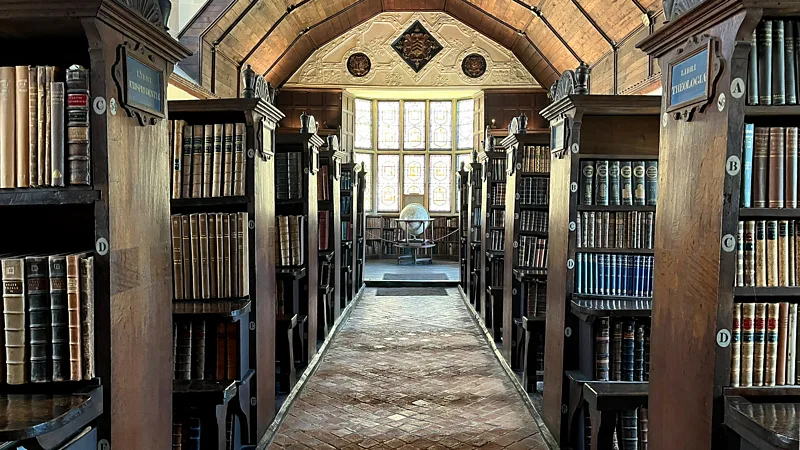
Predating the Aztec Empire, Merton College Library in Oxford has been used by everyone from celebrated 14th-Century mathematicians to JRR Tolkien. In an exclusive interview with the BBC for its 750th birthday, its librarian describes what makes it so special.
At Merton College in Oxford, there is an antique chest. In the Middle Ages, three key-holders had to be summoned to reveal the riches within. But this treasure wasn’t gold or jewels. It was books.
Such strict security may sound overly cautious for mere parchment. But in an era before the printing press, books were a valuable commodity. They could take months to produce, as the entire text had to be painstakingly written out by hand. So, just as universities solicit cash from their alumni today, Merton College insisted its 13th-Century fellows donated books.
“There’s no single definition of a library” – Prof Teresa Webber
The Archbishop of Canterbury issued a decree in 1276 introducing this requirement, which marked the beginning of the library at Merton College. It has been running continuously ever since. To put that length of time in context, Merton’s library predates the Aztec Empire. Its unbroken history stretches from before the Black Death to beyond the Covid-19 pandemic. And its users have encompassed everyone from famous 14th Century mathematicians to Lord of the Rings author JRR Tolkien.
This month marks the library’s 750th anniversary. It’s a major milestone. But Merton’s extraordinary lifespan has been recognised since the Victoria era, when it was routinely described as the oldest library in England.
In the 20th Century, writers like Rudyard Kipling and John Buchan referenced it in works of historical fiction, bolstering its reputation as a particularly venerable library. As the cultural recognition of “the famous Merton Library” grew, claims about its longevity became exaggerated. Some overzealous Oxonians even declared it the oldest library in the world.
The origins of the historic library
Historians today are more careful about making such bold declarations. “It’s a complicated question,” says Prof Teresa Webber from the University of Cambridge. “There’s no single definition of a library. And there were all sorts of stages in the development of what we think of today as a library.”
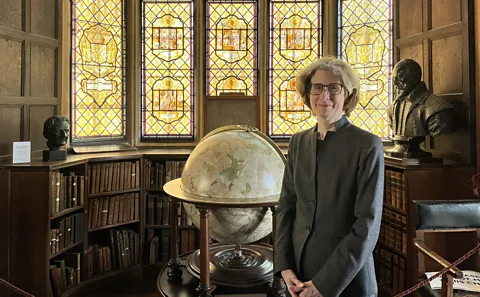
The origins of the library at Merton are certainly different from how we think of such institutions now. There was no librarian and there were no shelves for browsing. “There was a system of loaning and returning books from the chest,” Merton’s librarian, Dr Julia Walworth tells the BBC. “It would have been a formal thing. Rather than just saying, ‘Oh, go rummage and find the books you need,’ the whole community would come together to open the chest.”
“Horizontal shelves were installed for placing books upright. Merton is the first recorded use in Britain of this method of storing books” – Dr Julia Walworth
Merton’s collection started evolving into a modern library quite quickly. Just a few years after the Archbishop’s decree, several books were stored outside the chest for the first time. They were chained to a table in the college, making them available at any time. According to Walworth, this innovation “anticipates the modern distinction between loan and reference library collections”.
Merton’s book treasury moved closer to becoming a modern library in the 1370s, when a purpose-built room was constructed to house the growing collection. It was here that Merton introduced a vital improvement in book storage. “Horizontal shelves were installed for placing books upright,” Walworth says. “Merton is the first recorded use in Britain of this method of storing books.”
Curiously, Merton’s books were shelved with their spines inwards and their titles inked on the paper facing out. This was due to the continued use of chains, which were clipped on the fore-edge of each book’s cover. “The fellows were aware that chained books had a better chance of survival than books that went out on loan,” Walworth explains.
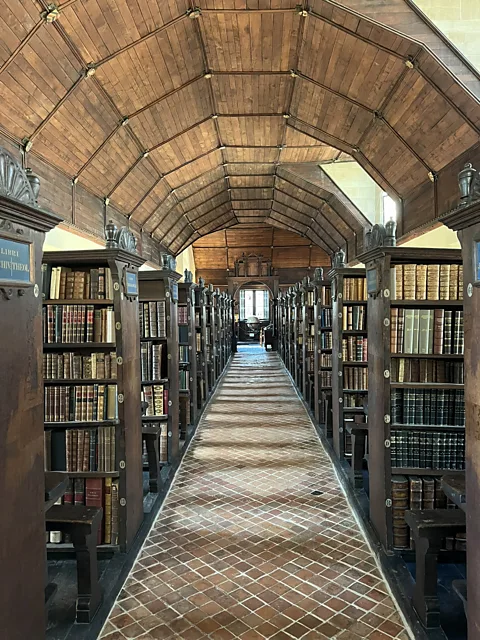
Today, just a few volumes in the library are chained – purely for display purposes. And the remaining books are now placed in the modern fashion with their spines out. But otherwise, the medieval room remains a remarkable time capsule of the library’s history. Near the entrance, visitors can even see the 13th-Century chest, which Walworth believes is the original. During term time, the historic library room is still used by students. And this ongoing use is a major factor in the superlatives that are often applied to the age of Merton’s library. “It’s hard to think of an earlier library room that’s been in continuous use,” Webber says.
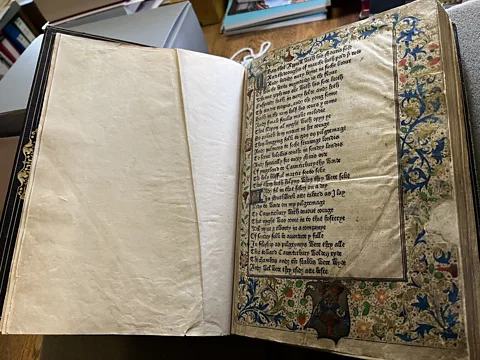
Claims about Merton’s longevity first gained traction in the Victorian era, as it became more of a tourist destination. Visitors would marvel at its stained-glass windows, as well as rare books like its 15th-Century edition of The Canterbury Tales. “It’s one of the earliest books printed in England,” Walworth explains. “What’s unique about Merton’s copy is the hand-illuminated borders.” Among those who visited the library was American writer Ralph Waldo Emerson, who mentioned it in his 1856 travelogue English Traits. In 1884, a young Beatrix Potter visited, describing the library’s “beautiful oak roof” and “ancient, dusty smell” in her diary.
By this time, books and magazines were increasingly describing the library in record-breaking terms. An 1878 guide to Oxford called Merton’s library “the most ancient now in England”. The 1885 edition of the Encyclopaedia Britannica described it as “the oldest existing library in England”. Gradually, these claims were inflated. A 1928 article in The Times recounted an event held by the Oxford Preservation Trust in which it was declared “the oldest library in the world”.
This growing perception of Merton’s longevity was even referenced in F Scott Fitzgerald’s classic novel The Great Gatsby. In the book, the multi-millionaire title character fills his mansion with imitations of history’s most prestigious rooms. So, it’s only natural that his books live in a recreation he refers to as “the Merton College Library”. As Walworth puts it, “Merton’s library had become a byword for the ‘best’ ancient library” by that time. She even points out that Fitzgerald’s fictional scenario had roots in reality. “The dining clubs at Princeton University have historical imitation rooms. One of them is based on the Merton College Library.”
But today, Walworth rebukes any suggestion that Merton’s library is the world’s oldest. She prefers to describe it with several qualifiers, calling it “one of the oldest still-functioning academic libraries in Europe”. That more measured description recognises that not all historic libraries can be categorised in the same bucket – monastic libraries functioned very differently from private subscription libraries, for instance. But it also acknowledges ancient institutions around the globe. “It’s not that people weren’t aware of other parts of the world in the past,” Walworth says. “But there was a tendency for people to think of their own world as having primacy. Our outlook tends to be more global now, quite rightly.”
The debate over the world’s oldest library
Among these global institutions, there are several candidates for the contested title of world’s oldest library. When the Al-Qarawiyyin library in Morocco underwent a major restoration in 2016, it was described by several media outlets as “the oldest library in the world”. But Guinness World Records cites Saint Catherine’s Monastery in Egypt as the oldest continuously operating library.
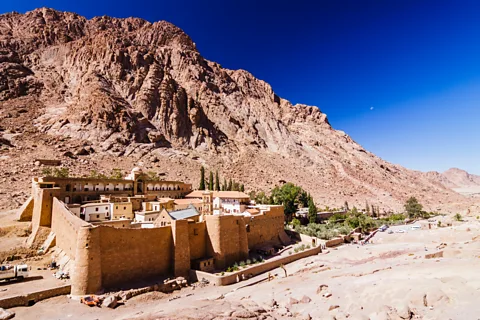
In both cases, it’s difficult to establish an exact starting date. For the Al-Qarawiyyin library, some scholars have cast doubt on the library’s claims of Ninth-Century origins, saying the “story has much myth about it”. In the case of Saint Catherine’s Monastery, the building was constructed in the Sixth Century. But ancient writings suggest that the library’s collections could date from two centuries earlier. “It depends how you count it,” Walworth says. “When are you going to start the timeline? What is the beginning of a library?”
However, Prof Richard Gameson from Durham University tells the BBC that the library at Saint Catherine’s Monastery “is probably the one with the longest continuous history”. But he caveats this by adding that “the nature of the ‘library’, how it was used and how it was understood changed over time”. So, any claim to be “the oldest” needs to be accompanied by an appropriate explanation of what a library is. Finding a single definition that allows for one conclusive record-holder seems a near-impossible task.
“You can think of the oldest library as the oldest coherent collection of books that stayed together,” says Webber. “Or you can think of it in terms of the survival of the physical space. Or you could ask, ‘What’s the oldest space and collection of books which has been there continuously?'”
She offers the Dunhuang Library Cave in China as an example. This secret chamber was filled with manuscripts and sealed sometime around the 11th Century. It was only opened again after its rediscovery in 1900. “But the books were still in continuous storage there,” Webber says.
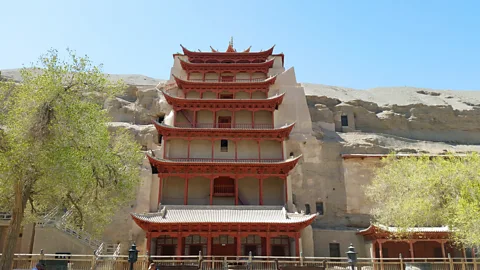
Finding a common definition of a library will only become more challenging now, as digital institutions offer physical spaces that do not even contain any books. “The definition of what a library is has always needed to be a capacious one,” says Webber. “The introduction of new technology is simply a continuation of that. But I don’t think the library as a physical space will disappear.”
Walworth is similarly optimistic, as she embarks on a project to digitise Merton’s manuscripts. “People will be able to access them anywhere. But I think they will still want to come and see the library and understand how people used books in the past.”
Reflecting on the 750-year span of Merton’s library, this digital phase seems like just another step in a long evolution. Just as the books moved from the Archbishop’s chest to chained desks to horizontal shelves, now they will enter the virtual realm. “I suppose that’s why I now find it less useful to talk about libraries as ‘the oldest’,” Walworth says. “For me, the story is not about how long a library has been running. It’s more about the sense of community.”
She points out that the tradition of donating books introduced by the Archbishop of Canterbury in 1276 persists to this day. “What started when he laid down those injunctions was the idea of a common collection built by the people. So, it’s just remarkable that for 750 years people have maintained this connection with an institution and its books.”
Perhaps that proves that books really are the most durable treasure – whether they are handwritten on parchment and sealed in an antique chest or distributed as pixels in the cybernetic ether.
[BBC]

World DNA Day falls on 25 April:
On 25 April 1953, Watson and Crick published an article, in the acclaimed journal “Nature” titled “Molecular structure of nucleic acids: A structure for deoxyribonucleic acid”.
The one-page article largely based on theoretical arguments and the previous work of Rosalind Franklin who examined DNA using X-rays, changed the world forever by explaining how genetic information is copied and transmitted.
Everyone concerned with promoting science in the country should be aware of the story behind the discovery of DNA and tell it to their children and students and remind the policymakers.
The world commemorates the transformative event on 25th April every year. An example vividly illustrates how intense curiosity and imagination, rather than mere indulgence in technologies, leads to groundbreaking discoveries.
DNA Day is also intended to celebrate the completion of the Human Genome Project in 2003. Genome means the entire set of genetic information characterising an organism.
Heredity and inheritance
Heredity is the cause of transferring traits from parents to their offspring. The closely related word “inheritance “refers to the specific nature of the transmitted trait. For example, we say intelligence is hereditary in their family and he inherited his father’s intelligence.
The resemblance of progeny to parentage was common knowledge, taken for granted and considered a blending of maternal and paternal traits. Philosophers of antiquity proposed several theories to explain the inheritance of parental traits by the offspring. Hippocrates believed the essence of all body parts of the parents are incorporated into the male and female germinal essence and therefore the offspring display characteristics as a proportionate blend. Aristotle offered a different explanation. He argued that the active principle is in the male seminal fluid and the mother’s blood provided the original body material. The inaccuracy of these theories was apparent. Sometimes children possess qualities akin to grandparents rather than parents. Fathers or mothers of humans and animals, deformed by accidents or disease, gave birth to normal children- a clear proof that the acquired characters are not inherited. Children of a blue-eyed mother and a brown-eyed father have either blue or brown eyes but not a blend of blue and brown.
Two golden sayings in our culture, “Arae gathi nare” and “Jammeta wada lokuei purrudha” (“Hereditary characters persist” and “Habits overtake heredity “), agree more with modern genetics, than the views of Hippocrates and Aristotle.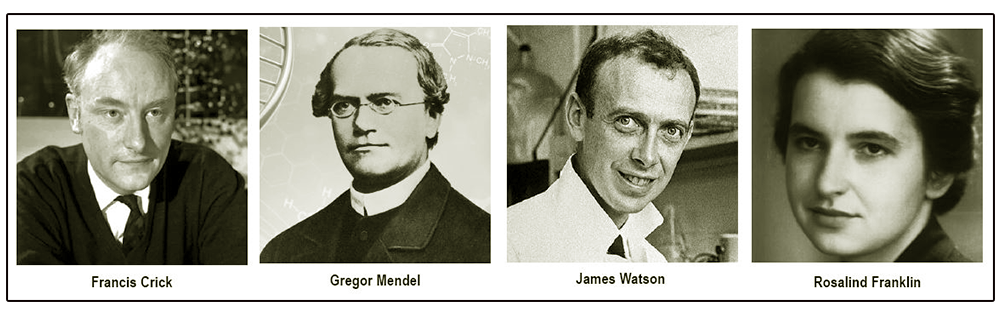
Gregor Mendal’s groundbreaking experiment
The Austrian mathematician cum botanist, Gregor Mendel was the first to conduct a systematic investigation to understand the cause of heredity. Being unconvinced of the traditional explanations, he carried out a series of experiments lasting eight years to determine how the traits (plant height, seed color, flower color etc.) of pea plants are transmitted from generation to generation. When Mendel cross pollinated tall and short plants, he found that the progeny was entirely tall. However, when first generation tall plants were allowed to self-pollinate, the missing short trait reappeared at a statistically significant probability of 25 percent. Mendel’s work provided an unequivocal proof that traits do not blend but exist as unique entities, manifested from generation to generation following a predictable mathematical pattern.
Mendel’s finding remained unrecognized for more than 30 years. His ideas were too far ahead of time and biologists were shy of mathematics. In the early 1900s several European botanists arrived at the same conclusion based on independent experiments. With the advancement of microscopy, a great deal of information about plant and animal cells was gathered. A key finding was the presence of colored bodies in the cell nucleus named chromosomes, seen separating during cell division, leading to the hypothesis that Mendel’s genetic units (genes) should be physical entities present in the chromosomes.
Chemists and biologists wondered what the genetic material in chromosomes made off. Is it a protein, carbohydrate or a lipid? Most biological materials are constituted of these substances.
Discovery of DNA
Great discoveries are made by unusual people. The Swiss Friedrich Miescher belonged to a clan of reputed physicians. Following family tradition, he qualified as a doctor but did not engage in profitable practice of medicine. He decided to do research to understand the foundations of life. In search for new biological substances, he experimented with pus deposited in bandages and extracted a substance rich in phosphates but very different from proteins. The new substance called “nuclein” was indeed DNA. Later, the German biochemist Albrecht Kossel following the Miescher’s work, showed that DNA contains four crucial compounds, adenine (A), cytosine (C), guanine (G) and thymine (T), known as nucleotide bases.
Avery – MacLeod – McCarthy Experiment
The flu pandemic of 1918 killed an estimated 50 million people worldwide due to the pneumonia that followed the viral infection. Pneumonia was caused by the virulent bacterium Streptococcus pneumoniae. The British bacteriologist, Frederick Griffith attempting to find a vaccine for pneumonia, worked with two strains of Streptococcus pneumoniae, one virulent causing pneumonia in mice, and the other avirulent to them. He found that neither the virulent strain denatured by heating nor the live avirulent strain injected into mice caused the disease, whereas a mixture of the denatured virulent strain and the live avirulent strain was deadly to mice just as the virulent one. He concluded that some chemical compound present in the virulent strain – a transforming principle – has changed the avirulent strain to the virulent strain.
In 1944, Oswald Avery, Colin MacLeod and Maclyn McCarty working at the Rockefeller University, United States, continued the work of Frederick Griffith to identify the transferring principle and found that it is not protein as widely believed, but deoxyribonucleic acid (DNA). Their result pointed to the conclusion that DNA is the carrier of genetic information.
A book by a physicist that triggered a transformation in biology
The insights of brilliant brains engaged in fundamental inquiry have opened the way for major scientific discoveries and technological innovations. In 1944, the Austrian theoretical physicist Erwin Schrodinger, one of the founders of quantum mechanics, published a book titled “What is life? The physical aspect of the living cell “. The American biologist Maurice Wilkins said he was so inspired by Schrodinger’s book and after reading it, he decided to switch from ornithology to genetics. While physicist Maurice was influenced to take up biology. Francis Crick was a physicist working on magnetic mines for the British Admiralty during the war. After reading “What is life” he thought a physicist could find treasures in biology and joined the Cavendish Laboratory in Cambridge to pursue a Ph.D.
Structure of the DNA molecule
When DNA was shown to be the molecular entity that encodes genetic information, chemists rushed to determine its structure.
The pattern formed when X-rays passing through a material cast an image on a screen, provides information about its molecular structure. In 1938, the English physicist William Astbury examined DNA using x-rays and concluded that the molecule has a helical structure. Having heard a group in the United Kingdom was attempting to unearth the structure of DNA, the American theoretical chemist, Linus Pauling, adopted Astbury’s data and proposed a model for the structure of DNA, publishing the results in the journal “Nature” in January 1953.
There was an obscure but remarkably talented person, Rosalind Franklin, pursuing x-ray diffraction studies on DNA at King’s College London. After a painstaking effort, she obtained accurate x-ray diffraction images of DNA. Her colleague, Maurice Wilkins, working in the same laboratory, passed the images to Francis Crick and James Watson at Cavendish Laboratory.
Crick and Watson were more insightful and theoretical in their approach to elucidating the structure of DNA. They, inspired by Erwin Schrodinger’s hypothesis, that the entity accounting for heredity should be an aperiodic molecular entity in cells, arrived at the double helix model, showing that Linus Pauling’s model was erroneous. The Crick – Watson model explained how DNA stores information and replicates during cell division. Their assertions were subsequently confirmed rigorously by experimentation. Crick, Watson and Wilkins received the Nobel Prize for Physiology and Medicine in 1962.
The work following the Crick – Watson model, firmly established that the DNA is a polymer string constituted of two strands made of a sugar- phosphate backbone, connected to each other by linkage nucleotide bases A, T, G, C. The base A links base T and G to C. When one strand is defined by the arrangement of bases, the complementary strand is defined. The arrangement bases store information analogously to a four-letter alphabet. Each individual in a species has a unique sequence of arrangement base pairs. The variation within the species is generally a fraction of a percent.
The Watson-Crick model also explained how the DNA molecule replicates. The two strands unwind and separate, and two complementary strands are inserted. The detailed dynamics of the replication process are not fully understood.
‘DNA is a cookbook’
DNA functions like a multiple – volume cookbook, written in a four-letter alphabet. The volumes are kept in a rack in the kitchen. The rack is the nucleus and volumes on it are the chromosomes, and the cell is the kitchen. A paragraph giving a recipe is a gene. Enzymes act as chefs, who read recipes and give instructions to cell machinery to prepare the dishes, which are proteins. The system is so complex; a complete macroscopic analogy would be impossible.
The significance of the Crick- Watson work
Until Charles Darwin proposed the idea of evolution, biology lacked a theoretical foundation. Darwin hypothesized, when organisms reproduce, the progeny inherit parental characters, but there are variations. The variants, though similar to the parents, have some new or altered characters. If these characters, originating from mutations or cross – breeding are favorable for survival in the environment, they dominate in the population, inheriting advantageous traits. Thus, random generation – to – generation, advancements of living organisms, become possible – a way of improving the design of things in a production process without a designer. Living systems store information and progeny retrieve them, when required. A bird hatched from an egg when matured, knows how to fly.
The discovery of DNA and understanding how it stores genetic information, replicates and mutates explained Darwinian evolution. A mutation is a change in the ordering of base pairs, accidentally during replication or due to external chemical or physical causes. In sexual reproduction, the offspring gets nearly half of its DNA from each parent. Consequently, the offspring does not have DNA identical to one parent. It mixes up DNA in the species. However, mutations generate new genes, driving evolution. Sexual reproduction and mutation acting in concert introduced the diversity of life on earth we see today.
Once science becomes explanatory and predictive, it opens the way for innovations. Theories of mechanics and electromagnetism formulated in the late 19th and early 20th centuries brought forth modern engineering, transforming it from an empirical craft to a scientific technological discipline. Before the discovery of DNA structure and its function, biological innovations were largely empirical. Today we have genetic engineering – genes in organisms can be manipulated. The goal of more advanced genetic engineering, referred to as synthetic biology, aims to induce major genetic changes to organisms by incorporating several genes to alter biochemical, physiological and anatomical functions. Gene technology is rapidly transforming medicine, agriculture and biotechnology. Cures have been found for diseases formerly branded incurable.
How did DNA come into existence
Life is believed to have originated in prebiotic oceans enriched with carbon and nitrogenous substances. How did DNA originate there? Today, chemists can synthesize DNA in minutes, via selective procedures, only humans can do with their knowledge. Even in a vast ocean containing trillions of times more molecular ingredients than in a test tube, a molecule as complex as DNA is most unlikely to be created by random events during the largest possible time scales of the universe. A plausible scenario would be DNA evolving from simpler self-replicating molecules such as RNA (a single strand of DNA) precursors. Unlike RNA, DNA is highly stable and good stability is necessary for the evolution of advanced forms of life.
Epigenetics
Earlier we pointed out there are two golden sayings in our culture: “Arae gathi nare” and “Jammeta wada lokuei purudha (“Hereditary characters persist” and “Habits overtake heredity “). The first is a consequence of our genetic predisposition determined by DNA and explicit genes. However, the character of an individual is also influenced by the physical, social and cultural environment. Although completely non-genetic, our children frequently follow habits we indulge in. Again, the behavior of an individual is also influenced by the physical, social and cultural environment.
The environmental factors also trigger or silence genes. The study of this important genetic effect, which does not alter the sequence of base pairs, is referred to as epigenetics. Epigenetic effects could be deleterious or beneficial. Sometimes, chronic stress causes disease, including cancer. Research suggests engagement in creative and imaginative activities, and establishes favorable epigenetic changes in the brain. Inheritance is dictated mainly by the arrangement of base pairs in DNA. Epigenetic changes involve chemical changes in DNA without altering the sequence. These alterations are erasable but allow transmission to subsequent generations.
Conclusion: World DNA day message to lawmakers
The discovery of the structure of DNA stands as one of the most significant scientific discoveries in human history. It is a lesson to all those involved in research and education, telling how great discoveries originated. It is intense curiosity, imagination and preparation rather than mere indulgence in technologies that clear the path for discovery and innovation. A society that advocates policies conducive to discoveries, also develops new technologies that follow. If we just borrow technologies from places where they originated, hoping for quick economic returns, the effort would be a gross failure. Students, determined to be the best judging from exam performance, engage in professional disciplines and perform exceptionally. Why are we short of discoveries and innovations in those disciplines? Will our lawmakers ever realize the issue? They need to wonder why we are weak in science and poor in innovation. Right policies can even reverse adverse epigenetic attributes propagating in a society!
By Prof. Kirthi Tennakone
ktenna@yahoo.co.uk
National Institute of Fundamental Studies
REVIEWED BY Prof. Rajiva Wijesinha
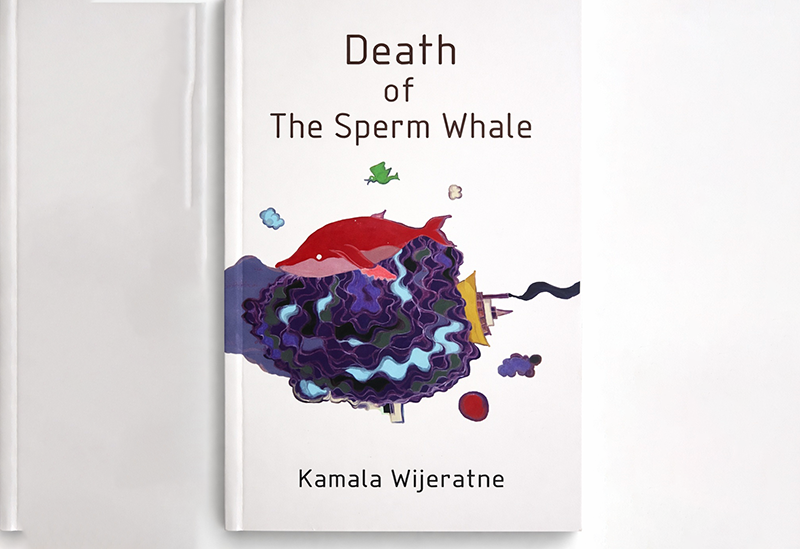
Earlier this year, I sent her most recent book by an old friend, Kamala Wijeratne. Death of the Sperm Whale is her first book of poetry in four years, though in between she has published fiction, two books though both of them too were slim volumes. I am full of admiration for her in that she keeps going, the last of the poets whom I helped to a wider readership in the eighties, when I championed Sri Lankan writing in English, something hardly any academic was prepared to do in those conservative days.

Kamala Wijeratne
Kamala’s subjects are those she has explored in the past, but the use of the plural indicates that her range is expansive. She dwells much on nature, but she deals also with political issues, and engages in social criticism. There are several poems about Gaza, the multiple horrors occurring there having clearly affected her deeply. She repeatedly draws attention to the slaughter of children, the infants sent by God only to be taken back. And she deals with the destruction of the life of a doctor, after his healing, a theme that has kept recurring in the ghastly world which is subject to the whims of the incredibly nasty Netanyahu.
The title poem is about a whale destroyed by ingesting plastic, a tragedy to which we all contribute, though those who ‘loll on the beach, their senses dulled by the burgers they eat’ could not care less. More immediate is the simple account of a friend whose infant had died in hospital, when they diagnosed pneumonia too late.
Contrasting with these urgent statements are Kamala’s gentle perceptions, as when she writes of her son supporting her as she walks, while she thinks back to the days she supported him; of a marigold growing in a crack in a shrine, offering obeisance with its golden flowers to the Noble One; of birds investigating her dining room and deciding not to build there, the male lingering ‘confused and irritated’ but eventually following the female through the window for ‘She was mistress after all.’
She is deeply interested in the passing of time, and its impact on our perceptions. The first poem in the book is called ‘First Poem of 2024’ when she ‘heard the weeping of the dying year’, and went on to meditate on how we have categorised the passing of time, while the universe moves on regardless.
She welcomes the return of the Avichchiya, the Indian Pitta, a bird that has figured previously in her poetry, after six months, but this time she spares a thought for his case against the peacock, which stole his plumes.
There are two personal poems, one about a former student who turned her back on her when she had achieved success, the other about being nominated for a literary award, but not getting it after the excitement of attending the Awards Ceremony. Swallowing her disappointment, she congratulates the winner, noting that she will not go into ecstasies the next time she is nominated.
Paraphrase cannot do justice to Kamala Wijeratne’s gentle touch, which has expanded its reach over the years. So,A I will end by quoting from her tribute to Punyakante Wijenaike, another of the distinguished ladies whose work I promoted, the one before the last to leave us. The tribute ends, recalling her most impressive work Giraya,
Like the nutcracker
That makes a clean cut
You cut the human psyche
To reveal its darkest depths
by Kamala Wijeratne

Advisory for Severe Lightning issued For Western, Sabaragamuwa and North-western province

AI chatbots could be making you stupider

‘A remarkable time capsule’: The enchanting history of Oxford University’s 750-year-old medieval library

Kohli, Padikkal hit fifties as Royal Challengers Bengaluru ace the chase against Gujarat Titans

Showers expected in the Western and Sabaragamuwa provinces and in Galle, Matara, Kandy, Nuwara-Eliya and Puttalam districts after 2.00 pm

Heat Index at Caution Level in the Northern, North-central, North-western, Western, Sabaragamuwa and Eastern provinces during the day time

‘Dates have the highest sugar content to fight Coronavirus’

Sunday Island 27 December – Headlines

#SundayIsland 17th December – Headlines

Sunday Island – 28th March

Sunday Island Headlines – 21 March

Sunday Island – 21st February – Headlines
-

 News5 days ago
Rs 13 bn NDB fraud: Int’l forensic audit ordered
-

 Opinion6 days ago
Shutting roof top solar panels – a crime
-

 News3 days ago
Lanka faces crisis of conscience over fate of animals: Call for compassion, law reform, and ethical responsibility
-

 News2 days ago
No cyber hack: Fintech expert exposes shocking legacy flaws that led to $2.5 million theft
-

 News2 days ago
Whistleblowers ask Treasury Chief to resign over theft of USD 2.5 mn
-

 News7 days ago
From Nuwara Eliya to Dubai: Isha Holdings markets Agri products abroad
-
 Life style7 days ago
After dark in Sri Lanka: Tiny wild cats step into the spotlight
-

 News6 days ago
Church calls for Deputy Defence Minister’s removal, establishment of Independent Prosecutor’s Office