
News
Brown sugar to be exported

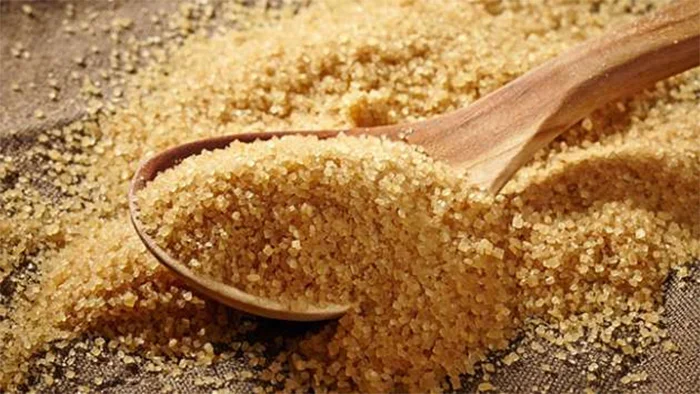
In a bid to rescue Sri Lanka’s struggling sugar industry, the government is exploring plans to rebrand locally produced brown sugar as “organic sugar” and market it to international buyers, including China, Iran, and several African nations.
Industries Minister Sunil Handunnetti revealed the strategy in Parliament yesterday, responding to opposition concerns over the dire state of the sugar industry. He said that Sri Lankan brown sugar, though produced using fertilisers with minimal arsenic content, qualifies for organic labeling under international standards.
“This is a long-term solution we are working on. Discussions are underway with China, Iran, and some African countries to begin exports,” Handunnetti said.
The announcement came during a heated exchange with Opposition and SJB Leader Sajith Premadasa, who warned that the collapse of the sugar sector could devastate more than 250,000 families in the Uva Wellassa region. He criticised the current tax structure, which burdens local sugar producers with 18% VAT and additional levies, pushing production costs to Rs. 238 per kilo—while the market price remains at Rs. 175, resulting in steep financial losses.
Premadasa highlighted significant losses at major state-affiliated sugar factories, citing Rs. 17 billion at Gal Oya, Rs. 10 billion at Pelwatte, Rs. 7 billion at Etimale, and noting that Sevanagala is in urgent need of repairs.
He also highlighted ethanol production as another loss-making area. While one litre of ethanol costs between Rs. 628 and Rs. 759 to produce, it is sold at just Rs. 450–475. “The minimum viable price should be Rs. 800 per litre,” he said, adding that although he doesn’t promote ethanol, it remains an essential byproduct of sugar production. The government, he noted, takes 45% of profits from ethanol sales and imposes a Rs. 10,000 tax on each metric tonne of molasses.
Responding to Premadasa’s accusations, Minister Handunnetti refuted claims that sugar is available in the market at Rs. 175 per kilo. He pointed out that under the previous administration, brown sugar prices had soared to Rs. 360 per kilo, while white sugar hit Rs. 220. “Today, brown sugar has dropped to Rs. 260 per kilo, while white sugar prices have remained stable,” he claimed.
Handunnetti detailed the structure of the industry, clarifying that only the Sevanagala and Pelwatte factories are under the state-run Sugar Corporation. Etimale is privately owned, and Gal Oya operates under a public-private partnership, with the government holding a 51% stake.
He presented five-year production data for the two state-run factories, showing outputs of 39,687 metric tonnes in 2020, 48,177 in 2021, 36,637 in 2022, 41,861 in 2023, and 39,721 in 2024.
Despite this, local sugar production met only 6.03% of the national requirement of 658,678 metric tonnes in 2024. The remainder was met through imports—564 million kilos in 2024, and 140 million kilos so far in 2025.
Handunnetti noted that imported sugar is taxed under a special commodity levy of Rs. 50 per kilo. Meanwhile, domestically produced sugar faces an 18% VAT introduced in January 2024 and a 2.5% social security tax—bringing the total tax burden on local sugar to 20.5%


… tells Prez such arbitrary change neither necessary nor desirable
The Bar Association of Sri Lanka (BASL) has urged President Anura Kumara Dissanayake to abandon the controversial plan to increase the retirement age of the judiciary, including the Court of Appeal and the Supreme Court.
In a statement issued by the BASL President Rajeev Amarasuriya and its Secretary Nalin de Silva, the BASL pointed out that the proposed increase of the retirement age of the judiciary would undermine the independence, integrity, dignity, and public confidence in the Judiciary, which is essential for the maintenance of the Rule of Law and democratic governance in Sri Lanka.
The text of the BASL statement: “The Bar Association of Sri Lanka (hereinafter referred to as “BASL”) notes with grave concern reports in the public domain that the Government is considering the introduction of an amendment to the Constitution to increase the age of retirement of Judges of the Court of Appeal and the Supreme Court.
It is the considered view of the BASL that the age of retirement of the judges of the Court of Appeal and the Supreme Court which has stood at 63 years and 65 years respectively from the promulgation of the 1978 Constitution, should not be changed arbitrarily and that such a change is neither necessary nor desirable.
To do so will result in the loss of public confidence in the integrity of the legal system and of the Government’s commitment to preserve and protect the rule of law and the independence of the judiciary. Members of the public are likely to question the motives of the Government in bringing in a Constitutional amendment solely for this purpose.
Your Excellency is no doubt aware that the cadre of the Judges of the Court of Appeal was increased from 12 to 20 Judges (including the President of the Court of Appeal) and that of the Supreme Court from 11 to 17 Judges (including the Chief Justice) by the 20th Amendment to the constitution certified on 29th of October 2020. With such enhancement, workwise, there cannot be a real requirement to extend the retirement ages of these judges.
Your Excellency is aware that altering the retirement age of judges of the apex courts would have to be done through a Constitutional amendment. For many years Sri Lanka’s Constitution has been subject to ad hoc amendments, sometimes in order to cater to the political needs of the government in power and often contrary to the interests of the rule of law, the independence of the judiciary and the judiciary.
Extending the retirement age of the sitting Judges of these Courts at this point of time is likely to be viewed by the public as a blatant attempt to interfere with the judiciary. We believe that to go ahead with such an ad hoc move will also be an affront to the Honourable Judges of those courts.
If the Government goes ahead with such a move it will set a dangerous precedent for future Governments too to introduce ad hoc amendments to the Constitution in respect of the functions of the Judiciary.
The independence of the Judiciary and the public confidence reposed in it, are indispensable pillars of the Rule of Law and the democratic framework of our Republic. In that regard, it is of paramount importance that the Judiciary must not only remain independent in fact, but must also be seen by the public to be wholly independent, impartial, and free from even the slightest perception of influence, favour, accommodation, or impropriety.
The Bar Association of Sri Lanka is therefore constrained, in the discharge of its duty to uphold and safeguard the Rule of Law and the independence of the Judiciary, to respectfully express its serious concern regarding any such proposed amendment, which is neither in the interests of the Judiciary and nor of the people.
In the circumstances, the BASL respectfully urges Your Excellency not to proceed with any proposed constitutional amendment seeking to increase the retirement age of the members of the Judiciary including Judges of the Court of Appeal and the Supreme Court.
We remain confident that Your Excellency will give due consideration to the importance of preserving and protecting the independence, integrity, dignity, and public confidence in the Judiciary, which is essential to the maintenance of the Rule of Law and democratic governance in Sri Lanka.”
Govt. declines to respond
A member of the Cabinet yesterday declined to comment on the BASL’s letter to President Anura Kumara Dissanayake. The Minister said that he wouldn’t comment for the time being.
12.5% additional duties on goods imported from Colombo
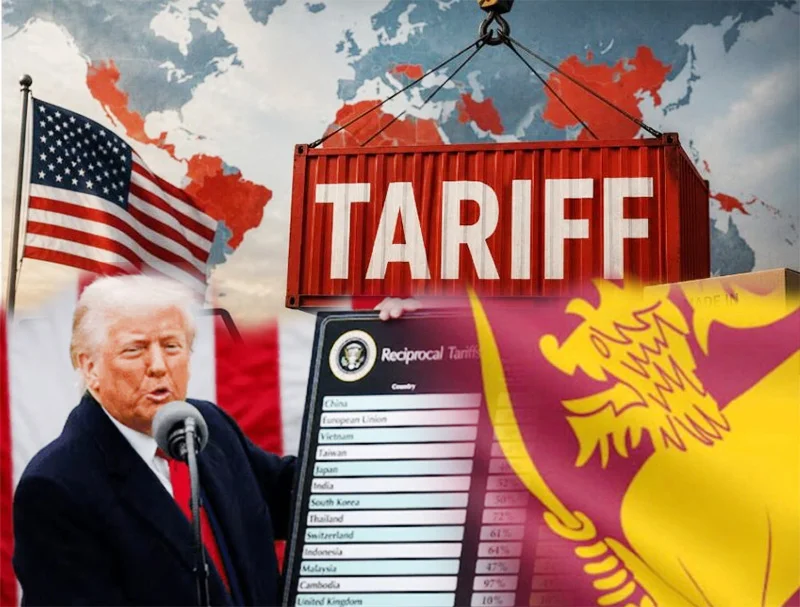
The US has proposed additional duties of 10% or 12.5% on imports from 60 economies, including Sri Lanka, over their alleged failure to curb trade in goods made with forced labour.
The proposal made by US Trade Representative’s (USTR) office in terms of Section 301 unfair trade practices investigation to be released, news agencies reported, pointing out that the Trump administration was seeking to rebuild its emergency tariffs, which were struck down by a US Supreme Court decision in February.
The USTR said it determined that it would impose 10% duties related to the forced labour investigation on imports from Canada, Ecuador, the European Union, Indonesia, Mexico, Pakistan, Argentina, Bangladesh, Cambodia, El Salvador, Guatemala, Indonesia, Malaysia, Taiwan and Britain.
The trade agency said it would impose additional duties of 12.5% on the remaining 45 countries that were investigated.
“The failure of our most important trading partners to address the importation of goods made with forced labour is unacceptable,” US Trade Representative Jamieson Greer said in a statement. “This creates a dynamic where American workers are forced to compete globally on an unlevel playing field.”
According to the trade agency, the USTR found that Sri Lanka has failed to impose and effectively enforce a forced labour import prohibition.
The USTR noted that the results of its investigation indicate that the acts, policies and practices of Sri Lanka related to the failure to impose and effectively enforce a forced labour import prohibition are unreasonable and burden or restrict US commerce.
Accordingly, it has proposed to impose 12.5% additional duties on goods imported from Sri Lanka.
The USTR said it also was proposing a textile mechanism that would allow for a certain volume of apparel and textile imports to enter the US at a reduced tariff rate, though the duties and volumes were not disclosed.
The announcement comes ahead of the July 24 expiration of a 10% temporary tariff imposed by the Trump administration on February 20, the day the Supreme Court struck down US President Donald Trump’s tariffs under the International Emergency Economic Powers Act.
On Monday, the USTR proposed a 25% duty on many Brazilian goods as a result of a Section 301 investigation into the country’s digital trade practices and preferential tariffs. The trade agency is also expected to soon unveil the findings of another major Section 301 probe into the buildup of excess industrial capacity in 16 trading partners, including China.
In the forced labour findings, the USTR said it would exempt from the tariffs a number of products, including energy, rare earths and certain other metals, beef, coffee, certain fruits and vegetables, pharmaceuticals, organic chemicals and aircraft parts.
The USTR said it would accept public comments on the proposed tariffs and other remedies through July 6, with a public hearing scheduled for July 7.
‘Coal scam turns into daylight robbery’
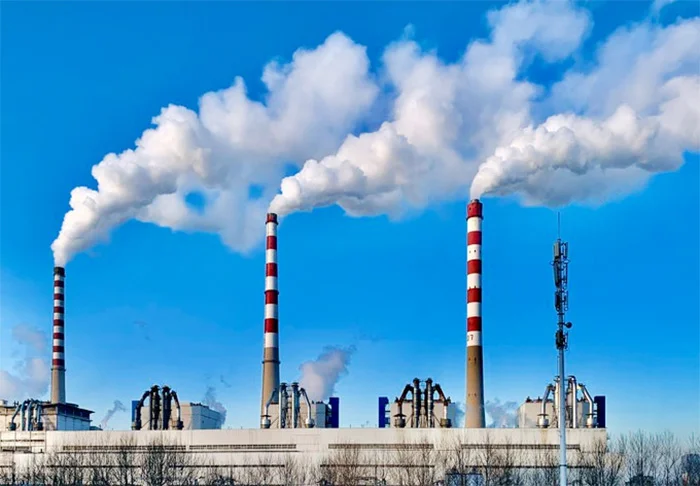
More than 55,000 metric tonnes of what has been described as substandard coal that should have been outright rejected had already been unloaded from the vessel MV JOSCO YONGZHOU by yesterday (June 2), intensifying allegations of a major procurement scandal involving the Norochcholai Lakvijaya Power Plant.
The Free Lawyers Organisation (FLO) warned that the controversial shipment, carrying a total of 59,766 metric tonnes of coal, was being discharged despite evidence that it failed to meet mandatory tender specifications and should never have been accepted into the country.
The vessel arrived at the Puttalam anchorage on May 28 and was inspected by authorities at around 3.30 p.m. Approval for unloading was reportedly granted within 30 minutes. Unloading commenced shortly thereafter and has continued despite mounting concerns raised by legal and civil society groups.
According to the FLO, the official Load Port Report issued by Bureau Veritas Solutions South Africa (Pvt) Ltd on April 30, 2026, classified the shipment as one that should have been completely rejected under the tender conditions applicable to the Lanka Coal Company.
The controversy centres on the ash content of the coal. The report indicates an ash level of 16.8 per cent, while the Lanka Coal Company’s own tender document, under Section 5.2 titled “LCC Reject Values for Coal”, sets the maximum permissible reject threshold at 16 per cent.
“The coal does not qualify for purchase under the tender conditions. There is no legal basis for the Lanka Coal Company or the Government of Sri Lanka to accept or pay for this shipment,” the organisation said.
The FLO described the incident as the most serious coal procurement controversy in recent years, noting that this is believed to be the first instance in which a shipment identified at the loading port itself as falling within rejectable limits has nevertheless been cleared for unloading in Sri Lanka.
The shipment was reportedly supplied by Taranjot Resource (Pvt) Ltd.
Attorneys-at-Law Athula de Silva and Piyal Darshana Guruge warned that any decision to process payment for the consignment could expose officials to liability under the Anti-Corruption Act No. 9 of 2023.
They argued that authorising payment for a shipment that allegedly fails mandatory quality requirements could amount to causing a loss to the state and constitute a serious breach of procurement procedures, financial regulations and administrative rules.
The lawyers questioned how a shipment identified in an internationally recognised inspection report as unsuitable for acceptance was allowed to proceed through the approval process and be almost entirely unloaded before any formal investigation was conducted.
With over 55,000 metric tonnes already discharged by yesterday morning, the organisation said the issue had moved beyond a mere procurement dispute and raised serious concerns about accountability, regulatory oversight and the protection of public funds.
The FLO called for an immediate independent investigation by the Auditor General, the Commission to Investigate Allegations of Bribery or Corruption, the Lanka Coal Company and relevant technical authorities, warning that failure to act could result in significant financial losses to the state and further undermine public confidence in the management of strategic energy procurements.
By Ifham Nizam

Netanyahu downplays US-Israel rift after Trump confirms criticism

Sabalenka the latest French Open shock exit as Shnaider wins quarterfinal

Kusal Mendis, Pathum Nissanka, bowlers put Sri Lanka 1-0 up

Showers about 100 mm are likely at some places in the Western and Sabaragamuwa provinces and in Galle, Matara, Kandy and Nuwara-Eliya districts

BASL asks govt. to abandon plan to raise retirement ages of CA and SC judges

New US tariffs proposed on 60 countries, including Sri Lanka

‘Dates have the highest sugar content to fight Coronavirus’

Sunday Island 27 December – Headlines

#SundayIsland 17th December – Headlines

Sunday Island – 28th March

Sunday Island Headlines – 21 March

Sunday Island – 21st February – Headlines
-
 News5 days ago
IMF urges Lanka not to meddle with exchange rate
-
 Business6 days ago
Sri Lanka’s construction industry losing ground while no one watches
-

 News2 days ago
Lankan duo emerge winners in Latin dance championship held in Blackpool, UK
-

 Business3 days ago
IMF’s unstated rate:Sri Lanka’s $695m loan costs about 5.33% per annum
-
 News5 days ago
State of emergency extended
-
 Features6 days ago
The Division Bell Mystery
-

 Features4 days ago
Are threats to Buddha Sasana external or from within?
-

 News3 days ago
UNP challenges NPP move to amend Vihara – Devalagam Act