
Foreign News
Russia and Ukraine fail again to agree ceasefire but commit to prisoner swap

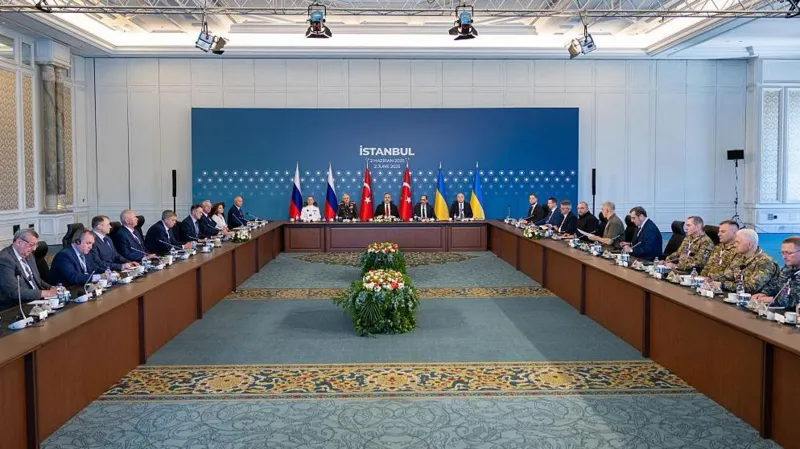
A second round of direct peace talks between Russia and Ukraine have ended without a major breakthrough, and only a deal to swap more prisoners of war.
Ukrainian negotiators said Russia had again rejected an “unconditional ceasefire” – a key demand by Kyiv and its allies in Europe and the US – but the two committed to return the bodies of 12,000 soldiers.
The Russian team said it had proposed a two- or three-day truce “in certain areas” of the vast front line, but gave no further details.
At Monday’s talks, which were held in the Turkish city of Istanbul and lasted just over an hour, the two sides did agree to exchange all sick and heavily wounded prisoners of war, as well those aged under 25.
Expectations were low even before the talks started, with both sides remaining deeply divided on how to end a war that has been raging since Russia launched its full-scale invasion of Ukraine in February 2022.
Moscow currently controls about 20% of Ukrainian territory, including the southern Crimea peninsula it annexed in 2014.
Speaking at a briefing after the meeting, Ukrainian Defence Minister Rustem Umerov, who led Kyiv’s negotiating team, said Ukraine was insisting on a “full and and unconditional ceasefire” for at least 30 days on land, at sea and in the air to “end the killings now”.
He said Ukraine had handed over its truce proposals to Russia “a few days ago” – but Moscow failed to do the same, presenting its plan only at the talks in Istanbul.
The texts of both the Russian and Ukrainian ceasefire proposals have not officially been made public.
However, Russian state-run media published what they say are key points of Moscow’s position after the talks concluded. These include unchanged demands of a Ukrainian military withdrawal from its four partly occupied regions in the south-east, and the demobilisation of its soldiers.
Russia also demands international recognition of Ukraine’s Donetsk, Luhansk, Kherson and Zaporizhzhia regions, as well as the annexed Crimea.
Other conditions include a ban on Ukraine’s membership in any military alliances, a limit on the size of the Ukrainian army, Russian as an official language, and the lifting of international sanctions on Russia.
Ukrainian Deputy Foreign Minister Serhiy Kyslytsia said that Russia had rejected the unconditional ceasefire.
Ukraine also handed over a list of hundreds of children Kyiv says have been forcefully taken to Russia.
Ukraine’s negotiators said they were expecting Russia’s response to their proposals by the end of June, stressing the need to prepare for direct talks between Ukrainian President Volodymyr Zelensky and Russia’s Vladimir Putin.
But so far there is no sign of any progress towards a meeting between the two presidents.
Speaking at a separate news briefing, Russian delegation head Vladimir Medinsky confirmed all sick and heavily wounded prisoners of war, as well as those younger than 25, would be exchanged. No time frame was given as to when this would happen.
Medinsky also said that Russia would hand over the bodies of 6,000 Ukrainian soldiers to Kyiv next week. Zelensky also said later on Monday that Ukraine would return the bodies of 6,000 Russian soldiers, but did not specify when this would occur.
Rejecting an unconditional ceasefire, Russia prefers to talk about “lasting peace”, repeating its previous tough demands which Ukraine and its allies say are tantamount to Kyiv’s de facto capitulation.
Zelensky, who was attending a summit in Vilnius, Lithuania on Monday, said that “while there are no meaningful signals from Russia to end the war, it is important to strengthen our defence”.
He also called for more pressure through sanctions on Russia.
In the first round of direct peace talks, held on 16 May, Ukraine and Russia failed to bridge their differences on how to end the war, agreeing only to swap 1,000 prisoners of war each.
Zelensky and his European allies have repeatedly accused Russia of deliberately delaying any meaningful negotiations to seize more Ukrainian territory.
US President Donald Trump, who has been pushing for a quick settlement, has so far delayed hitting Russia with tougher sanctions.
In a rare rebuke last month, Trump called Putin “absolutely crazy” following a massive drone and missile attacks on Ukraine. In response, the Kremlin said Trump was showing signs of “emotional overload”.
[BBC]

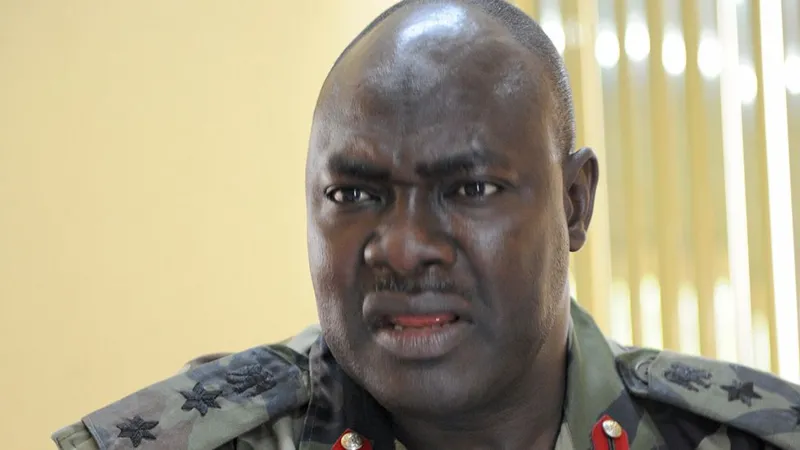
A retired Nigerian army general who had been kidnapped by gunmen in the country’s north-west has died while being held captive, the military has said.
Maj Gen Rabe Abubakar, who had a high-profile job as military spokesman between 2015 and 2017, was abducted with his wife while travelling in Katsina state last month.
No group has said it was behind the kidnappings.
The abduction and death of Abubakar highlights the continuing security challenges facing parts of north-west Nigeria, where criminal gangs known locally as “bandits” frequently carry out kidnappings for ransom, as well as cattle rustling and attacks on rural communities.
Some militant jihadists have also operated in the region. An alleged militant camp in Sokoto state was the target of a US airstrike on 25 December last year.
Katsina has been one of the states most affected by the violence.
Local media reported that the retired officer had been going to a wedding on 30 May when armed men attacked his vehicle and seized him, his wife and their driver.
Days before news of his death emerged, a video shared on social media appeared to show Abubakar in captivity. He was seen with an apparent injury to his left leg alongside his wife and other hostages.
The military said it chose not to comment publicly on the abduction while efforts to free those in captivity were being made.
“In deference to ongoing rescue efforts by security agencies, the Armed Forces withheld public comment while every operational resource was deployed in the hope of securing his safe return,” the statement said.
The whereabouts and condition of Abubakar’s wife remain unknown. But a military spokesman said that “ongoing operations have since been further intensified to bring perpetrators to justice and to dismantle all terrorist networks threatening our nation”.
The military paid tribute to the major general, who local media reported was 61 when he died, describing the loss as “tragic” and offered condolences to his family and former colleagues.
A statement said he made “immense contributions to counter-insurgency operations… His commitment to duty and to the unity of Nigeria remains a shining example for all personnel.”
[BBC]
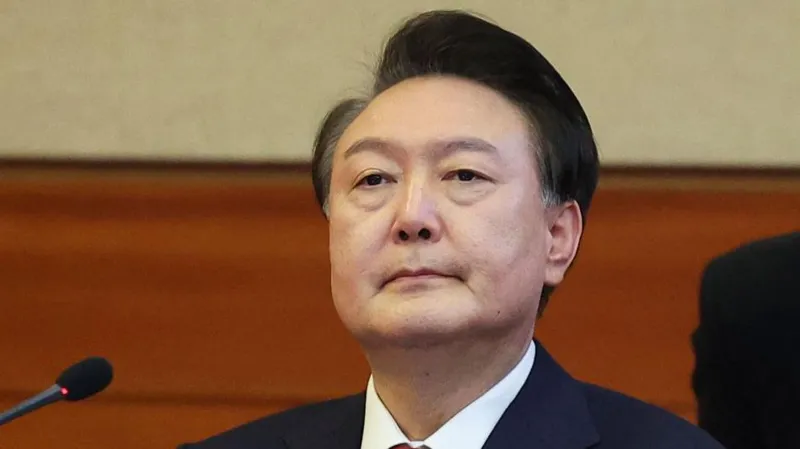
A South Korean court has sentenced former President Yoon Suk Yeol to 30 years in jail for sending drones into North Korea.
Prosecutors argued that Yoon ordered the operation in October 2024 to provoke Pyongyang and create a pretext for his failed martial law bid later that year.
When Yoon declared martial law on 3 December, he had claimed he was protecting the country from “anti-state” forces that sympathised with North Korea. But it soon became clear he was driven by domestic troubles and he rolled back the order in the face of mass protests.
Yoon was impeached and is now serving time in prison after he was sentenced to life for insurrection over his botched martial law attempt.
On Friday, the Seoul District Court found Yoon, as well as his former defense minister Kim Yong-hyun, former head of the Defense Counterintelligence Command Yeo In-hyung and former head of Drone Operations Commands Kim Yong-dae guilty of treason and abuse of power.
Kim was sentenced to 30 years in jail, while Yeo received 15 years and Kim Yong-dae received three years in prison with a five-year suspended sentence.
“The defendants used the guise of a military operation to induce provocations from North Korea with the aim of creating a state of emergency,” the court said.
It added that all three officials had “provoked North Korea”, thus “increasing the risk of a military conflict”, but concluded that Yoon bore the “greatest responsibility” in this event.
Yoon’s lawyers had argued that his actions were a “legitimate” response to North Korea’s “provocations with rubbish balloons”.
This was a reference to North Korea dropping hundreds of balloons in 2024, which were later found to contain “filthy waste and trash”, across the border in the South.
The two countries have used such “propaganda balloons” in their campaigns since the Korean War, where messages are put inside the balloons.
But tensions shot up in 2024 when North Korea accused the South of flying drones into its capital. These drones allegedly scattered propaganda leaflets all over Pyongyang, in what the North described as a provocation that could lead to war.
It was Yoon who sent these drones into the North expecting it to strike back, said a judge in Friday’s ruling.
Apart from insurrection, Yoon has was also sentenced to five years in jail for abuse of power and obstructing his own arrest.
Yoon’s martial law attempt and the protests that followed created months of chaos in the country, ending in an election which saw the opposition Democratic Party’s Lee Jae-myung win a decisive mandate.
[BBC]
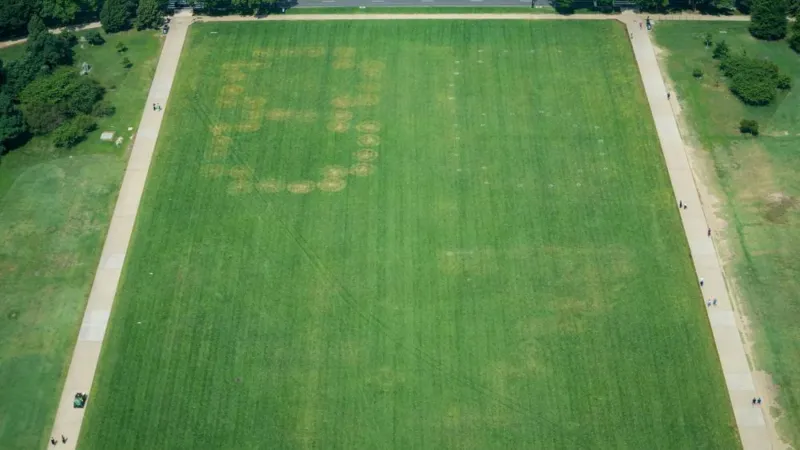
US police are investigating a large imprint of the numbers 8-6-4-7 that were apparently drawn in the grass of the National Mall in Washington DC.
“Eighty-six” is a slang term for “get rid of”, and Trump administration officials claim that the numbers are meant to encourage violence against Trump, the 47th president.
US Park Police “responded to a report of vandalism” at around 11:30ET (16:30GMT) on Thursday morning, the agency said in a statement.
“The cause of the discoloration has not yet been determined. Grass samples have been collected for testing. The investigation is ongoing.”
Images of the grass show the numbers 8, 6 and 7, but the number 4 is not clearly visible.
The investigation comes as US prosecutors attempt to jail the former director of the FBI for a social media post in which the numbers were seen written on a beach in sea shells.
James Comey is facing multiple charges related to an alleged threat to kill Trump. He has denied the charges and called the prosecution politically-motivated.
The numbers have been used by opponents of Trump, and have appeared at protests against his administration.
The slogan written in the grass appears somewhat faded, with the number 8 appearing more prominently than the others. It is located close to the World War 2 memorial.
The alleged vandalism comes amid a beautification campaign of US monuments in the city, led by Trump. The campaign includes $13.1m (£9.6m) to repaint the Lincoln Memorial reflecting pool, as well as a plan to build an arch decorated with golden figures including lions and eagles.
[BBC]

Vinicus Jr recues draw for Brazil against Morocco

Kidnapped Nigerian retired general dies in captivity

Switzerland to vote on plan to cap population at 10 million

Gill, Rahul seal India’s chase for 1-0 lead after Gurbaz century

Trump says US-Iran deal to be signed on Sunday as Tehran casts doubt on timing

Litchfield, spinners hand Australia big win over South Africa

‘Dates have the highest sugar content to fight Coronavirus’

Sunday Island 27 December – Headlines

#SundayIsland 17th December – Headlines

Sunday Island – 28th March

Sunday Island Headlines – 21 March

Sunday Island – 21st February – Headlines
-

 Editorial6 days ago
Probe Sallay’s complaint
-
 News4 days ago
Local firms move millions of dollars overseas for phantom imports: Govt.
-
 News2 days ago
CIABOC summons Yoshitha over his participation in British Navy training programme
-
 Midweek Review4 days ago
July 09: An inexcusable overall security failure and exceptional contingency plan
-
 Opinion5 days ago
Could Sri Lanka once again face an economic crisis similar to 2022?
-

 News4 days ago
AI raises concerns over arrest of Sallay and rapper under PTA
-
 News5 days ago
Sallay refuses to end hunger strike unless probe is taken out of CID led by Shani
-
 Latest News5 days ago
Iran and Israel say they will pause strikes but warn of retaliation if ceasefire breached again