
Business
“Badu Shakthi – National Tax Week” launched

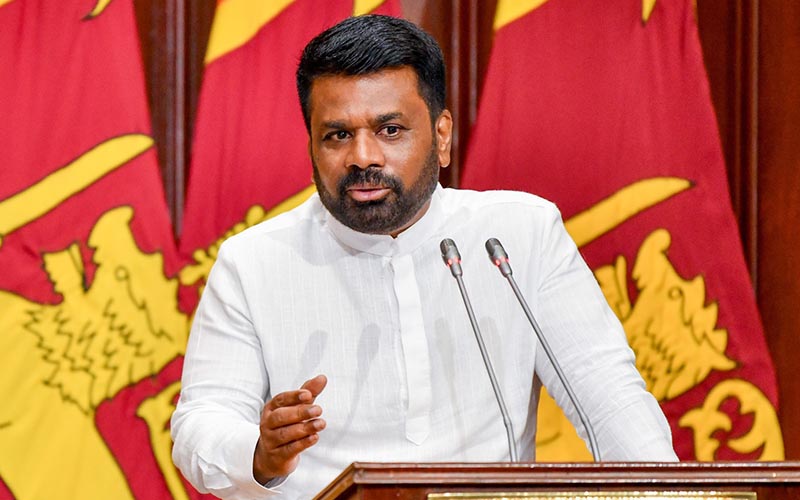
President Anura Kumara Disanayake assured that not a single rupee of the tax money paid by the people will be misused or lost to corruption.
He further stated that if any politician or public official is found engaging in such misconduct, strict action will be taken regardless of their position and the maximum possible punishment will be enforced. The President affirmed his commitment to ensuring justice for the taxpayers by dismantling the corrupt mechanisms that have long operated against the public interest.
President Disanayake made these remarks on Monday (02) morning while addressing the inaugural ceremony of the national programme titled “Tax Power’ to enhancing Tax Compliance and Broadening the Tax Base held at the Presidential Secretariat.
The launch of “Badu Shakthi – National Tax Week” also took place in parallel under the theme “Your Tax – Your Future”.
The President emphasized that the current government inherited a nation in a state of collapse and that a well-structured tax system is essential to revive and rebuild the country.
He further noted that Sri Lanka is currently under economic probation and invited all citizens to join hands in building a self-sufficient national economy. He underscored that the extended credit facility agreement with the International Monetary Fund (IMF) should mark the final such programme for the country.
The “Tax Shakthi” National Tax Week commenced with the objective of transforming negative public perceptions surrounding tax compliance into a more constructive outlook, while fostering a new tax culture grounded in transparency, accountability, and civic responsibility. From June 2 to June 7, a series of awareness programmes will be carried out to educate the public on the importance of tax contributions, how tax revenue supports national development and the tangible benefits delivered to citizens through effective public financing.
As part of the initiative, the Inland Revenue Department officially launched its online platform for the submission of individual income tax returns for the 2024 assessment year. Marking a significant gesture of leadership and commitment to fiscal responsibility, President Anura Kumara Disanayake submitted his personal income tax return via the online portal, becoming the first to do so for the 2024/25 assessment year.
Additionally, the implementation of the ASYHUB system at the Sri Lanka Customs Department was carried out as part of this initiative. Developed with the support of the German government and the UNCTAD organization, this modernized system enables importers to complete their customs procedures before the goods arrive in the country. Through this system and the integrated risk management software used by Customs, risk-free shipments are directly cleared at the port and conveniently transported to the respective importers’ warehouses.
Excise Department officers were introduced to a new mobile application designed to identify legally manufactured alcoholic beverages through a secure labelling system.
Secretary to the President, Dr. Nandika Sanath Kumanayake, also addressed the event, stating that the primary aim of Tax Week is to enhance tax compliance among the business community and the general public, thereby strengthening the national tax base.
Secretary to the Ministry of Finance, Mahinda Siriwardana, noted that paying taxes is a goodwill investment made by citizens for the betterment of the country.
Convenor of the “Clean Sri Lanka” initiative, Senior Additional Secretary to the President Russell Aponsu emphasized that tax compliance plays a crucial role in building a well-disciplined nation guided by ethical and sustainable development principles.
The full speech delivered by President Anura Kumara Disanayake at the event:
“There is a generally negative perception of taxation in our country. Public discourse often reflects concerns about tax wastage, tax evasion and the overall complexity of the tax system. Moreover, institutions have emerged with the sole purpose of advising individuals and businesses on how to evade taxes. These attitudes have developed largely due to the weaknesses in our tax administration system and the public’s awareness of past misuse and mismanagement of tax revenues. Therefore, it is essential that we initiate a broader public discussion on tax compliance, the mechanisms through which taxes are collected, and the prevailing public attitudes toward taxation.
When we examine some of the available data, the picture is far from encouraging. Only 43% of those registered as companies have submitted their tax returns. For the 2023–2024 period, only 23% of individuals liable for income tax have filed returns. Among partnerships, the compliance rate is 46%. Meanwhile, just 18% of those liable for PAYE tax have submitted their returns. None of these figures exceed 50%, clearly indicating widespread tax non-compliance and deliberate efforts to evade taxes.
The root cause of this situation lies in the public’s criticism particularly from taxpayers of how past political administrations have misused tax revenues. Therefore, our first responsibility is to assure the people that their tax money will be used appropriately and exclusively for essential needs. That assurance is now entrusted to me and to the current political leadership. As President, I give you my personal guarantee that not a single rupee of your tax money will be wasted or misappropriated by the political authority.
I, as President, have been granted certain privileges funded by public tax money through laws, gazette notifications and Cabinet decisions. However, we have already relinquished many of those privileges. I have made every possible effort to reduce expenditures under the Presidential budget allocation, in order to safeguard every rupee contributed by the people. The Cabinet and Members of Parliament are following the same principle. We are operating under a regime of discipline and accountability. And that is where we begin to set the first example.
We must also build an efficient public service. We are making a concerted effort to transform the relationship between the state apparatus and the citizen into a fast, efficient and fully digital system. At the same time, corruption that has spread throughout the public sector must be eradicated. You are aware that when an ordinary citizen applies for a passport, they must personally visit the Department of Immigration and Emigration, submit their photograph and provide fingerprints. Yet, underworld figures have been issued multiple passports with different sets of fingerprints and several types of photographs. Institutions tasked with upholding our legal framework have themselves contributed to its breakdown.
Similarly, there was a case where a locker belonging to an officer of the Department of Motor Traffic contained a sum of money that could not have been legally earned even over three years. There are serious allegations surrounding the Customs Department. The Excise Department is also affected by similar issues. As a result, while our country may appear peaceful on the surface, a hidden shadow system continues to operate beneath. This underground network is run by organized smuggling rings. Recently, during the opening of a new Customs warehouse system, illegal imports by some well-known branded companies were uncovered clearly pointing to the involvement of powerful players in this black economy. This shadow system has long been protected by political authorities. It also includes certain state officials, illegally armed individuals, and even some members of the media.
Therefore, we are confronting a highly organized shadow system. I assure the people of this country that this shadow system will be dismantled. We are building a nation where everyone is subject to the rule of law. What use is amassing great wealth if, at the age of 61, you end up spending 20 years behind bars? Can anyone justify stealing public funds after receiving their education through public money and drawing a salary funded by taxpayers? All such actions will be punished. This issue regarding public funds is not merely a matter of paying or collecting taxes. It is a deeper, networked problem. Pointing fingers at individual institutions will not solve it, because it is an interconnected system. Therefore, as a state apparatus, we must be fully prepared to deal with it. Anyone unwilling to take on this responsibility is free to step aside. Unless this shadow system is broken, the country will not be able to move even an inch forward. That is why we are committed to dismantling this corrupt network.
Entrepreneurs are conducting their businesses lawfully and paying fair taxes to the government. It is the responsibility of the state to protect that system. Likewise, those who work hard to earn an honest living and pay a portion of it to the government in taxes deserve the assurance that their contributions are safeguarded. That is our responsibility. Therefore, I invite every taxpayer to continue fulfilling your duty. I give you my assurance that every rupee you pay will be protected. And if even a single rupee is misappropriated, I will ensure the full force of the law is brought to bear against it.
In this process, neither power nor social background will be taken into account. Only by cleansing this entire shadow system can we realistically achieve our tax revenue targets. Therefore, our key objective during Tax Week is to send this message to society. To that end, a broad and inclusive social dialogue must be initiated.
When we look closely at the lives of ordinary people, we see that we have failed to create an economy that adequately meets their basic needs. One of the foremost concerns raised by many industrialists and business people is the issue of taxes. Consequently, the most frequent discussion revolves around the perception that taxes are an obstacle to economic activity. Taxes are not a hindrance to economic movement. I am ready to assure every entrepreneur and industrialist that if your industry lacks reliable electricity, we will provide it. If you do not have suitable land to carry on your business, we will acquire and provide it. If you lack access to water facilities, we will supply them. If the roads are inadequate, we will build proper roads. However, you must pay your taxes. No one should request tax concessions in the name of developing their industry or business. Everything else infrastructure, legal frameworks and efficiency improvements we will arrange and provide. But you must pay your fair share of taxes.
We are systematically undertaking the reconstruction of a collapsed economy. We face a significant challenge though I am reluctant to emphasize this, it must be said. What we have inherited is a stalled country. Typically, during a change of government, the country continues to move forward despite political transitions. Many have gained from this momentum. However, what we encountered was a country at a complete standstill. Investments, projects and foreign loans everything had come to a halt. Now, what has been entrusted to us? How do we revive a country that has been stopped on all these fronts? That is our primary challenge. This is why we are striving to revive the projects that were halted, particularly through foreign investments. We believe that within the next two to three months, a substantial number of these stalled projects will be able to restart.
Therefore, what we have is a country that needs to be revived. A country that is running can be held and directed, but what we have is a country that needs to be awakened. In that process, we must first understand the underlying causes that led our country to this collapse. Even in the midst of this crisis, as political leaders, as public officials, and as members of the general public, if we fail to learn from these failures, then we fail as human beings. Some of the root causes of this collapse have even been pointed out by the Supreme Court.
Recently, when punishments were handed down to those involved in corruption and fraud, the judges also highlighted the root causes of this collapse. Through our own life experiences, we have identified the factors that led to this breakdown. Therefore, the responsibility entrusted to us is to thoroughly understand these root causes and prevent their recurrence.
One of the main reasons for this collapse was our failure to properly reform the tax system and collect a fair amount of tax revenue. This crisis was of our own making. If I recall correctly, in around 1996, tax revenue accounted for about 23% of the national income, but it has since fallen to just 7.3%. This decline was a significant factor that contributed to the deepening economic crisis. Hence, it is essential to efficiently collect taxes. This crisis arose precisely because we failed to do so. Over different periods, tax reforms were carried out to satisfy various political agendas rather than economic principles. This politically driven approach to tax reform created a major problem. I assure you that we do not make any economic decisions based on political principles. All our economic decisions are made strictly on economic fundamentals. Politically motivated economic decisions were one of the reasons the country as a whole fell into collapse.
Because we were unable to overcome this crisis on our own, we have become subject to external control. We are being managed from above. Our revenue targets are now set for us. This year, the national income must grow by 15.1%. Of that, 2.3% must be maintained as a primary surplus. We have to manage the economy according to expenditure limits and revenue targets agreed upon by external parties. Why? Because we were the “bad child.” Now, we have been punished and placed under guardianship. Our economy and assets are under guardianship. Are we to remain an economy always under such guardianship? Certainly not. In a discussion with Mr. Mahinda Siriwardhana, Secretary to the Ministry of Finance, the consensus was reached that this should be regarded as the final stage of entering the International Monetary Fund’s extended loan programme. We must embark on an economic journey based on our own criteria and targets.
However, at some point, our economy must set economic goals aligned with the public’s aspirations and social expectations. Yet, currently, we are managing an economy partly under guardianship. Therefore, our firm determination is to bring this to an end this phase of the IMF extended loan programme and move forward. To achieve this, our government revenue must be increased. A large portion of this revenue comes from taxes. The bulk of tax collection and administration falls on the Department of Inland Revenue, the Department of Customs and the Excise Department. Therefore, as taxpayers, tax collectors, and tax administrators, let us work together to succeed in this effort. Let us strive to transform an economy under guardianship into a sovereign economy with full independence”.
Joining this effort were Minister of Labour and Deputy Minister of Economic Development Anil Jayanta Fernando, Deputy Minister of Finance and Planning Harshana Suriyapperuma, Governor of the Central Bank Dr. Nandalal Weerasinghe, along with other senior government officials, provincial governors and private sector representatives.
[PMD]


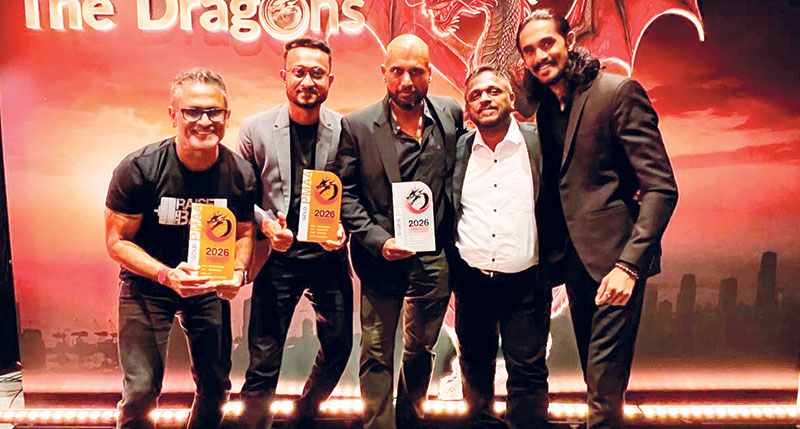
Nine awards, including two Golds, across disciplines recognise business-driven creativity
Ogilvy Group Sri Lanka delivered a standout performance at the recently concluded Dragons of Sri Lanka 2026 Awards, securing a total of nine awards comprising two Gold Dragons, one Silver Dragon and six Black Dragons, among the festival’s highest overall award tallies, a company news release said.
Gold Dragon wins for Phoenix Ogilvy and Ogilvy Digital, together with the seven additional recognitions across multiple categories, highlighted Ogilvy’s ability to combine creativity, strategic thinking and commercial effectiveness to deliver business results.
Organised by the 4As Sri Lanka, the third edition of Dragons of Sri Lanka shortlisted more than 50 agencies and corporates, making it one of the country’s most competitive marketing communications awards. These local awards, along with the chapters in Malaysia and Pakistan are part of the Dragons of Asia platform, one of the region’s leading programmes for marketing communications effectiveness, with entries being judged on strategy, originality, execution and measurable results.
Ogilvy Digital accounted for eight awards in total, including a Gold Dragon in the Business & Trade Marketing category, and a Silver Dragon in the Innovative Idea or Concept category. The Agency additionally received six Black Dragons across the categories of Innovative Idea or Concept, Business & Trade Marketing, Content Creation, Small Budget, Event or Experiential, and Brand Trial or Sales Generation.
Commenting on the achievement, Sajith Weerasinghe, Chief Operating Officer of Ogilvy Digital, said, “These recognitions reflect the breadth of capabilities we’ve built across strategy, creative, content, experience design, technology and performance marketing. The fact that the work was recognised across so many different disciplines demonstrates our ability to apply creativity to a wide range of business challenges and objectives. We’re proud that this achievement spans multiple clients, categories and types of work, reflecting both the versatility of our people and our commitment to delivering results.”
The Ogilvy Group’s second Gold Dragon win was Phoenix Ogilvy’s recognition in the Product Launch or Re-Launch category for the relaunch of American Premium Water. It was a multi-dimensional campaign which refreshed the identity and rejuvenated the positioning of one of Sri Lanka’s pioneering bottled drinking water brands, bolstering its 30-year heritage while connecting with a new generation of consumers.
Commenting on the win, Siddhartha Roy, Chief Operating Officer at Phoenix Ogilvy, said, “There’s always something special about reimagining a brand with a rich heritage. American Premium Water has been a trusted name in Sri Lanka for more than three decades, but the challenge was to make it relevant and compelling for a new generation of consumers. We created a new blueprint for growth for the brand’s positioning, proposition and visual identity, and manifested it through design, packaging and storytelling. To see that transformation recognised with a Gold Dragon, and more importantly reflected in the brand’s renewed momentum in the market, makes this a particularly rewarding achievement.”
The Ogilvy Group Sri Lanka operates across multiple marketing communication disciplines and comprises over 290 staff in creative, strategy, digital, media, public relations and integrated communications. As part of the global Ogilvy network, the Group partners with leading local and international brands to create integrated campaigns that build brands, influence behaviour and drive business growth.

A musical tribute celebrating the life and legacy of Rev. Fr. Marcelline Jayakody, OMI, renowned for his contribution to Sri Lankan arts, music, culture and religious harmony, was held in California with the participation of a large gathering of Sri Lankans.
Titled “Sri Lanka Rani Maniye,” the event was organised by the Sri Lankan Catholic Community in California (SLCCC) under the guidance of Rev. Fr. Rashmi M. Fernando, S.J.
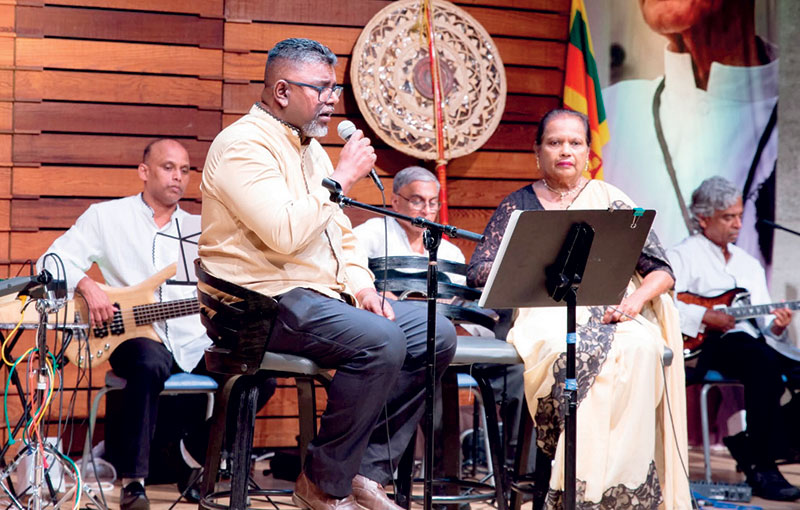
Shalika Perera singing at the event
The programme honoured Fr. Jayakody, affectionately known as “Pansale Piyathuma” (The Priest of the Temple), for his efforts to promote Buddhist-Catholic understanding, interfaith dialogue and a shared Sri Lankan identity.
The event brought together members of the Maha Sangha, the Consul General of Sri Lanka in Los Angeles, musicians, singers, donors, parents, children and members of the Sri Lankan community from Los Angeles and other parts of Southern California.
Music, song and Sri Lankan cultural traditions featured prominently, with organisers placing particular emphasis on introducing the country’s artistic and cultural heritage to younger generations of Sri Lankans growing up overseas.
The programme also highlighted the importance of community unity, religious harmony and mutual respect among Sri Lankans living abroad.
Rev. Fr. Fernando told the gathering that the event marked only the beginning of efforts that could achieve more through unity “for the pride and greater good of our motherland, Sri Lanka.”
The organisers thanked the performers, volunteers, donors and well-wishers who contributed to the event, which concluded as a celebration of Fr. Jayakody’s enduring cultural legacy and the Sri Lankan diaspora’s continuing connection with its homeland.
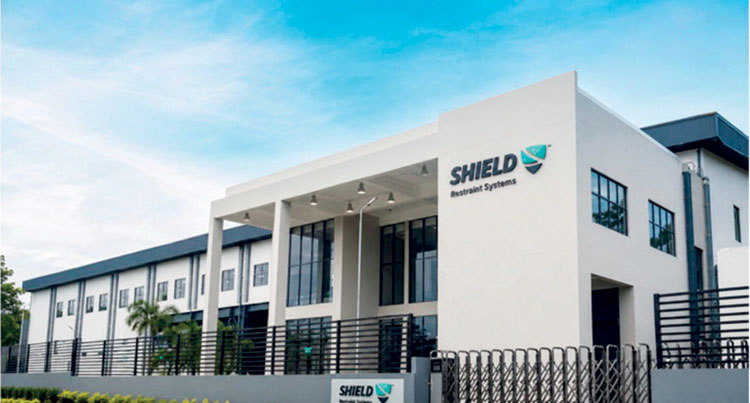
Hayleys Fentons Limited has completed construction of a state-of-the-art manufacturing facility for Shield Restraint Systems (Pvt) Ltd at the Wathupitiwala Export Processing Zone, with the project completed on schedule within approximately 14 months.
The project, valued at more than Rs. 1 billion, commenced with the laying of the foundation stone on January 7, 2025. It was undertaken by the project arm of Hayleys Fentons, with Design Consortium International (Pvt) Ltd serving as the principal design consultant.
The facility has been designed to meet international industry standards and incorporates advanced safety and energy-efficiency features. A pre-engineered building structural system was used to facilitate faster construction and optimise project costs.
The new facility will manufacture safety restraint systems for the international automotive industry through Shield Restraint Systems.
Hayleys Fentons Deputy Managing Director – Projects Sujith De Alwis said the timely completion of the project demonstrated the company’s engineering and project management capabilities and the ability of Sri Lankan construction expertise to meet stringent international standards.
Hayleys Mobility Executive Director Roshani Dharmaratne said the project required detailed planning, quality management and coordination across multiple disciplines.
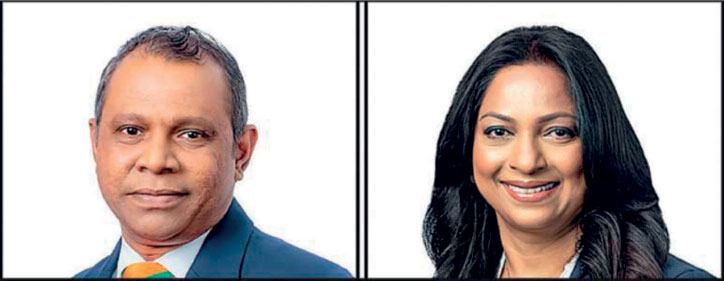
Sujith De Alwis, Deputy Managing Director – Projects of Hayleys Fentons Limited and Roshani Dharmaratne, Executive Director of Hayleys Mobility Limited
Chairman Design Consortium Migara Alwis said the project further strengthens its portfolio in specialised industrial construction and supports investment linked to Sri Lanka’s participation in the global automotive supply chain.

Shree Charani, Prema Rawat spin Pakistan out for 55 in one-sided contest

Sun directly overhead Bentota, Thiniyawala, Iththakanda, Udawalawe, and Kataragama about 12.08 noon t9day (06)

Showers above 75 mm are likely at some places in the Uva and Eastern provinces.

Tharanga creates history with Diamond League crown in Brussels

UN welcomes Lanka’s anti-graft drive, seeks end to impunity

Dispute which triggered listed company director being detained at BIA resolved

‘Dates have the highest sugar content to fight Coronavirus’

Sunday Island 27 December – Headlines

#SundayIsland 17th December – Headlines

Sunday Island – 28th March

Sunday Island Headlines – 21 March

Sunday Island – 21st February – Headlines
-

 Features7 days ago
When Sri Lankan stories find their own voice
-
 News7 days ago
BASL takes exception to Justice Ganepola being denied a place in SC
-

 News4 days ago
Denied of promotion to SC despite vacancies, justice Gurusinghe retires
-

 Latest News4 days ago
Grade 5 scholarship exam results released
-

 News4 days ago
22A: SC urged to suspend hearing, appoint full bench
-

 Midweek Review5 days ago
The local and global dynamics of Sri Lanka’s 22nd Amendment
-

 News4 days ago
Govt. seeks NATO assistance
-

 Business7 days ago
ADB-funded Thalaiyadi plant serves as blueprint for vulnerable dry zones in Sri Lanka